

Crown Seal Watches: What Every Owner Must Know
The crown seal is your watch’s primary barrier against water, moisture, dust, and debris. Every time you set the time or wind the movement, you temporarily break that barrier. The single most effective thing you can do right now: confirm the crown is fully screwed down (or firmly pushed in) and free of grit before any water exposure. According to Matheu’s Fine Watches & Jewelry, the crown is the most frequently manipulated component on any watch, which makes it the most likely entry point for moisture when neglected or improperly secured. Understanding the role of crown seal watches goes well beyond knowing what a crown does — it means knowing how the seal works, when it fails, and what to do about it.
Table of Contents
- How crown seals work: the gasket stack behind the protection
- What your crown type tells you about your watch’s limits
- How crown integrity affects water resistance — and what fails first
- How to operate a screw-down crown safely
- Maintenance and inspection checklist from ChronoCare
- When to get professional service: timelines and realistic costs
- Common owner mistakes and red flags to watch for
- Key Takeaways
- The part most collectors get wrong about crown care
- Keep your crown clean with ChronoCare
- Further reading and sources used in this guide
How crown seals work: the gasket stack behind the protection
The crown looks simple from the outside. Underneath, it is a precisely engineered stack of components working together to keep water out.
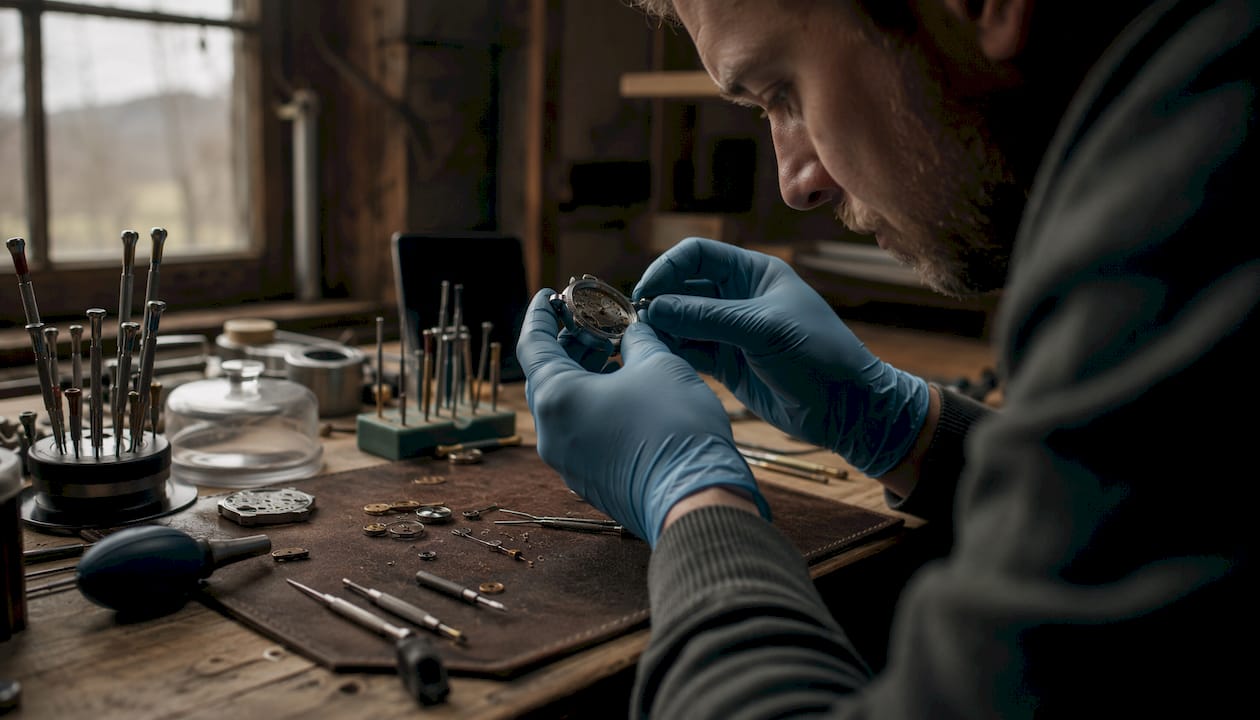
Anatomy of the crown-to-tube interface
The main parts are the crown head (what you grip), the winding stem (which runs into the movement), the case tube (the threaded sleeve pressed or screwed into the case middle), and one or more gaskets, usually O-rings or die-cut washers, seated between the crown and the tube. When you screw a crown down, the threads pull the crown tight against the tube and compress those gaskets. That compression is where the watertight barrier actually forms. The seal is not at the crown head — it is at the interface between the gasket and the tube wall.
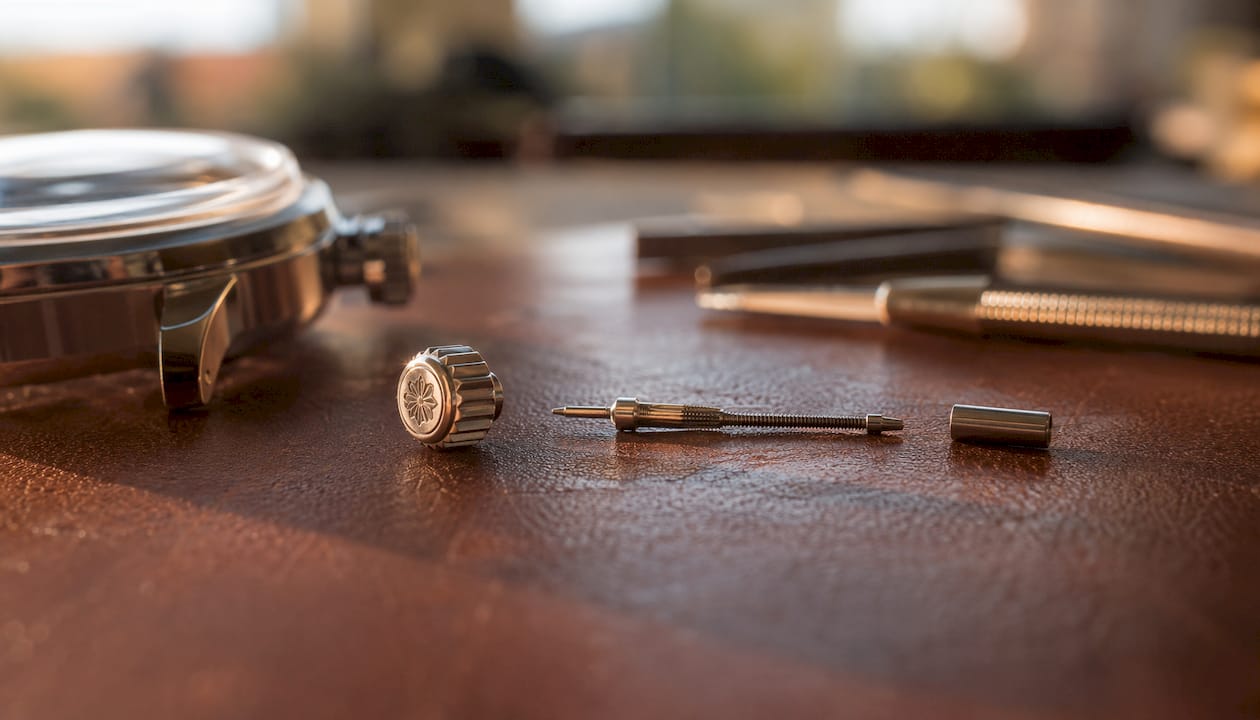
Why gaskets degrade over time
Gaskets are not permanent. Stem motion, winding friction, UV exposure, temperature cycling, and contact with solvents (think hand sanitizer, sunscreen, cleaning sprays) all cause the rubber or synthetic material to harden and shrink. According to HorologyCAD, this progressive hardening is a leading cause of moisture ingress even before a gasket visibly fails. You may not see a crack; the gasket simply stops compressing enough to hold a seal under pressure.
Pro Tip: Run a clean fingernail around the crown base before water exposure. Any grit or debris you feel can prevent the gasket from seating fully — a quick wipe with a soft cloth takes five seconds and can save a movement.
| Condition | Recommended gasket inspection/replacement |
|---|---|
| Regular water use (swimming, showering) | Inspect every 12 months; replace every 2–3 years |
| Occasional water exposure | Inspect every 6–12 months; replace every 2–3 years |
| Desk/dry use only | Inspect every 2 years; replace at full service |
Gasket degradation typically becomes noticeable between 2–5 years depending on UV, solvent, and temperature exposure. Many watchmakers recommend replacing crown gaskets every 2–3 years for regularly water-exposed watches.
What your crown type tells you about your watch’s limits
Not all crowns seal the same way. Knowing which type you have tells you a lot about what your watch can handle.
- Push-pull crowns are the most common type on dress watches and everyday quartz pieces. You pull to set, push back in to close. They rely on a simple gasket press-fit rather than threaded compression, so their water resistance is limited — typically suitable for splash resistance and light rain, not swimming.
- Screw-down crowns thread into the case tube and compress gaskets under tension. This design, first patented by Rolex in 1926, remains the standard for sport, dive, and tool watches. A properly screwed crown can maintain water resistance to significant depths. It also prevents accidental crown pulls underwater, which is a real risk with push-pull designs.
- Lockable (locking) crowns add a secondary locking collar or bayonet mechanism on top of the screw-down thread. Found on high-specification dive watches, they provide an extra layer of security against accidental loosening.
- Oversized and pilot crowns are large-diameter crowns designed for gloved operation. IWC Big Pilot and Breitling aviator watches are classic examples. The size makes them easier to grip but does not inherently change the sealing mechanism — most still use a screw-down or push-pull system depending on the model’s water-resistance target.
Some watches carry multiple crowns: one for time-setting, another for a second time zone or internal bezel. Each crown is a separate seal point and each needs the same attention. For fashion and branded retail watches, crown styles vary widely — retail watch collections often prioritize aesthetics over tool-watch-grade sealing, so check your specific model’s water-resistance rating before assuming any crown type is dive-ready.
The practical rule: if your watch is rated below 100 meters, treat the crown as a weak point near water. Screw-down crowns rated at 100 meters or more are generally safe for swimming; push-pull crowns are not.
How crown integrity affects water resistance — and what fails first
A watch’s stated depth rating assumes every sealed interface is intact. In practice, the crown-to-tube gasket is the most common failure point, not the crystal and not the case back. Higher depth ratings do not guarantee safety if the crown seal is compromised.
Common failure modes:
- Gasket hardening or shrinkage — the most frequent cause; the gasket loses elasticity and no longer compresses fully against the tube wall
- Grit and debris preventing full seating — sand, soap residue, or dried sweat under the crown stops it from threading down completely, leaving a gap
- Cross-threading or damaged threads — forcing a misaligned crown strips the tube threads, creating a permanent leak path that requires machining to repair
- Crown or stem wobble — physical impact or worn stem tolerances allow lateral movement that breaks the gasket seal under pressure
- Solvent contamination — perfume, sunscreen, and cleaning agents degrade gasket material faster than water alone
Watch for this: If you notice condensation or fogging under the crystal after a shower or swim, the crown gasket is the most likely entry point and should be inspected before the watch is worn again.
Any crown operation — pulling, unscrewing, adjusting — creates a temporary breach in the case barrier. That is not a design flaw; it is unavoidable. What matters is that you reseal the crown correctly every time and inspect it regularly. The 7 signs your watch needs professional cleaning include moisture under the crystal as a top indicator — do not ignore it.
How to operate a screw-down crown safely
Getting this sequence right protects both the gasket and the case tube threads. Rushing it is how cross-threading happens.
- Dry the crown area first. Wipe around the crown with a soft cloth to remove any moisture, grit, or residue before touching it.
- Unscrew counterclockwise. Apply light, steady pressure and turn counterclockwise. You will feel the threads release after one to two full turns. Do not pull until the threads are fully disengaged.
- Pull to the correct position. One click out for date adjustment (on most movements), two clicks for time-setting. Never force past a position — if it resists, you are at the stop.
- Make your adjustments. Set the time or date. If winding manually, turn clockwise with light, consistent pressure. Stop when you feel resistance increase — do not force past it.
- Push gently inward and begin threading clockwise. This is the critical step. Press the crown lightly toward the case while turning clockwise. You should feel the threads catch smoothly within the first half-turn.
- Thread until snug, then stop. Turn until you feel firm resistance. The crown is seated. Do not continue past that point.
Pro Tip: If the crown resists threading after a quarter-turn, stop immediately. Back it off counterclockwise, realign, and try again. That resistance is the thread catching at the wrong angle — forcing it strips the tube. A correctly threading crown turns smoothly with almost no effort until the final snug.
Warning: Never operate the crown while the watch is submerged or even partially wet. Water can be drawn into the movement the moment the seal breaks. Also avoid advancing the date between approximately 9 PM and 2 AM on most mechanical movements — the date-change mechanism is engaged during those hours and forcing the date can damage the gears.
Maintenance and inspection checklist from ChronoCare
Routine inspection takes less than two minutes and catches most problems before they become expensive. ChronoCare’s guidance for crown cleaning and preservation is built around this kind of regular, low-effort habit.
Visual and tactile checks (every 1–3 months):
- Crown sits flush against the case with no visible gap
- No wobble when you gently press the crown sideways
- No grit, dried residue, or discoloration around the crown base
- Threads engage and disengage smoothly without grinding
Functional checks (every 6 months):
- Unscrew and reseat the crown; it should thread down without resistance
- No free-spinning (crown turns without engaging the stem)
- No condensation or fogging under the crystal after the check
Cleaning steps owners can safely perform:
- After saltwater exposure, rinse the crown area with fresh water and a soft brush (a clean toothbrush works)
- Dry thoroughly with a lint-free cloth; never use compressed air directly into the crown gap
- For routine cleaning, ChronoCare’s watch cleaning kit is formulated for luxury finishes and safe around crown gaskets — apply to the exterior only, never force liquid into the crown tube
Pro Tip: After any saltwater activity, rinse the watch under fresh running water with the crown screwed down, then dry it immediately. Salt crystals left around the crown base are abrasive and hygroscopic — they draw more moisture in over time.
When to call a watchmaker:
- Crown wobbles or spins freely
- Threads feel rough, stripped, or gritty after cleaning
- Persistent condensation under the crystal
- Crown will not screw down fully despite being clean
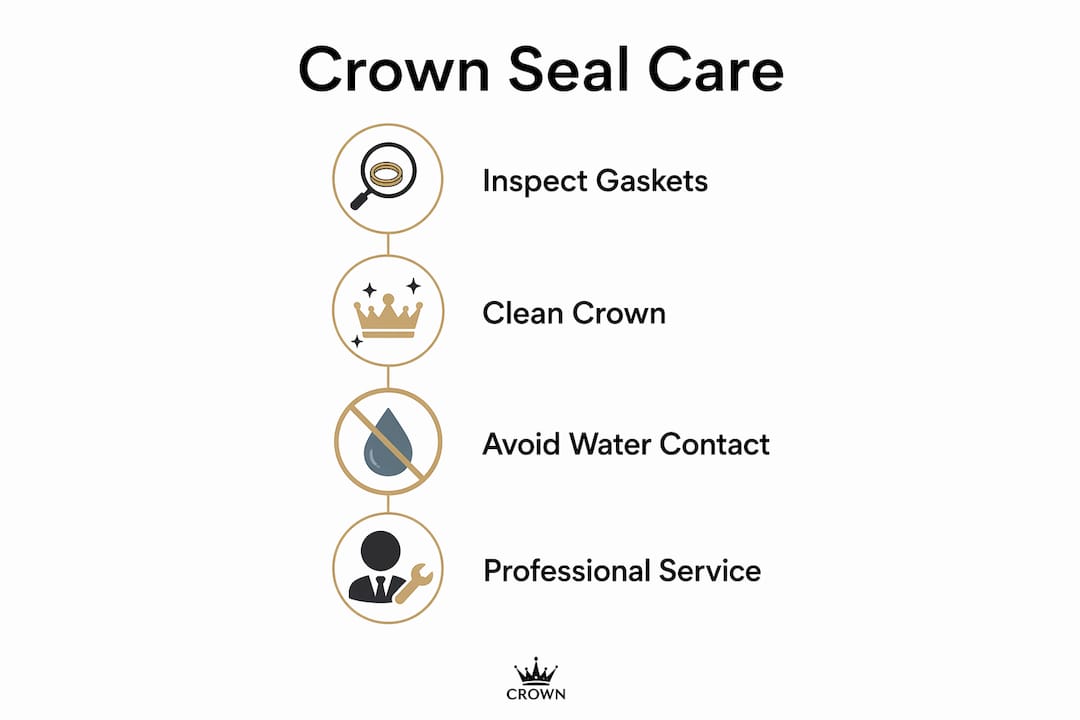
For a broader maintenance schedule between services, the recommended interval is a visual crown inspection every 6–12 months and gasket replacement every 2–3 years for watches used near water regularly.
When to get professional service: timelines and realistic costs
Some crown problems are beyond what a cleaning kit can fix. Knowing when to hand the watch over — and what to expect — saves both time and money.
Typical service actions related to the crown:
- Gasket replacement only: A watchmaker removes the crown, replaces the O-ring or gasket set, and pressure-tests the watch. This is the most common crown service and usually the least expensive.
- Crown and stem replacement: If the crown head is damaged, the stem is bent, or the threads are worn, the crown assembly is replaced. Parts cost varies significantly by brand and model.
- Thread repair or case tube replacement: Stripped case tube threads require machining or tube replacement — a more involved repair that takes longer and costs more.
- Pressure testing and resealing: After any crown service, a reputable watchmaker will pressure-test the watch to confirm the seal holds before returning it.
Cost context: Gasket replacement alone typically runs in the range of $30–$80 at an independent watchmaker in the United States, depending on the movement and brand. Crown and stem replacement can range from $80 to several hundred dollars for luxury or vintage pieces where parts must be sourced. Full pressure testing is often included in a service but may be quoted separately at $20–$50. These are general ranges — always get a written estimate before authorizing work.
Timeline: A simple gasket swap and pressure test can often be completed same-day or within 48 hours at a local watchmaker. Crown or stem replacement requiring sourced parts can take 2–6 weeks, longer for vintage or limited-production models. If speed matters, ask the watchmaker upfront whether parts are in stock.
Common owner mistakes and red flags to watch for
Most crown-related damage is preventable. These are the errors that show up most often.
Frequent mistakes:
- Forgetting to screw the crown back down after setting the time — the single most common cause of water ingress
- Forcing a stuck or gritty crown instead of cleaning it first
- Over-tightening: stripping the case tube threads or permanently deforming the gasket by cranking past snug
- Setting the date or time while the watch is wet or submerged
- Ignoring grit around the crown base, which acts as an abrasive on the gasket every time the crown is operated
Red flags that need immediate attention:
- Crown spins freely without engaging the stem or winding mechanism
- Crown wobbles laterally when pressed
- Moisture, condensation, or fogging visible under the crystal
- Sudden loss of timekeeping accuracy after water exposure
- Crown feels rough or gritty when threading, even after cleaning
If the watch gets soaked:
Remove it from the water immediately. Do not press any buttons or operate the crown. Dry the exterior gently with a lint-free cloth and bring it to a watchmaker as soon as possible. Running a wet movement accelerates corrosion dramatically. Time matters here — the difference between a gasket replacement and a full movement service can be measured in hours.
Key Takeaways
A properly seated, clean crown gasket is the single most important factor in maintaining your watch’s water resistance — more so than the stated depth rating.
| Point | Details |
|---|---|
| Crown is the primary seal point | Most water ingress happens at the crown-to-tube gasket, not the crystal or case back. |
| Gasket lifespan is finite | Replace crown gaskets every 2–3 years for watches used regularly near water. |
| Operation sequence matters | Always unscrew, adjust, then re-thread clockwise to snug — never force past resistance. |
| Red flags need fast action | Free-spinning crown, wobble, or condensation under the crystal require professional service promptly. |
| ChronoCare supports routine care | ChronoCare’s cleaning kits and crown-care guides are designed to keep gasket areas clean between professional services. |
The part most collectors get wrong about crown care
There is a tendency in the watch community to focus maintenance energy on the dial, the bracelet, and the movement — the visible and mechanical showpieces. The crown gets cleaned when it looks dirty and serviced when something goes wrong. That is exactly backward.
The crown is the only part of the watch that is designed to be opened and closed repeatedly. Every adjustment is a micro-stress event on the gasket. Every time grit sits in that gap, it is grinding against the seal. The gasket does not announce its failure with a loud noise or a warning light; it just quietly stops compressing enough to hold under pressure, and the next swim is the test.
What the conventional wisdom misses is that crown maintenance is not really about the crown at all — it is about the gasket you cannot see. Replacing a gasket every two to three years on a watch you wear near water is a $50–$80 insurance policy on a movement that might cost ten times that to service after moisture damage. The math is not complicated.
The luxury timepiece maintenance checklist ChronoCare publishes puts crown inspection at the top for exactly this reason. Not because it is the most glamorous task, but because it is the one that prevents the most expensive failures.
Keep your crown clean with ChronoCare
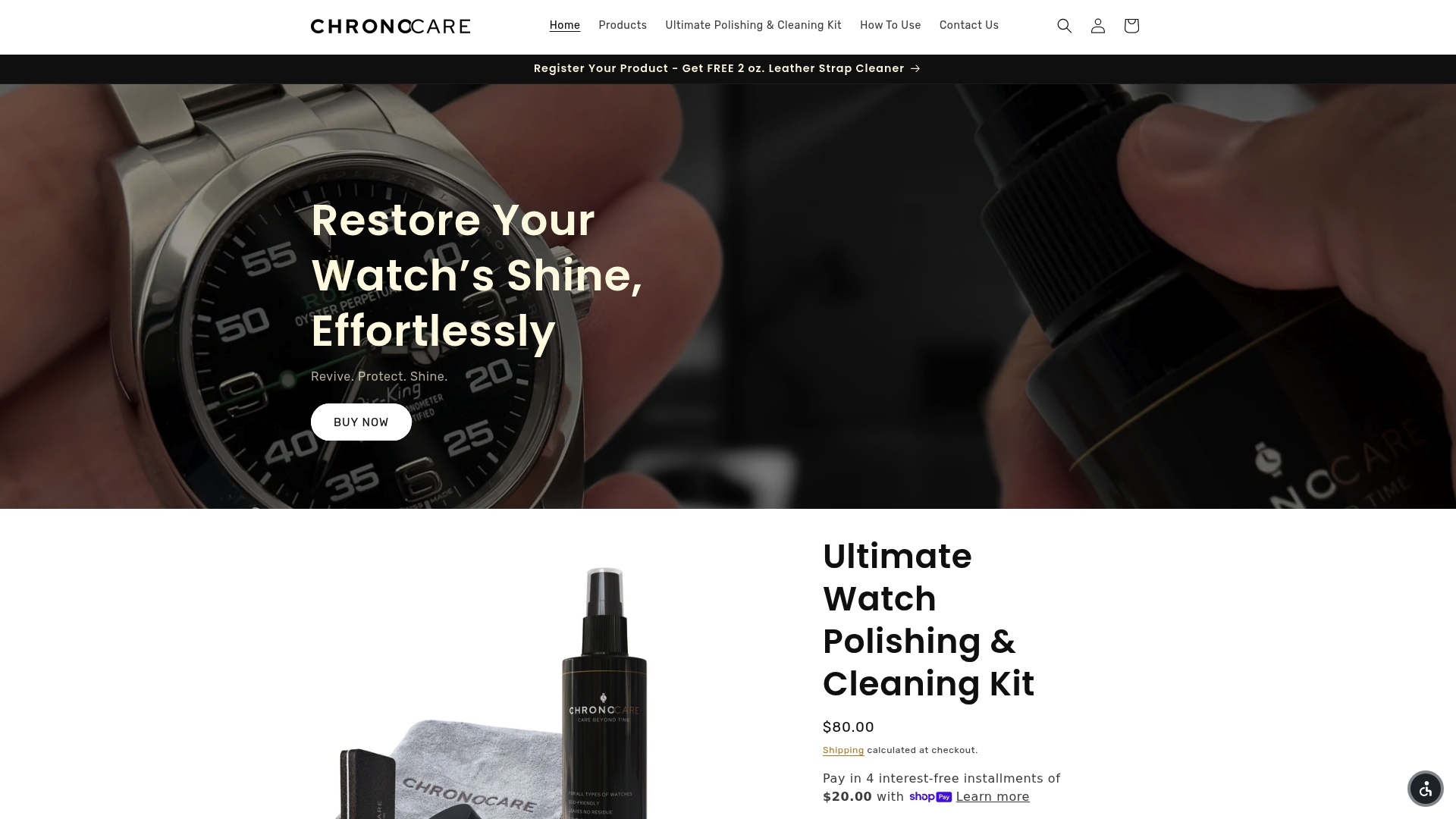
Routine crown-area cleaning is the most underrated step in watch maintenance, and ChronoCare’s products are built specifically for it. The Ultimate Watch Cleaning Kit includes a cleaning spray and tools formulated for luxury finishes, safe to use around crown gaskets and case tubes without degrading seals. For watches that need exterior restoration alongside cleaning, the Ultimate Watch Polishing & Cleaning Kit covers both steps in one kit. Every product ships with guided use instructions so you know exactly where to apply and where to stop. For mechanical repairs — stripped threads, damaged stems, failed gaskets — a watchmaker is the right call. ChronoCare handles the cleaning and preservation side; the kits are designed to keep your crown area in the best possible condition between those professional visits. Browse the full range at shopchronocare.com and start with the cleaning kit if you are not sure where to begin.
Further reading and sources used in this guide
The following sources provided the technical and practitioner foundation for this article. Each adds something specific.
- Matheu’s Fine Watches & Jewelry — Screw-Down Crown Explained: Retailer and watchmaker perspective on crown mechanics, owner handling habits, and the crown as the primary moisture entry point. Practical and well-sourced.
- Watch.AL / Iglisi — Watch Crown Explained: Covers crown operation mechanics, gasket degradation timelines (2–5 years), and the condensation-as-crown-failure diagnostic. One of the more technically detailed practitioner guides available.
- Vaer Watches — What Is a Screw-Down Crown: Explains why depth ratings are conditional on crown integrity, with step-by-step operation guidance and tactile cues for correct threading.
- WatchLab — Watch Crown Mechanics and Handling: Focused on over-tightening risks, thread damage, and the practical limits of screw-down crowns under real-world pressure.
- HorologyCAD — Crown Sealing System: Tube and Gasket Stack: Technical deep-dive into the dynamic gasket stack, stem friction as a degradation driver, and why microscopic gasket hardening precedes visible failure.
- Horopedia — Crown: Historical and mechanical reference covering the evolution of the crown from its origins to the 1926 Rolex patent and modern screw-down designs.
- ChronoCare Blog — Why Watch Crowns Need Cleaning: ChronoCare’s own guidance on routine crown cleaning, product-safe methods, and how cleaning habits extend gasket life between professional services.