

Collectors: When to Use Polishing Cloth or Cream to Keep Patina
For most sterling silver and everyday jewelry, a polishing cloth is the safer, faster default. Reach for cream only when you’re facing heavy, stubborn oxidation on solid, unplated metal. Plated pieces and soft or porous gemstones need extra caution with either method. Below you’ll find the mechanics behind each tool, a clear decision checklist, and step-by-step routines you can follow today.
TL;DR:
- Polishing cloths are ideal for routine tarnish and light dirt on unplated silver and gold, handling gentle cleaning without risking surface damage.
- Creams are suited for heavy oxidation on solid metal pieces but should be avoided on plated items or soft stones due to their abrasiveness and chemical agents.
- Soft, porous, or delicate stones such as opal, turquoise, and pearl must never meet creams or ultrasonic cleaners to prevent damage.
- Regular storage and gentle use extend the lifespan of cloths and prevent contamination of creams, ensuring safe and effective maintenance of jewelry.
- For collectors and antiques, conservative cleaning and testing on small areas protect patina and engraved details, avoiding irreversible damage from aggressive polishing.
Table of Contents
- Quick side-by-side verdict: cloth vs cream
- How polishing cloths work and why they’re usually the safe default
- How polishing creams work and when they’re worth using
- Decision checklist: how to choose cloth vs cream for each piece
- Step-by-step: using a polishing cloth safely
- Step-by-step: using polishing cream safely
- Safety and limits: gemstones, plated pieces, and antiques
- Care, lifespan, storage, and replacement guidance
- ChronoCare perspective and expert tips for collectors
- Balancing preservation and appearance
- ChronoCare kit: a curated option for readers who want a tested solution
- Sources
- FAQ
Quick side-by-side verdict: cloth vs cream
A polishing cloth handles routine tarnish and light dirt with almost no risk. It’s mechanical, not chemical: the treated fibers lift tarnish and leave a protective film behind. Cream works harder and faster on deep oxidation, but it’s more abrasive and carries real risk for plated surfaces and soft stones.
- Effectiveness: cloths handle light to moderate tarnish; cream handles heavy, blackened oxidation on solid metal.
- Speed and cost: cloths are quick, reusable for months, and cheap per use; cream works faster on tough tarnish but costs more per application and requires cleanup.
- Portability: a cloth fits in a pocket or travel case; cream needs an applicator, water access, and a few extra minutes.
- Gemstone and plating risk: cloths pose minimal chemical risk, though repeated rubbing can wear thin plating; creams are riskier around rhodium plating and soft stones like opal or turquoise.
If you wear a piece daily, keep a cloth in the drawer. If a solid silver heirloom has gone dark gray or black, cream (used carefully) will get you further, faster.
How polishing cloths work and why they’re usually the safe default
A polishing cloth isn’t just fabric. It’s impregnated with micro-abrasives and anti-tarnish compounds that lift oxidation mechanically rather than dissolving it chemically. Most cloths use a two-sided design: one side carries the treated compound for active polishing, the other is a plain buffing layer that removes residue and brings up shine. This combination removes microscopic layers of tarnish mechanically and leaves a protective film behind, which slows the next round of oxidation.
Because the action is physical rather than chemical, cloths are gentle on most gemstones and safer for plated surfaces when you use light pressure. That’s a meaningful advantage over creams, which combine abrasives with chemical agents that can be too aggressive for delicate finishes.
Cloths do have limits. They struggle with dirt trapped in filigree or prong settings, and they can’t fully lift heavy, blackened tarnish that’s built up over years. When a cloth stops producing shine, or starts leaving dark smudges no matter how you rub, it’s spent.
- Unfold the cloth and locate the treated (usually darker or textured) side.
- Rub the treated side gently over the metal in straight strokes, not circles, until tarnish lifts.
- Flip to the plain side and buff to bring up full shine and remove any residue.
- Fold to a clean section as the cloth darkens, since a saturated patch stops working.
Pro Tip: Store your cloth in a sealed bag between uses. Air exposure lets it absorb moisture and lose potency faster.
How polishing creams work and when they’re worth using
Polishing cream pairs fine abrasive particles with a chemical carrier, which lets it cut through oxidation that a cloth can’t touch. Where a cloth relies purely on mechanical friction, cream adds a chemical component that breaks down tarnish faster and can blend very light surface scratches into the surrounding metal.
Cream earns its place in a few specific scenarios:
- Heavy, blackened oxidation on solid sterling silver or solid gold that a cloth barely dents.
- Blending faint surface scratches on solid metal jewelry or watch cases.
- Restoring shine to pieces that have sat unworn and untreated for a long time.
The tradeoff is risk. Cream is abrasive enough to wear through thin rhodium or gold plating with repeated use, and overuse on solid pieces gradually removes metal, softening engraving and stamped details over time. Cream should never touch soft or porous stones like opal, turquoise, or pearl, since the chemical carrier and abrasive grit can dull or etch these surfaces permanently. Used sparingly and on the right pieces, cream is a legitimate tool. Used often or on the wrong metal, it does last damage that no cloth can undo.
Decision checklist: how to choose cloth vs cream for each piece
Before you touch any polishing product, run through three questions: what’s the metal, what’s the stone, and how bad is the tarnish?
Metal type matters most. Solid sterling silver and solid gold can tolerate occasional cream use. Rhodium-plated white gold and gold-plated pieces cannot, since the plating layer is thin and rhodium plating increases brightness and tarnish resistance precisely because it sits as a thin protective layer over a base metal, not because it can withstand aggressive abrasion. Wear through that layer and you expose the metal underneath, permanently changing the piece’s appearance.

Stone type is the second filter. Hard stones like diamond, sapphire, and ruby tolerate a cloth without issue and generally handle brief cream contact if you’re careful and rinse promptly. Soft or porous stones, pearls, opals, turquoise, and emeralds, should never meet cream, ultrasonic cleaners, or steam.
Tarnish level decides the tool. Light haze or dullness on daily-wear pieces calls for a cloth. Heavy, dark, blackened tarnish on solid, unplated metal is where cream earns its use.
Use these rules as your default:
- Daily-wear sterling silver or gold with light tarnish: cloth, every time.
- Solid, unplated metal with heavy black oxidation: cream, applied sparingly.
- Any plated piece, regardless of tarnish level: cloth only, light pressure.
- Any piece with soft or porous stones: cloth only, and keep the stone itself untouched when possible.
- Antique or high-value pieces with unclear plating or metal content: consult a professional before using cream.
Pro Tip: When you’re unsure whether a piece is plated, check the hallmark or ask a jeweler before reaching for cream. Once plating is gone, it’s gone.
Step-by-step: using a polishing cloth safely
Start with a light wash in warm water with a small amount of mild soap if the piece has oily residue or skin oils, then dry it completely before polishing. Set aside any pieces with soft stones so you can work around them rather than over them.
- Wash and fully dry the piece, isolating any soft or porous stones from direct contact.
- Use the treated side of the cloth in gentle, straight strokes, working small sections at a time.
- Watch for color transfer onto the cloth. That’s tarnish lifting, not damage.
- Switch to the plain side and buff lightly to bring up shine and clear residue.
- On plated pieces, use minimal pressure and stop as soon as shine returns.
A quality cloth typically lasts several months of regular use before it darkens and loses effectiveness, at which point rubbing stops producing shine and starts leaving dark streaks instead. That’s your signal to replace it rather than keep working a depleted section.
Step-by-step: using polishing cream safely
Cream demands more caution than a cloth, so slow down and test before committing to a full piece.
- Remove any detachable stones or set pieces aside, and shield fixed soft stones with tape or by working around them entirely.
- Test the cream on a small, inconspicuous area first and check for discoloration or dulling before continuing.
- Apply a small amount of cream to a soft applicator, not directly to the metal.
- Work in gentle circular motions on solid metal only, avoiding edges near plating or stone settings.
- Wipe away all residue with a clean, dry cloth, then follow with a final buff using the plain side of a polishing cloth.
- Stop immediately if you notice color change, thinning, or exposed base metal, and hand the piece to a professional restorer instead of continuing.
Safety and limits: gemstones, plated pieces, and antiques
Some materials should never meet cream, ultrasonic cleaners, or steam cleaners, since ultrasonic and steam cleaners remove trapped dirt but cannot break down chemical tarnish and can still damage fragile materials through vibration or heat.
- Pearls: porous and easily etched by cream chemicals or ultrasonic vibration.
- Opals: soft and water-sensitive; heat and chemicals can cause cracking.
- Emeralds: often filled with oil or resin to hide inclusions, which cleaning chemicals and ultrasonic waves can strip out.
- Turquoise: porous and prone to absorbing chemicals, which causes discoloration.
Identifying plating takes a careful eye. A hallmark reading “GP” or “plated,” an unusually uniform bright finish on an older piece, or wear patterns showing a different base color underneath are all signs that you’re dealing with a thin surface layer rather than solid metal. Antiques deserve extra restraint: specialist guidance recommends leaving some patina in place, since stripping every trace of tarnish can flatten engraved detail and reduce the depth that gives antique pieces their character.
Pro Tip: Keep a separate cloth for gold and silver pieces. Cross-contaminated abrasives can scratch a softer metal with grit picked up from a harder one.
Care, lifespan, storage, and replacement guidance
A treated polishing cloth lasts through months of regular use before it darkens and stops producing shine, at which point it’s time to replace it rather than keep working a spent section. Cream has a shorter practical window once opened, since exposure to air and moisture can degrade the abrasive suspension and introduce contamination if you dip dirty applicators back into the jar.
- Store cloths in a sealed bag or their original packaging to limit air exposure.
- Keep cream jars closed tightly and use a fresh applicator each time to avoid contamination.
- Store jewelry in anti-tarnish pouches or lined boxes, never loose in newspaper or directly on wood, both of which can accelerate tarnishing.
- Wipe daily-wear pieces with a cloth every few weeks rather than waiting for heavy tarnish to build up.
ChronoCare perspective and expert tips for collectors
Some watch care products, including polishing creams and treated cloths, aim to address the same core challenge collectors face with jewelry: removing oxidation and light wear without erasing the geometry that gives a piece its original character. That principle carries directly over from watch cases to rings, bracelets, and chains.
Our guidance to collectors is consistent: test on a small area first, work in light passes rather than one aggressive pass, and stop as soon as the result looks right rather than chasing a mirror finish. Progressive abrasive steps without testing between them are how collectors accidentally soften stamped hallmarks or blur fine engraving. For readers working on watch cases and bracelets specifically, our guides on removing hairline bracelet scratches and polishing a watch case after service walk through the same conservative approach in more mechanical detail.
Balancing preservation and appearance
Not every tarnished piece needs to look brand new. Antique jewelry often carries patina that adds depth and history, and stripping it entirely can leave a piece looking flatter than before you started. The better instinct is to test a small area, evaluate the result, and stop before you’ve removed more than you meant to.
Aggressive polishing is rarely reversible. A conservative pass you can repeat later beats one heavy session that changes the piece for good.
— Raymond Jenkins
ChronoCare kit: a curated option for readers who want a tested solution
If you’d rather not assemble separate cloths, creams, and applicators on your own, the Ultimate Watch Polishing & Cleaning Kit bundles the tools this article walks through into one package. It’s built for watch cases and bracelets, but the same components apply directly to the cloth and cream routines described above.
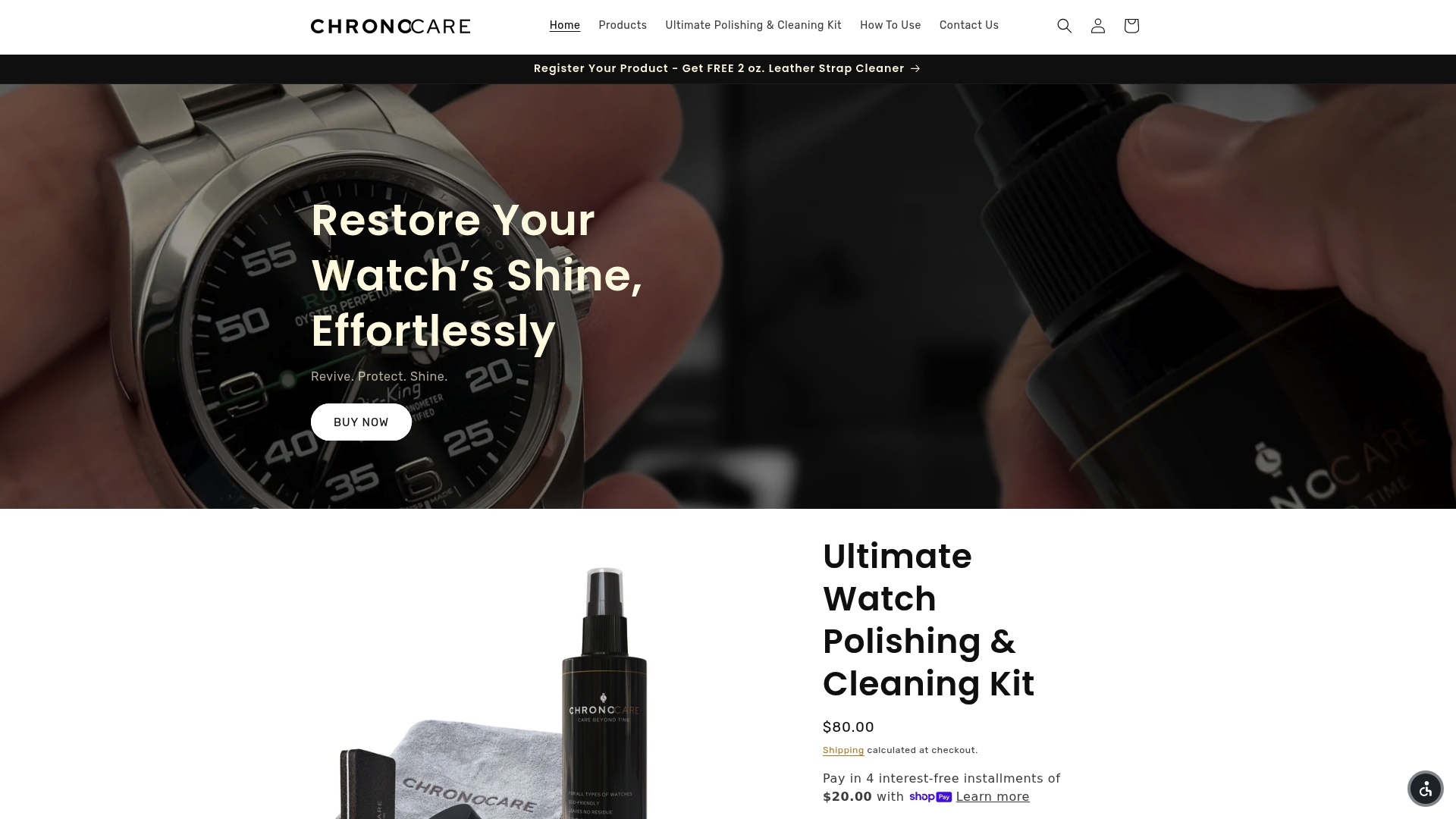
- A cleaning solution for the initial wash step before any polishing begins.
- A polishing cream for solid metal surfaces with real oxidation.
- Soft applicators and a finishing cloth for the buffing stage.
Collectors managing multiple pieces, or anyone who wants pre-measured products instead of guessing at ratios, get the most out of a curated kit like this. If you only have one or two pieces and already own a cloth, the DIY workflows above will get you just as far. For a lighter, cleaning-focused option, the Ultimate Watch Cleaning Kit is worth a look too. Either way, start on the ChronoCare site to see which fits your collection.
Sources
- Jewelry Polishing Cloth vs. Ultrasonic Cleaner — SageStone
- White Gold vs. Silver | What’s the Difference? | GIA 4Cs
- Why does silver tarnish? | Sheffield Assay Office
FAQ
Will dish soap remove tarnish from silver?
Mild dish soap can lift oils and surface dirt, but it will not chemically reverse tarnish, since tarnish is a chemical reaction with sulfur compounds that soap doesn’t address. Repeated washing can also dull some finishes over time, so it’s best used as a pre-cleaning step before polishing rather than a tarnish remover on its own.
How many times can you use a polishing cloth?
A quality treated cloth typically holds up through months of regular use before the treated compound wears out. You’ll know it’s spent when rubbing stops producing shine and instead leaves dark smudges, at which point it’s time to replace it rather than keep working the same section.
What can you use instead of a polishing cloth?
Liquid silver cleaners and polishing creams work as alternatives for solid, unplated metal, though they involve chemical abrasives that need more careful handling. Ultrasonic and steam cleaners are useful for clearing trapped dirt from settings, but they do not remove chemical tarnish, so they work best as a complement to a cloth rather than a replacement for it.
Does a polishing cloth remove scratches?
A polishing cloth is designed to lift tarnish and light dirt, not to remove or blend scratches, since its abrasive level is intentionally mild to protect the metal surface. Fine surface scratches on solid metal are better addressed with a polishing cream or a professional finishing service, while deeper scratches usually need a jeweler’s attention.