

Watch Patina Explained: A Luxury Collector's Guide
Watch patina is defined as the natural, stable transformation of a watch’s original materials caused by decades of environmental exposure, wear, and time. This aging process affects dials, luminous compounds, metal cases, and bezels, producing color shifts and surface changes that collectors prize as marks of authenticity. Understanding watch patina separates informed buyers from those who overpay for damaged goods or unknowingly strip value from their pieces. The difference between a watch worth twice its retail price and one worth half often comes down to how its patina has aged and whether anyone has interfered with it.
What is watch patina and how does it form?
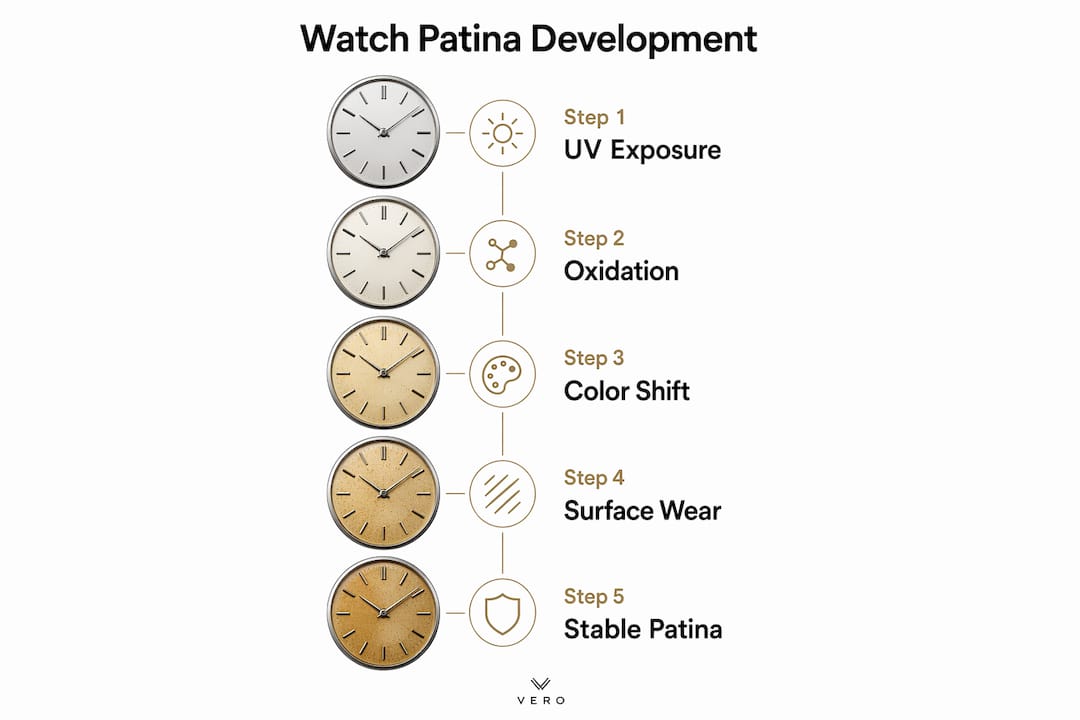
Watch patina is a chemical and physical state change within a watch’s original materials, not the introduction of foreign substances. That distinction matters enormously. A dial that has shifted from white to cream over 40 years has undergone patina. A dial with water stains from a leaky gasket has suffered damage.
How dials develop patina
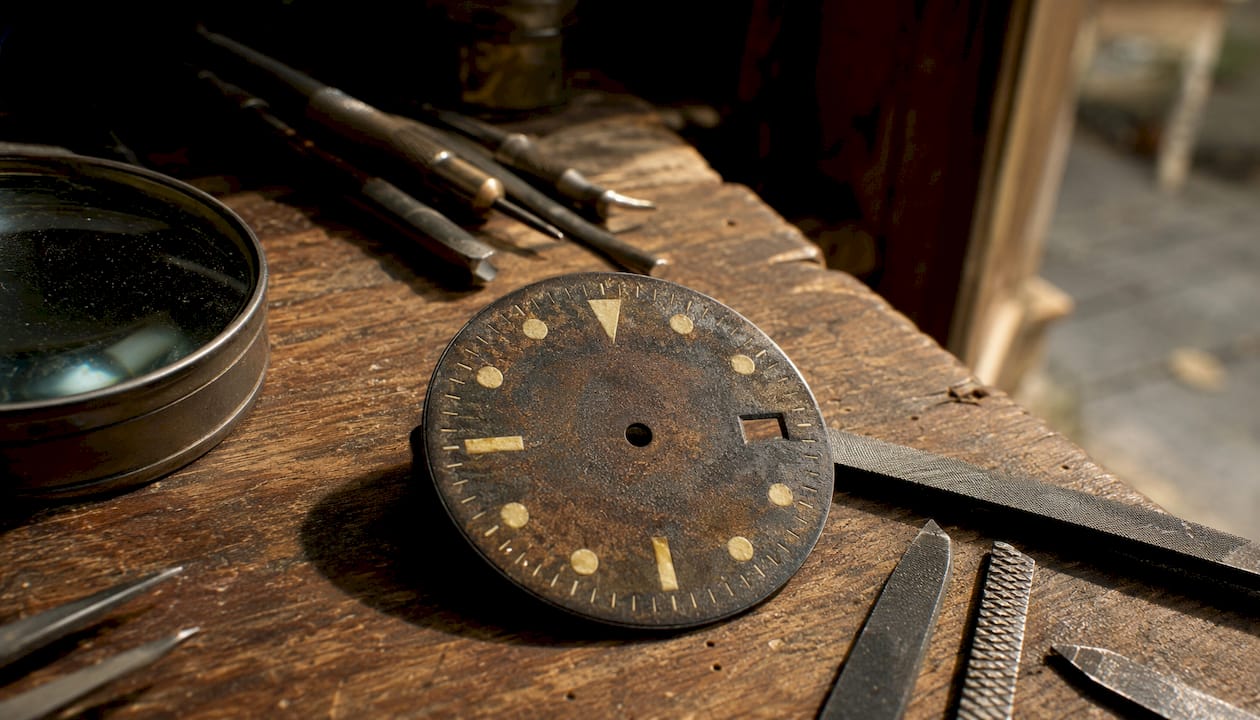
Dial lacquers and paints oxidize slowly when exposed to UV light, humidity, and ambient air. On vintage Rolex and Omega models from the 1960s and 1970s, this process produces the famous “tropical” effect, where a black or dark gray dial shifts to rich brown or chocolate tones. Tropical dials are among the most sought-after examples of watch aging effects in the collector market. The color change results from the breakdown of specific lacquer compounds, and no two dials age identically.
How luminous compounds change over time
Radium and tritium lume, used in vintage watches before safer compounds replaced them, yellow and cream with age. That warm, ivory glow on an old Submariner or Speedmaster is not a defect. It is a chemical signature of genuine age. Modern Super-LumiNova does not age the same way, which is one reason collectors can quickly spot a redial: the lume looks too fresh.
How cases, bezels, and straps age
Metal cases develop micro-scratches and softened edges from daily contact. Aluminum bezels on vintage watches fade and ghost, producing the “ghost bezel” look that commands premiums. Ceramic bezels, by contrast, resist color change entirely. Leather straps develop creases, darkening, and surface texture changes that reflect years of wrist contact and sweat exposure.
Pro Tip: UV light accelerates dial patina faster than almost any other factor. Store vintage watches away from direct sunlight, even inside display cases with glass fronts that transmit UV.
| Component | Primary aging mechanism | Typical timeline |
|---|---|---|
| Lacquered dial | UV oxidation, humidity | 20–40 years |
| Tritium lume | Radioactive decay, oxidation | 10–30 years |
| Aluminum bezel | UV fading, surface oxidation | 15–25 years |
| Steel case | Micro-abrasion, edge softening | 5–20 years |
| Leather strap | Sweat, oils, flexing | 2–10 years |
What is the difference between desirable patina and damage?
Patina is a state change within original materials. Damage involves foreign intrusion or irreversible destruction of those materials. The line between them is real, even when sellers blur it with flattering language.
Desirable patina shows these characteristics:
- Even, gradual color shifts across the dial surface
- Stable, dry lume that has yellowed uniformly
- Consistent fading on bezels without pitting or flaking
- Softened case edges from natural wear, not grinding
- A harmonious aged appearance across all components
Damage looks different. Moisture stains leave irregular tide marks on dials. Mold produces fuzzy or spotty discoloration. Corrosion pits metal surfaces. Uneven spotting on a dial almost always signals water intrusion rather than natural aging. Moisture intrusion is the fastest cause of irreversible damage to vintage watches, turning what could have been attractive patina into mold and corrosion that destroys value.
Over-polishing is the other major threat. A watchmaker who buffs a case to a mirror shine removes the micro-scratches and edge softening that prove genuine age. Improper polishing reduces patina and collector value in ways that cannot be undone. A polished vintage Rolex Submariner can lose a significant portion of its market value compared to an unpolished example in the same condition.
Pro Tip: Use a 10x loupe to inspect dial surfaces before buying any vintage watch. Genuine patina shows consistent surface texture. Fresh paint, mold, or refinishing each leave distinct visual signatures under magnification.
The market uses buzzwords that sometimes disguise defects. “Honest wear” and “character” are legitimate terms, but sellers occasionally apply them to moisture damage or corrosion. Inspect every watch in person or request high-resolution macro photographs before committing to a purchase.
Is watch patina valuable, and what drives collector premiums?
Patina serves as a visible record of a watch’s unique history and strongly influences market value through originality and authenticity. Collectors pay premiums for stable, attractive patina that reflects genuine wear over factory-new appearance. That premium exists because patina cannot be faked convincingly and cannot be recreated once removed.
The most valuable patina types include:
- Tropical dials: Black or gray dials that have shifted to brown, chocolate, or cognac tones. These command the highest premiums in the vintage Rolex and Omega markets.
- Creamy lume: Uniformly yellowed tritium or radium plots and hands that glow warmly and age consistently across all indices.
- Ghost bezels: Aluminum inserts so faded they appear nearly colorless, prized on vintage dive watches.
- Gilt dials: Early 1960s dials with gold printing that develops a warm, aged luster distinct from later matte finishes.
Patina is the one thing a factory cannot replicate and a restorer cannot replace. A watch with original, attractive patina carries proof of its own history on its face. That proof is exactly what the vintage market pays for. Collectors who understand this buy watches that appreciate. Those who do not end up with polished cases and refinished dials that look new but are worth far less.
Artificial patina acceleration, achieved through chemical treatments or UV lamps, does exist. Experienced collectors and auction specialists identify it quickly. Artificially aged watches sell at a discount once identified, and the reputational damage to sellers is lasting.
How to preserve watch patina: best practices for collectors
Preserving patina means protecting original surfaces from the interventions that erase them. The goal is not to freeze a watch in time but to prevent avoidable damage while allowing natural aging to continue.
- Limit cosmetic servicing. Service mechanical watches every 5–10 years for movement health, but restrict the work to the movement itself. Never authorize dial cleaning, case polishing, or bezel refinishing.
- Communicate clearly with your watchmaker. Explicitly request no dial refinishing or case polishing before any service. Ask for all replaced or retired parts to be returned. This protects provenance and authenticity.
- Control storage conditions. Avoid prolonged UV exposure and fingerprints on vintage dials. Use humidity-controlled watch rolls or boxes. Skin oils and acids alter finishes over time, so handle vintage pieces with cotton gloves or a soft cloth.
- Keep vintage watches away from water. Vintage watch water resistance deteriorates with age, making immersion risky regardless of original ratings. Even a splash can compromise a degraded gasket and introduce moisture that causes irreversible dial damage.
- Wear your watch thoughtfully. Regular wear contributes to natural case aging and lume development, which is desirable. Avoid contact sports, chemical exposure, and environments with extreme humidity or temperature swings.
Pro Tip: When storing multiple vintage watches, keep them in individual compartments or pouches. Metal-on-metal contact creates scratches that look nothing like natural wear patina under a loupe.
For collectors who want to restore a pre-owned watch’s appearance without harming original surfaces, the approach requires products specifically formulated for delicate finishes rather than general-purpose cleaners.
Key Takeaways
Watch patina is the single most important factor separating a vintage watch with strong collector value from one that has been diminished by polishing, refinishing, or moisture damage.
| Point | Details |
|---|---|
| Patina is a state change, not damage | Genuine patina results from original materials aging naturally, not from foreign intrusion or corrosion. |
| Material type determines aging rate | Aluminum bezels ghost and fade; ceramic bezels resist change; lacquered dials shift color over 20–40 years. |
| Over-polishing destroys value | Case polishing and dial refinishing erase patina permanently and reduce collector premiums significantly. |
| Inspection tools matter | A 10x loupe reveals genuine patina versus refinishing, mold, or moisture damage before purchase. |
| Storage prevents avoidable loss | Humidity control, UV protection, and cotton-glove handling preserve patina without stopping natural aging. |
Why I think most collectors misunderstand patina
Most new collectors treat patina as a bonus feature. It is not. It is the primary evidence that a vintage watch is what the seller claims it is. A 1968 Rolex Submariner with original tropical dial and creamy lume is not just prettier than a polished example. It is a fundamentally different object from an authenticity standpoint.
The misconception I see most often is the belief that a watch needs to look “clean” to be valuable. That instinct comes from how we treat everyday objects. Watches are different. The micro-scratches on a steel case, the softened bezel edges, the yellowed lume plots: these are not flaws. They are the watch’s biography written in metal and lacquer.
I also warn against the opposite error. Chasing patina so aggressively that collectors ignore mechanical condition is a mistake. A watch with a stunning tropical dial and a movement that hasn’t been serviced in 30 years is a liability. Balance matters. Preserve the surface. Maintain the movement. Those two goals are not in conflict if you choose the right watchmaker and give clear instructions before every service.
New collectors should resist the urge to polish anything. When in doubt, leave it alone. Natural aging is patient. Polishing is permanent.
— Raymond Jenkins
Caring for your watch without compromising its character
Collectors who want to maintain their watches between services need products that clean gently without stripping original finishes or altering the aging process that makes vintage pieces valuable.
ChronoCare’s luxury watch cleaning kit is formulated specifically for high-value timepieces, using gentle compounds that remove surface grime without affecting lacquered dials, aged lume, or case finishing. For collectors who also want to address light surface marks on metal, the Ultimate Watch Polishing & Cleaning Kit provides controlled, targeted care that protects original surfaces. Both kits are formulated in the US and designed for collectors who treat maintenance as part of long-term value preservation, not a cosmetic shortcut.
FAQ
What is watch patina in simple terms?
Watch patina is the natural color change and surface aging that occurs on a watch’s original materials over decades of exposure to light, air, and wear. It is considered desirable by collectors because it proves authenticity and reflects a watch’s genuine history.
How long does it take for watch patina to develop?
Patina development varies by material. Lacquered dials typically show visible color shifts after 20–40 years, tritium lume yellows within 10–30 years, and aluminum bezels begin fading within 15–25 years of regular use.
Does watch patina increase value?
Attractive, stable patina increases the value of vintage watches by confirming originality and authenticity. Collectors pay premiums for tropical dials, creamy lume, and ghost bezels precisely because these features cannot be replicated or restored once removed.
How do I tell patina from damage on a vintage watch?
Genuine patina shows even, stable color changes across original surfaces. Damage appears as irregular moisture stains, pitting, mold spotting, or corrosion. A 10x loupe helps distinguish authentic aged surfaces from refinishing or water intrusion under magnification.
Should I clean a vintage watch with patina?
Clean only with products formulated for delicate watch surfaces, and avoid any chemical that contacts the dial directly. Never authorize case polishing or dial refinishing during service, as these interventions permanently erase patina and reduce collector value.