

Watch Enthusiasts: Polish Brushed Titanium Watches in 30–60 Minutes
Yes, you can polish a titanium watch at home, but only under specific conditions. Light surface scratches on brushed, uncoated titanium respond well to simple hand tools and a careful technique. Polished or coated surfaces, like PVD or DLC finishes, carry much higher risk, and deep gouges are a job for a watchmaker. Run the quick checklist below before you touch anything abrasive to your case.
TL;DR:
- Light surface scratches on brushed titanium can often be polished out with Scotchbrite pads and simple tools, but coated or deep gouges require professional help.
- Confirm whether your titanium surface is uncoated, polished, or coated before attempting repairs, as coatings are highly vulnerable to improper abrasive treatment.
- Use gentle cleaning methods with soap and soft brushes for initial care, avoiding household abrasives like baking soda or bleach that can damage thin oxide layers.
- For brushing repairs, work along the grain with fine Scotchbrite or progressively finer sandpaper, and always blend outward from the scratch for better results.
- Avoid abrasive polishing on coated or deep scratches, and know when to stop to prevent additional damage or coating breach, opting for professional service if needed.
Table of Contents
- Which finish and scratch depth do you have?
- How do you refresh a brushed titanium finish?
- What about polished or mirror-finish titanium?
- What tools and products actually work on titanium?
- When should you stop and step away from the watch?
- When does a professional make more sense than DIY?
- How does titanium polishing differ from steel, and who’s writing this?
- How I approach a typical brushed-finish repair
- Which ChronoCare products match each step above
- Sources
Which finish and scratch depth do you have?
Before you pick up a Scotchbrite pad or a tube of polish, figure out exactly what you’re working with. Getting this wrong is the single most common way DIY attempts go sideways.
Start by looking at the surface under direct light. Brushed titanium has fine, parallel lines running in one direction, usually visible as a soft satin texture. Polished titanium reflects like a mirror with no visible grain. Coated surfaces, PVD or DLC, often look unusually dark (black, deep gray, or bronze) and tend to show wear at high contact points like lug edges or bracelet links, where the base metal peeks through in a different color. That color mismatch at the edges is your biggest clue: if the metal underneath a worn spot looks lighter or different than the surrounding finish, you’ve got a coating.
Next, run the nail-catch test. Drag a fingernail gently across the scratch:
- Nail glides over smoothly, scratch is barely visible in normal light — this is a surface-level mark. Clean the watch first; it may look better than you think once grime is gone.
- Nail catches slightly but doesn’t dig in — a light Scotchbrite blend along the grain will likely handle it.
- Nail catches firmly or the scratch is visibly deep — this calls for progressive sanding, and if the finish is coated, stop and go to a professional.
- Multiple deep scratches, gouges, or a coated surface with any of the above — skip DIY entirely.
For a first pass on any titanium watch, use only a microfiber cloth and mild dish soap with a soft-bristle brush for cleaning a titanium bracelet safely. Skip toothpaste, baking soda, and bleach. These household staples are common advice online, but titanium’s surface oxide layer is thinner and more reactive than people expect, and coarse household abrasives can dull or streak it in ways that are hard to reverse.
How do you refresh a brushed titanium finish?
Brushed finishes are the most forgiving surface on a titanium watch, largely because the grain pattern already hides minor imperfections. This is the workflow ChronoCare recommends for light to moderate scratches on uncoated brushed cases and bracelets.
- Prep (5 to 10 minutes). Remove the bracelet if it’s practical to do so with a spring-bar tool, so you’re not fighting curved surfaces. Clean the case with warm water, mild soap, and a soft brush to strip away grit that would otherwise scratch the surface further during buffing. Dry completely with a microfiber cloth.
- Blend the scratch (10 to 20 minutes). Use a fine gray or maroon Scotchbrite pad and work strictly along the existing grain direction, never across it. Apply light, even pressure and check your progress every 10 to 15 strokes under a bright light.
- Escalate if needed (15 to 30 minutes). If the mark persists, move to wet sandpaper in a progression: 600 grit, then 800, then 1000 or finer, always following the grain. Follow with the Scotchbrite pad again to re-establish a uniform satin texture across the whole panel, not just the scratched spot.
- Finish and protect (10 minutes). Clean off all residue, apply a small amount of metal polish only where needed, and buff with a fresh microfiber cloth. A restoration guide for brushed finishes covers optional protective films or nano-coatings that add a buffer against future marks.
Pro Tip: Work in small sections and blend outward past the scratch itself. Titanium restorers who specialize in this warn that matching a new patch of brushing to old, worn brushing is much harder than the original scratch was, so blending a wider area beats spot-treating.
Total time for a single scratch on a brushed case: usually 30 to 60 minutes.
What about polished or mirror-finish titanium?
Polished titanium is a different animal entirely, and it’s where most DIY attempts go wrong. A mirror surface reflects every imperfection, which means a fix that looks perfect up close can create a visible “hot spot” or dull patch under normal light once you step back.
First, confirm the surface is uncoated. Check the watch’s product listing or manual for any mention of PVD, DLC, or ion-plating, and inspect high-wear points for color mismatches, as covered above. Coated polished surfaces are the highest-risk category on this entire list.
If the titanium is uncoated and the scratch is genuinely light, a fine polishing compound like Autosol or Flitz applied sparingly can work. Restorers who do this regularly caution that polishing a case to a mirror finish is achievable but difficult, because polishing tends to make remaining scratches more visible by contrast, not less. The fix:
- Apply a small amount of compound to a soft cloth, not directly to the case.
- Work in small circular motions over the scratch, then blend outward in wider circles across the entire panel.
- Stop and reassess after every 20 to 30 seconds of buffing rather than working continuously.
- Never use a rotary tool on a polished surface unless you have real experience with metal finishing.
If the surface is coated or the scratch is deep, do not attempt abrasive polishing — this is where expert advice on caring for your fine jewelry can guide your next steps. You risk stripping the coating in one spot, which leaves a permanent color mismatch, or creating a hot spot that catches light differently than the rest of the case forever. That’s a professional refinishing or recoating job. Once you’ve handled a light polish successfully, a nano-coating or protective spray helps prevent the next scratch, and going forward, stick to soft cloths and non-abrasive cleaners.
What tools and products actually work on titanium?
You don’t need a workshop full of gear. A basic kit handles most jobs, and a second tier of products covers refinishing when scratches go past surface level.
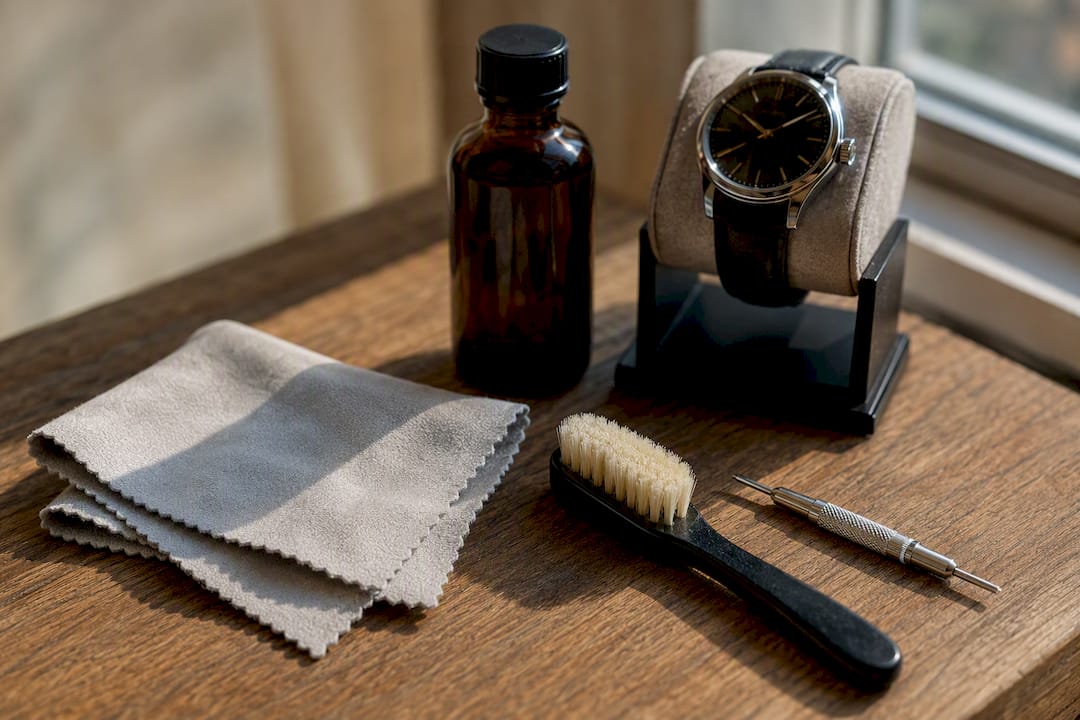
Core cleaning kit: microfiber cloths, mild dish soap, a soft-bristle brush, a spring-bar tool for bracelet removal, masking tape to protect adjacent surfaces, and something to hold the watch steady while you work.
Refinishing supplies: fine Scotchbrite pads in maroon or gray, progressive wet/dry sandpaper starting at 600 grit, a metal polish like Autosol or Flitz, and Cape Cod polishing cloths for light swirl removal on smaller areas.
Targeted tools: fiberglass scratch pens are popular among hobbyists for spot-treating brushed titanium, and forum communities report good results with real caveats: the fiberglass sheds fibers that irritate skin and lungs, so gloves and a respirator mask aren’t optional. Rotary buffing wheels exist too, but they remove material fast and are better left to people who’ve used them before.
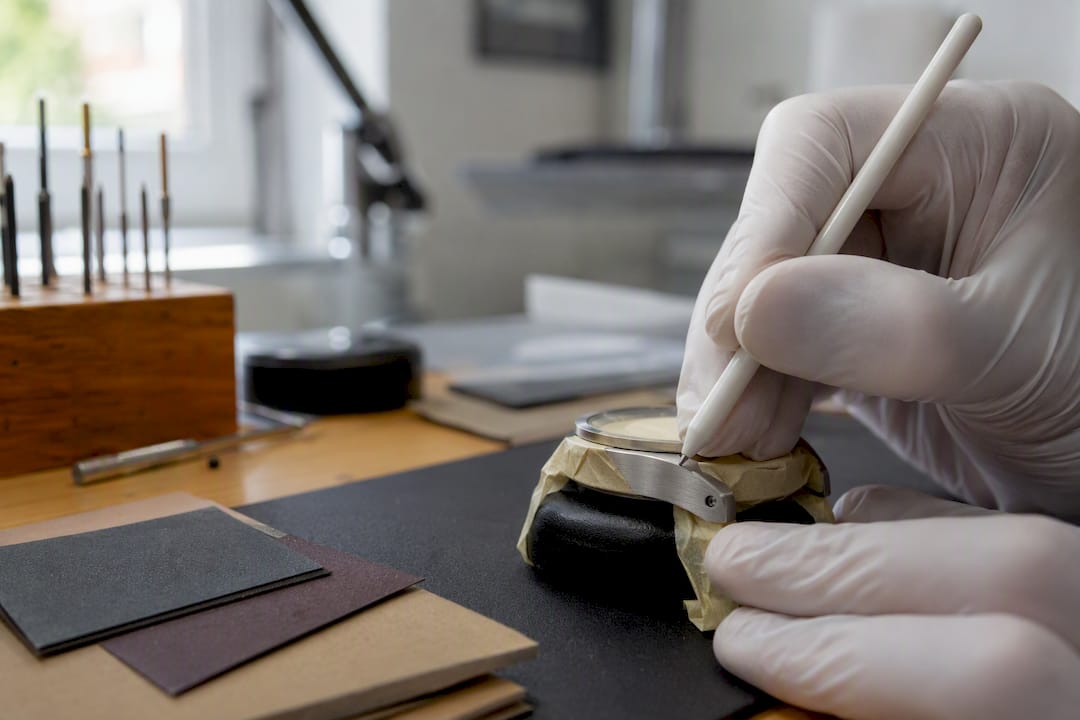
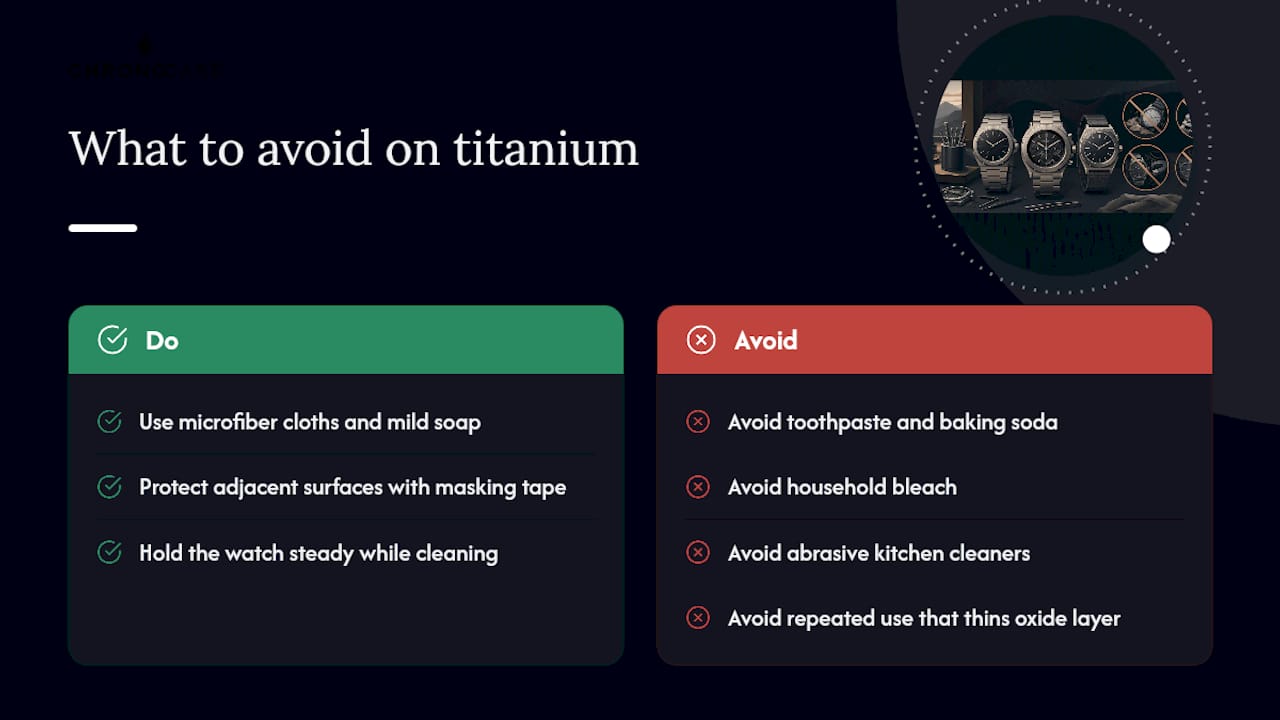
What to avoid entirely: toothpaste, baking soda, and household bleach or abrasive kitchen cleaners. These show up constantly in casual advice, but repeated use on titanium’s thin oxide layer can thin the metal over time rather than restore it, especially near lugs and case edges where the material is already at its thinnest.
When should you stop and step away from the watch?
Some signs mean the job has moved past what a kitchen-table repair should handle.
Watch for color mismatches appearing where none existed before. That’s a coating breach, and it doesn’t grow back with more polishing. Watch for uneven texture or a “hot spot” where one section reflects light differently than the surrounding finish. Both are signs you’ve gone from removing a scratch to creating a new, permanent flaw.
- Stop immediately if you see a color change at the edge of your work area.
- Stop if metal feels noticeably thinner or the case edge looks rounded compared to before.
- Wear a respirator mask and work in a ventilated space any time you use a fiberglass scratch pen, since airborne fibers can embed in skin and clothing and cause irritation well after the job is done.
- Clean your workspace fully afterward and dispose of used pads separately from household trash.
- If what started as a light touch-up now involves multiple failed attempts or visible new damage, hand the watch to a professional rather than continuing to experiment.
When does a professional make more sense than DIY?
Deep gouges, mixed finishes across a single case, coating damage, or anything involving the crown or lugs are all jobs for a watchmaker or jewelry professional, not a home kit.
A pro visit typically covers rebrushing to restore the original grain pattern, full polishing on complex case geometry, an ultrasonic clean to lift grime from crevices a toothbrush can’t reach, and recoating for PVD or DLC surfaces that have worn through. Expect a light exterior refinishing to run on the lower end of a repair estimate, while a full case and bracelet refurbishment with recoating sits considerably higher. Always request a written estimate before handing anything over, since coating jobs in particular vary a lot by brand and complexity.
- Ask whether they’ve worked on titanium specifically, since technique differs from steel.
- Ask for before-and-after photos from prior titanium jobs.
- Confirm turnaround time in writing, especially if recoating is involved.
Beyond the case exterior, professional watchmakers recommend a full mechanical service every two to five years for titanium dive watches. Surface polishing addresses the outside of the watch only. It doesn’t substitute for that internal service interval.
How does titanium polishing differ from steel, and who’s writing this?
Titanium is softer and more reactive at the surface than stainless steel, which is why steel-era habits like toothpaste polishing damage titanium faster than they’d damage a steel case. This guide was written by Raymond Jenkins for ChronoCare, which formulates polishing creams and cleaning kits specifically calibrated for titanium’s thinner oxide layer. For deeper procedures, see ChronoCare’s guides on cleaning titanium without damage and general collector-level watch cleaning, both covered under ChronoCare’s standard product guarantee.
How I approach a typical brushed-finish repair
My own sequence rarely changes: clean, test with a nail-catch check, blend with Scotchbrite along the grain, then finish with a light polish and a protective layer. Most single scratches on brushed titanium wrap up in under an hour with a result that holds up under normal light.
— Raymond Jenkins
Which ChronoCare products match each step above
If you’d rather skip assembling separate tools, ChronoCare builds kits around exactly the steps outlined here.
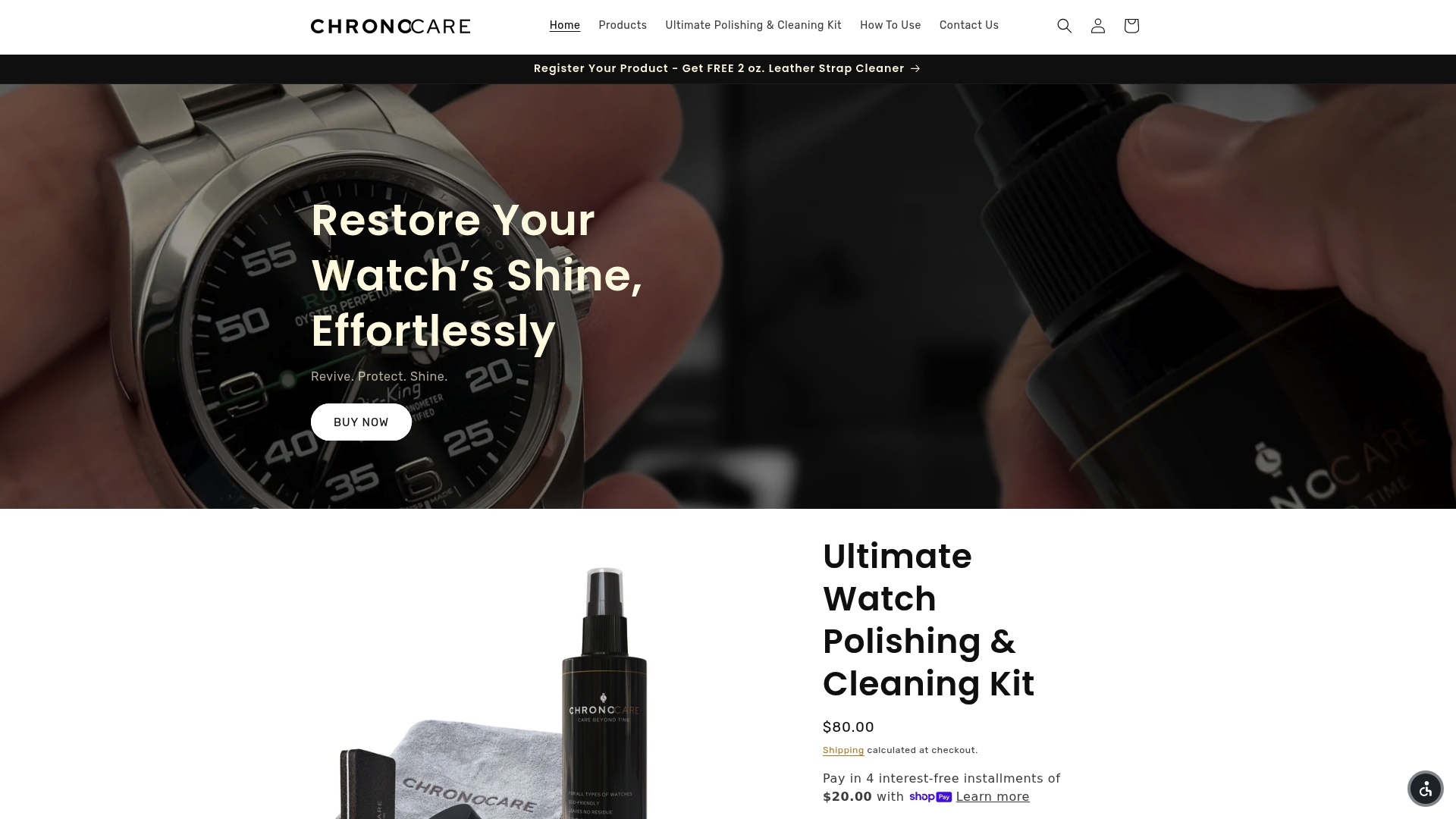
For the brushed-finish workflow in this guide, the Ultimate Watch Polishing & Cleaning Kit bundles the cleaning and blending steps into one kit, so you’re not hunting down Scotchbrite pads and cloths separately. For light swirl marks on uncoated polished titanium, the Watch Polishing Cream is formulated to remove surface marks without the aggressive cut of generic metal polish. And if all you need is the prep stage, the Ultimate Watch Cleaning Kit covers the soap, brush, and cloth routine that should happen before any refinishing step. One reminder worth repeating from earlier: if your watch has a PVD or DLC coating, or the scratch is deep enough to catch a fingernail firmly, skip the polishing cream and get a professional opinion first. Pick the kit that matches your finish, and start with the cleaning step regardless of what comes next.
Sources
- Care and maintenance of titanium dive watches — Spinnaker
- DIY Titanium scratch removal | WatchUSeek forum
- How to remove scratches from watch bezel — The Pristine Vault
- How to clean a titanium watch bracelet — The Chic Tribe