

Collectors: Preserve Factory Geometry When Polishing Platinum Watches
Light surface scratches on a platinum watch can usually be burnished out at home with the right dedicated tools, but deep gouges, factory finishes, and gem-set cases belong with an authorized service center. Clean the case thoroughly and inspect it under a loupe before you touch anything abrasive. That inspection tells you whether you’re looking at a five-minute job or one that needs a bench jeweler.
TL;DR:
- Minor scratches and surface haze on platinum watches can often be burnished out at home with dedicated tools, but deep gouges or factory finishes require professional service.
- Use platinum-specific burnishing tools, compounds, and a clean workspace, avoiding household abrasives like toothpaste or baking soda that can dull the finish.
- Home polishing should follow a step-by-step process of thorough cleaning, careful inspection, gradual grit progression, and finishing with a fine compound, stopping if scratches remain too deep.
- Always mask gemstone settings and remove bracelets when polishing gem-set or intricate cases to prevent damage or distortion.
- Deep dents, structural repairs, or factory finishes should be handled by authorized service centers to preserve the watch’s value and original geometry.
Table of Contents
- Should You Polish Your Platinum Watch Yourself or Send It to a Pro?
- Tools, Compounds, and Workspace: What You Need for Safe Platinum Polishing
- How to Burnish and Finish a Platinum Watch Case Safely
- Gem-Set and Bracelet-Specific Precautions
- Risks That Reduce Value: Rounded Edges, Contamination, and Lost Factory Finish
- When to Send the Watch to the Manufacturer or an Authorized Service Center
- Maintenance Schedule and Preventive Care for Platinum Watches
- ChronoCare’s Approach to Platinum Watch Care
- Patina or Mirror Finish: A Collector’s Trade-Off
- Safe At-Home Products for This Workflow
- Sources
- FAQ
Should You Polish Your Platinum Watch Yourself or Send It to a Pro?
The answer hinges on three things: how deep the damage runs, how sharp the case’s original edges still are, and how much the piece is worth to you as a collectible. Platinum doesn’t behave like steel or gold when it scratches. The metal displaces rather than disappears, which is why burnishing rather than aggressive abrasion is the preferred bench technique for minor marks.
Here’s a rough way to sort your case:
- Hairline scratches and light haze from daily wear: safe territory for careful at-home burnishing and cleaning.
- Scratches you can feel with a fingernail or see without magnification: borderline. Inspect closely before deciding.
- Deep gouges, dents, or bracelet link wear that’s rounded the edges: send it out. You risk making it worse.
- Gem-set cases, factory-applied satin or sunburst finishes, or anything with collectible provenance: always professional service.
- Anything under active manufacturer warranty: check with the brand first, since unauthorized work can void coverage.
Cost expectations vary widely depending on the brand and the extent of the work, but a full professional polish and refinish on a platinum piece typically costs several hundred dollars or more, sometimes far more for pieces requiring case replating or bezel restoration. Turnaround at an authorized center often stretches several weeks, especially if the case needs to travel to a regional service hub. DIY burnishing, by contrast, takes an evening and costs you the price of the right compound. If you’re unsure which category your watch falls into, our guide on removing deep scratches from a watch case walks through the visual cues that separate a home job from a bench job.
Tools, Compounds, and Workspace: What You Need for Safe Platinum Polishing
Platinum punishes shortcuts. Use tools designed for gold or steel, and you risk embedding foreign metal particles into the platinum’s surface, which shows up later as yellow discoloration that no amount of cleaning will fix. Dedicated equipment isn’t optional here.
What belongs on your bench:
- A tungsten or steel burnishing tool, reserved exclusively for platinum work.
- Muslin buffs kept separate from any wheel that has touched gold, silver, or brass.
- A progressive set of platinum-specific polishing compounds, moving from coarser to finer grit.
- A soft-bristle brush and mild soap for pre-polish cleaning.
- Magnification (a 10x loupe at minimum) to check your progress between steps.
Bench jewelers commonly move through a grit progression, something like 800, then 1500, then 4000, then finishing around 8000, cleaning the piece between each stage to avoid dragging coarser particles into a finer pass. Stuller’s platinum polishing guide pairs specific compound types with specific buff media for exactly this reason. Skip the household stuff entirely. Toothpaste and baking soda are abrasive in unpredictable ways and can leave a dull, uneven finish rather than the mirror or satin look you started with.
Pro Tip: Keep one buff wheel that never touches anything but platinum. Even a single pass on a gold ring can leave enough residue behind to cause staining weeks later.
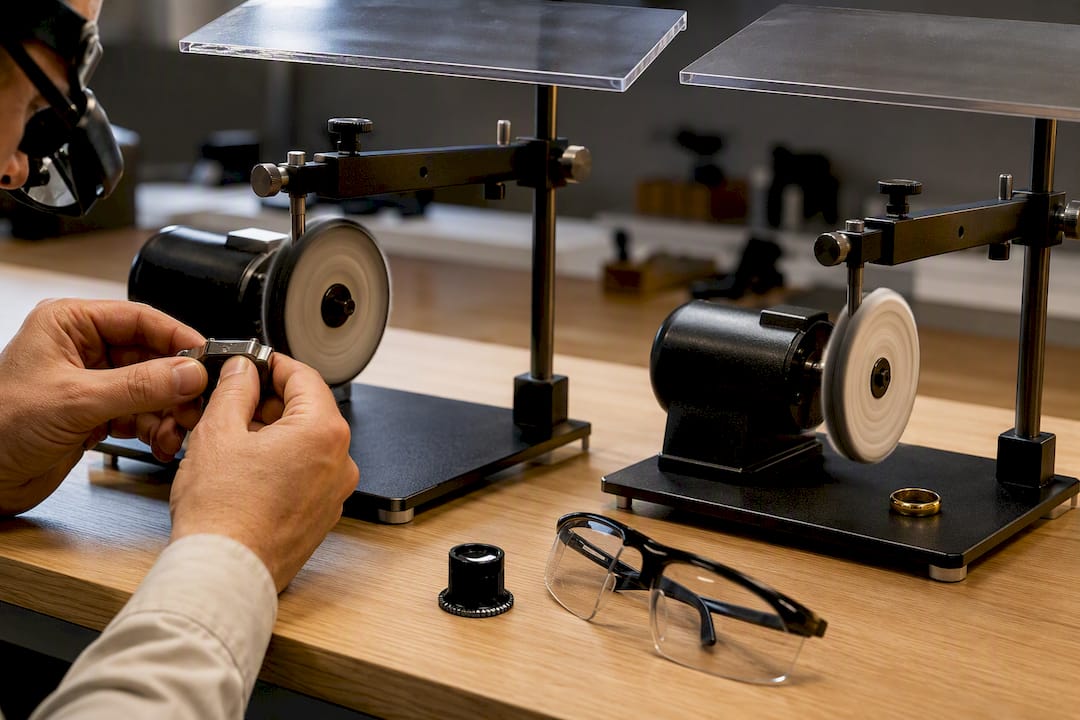
Work in a clean, dust-free space, and wear eye protection if you’re running a motorized buff. Our breakdown of watch polishing compounds covers the grit-to-finish relationship in more detail if you want to match compound choice to your specific case finish.
How to Burnish and Finish a Platinum Watch Case Safely
This is the conservative workflow bench jewelers actually use for light restoration, adapted for a careful home setup. Follow it in order. Skipping the cleaning steps between stages is the single most common reason home polishing jobs go wrong.
- Deep clean first. Wash the case with mild soap and warm water using a soft toothbrush, paying extra attention around any gem settings or bracelet links. This alone often removes 80 percent of what looks like “scratching” but is actually surface grime.
- Inspect under magnification. Dry the case completely and examine it with a loupe. Note exactly where the marks sit relative to the case edges and chamfers. This is also the moment to photograph the watch, so you have a clear “before” record if you later need to compare against a professional’s work.
- Burnish the affected area. Using light, even pressure, move the burnishing tool in the same direction as the original brushed or polished grain. Platinum’s metallurgy means the burnisher is displacing and compacting metal rather than removing it, and done correctly, it can slightly work-harden the surface, improving future scratch resistance.
- Move through the compound progression. Start with the coarsest compound your scratch depth actually requires. Don’t jump straight to a fine polish if you’re dealing with a visible line. Apply with a dedicated muslin buff at moderate speed. Heat buildup is your enemy here. If the case feels warm to the touch, you’re pressing too hard or running too fast.
- Clean thoroughly between every grit change. This step gets skipped constantly, and it’s the one that ruins finishes. GIA’s own finishing benchmarks stress washing or ultrasonic cleaning between abrasive stages, because leftover coarse grit contaminates the next, finer buff and introduces new micro-scratches you can’t see until it’s too late.
- Finish with the finest compound and a clean buff. Work toward the finish you want. Platinum takes a genuinely brilliant mirror shine, but a satin finish requires stopping at a coarser stage and running consistent, parallel strokes.
- Final inspection. Back under the loupe. Check that the polished area blends into the surrounding finish rather than sitting as an obvious flat spot. Compare against your earlier photo. If the chamfer edges near your work look softer or rounder than the rest of the case, stop. You’ve likely gone too far, and further home work will only make the geometry mismatch worse.
If, at any point in this sequence, you find the scratch is deeper than the polish removes after two or three careful passes, that’s your signal to stop entirely. Continuing to chase a deep mark with a home setup is how collectors end up needing a case replacement instead of a simple refinish.
Gem-Set and Bracelet-Specific Precautions
Anything with stones or articulated links changes the calculation. Prongs and adhesives don’t tolerate the same handling as a smooth case back, and bracelets have geometry that’s easy to distort if you’re not careful.
- Mask gemstone settings with tape or a protective compound before any buffing near prongs. A buff wheel can catch a prong edge and bend it in a fraction of a second.
- Remove the watch head from the bracelet when possible, and work on each separately. It’s slower, but it keeps a spinning buff away from stones entirely.
- Be cautious with ultrasonic cleaners on gem-set pieces. Certain stones, particularly those with fracture fills or organic gems like pearl and opal, don’t respond well to ultrasonic vibration and can loosen from their settings.
- Hand-finish bracelet links rather than tumbling them. Tumbling is efficient for bulk work, but it rounds sharp-edge link transitions that were cut into the metal at the factory, and that geometry doesn’t come back.
- Work link by link on a bracelet rather than buffing across multiple links at once, which tends to blur the transitions between them.
When in doubt on a gem-set piece, this is exactly the kind of job that belongs with a professional. The cost of a bent prong losing a stone dwarfs whatever you’d save doing it yourself.
Risks That Reduce Value: Rounded Edges, Contamination, and Lost Factory Finish
Over-buffing is the most common way home polishing backfires, and it’s largely invisible until you compare the case against its original lines. Collectors and forum communities consistently flag rounded chamfers and glazed buffs as the telltale signs of a rushed or amateur polish job.
- Rounded edges: repeated buffing softens the crisp transition between case surfaces, which appraisers and serious collectors notice immediately.
- Contamination staining: using a wheel that’s previously touched gold can leave platinum with a faint yellow cast that’s difficult to remove.
- Glazed or loaded buffs: a dirty wheel picks up debris and starts scraping rather than polishing, adding new fine scratches instead of removing old ones.
Pro Tip: Check a finished polish job by holding the case at an angle under a bright light. A properly preserved edge shows a distinct, even line where two surfaces meet. A rounded edge looks soft and blurred, and once that line is gone, it can’t be restored without material removal.
When to Send the Watch to the Manufacturer or an Authorized Service Center
Some jobs simply aren’t home projects, no matter how careful your technique.
- Deep gouges or dents that require actual material removal, not just surface burnishing.
- Restoring a factory satin, sunburst, or brushed finish that needs to match the original pattern exactly.
- Structural repairs, bezel replacement, or anything involving the case’s water resistance seals.
- High-value or collectible pieces where provenance and originality affect resale price.
Authorized centers carry proprietary compounds and dedicated platinum equipment that most independent shops don’t stock, and using them typically protects your warranty. Before you ship a watch out, ask the service center directly how they prevent cross-metal contamination between jobs. Their answer tells you a lot about how carefully they’ll handle your piece.
Maintenance Schedule and Preventive Care for Platinum Watches
Prevention beats restoration every time. Daily wearers should wipe the case with a microfiber cloth nightly and do a full soap-and-water clean weekly. Occasional wearers can stretch that to a cleaning every few weeks, plus a check before and after storage.
- Clean with mild soap, warm water, and a soft brush before reaching for any polish or compound.
- Reserve burnishing for visible marks, not as a routine step. Unnecessary buffing removes material you can’t put back.
- Store the watch in a soft-lined case away from other jewelry that could scratch it in transit.
- Remove the watch before activities involving abrasive surfaces, tools, or rock climbing gear.
ChronoCare’s Approach to Platinum Watch Care
The guides referenced in this article draw on bench-jeweler protocols and trade references rather than guesswork.
- The burnishing-first approach reflected here lines up with GIA’s finishing benchmarks and Ganoksin’s bench-jeweler guidance on platinum-specific technique.
- Contamination control recommendations follow the same dedicated-wheel principle detailed in Stuller’s platinum polishing reference.
- Craft-quality assessment matters here too. Understanding how craftsmanship is evaluated in luxury goods helps you judge whether a polishing job, home or professional, actually preserved the piece’s character.
Patina or Mirror Finish: A Collector’s Trade-Off
Some collectors chase a flawless mirror shine. Others let a platinum case develop a soft, worn patina that tells the story of years on the wrist. Neither is wrong, but a mirror finish demands more frequent upkeep, while patina rewards patience. The recommended position leans conservative: preserve original geometry first, polish second.
— Raymond Jenkins
Safe At-Home Products for This Workflow
For the light burnishing and cleaning work covered above, ChronoCare’s Ultimate Watch Polishing & Cleaning Kit gives you the dedicated tools and platinum-safe compound in one set, so you’re not piecing together mismatched supplies from different sources.
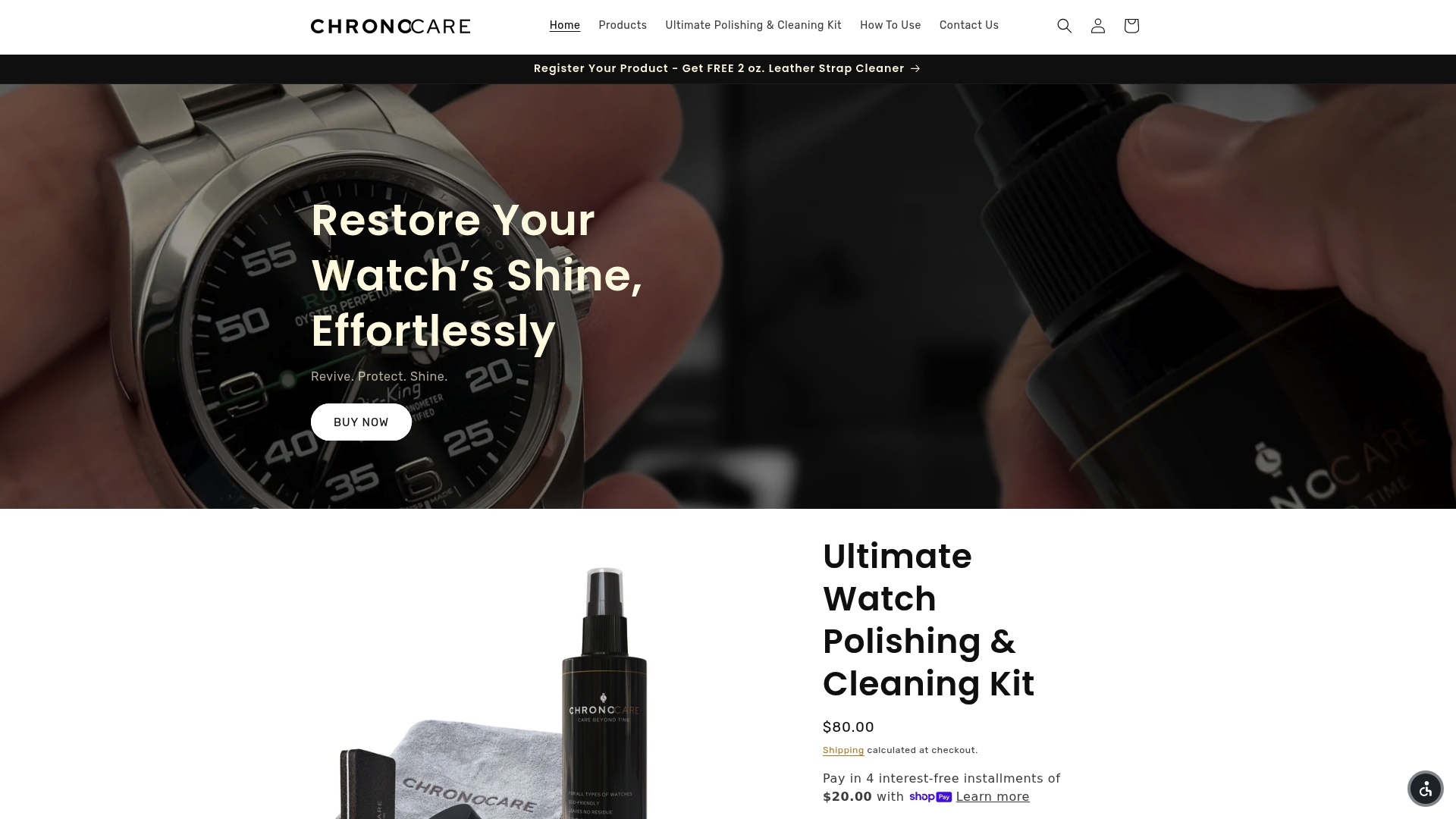
If your case just needs a routine clean rather than any polishing at all, the Ultimate Watch Cleaning Kit handles the soap-and-brush stage covered in the maintenance section above. For targeted work on a specific hairline scratch, the Watch Polishing Cream is formulated to remove light surface marks without the aggressive cut of a bench compound, which keeps you inside the conservative, edge-preserving approach this guide recommends. Reserve anything beyond light surface work, deep gouges, factory finish restoration, or gem-set cases for an authorized service center. Start with the polishing and cleaning kit product page to see what’s included before your next at-home maintenance session.
Sources
- Success in Polishing Platinum - Ganoksin
- Prefinish, polish & buff platinum — GIA quality assurance benchmark
- Your guide to platinum polishing - Stuller
- Watch care recommendations — Patek Philippe
FAQ
How do you get platinum shiny again?
Clean it with mild soap and warm water, then burnish light scratches with a dedicated platinum tool before moving through a progressive polishing compound. Deep scratches or dulled factory finishes need professional attention rather than home burnishing.
How much does a jeweler charge to polish a watch?
Prices vary widely by brand and damage extent, but a full professional polish on a platinum piece often starts in the low hundreds of dollars and climbs significantly for cases needing structural work or refinishing. Get a quote before committing, since authorized centers price based on the specific repair needed.
Does platinum turn yellow like white gold?
Platinum doesn’t naturally turn yellow the way white gold’s rhodium plating wears off, but it can develop a yellow cast from contamination if gold particles transfer onto it during polishing with a shared wheel. That’s why dedicated platinum-only tools matter so much.
Is polishing a watch a good idea?
Light, careful polishing to remove surface haze is generally safe and can restore shine without harming the piece, but repeated or aggressive polishing rounds case edges and reduces long-term value. The safest approach is minimal intervention: clean often, polish rarely, and send anything beyond light surface work to an authorized service center.