

How to Maintain Your Automatic Watch Movement in 2026
What are the core practices to maintain an automatic watch movement?
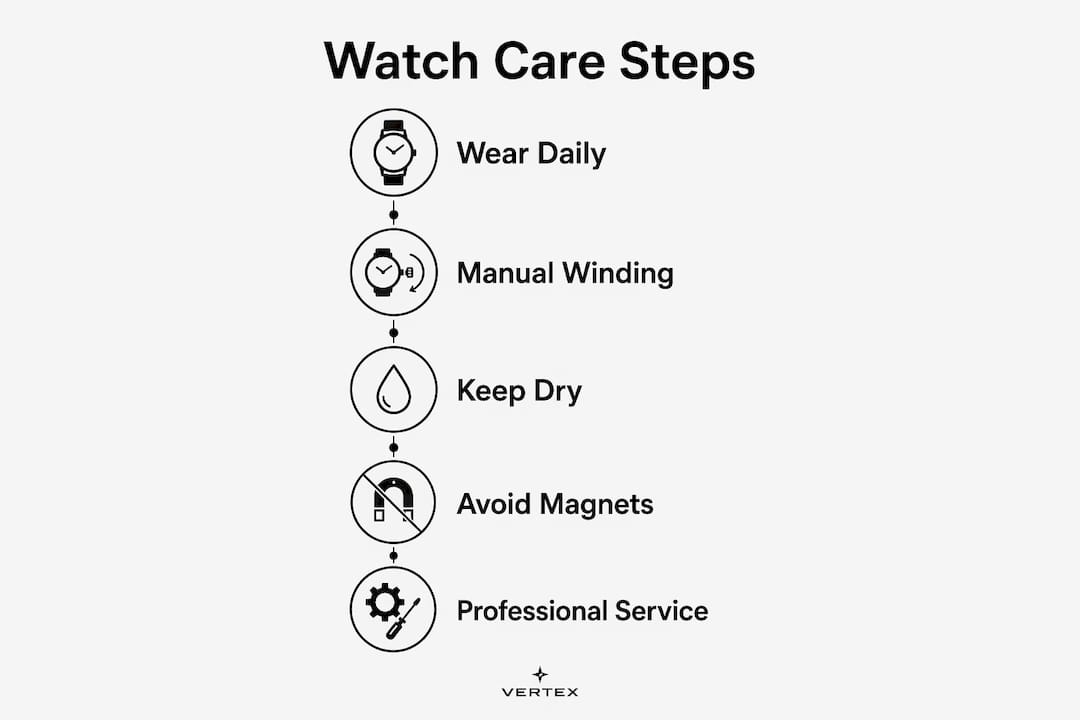
Keeping your automatic watch movement in top shape comes down to five habits: wear it regularly, wind it manually when it sits idle, protect it from magnets and temperature extremes, clean the exterior gently, and schedule professional servicing every few years. Skip any one of these and you are accelerating wear on components that cost hundreds of dollars to repair.
- Wear daily or use a winder. Daily wear keeps lubricants evenly distributed and the mainspring charged without any effort on your part.
- Wind manually after inactivity. If the watch has sat for more than a day or two, manual winding restores the power reserve reliably. Shaking the watch does not.
- Avoid magnetic fields and temperature extremes. Both degrade lubricants and can permanently affect accuracy.
- Store in a dry, stable environment. A watch box with individual compartments protects components from dust, moisture, and accidental knocks.
- Service every few years. Professional servicing cleans, relubes, and regulates the movement. Some luxury brands recommend longer intervals, but many manufacturers suggest more frequent care.
How should you handle and care for your watch every day?
Daily habits are where most watch damage actually happens, and most of it is avoidable. The best automatic watch care starts with a few consistent routines that take less than two minutes combined.
- Wear it for at least 8 hours. Eight hours of wear generates enough wrist motion to power the watch for 24–36 hours afterward.
- Wind off the wrist. Remove the watch before turning the crown. Winding on the wrist places uneven pressure on the stem and risks premature wear. Turn the crown 20–30 times clockwise until you feel slight resistance, then stop.
- Never set the date between 9 p.m. and 2 a.m. During this window, the date-change gears are already engaged in their automatic transition. Forcing a manual adjustment can shear the teeth.
- Wipe the case and bracelet each evening. A soft microfiber cloth removes sweat and skin oils before they work into gaskets or corrode metal surfaces.
- Keep the crown fully pushed in. An unseated crown eliminates water resistance entirely, even on watches rated to 100 meters.
- Use a watch winder for complex complications. Watch winders are most useful for collectors rotating multiple pieces with perpetual calendars or moon phases, where resetting after a stop is genuinely tedious.
Pro Tip: If your watch stopped while the hands were between 9 p.m. and 2 a.m., pull the crown out fully and advance the hands past 2 a.m. before setting the date. It takes 30 seconds and saves an expensive gear repair.
What does professional watch movement servicing actually involve?
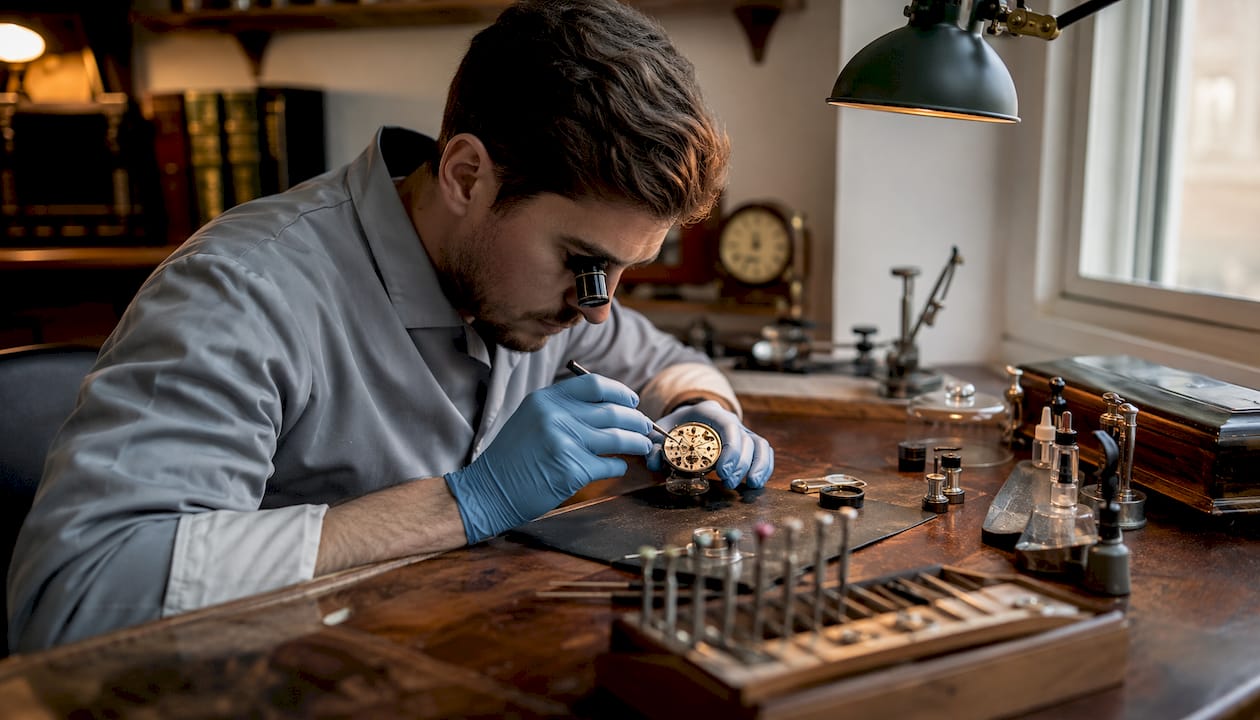
Professional servicing is the one part of watch movement maintenance you cannot replicate at home, and skipping it is the most common reason a perfectly good watch becomes an expensive repair job.
The general interval is every 3–5 years, though luxury brands vary. Longines targets 3–5 years; Patek Philippe recommends 8–10 years for their movements. Always check your manufacturer’s guidance rather than assuming a universal schedule applies.
A full service includes:
- Complete disassembly of the movement, case, and bracelet.
- Ultrasonic cleaning of every component, removing microscopic debris that no cloth can reach. This step alone is why professional ultrasonic cleaning reduces friction so effectively.
- Replacement of worn parts, including gaskets, springs, and any damaged jewels.
- Fresh lubrication applied in precise amounts to each friction point. A watchmaker may use up to a dozen different oils in a single service.
- Regulation and water resistance testing before the watch leaves the bench.
The signs that your watch needs service before the scheduled interval are worth knowing: time drift, rattling noises, difficulty winding, or a power reserve that runs out faster than it used to. Catching these early prevents a simple service from turning into a parts replacement.
How do you protect your watch from magnets, shocks, and temperature damage?
Environmental threats are responsible for a surprising share of accuracy problems, and most owners do not connect the symptom to the cause. A watch that suddenly gains 30 or more seconds per day after sitting near a laptop overnight has almost certainly been magnetized.
- Keep the watch away from strong magnetic sources. Speakers, phone charging pads, laptop keyboards, and magnetic clasps on bags all generate fields strong enough to magnetize the hairspring. Magnetization causes the hairspring coils to stick together, shortening oscillation and making the watch run fast. A watchmaker can demagnetize it in minutes, but prevention is easier.
- Avoid extreme temperatures. Heat above 60°C causes gaskets to expand and lubricants to degrade. Cold below 0°C stiffens oils and slows the movement. Neither extreme needs to be dramatic to cause damage over time.
- Take the watch off for high-impact activities. Hammering, golf, tennis, and similar activities produce sharp wrist impacts that exceed what even quality shock protection handles reliably.
- Store away from magnetic sources. A watch box on a nightstand next to a phone charger is a common mistake. Keep storage spots dry, temperature-stable, and away from electronics.
How should you clean your automatic watch safely?
Cleaning the exterior of an automatic watch is straightforward, but the wrong products can destroy gaskets and strip coatings faster than years of normal wear.
- Use a dry microfiber cloth daily. This removes oils, dust, and sweat without any risk to seals or finishes.
- Avoid soaps, solvents, and harsh chemicals. These attack rubber gaskets and can strip PVD or DLC coatings permanently.
- For water-resistant models, mild soapy water works occasionally. Secure the crown fully first, use a soft brush on the bracelet links, then rinse and dry thoroughly. Never do this with a watch whose water resistance has not been tested recently.
- Clean around the crown and pushers carefully. Dirt packed into these areas works its way past seals over time. A slightly damp cloth or a soft toothbrush handles this without forcing moisture inside.
- Never attempt to open the case yourself. Internal cleaning belongs exclusively to a qualified watchmaker during a scheduled service.
Pro Tip: A luxury timepiece maintenance checklist helps collectors track cleaning dates, service history, and water resistance tests in one place, so nothing gets overlooked across a rotation of watches.
For collectors building good habits across multiple pieces, the watch collecting best practices guide covers storage, rotation, and documentation in useful depth.
ChronoCare makes proper watch care easier to maintain
Your movement stays healthy when the exterior does too. Sweat, oils, and grime that build up on the case and strap do not stay there; over time they work into gaskets, corrode metal, and accelerate the wear your next service has to address.
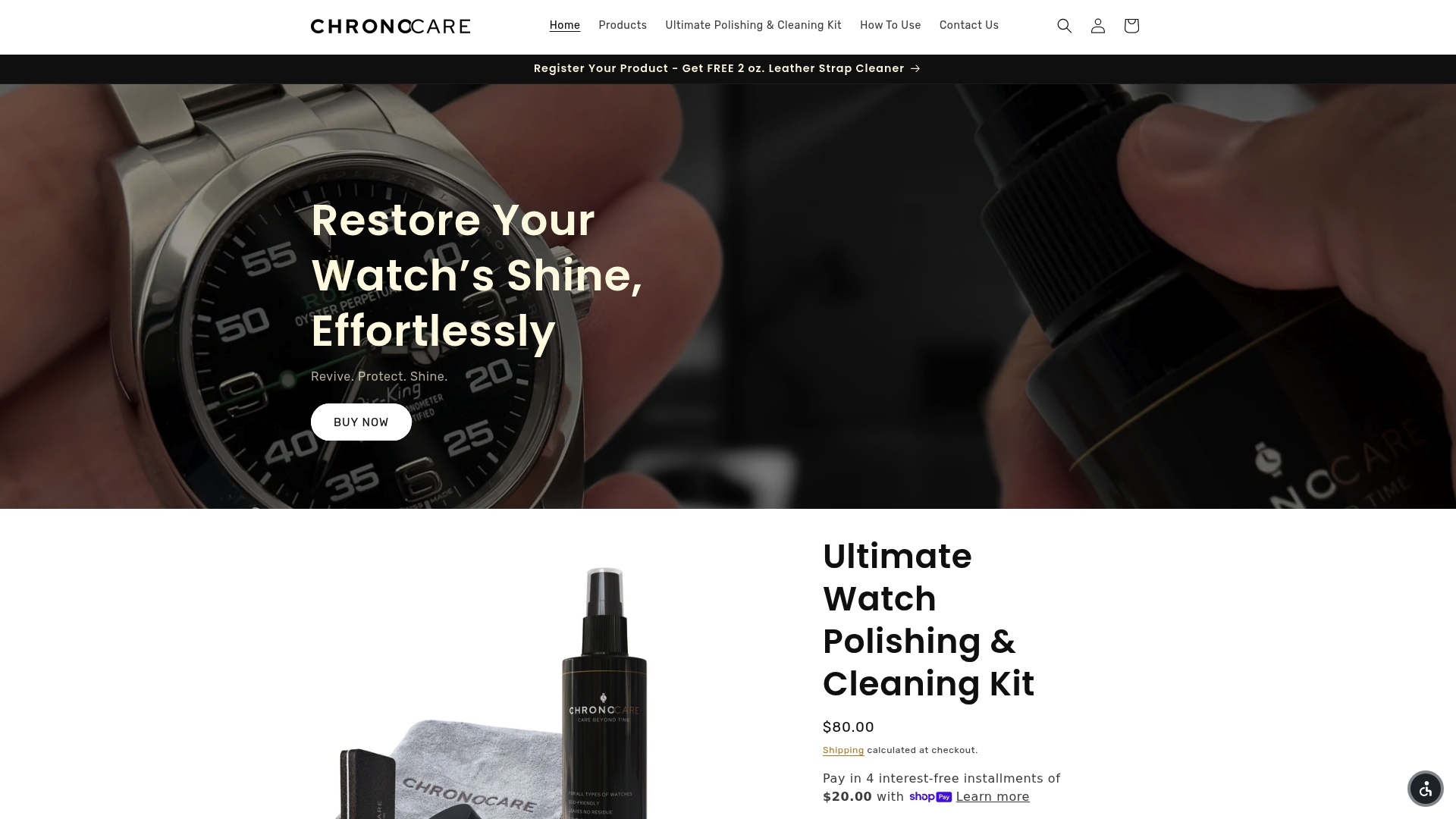
ChronoCare’s Ultimate Watch Cleaning Kit gives you the right tools for delicate watch surfaces: formulated in the US specifically for luxury timepieces, not generic household use. For leather straps, the Leather Strap Cleaner Spray conditions and cleans without drying out the material or weakening the stitching. Both products are part of a care routine that protects what you have between professional services, not a substitute for them.
Key Takeaways
Proper automatic watch movement care requires daily wear or manual winding, environmental protection, gentle exterior cleaning, and professional servicing every 3–5 years for most brands (up to 8–10 years for luxury brands like Patek Philippe) to preserve accuracy and longevity.
| Point | Details |
|---|---|
| Daily wear is the best maintenance | Wearing your watch for at least 8 hours keeps lubricants distributed and the mainspring charged. |
| Manual winding technique | Remove the watch from your wrist and turn the crown 20–30 times clockwise; stop at first resistance. |
| Avoid the 9 p.m.–2 a.m. date window | Setting the date during this period risks shearing the date-change gears, requiring costly repair. |
| Service every 3–5 years (up to 8–10 years for luxury brands) | Professional servicing includes ultrasonic cleaning, fresh lubrication, and water resistance testing. |
| ChronoCare exterior care | ChronoCare’s cleaning kits and leather strap spray protect seals and surfaces between professional services. |