

ISO Tips to Keep DLC Watches Like New Without Polishing for Collectors
For daily wear, care for a DLC watch with a quick microfiber wipe, a rinse after salt or sweat exposure, and nothing abrasive or solvent-based near the case. DLC is one of the hardest coatings used on watches, but it is not indestructible: deep scratches often cannot be buffed out, and severe damage may mean replacing the case rather than restoring it.
TL;DR:
- DLC coatings are highly resistant to light scratches but can chip at edges and links with repeated impacts or grit trapped during wear.
- Regular cleaning with a microfiber cloth and mild soap, along with careful avoidance of abrasive products, is essential for maintaining DLC finishes.
- Deep scratches, chips, or worn-through coatings require professional repair or case replacement, as DLC cannot be polished like steel.
- Ultrasonic cleaning and heat are risky for DLC cases and should be performed only by specialists familiar with coated materials.
- Avoid chemicals like acetone, abrasive polishes, and lubricant sprays, as they can permanently damage or dull the DLC surface.
Table of Contents
- What Is DLC and How Does It Differ From PVD?
- Durability: Realistic Scratch Resistance and Wear Limits
- Daily Cleaning and a Safe At-Home Routine
- What to Avoid: Chemicals, Polishes, and DIY Traps
- Saltwater, Sweat, and Water-Resistance Care
- When Professional Service Is Needed and What to Expect
- A Practical Routine for Keeping DLC Looking New
- An Honest Look at Living With a DLC Watch
- Keep a DLC Finish Looking Right With the Right Tools
- FAQ
- Sources
- Standards and Manufacturer Guidance Referenced
What Is DLC and How Does It Differ From PVD?
DLC stands for diamond-like carbon, a coating applied through vapor-phase deposition at relatively low temperatures so it does not distort the case metal underneath. The result is a layer with extreme surface hardness, low friction, and strong chemical inertness, properties that make it resist corrosion and everyday chemical exposure better than many coatings. Its black color comes from the carbon structure itself rather than a dye or finish layer, so it does not fade.
PVD (physical vapor deposition) covers a broader family of thinner coatings that can scratch more easily and sometimes be re-applied by a jeweler. DLC’s density and hardness make it tougher to damage, but also harder to repair once it is.
Durability: Realistic Scratch Resistance and Wear Limits
DLC’s hardness means it shrugs off the light surface abrasion that would dull polished steel or leave hairline marks on PVD. That resistance has limits. Edges and bracelet links see the most concentrated contact, and repeated knocks against hard surfaces can chip the coating at corners even when the flat case surfaces stay clean.
Wear happens when grit gets trapped between metal links, when the case strikes something harder than itself, or when fine particles act like sandpaper during a hard wipe. ISO 18535 sets out a ball-on-disc method for measuring DLC friction and wear under dry, controlled lab conditions, but the standard notes that results do not necessarily apply once a coated part operates in a lubricated, real-world setting. In practice that means lab numbers describe a best-case scenario, not a guarantee of how a watch behaves on a wrist that sweats, swims, and bumps into doorframes.
ISO 16253 covers the broader requirements and test methods for vapor-phase deposited hard coatings on watch cases, giving manufacturers a shared baseline for wear and corrosion resistance claims. Both standards are useful for understanding what “scratch-resistant” actually means on paper, but neither replaces sensible daily handling.

Daily Cleaning and a Safe At-Home Routine
A short routine keeps most DLC cases looking correct for years without risking the finish.
- Daily: wipe the case and bracelet with a dry microfiber cloth after wear to remove skin oils and dust before they build up.
- Weekly or after heavy exposure: mix lukewarm water with one drop of mild dish soap, work it into the links with a soft brush, then rinse in fresh water.
- Drying: pat the watch dry immediately with a clean microfiber cloth rather than letting it air-dry, which can leave water spots.
Skip the water step entirely on watches that are not rated water-resistant, since moisture can reach the movement through the crown or case back. Ultrasonic cleaners and heat-based devices are common in jewelry shops but carry real risk for DLC: vibration and heat can stress the coating’s bond to the metal underneath, so they are best left to a professional who knows the specific case.
What to Avoid: Chemicals, Polishes, and DIY Traps
A few products that seem harmless can permanently alter a DLC finish.
- Metal polishes and abrasive creams, which are designed to remove a microscopic layer of metal and will dull or scratch the coating.
- Acetone and other strong solvents, which can attack the coating’s adhesive bond over repeated use.
- WD-40 and similar lubricant sprays, which attract dust and grit rather than protecting the surface.
Many DLC cases cannot be re-polished the way steel can, since the process would strip the coating rather than restore it, as explained in does polishing remove scratches and stains. When damage goes deep enough to expose the base metal, case replacement is sometimes the only real fix. Stick with a microfiber cloth, mild soap, and products formulated for luxury finishes, and always test a new cleaning product on a hidden link before using it across the whole bracelet.
Pro Tip: A hidden test spot on the clasp’s inner edge tells you in seconds whether a product is safe for the rest of the case.
Saltwater, Sweat, and Water-Resistance Care
Salt crystals left behind from seawater or sweat can work their way into bracelet links and act as an abrasive every time the watch moves, slowly dulling the finish from the inside out. A quick rinse in fresh water after swimming or a heavy workout, held briefly under a controlled faucet stream or in a bowl, clears the salt before it has a chance to grind against the metal. Dry the watch thoroughly afterward.
Manufacturer guidance, including Patek Philippe’s own care recommendations, points to rinsing after saltwater exposure and keeping up with scheduled servicing, since gaskets lose their seal over time regardless of how carefully a watch is cleaned.
When Professional Service Is Needed and What to Expect
Light surface haze and minor surface grime respond well to the at-home routine above. Deep gouges, chipped edges, or any sign the coating has worn through to bare metal call for a professional, since these are not fixable with cleaning alone. Some manufacturers will replace the case outright rather than attempt a repair that cannot blend into the original finish.
An authorized service center can pressure test the case, replace gaskets, and confirm whether a case replacement is available for the model. An independent watchmaker familiar with coated cases can often handle the same checks at a lower cost, but it is worth asking directly about their experience with DLC before handing over a watch. Grand Seiko’s service guidance recommends a full inspection and overhaul roughly every three to four years for mechanical watches, a timeline that applies just as much to DLC cases as to steel ones.
A Practical Routine for Keeping DLC Looking New
Our stepwise approach for DLC starts with a dry wipe-down, moves to a diluted soap solution for the bracelet, and finishes with a soft-bristle brush worked gently along the link edges rather than scrubbed across the flat surfaces, which is where chipping risk concentrates. Light polishing products formulated for coated surfaces can address faint surface haze, but only after a test on a hidden area confirms the product will not dull the matte texture collectors specifically look for.

Dilution matters more than people expect. A few drops of mild soap in a cup of lukewarm water goes further than a concentrated solution, and it reduces any risk of residue building up in the links over time.
Pro Tip: Wipe the case before storing it, not after pulling it back out, since overnight moisture trapped against the coating is what invites grit to stick on the next wear.
An Honest Look at Living With a DLC Watch
DLC rewards owners who accept a slightly more deliberate handling routine in exchange for a finish that looks genuinely different from polished steel. It is the right choice for someone who wants that deep, matte black look and does not mind a quick wipe-down as part of taking the watch off each day.
For watches that will see rough daily wear, heavier steel or titanium with a conventional finish may hold up with less fuss. Save DLC for pieces worn with some intention rather than thrown on for yard work.
— Raymond Jenkins
Keep a DLC Finish Looking Right With the Right Tools
The routines above work best when paired with products actually formulated for coated cases rather than whatever polish happens to be in the cabinet. Our Ultimate Watch Cleaning Kit covers the daily wipe-down and weekly soak steps described earlier, giving you a soft brush, microfiber cloths, and a cleaning solution sized for bracelet links without the guesswork of mixing your own dilution.
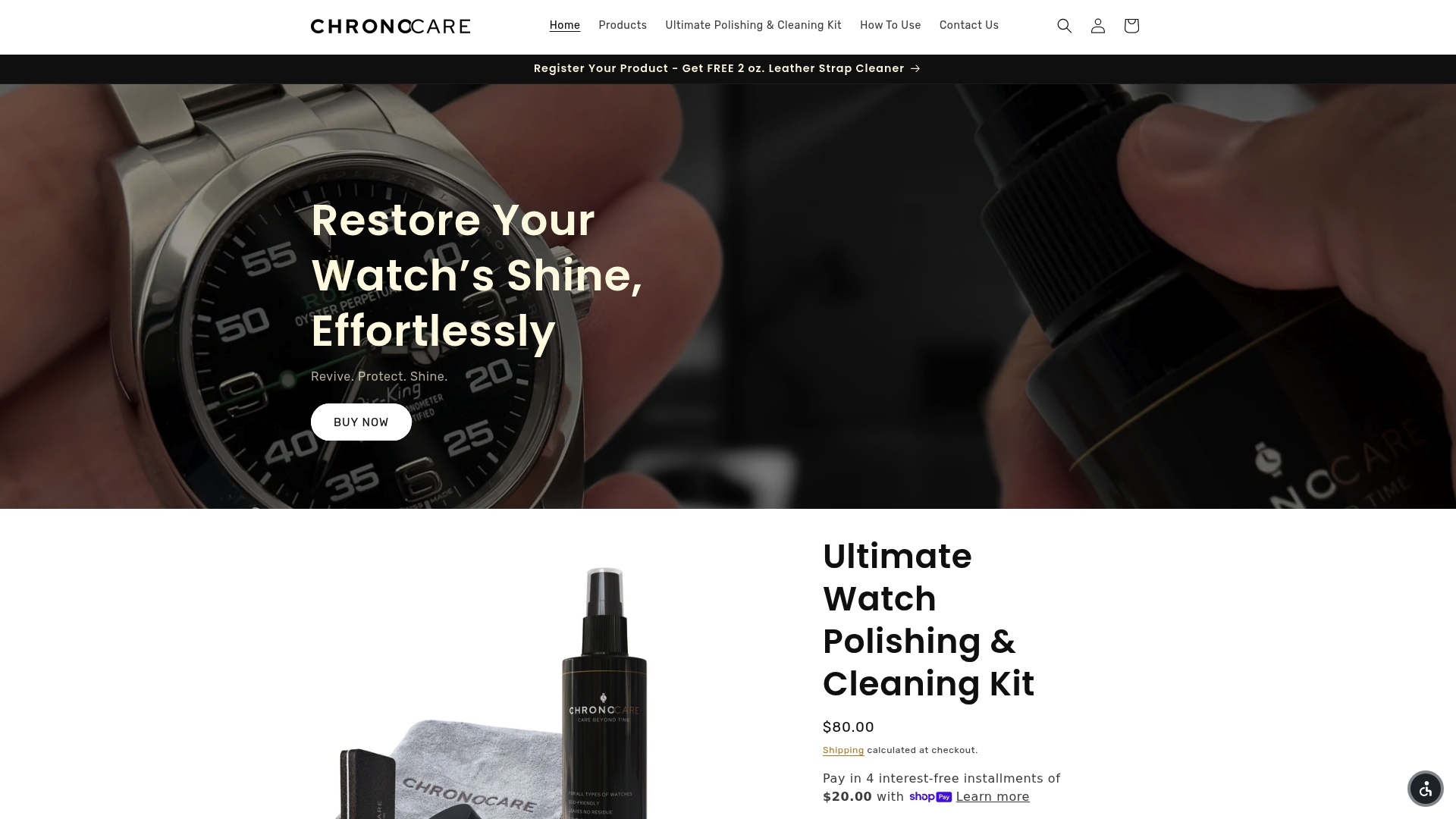
For watches showing light surface haze rather than deep damage, the Ultimate Watch Polishing & Cleaning Kit pairs a gentler cleaning step with a polishing component meant for light marks, not the deep scratches that call for a service center. Test any polishing product on a hidden link first, every time, before it touches a visible surface.
FAQ
Is a PVD coating scratch-resistant?
PVD coatings offer moderate scratch resistance, better than bare polished metal but noticeably softer than DLC. They can pick up fine surface scratches with regular wear and are more commonly re-coated by a jeweler than DLC, which resists damage better but is harder to restore once it occurs.
Can you use Dawn dish soap to clean a watch?
A small amount of mild dish soap diluted in lukewarm water is a safe cleaning method for most watches, including DLC-coated cases, as long as the watch is water-resistant. Use one drop in a cup of water, work it gently into the bracelet with a soft brush, then rinse and dry thoroughly.
Is DLC a type of PVD?
DLC is applied using a vapor-phase deposition process, which places it in the same broad family of techniques as PVD, but the resulting coating is distinct in composition and hardness. Manufacturer guidance describes DLC as a nanocomposite with properties closer to diamond, including higher hardness and corrosion resistance than typical PVD coatings.
Can you use WD-40 on watches?
No. WD-40 and similar lubricant sprays are not formulated for watch cases or bracelets, and they tend to attract dust and grit rather than protect the surface. Stick with a microfiber cloth and mild soap and water, or a product made specifically for luxury watch cleaning.
Sources
- ISO 18535:2016 - Diamond-like carbon films — Determination of friction and wear characteristics of diamond-like carbon films by ball-on-disc method
- Cases, Barrels and Crowns | FAQs – Bremont Watch Company (US)
- Owner manual excerpts – Grand Seiko service and care guidance
- Patek Philippe watch care recommendations
Standards and Manufacturer Guidance Referenced
The claims above draw on ISO 16253 for vapor-phase coating requirements, ISO 18535 for DLC friction and wear testing, and manufacturer service guidance from brands including Patek Philippe and Grand Seiko on rinsing protocols and inspection intervals. These sources describe lab-tested performance and official care recommendations rather than informal advice.