

Clean a PVD Watch Safely With a 3-Item Care Kit for Collectors
Use lukewarm water with a single drop of neutral dish soap, a soft nylon toothbrush, and a microfiber cloth to clean a PVD-coated watch case and bracelet. Confirm the water-resistance rating before any soaking, and never soak a leather strap. Skip toothpaste, baking soda, wire brushes, and ultrasonic cleaners on an assembled watch. That combination protects the coating and the movement.
TL;DR:
- PVD coating resists wear better than plating but is vulnerable at high-contact points, making regular inspection and gentle cleaning essential.
- Use only soft, non-abrasive tools like microfiber cloths, soft brushes, and neutral soap, avoiding ultrasonic cleaners or metal brushes on assembled watches.
- Never soak leather straps or vintage watches in water; clean with minimal moisture and avoid abrasive polishing compounds on coating surfaces.
- Recoating is a specialized process requiring professional equipment, and signs of coating wear include faint color shifts or metal exposure at contact points.
- Home cleaning routines should focus on prevention and gentle maintenance, with professional repairs reserved for clear coating damage or mechanical issues.
Table of Contents
- Step-by-Step: The Safe Way to Clean a PVD Watch
- What Makes PVD Different From Plating or Bare Metal?
- Which Tools and Cleaners Are Safe for PVD Watches?
- How Should Leather Straps and Vintage Watches Be Handled?
- When Does PVD Damage Need a Professional?
- Workshop Habits That Actually Extend a PVD Finish
- Building a PVD Care Kit That Matches the Job
- Sources
- FAQ
Step-by-Step: The Safe Way to Clean a PVD Watch
A PVD coating doesn’t need harsh chemicals or elbow grease. It needs a routine you can repeat without thinking twice, borrowed from the workshop-grade approach Longines recommends for keeping both gaskets and finishes intact.
- Check the water-resistance rating and secure the crown. Screw down the crown (and any pushers) if your watch has them. If you don’t know the rating, or it’s unmarked, treat the watch as not safe to submerge and stick to a damp-cloth wipe instead.
- Mix a bowl of lukewarm water with one drop of neutral dish soap. Skip anything scented or degreasing. You want mild suds, not a kitchen-sink deep clean.
- Soak briefly if your watch allows it, then scrub gently. Dip the case and bracelet for a minute or two, then work a soft nylon toothbrush into the clasp, end links, and case back gaps where sweat and skin oil collect.
- Rinse crown-down under gentle running water, then dry. Pat everything with a microfiber cloth and use an air puffer to chase moisture out of bracelet recesses. Trapped water there is what leads to slow discoloration around the links.
A quick wipe with a dry microfiber cloth after daily wear is enough most days. Save the full soak-and-scrub for once a month, and rinse immediately, don’t wait, after ocean swims, heavy sweating, or a beach day. Salt and dried sweat are mildly corrosive, and letting them sit against the coating overnight does more damage than a year of normal wear.
What Makes PVD Different From Plating or Bare Metal?
PVD stands for physical vapor deposition, a process that vaporizes metal (commonly titanium nitride or chromium compounds) inside a vacuum chamber and bonds it to the watch case at a near-molecular level. That bond is why PVD resists wear far better than traditional electroplating, which sits on top of the base metal rather than fusing to it.
The coating is still only a few microns thick, though. It can wear through at high-contact points: the underside of a bracelet against the wrist, the edges of lugs, the crown where fingers grip it daily. Watch for a faint color shift or a slightly different sheen at these spots, that’s usually the first visible sign the coating is thinning rather than just dirty. Coating thickness and how hard the substrate underneath is both affect how long a PVD finish lasts before wear shows. Once it wears through to bare metal, no amount of cleaning brings the color back. Re-coating requires stripping the case and running it through a vacuum chamber again, which is a specialist repair, not a weekend project.
Which Tools and Cleaners Are Safe for PVD Watches?
Stick to soft, low-abrasion materials and you’ll rarely have a problem. The list of things to avoid is short but non-negotiable.
Safe to use:
- Microfiber cloths for daily wipes and drying
- Soft nylon toothbrush for clasps, end links, and case gaps
- Soft cotton swabs for tight corners near the crown
- An air blower to force moisture out of bracelet recesses
- Neutral dish soap diluted in lukewarm water, or a low-abrasion watch-cleaning spray made for coated finishes
Avoid entirely:
- Toothpaste and baking soda (both are mild abrasives that will dull PVD over time)
- Wire brushes, steel wool, or anything metal-bristled
- Bleach and acetone
- Aerosol sprays applied directly onto the case surface rather than onto a cloth
- Ultrasonic cleaners on an assembled watch
That last point deserves emphasis. Ultrasonic baths work well on a detached bracelet sitting alone in the tank, but on a fully assembled watch, the vibrations can loosen dial markers, disturb lubricants inside the movement, and stress gaskets you can’t inspect from the outside.
Pro Tip: Wipe and buff in one direction, following the brushed grain of the metal, instead of circling the cloth. Cross-grain motion is what causes the faint spiderweb of micro-swirls you sometimes see on older PVD pieces under bright light.
How Should Leather Straps and Vintage Watches Be Handled?
Leather and PVD don’t share a cleaning routine, and treating them the same is the fastest way to ruin a strap. Never soak leather. A quick wipe with a barely damp cloth, followed by a small amount of dedicated leather conditioner applied sparingly, keeps the strap supple without saturating the fibers that hold it together.
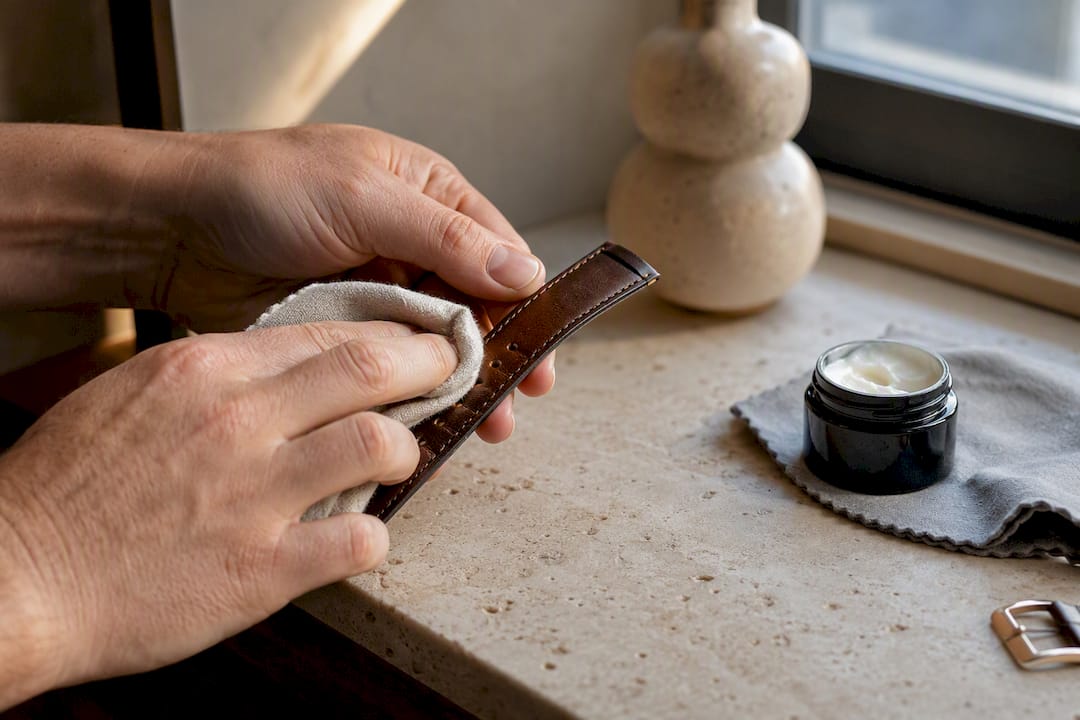
Vintage PVD pieces need a more conservative approach across the board. If the water-resistance rating is unknown or the gaskets haven’t been serviced in years, confine cleaning to the case surface only, no dipping, no running water near the crown. A soft cloth and light dish soap on a damp corner is as far as you should go.
On the subject of blemishes: a light haze or watermark usually wipes away with soap and water. A scratch that shows a different color underneath means the coating is worn through, and no amount of home polishing fixes that. Polishing compounds are abrasive by design, and running them over PVD just removes more coating, exposing more bare metal underneath. For water-resistant pieces exposed to saltwater or heavy sweat, rinse and dry the same day rather than letting residue sit until the next cleaning session.
When Does PVD Damage Need a Professional?
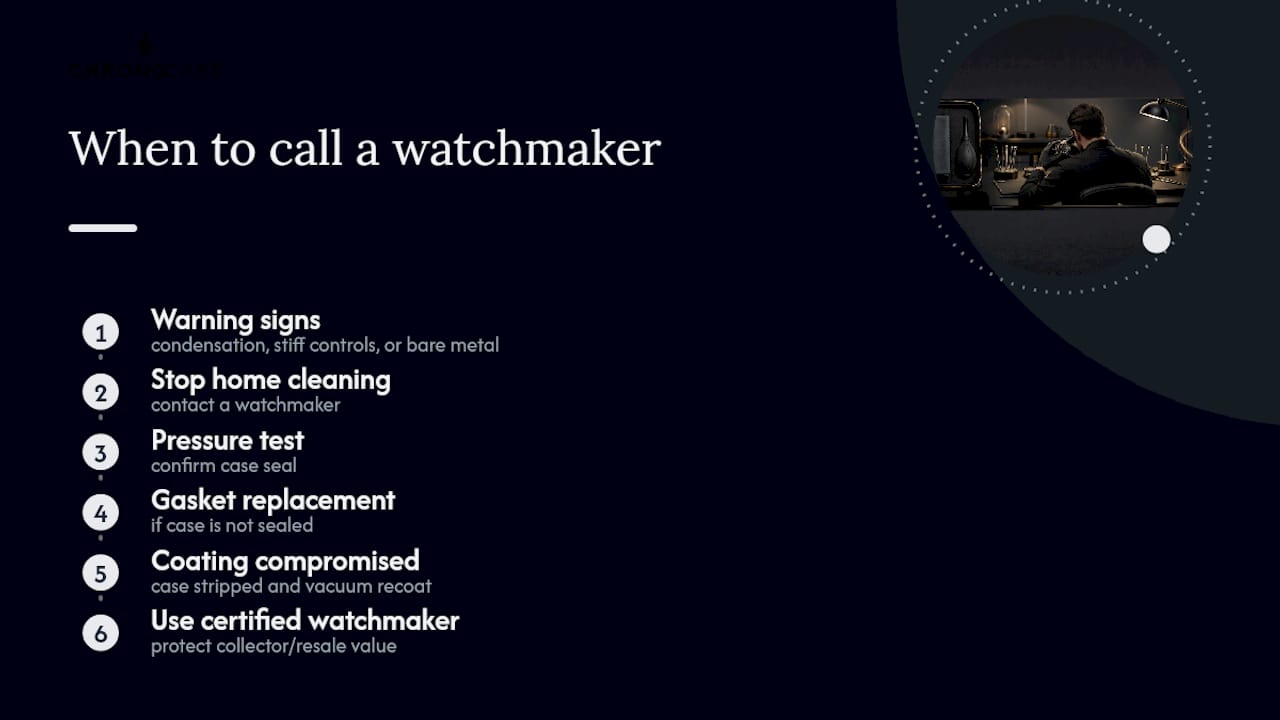
Certain signs mean it’s time to stop cleaning and start calling a watchmaker: condensation fogging up under the crystal, pushers or a crown that feel stiff or grind when turned, or a patch of coating that’s visibly worn to bare metal rather than just dull.
A proper professional workflow typically starts with a pressure test to confirm the case is still sealed, followed by gasket replacement if it isn’t. If the coating itself is compromised, the case gets stripped down and re-run through a vacuum chamber, since reapplying PVD requires equipment no home kit can replicate. Costs vary by case size and coating complexity, but for anything with real collector or resale value, a certified watchmaker is worth the expense over a DIY attempt that could void what’s left of the finish.
Workshop Habits That Actually Extend a PVD Finish
Most of the damage collectors blame on “bad luck” is really just accumulated small mistakes: wiping in circles instead of along the grain, letting sunscreen or perfume dry against the case, skipping the monthly deep clean because the watch “looks fine.” None of these show up in a week. They show up in year three, as a faint dullness that never quite polishes back out.
The habit that matters most is inspection, not cleaning. Check gaskets and crown action every few months, and if your watch fogs up after a swim or a shower, don’t wait for it to dry on its own, get it to a watchmaker within a day or two. For anyone building a maintenance routine from scratch, ChronoCare’s bracelet cleaning checklist walks through the clasp and end-link details that trap the most grime, and the dial-safe cleaning guide covers how to work around the crystal without risking moisture intrusion. If you’re weighing whether a mark is safe to buff out yourself, the same logic conservators apply to avoiding over-cleaned metal surfaces holds here too: when in doubt, clean less, not more.
— Raymond Jenkins
Building a PVD Care Kit That Matches the Job
Most of the routine above only needs three things: mild soap, a soft brush, and a microfiber cloth. For collectors who want that covered in one place, ChronoCare’s watch cleaning kit bundles a pH-balanced cleaning spray, brush, and cloths sized for the monthly deep clean and the after-sweat rinse described above.
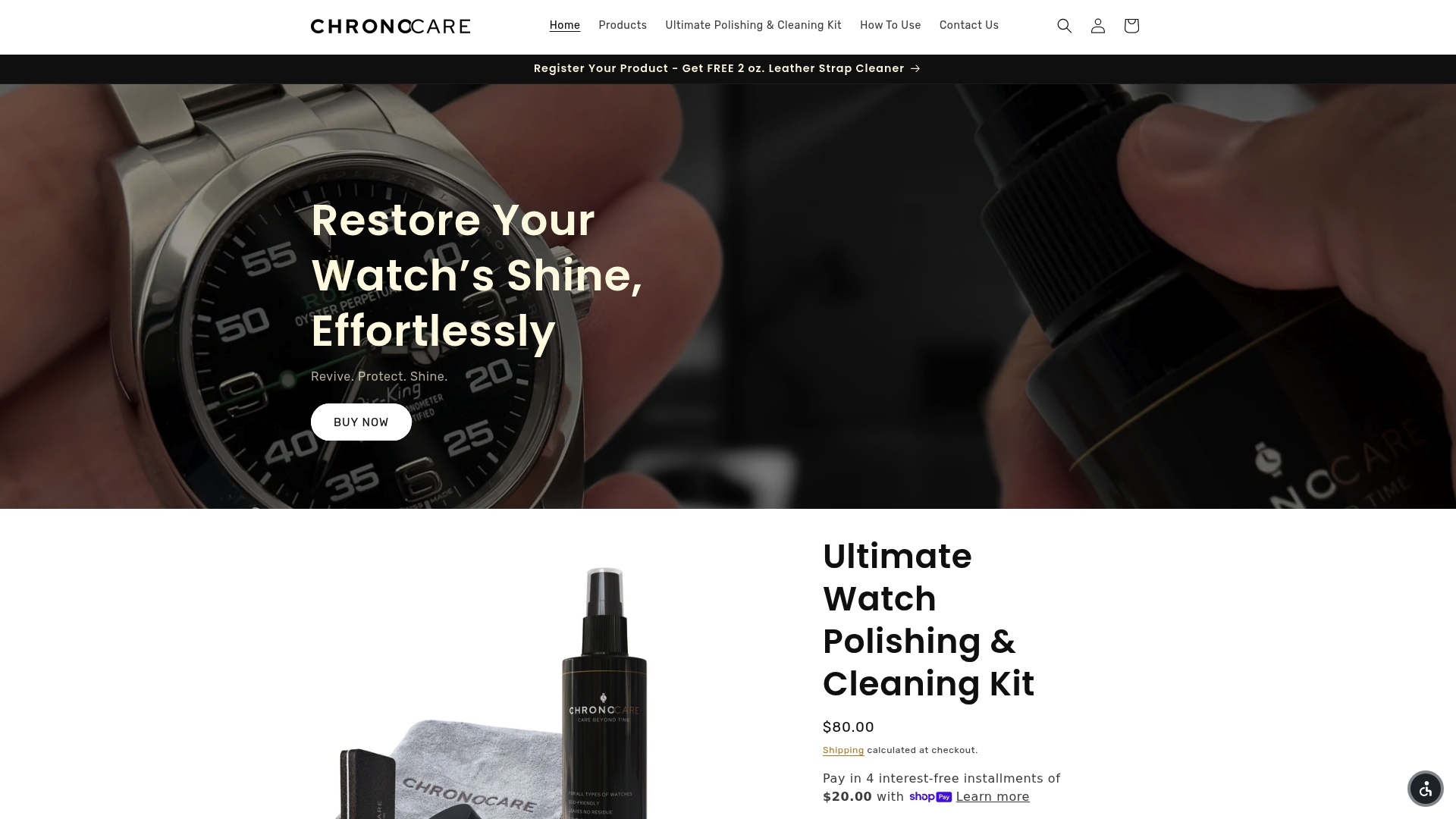
If you’re dealing with light, metal-only blemishes rather than coating loss, ChronoCare’s watch polishing cream is formulated for careful, targeted use on bare metal surfaces. Test it on an inconspicuous spot first, and skip it on PVD-coated areas unless the product listing specifically says it’s safe for coated finishes. Collectors managing multiple pieces, or a matte case that needs finish renewal on top of routine cleaning, may prefer the Ultimate Watch Polishing & Cleaning Kit, which pairs the cleaning essentials with polishing sponges built for that job. Check the product pages for full usage instructions before you start on a coated watch.
Sources
FAQ
Can a PVD Finish Be Removed?
Yes, PVD can be stripped, but it takes specialized equipment to remove it cleanly and reapply a new layer. It isn’t something a home cleaning routine or standard polishing kit can do.
Does Black PVD Coating Wear Off Over Time?
It can, especially at high-contact points like the underside of the bracelet or the crown edge, where friction gradually thins the coating down to bare metal. Regular gentle cleaning slows this, but it doesn’t stop the process entirely.
Can You Polish a PVD Coating?
Home polishing generally isn’t safe for PVD, since abrasive compounds remove coating rather than restore it. Light surface residue comes off with soap and a soft brush; anything deeper than that calls for a professional re-coating service rather than a polishing cream.
Does Rolex Use PVD Coating?
Some watch brands use PVD or similar vapor-deposition processes on select case and bracelet finishes, though practices vary by brand and model. Check your specific watch’s documentation or an authorized service center to confirm what coating, if any, it carries.