

Collectors: Clean a Watch Without an Ultrasonic, Protect the Balance
Yes, you can clean most of a watch by hand, and the movement is no exception. Disassemble it, soak the metal parts in naphtha or a dedicated watch cleaning solution, brush away grime with soft bristles and peg wood, run staged rinses that finish in 99% isopropyl alcohol, then dry thoroughly. The one hard rule: never soak the hairspring, balance assembly, or shellac-secured jewels, and always secure the crown before any water touches the case.
TL;DR:
- Proper manual cleaning avoids soaking delicate parts like the hairspring and jewels, limiting immersion to non-sensitive components only.
- Use staged rinses in three separate jars with progressively cleaner solvent, finishing with 99% isopropyl alcohol to prevent residue build-up.
- Never use flammable solvents near open flames or heat sources, and always work in a well-ventilated area to handle vapors safely.
- For external case and bracelet cleaning, lukewarm water with mild soap is safe if the water resistance is confirmed, while leather straps require specialized cleaning methods.
- Professional service is necessary for serious repairs like bent hairsprings or missing jewels, while routine cleaning is suitable for confident hobbyists with proper supplies.
Table of Contents
- What You Need to Clean a Watch Without an Ultrasonic Cleaner
- How to Clean a Watch Movement Step by Step
- Handling the Balance Wheel, Hairspring, and Pallet Fork
- Cleaning the Case, Crystal, and Bracelet Safely
- The Solvent Hazards Nobody Warns You About
- Where ChronoCare Fits Into This Workflow
- When to DIY and When to Call a Professional
- Get the Kit Built for This Exact Workflow
- Sources
- FAQ
What You Need to Clean a Watch Without an Ultrasonic Cleaner
Good manual cleaning starts with the right supplies laid out in the right order, not with expensive equipment. Most of what you need costs less than a single ultrasonic tank.
For the wash stage, naphtha (lighter fluid) or a purpose-built watch cleaning solution cuts through old oil and dust without attacking plating or lacquer. For the final rinse, reach for 99% isopropyl alcohol specifically, Lower concentrations, like the 70% IPA sold at most drugstores, carry enough water content to promote surface rust on steel pivots and screws, so keep that bottle out of your watch kit entirely.
On the tool side, you want: find quality cleaning brushes and related supplies at Prima Dons & Donnas to support your manual watch-cleaning workflow.
- Soft-bristle brushes (a few sizes, from fine detail brushes to a slightly stiffer one for bridges)
- Peg wood, sharpened to a point for jewel holes and pivots
- Rodico, the tacky putty watchmakers use to lift dust and grease without solvent
- Lint-free cloths for wiping and final drying
- A loupe or magnifier for inspection between steps
- A parts tray with divided compartments, plus small glass jars for wash and rinse cycles
- A gentle heat source or hand blower for drying
Set up your bench near an open window or under a fume hood if you have one. Naphtha and hexane-based cleaners are flammable, so keep them in small closed jars away from any flame or spark source, and never use them near a stovetop or space heater. Number or label each compartment in your parts tray before you start disassembly, since a bridge and a barrel bridge look nearly identical once they’re both sitting loose on a mat.
Pro Tip: If you’re on a budget, a repurposed spice jar with a tight lid works fine for solvent baths. Just make sure it’s glass, not plastic. Naphtha will slowly degrade some plastics and cloud your view of the parts inside.
Skip WD-40 entirely. It leaves a waxy residue that attracts more dust than it removes. Keep acetone away from anything with shellac, and never substitute a household glass cleaner or dish detergent with fragrance additives. Those additives leave films that gum up pivots over time.
How to Clean a Watch Movement Step by Step
This is the core workflow, and it mirrors the wash and rinse logic used in professional cleaning machines. You’re just doing it by hand, one small jar at a time.
- Disassemble in groups. Break the movement down into logical assemblies (barrel, gear train, bridges, balance) rather than scattering every screw and wheel loose. Keep each group in its own tray compartment.
- Pre-clean before soaking. Use Rodico or a solvent-dampened swab to lift the heaviest grease off bridges and plates first. This keeps your wash jar cleaner for longer and means fewer rinse cycles overall.
- Soak the metal parts. Drop non-delicate components, plates, bridges, wheels, and screws, into naphtha or your chosen watch cleaning solution. Hobbyist soak times generally run from a few minutes up to fifteen, depending on how much old oil has gummed up the parts. Swirl the jar gently rather than shaking it hard.
- Brush and peg carefully. Once out of the soak, use a soft brush on flat surfaces and peg wood on jewel holes and pivots. Peg wood should spin against a jewel hole with almost no downward pressure. Pressing hard risks chipping the jewel or bending a pivot.
- Run staged rinses. Set up three small jars: wash, rinse one, rinse two. Move parts through each in sequence so residue gets progressively diluted rather than dragged straight from a dirty wash into a clean rinse. Finish the final rinse in 99% IPA.
- Dry and inspect. Lay parts on a lint-free pad to air dry, or use a gentle warm air source, a hand blower on low, or a low-heat drying box, to speed evaporation. Finish with a loupe inspection, checking pivots for lint, jewel holes for haze, and screw heads for any leftover grime.
The three-jar system is the detail most beginners skip, and it’s the one that matters most. A single rinse jar just moves dirty solvent around instead of removing it. Progressive dilution across multiple containers is what actually gets parts clean, and finishing in pure isopropyl alcohol displaces any trace of the wash solvent so parts dry almost immediately instead of sitting damp.
A few things to keep in mind as you work through the sequence:
- Never rush the pre-clean step. Skipping it just means your wash jar turns into sludge after two or three parts.
- Watch for parts that sink to the bottom of a jar versus ones that float. A part that won’t submerge (usually from trapped air in a hollow screw) needs a light tap with peg wood to release the bubble.
- Reuse rinse two as the next session’s rinse one, and mix fresh solvent for the final rinse position every time. Solvent degrades in usefulness even if it looks clear.
- If a part still looks hazy after two rinse cycles, it’s picking up residue from your peg wood, not the solvent. Swap in a fresh piece.
Inspection under a loupe is where most amateur cleaning jobs fall short. Watchmakers check every jewel hole for a faint film, every pivot for lint fibers, and every screw slot for compacted dust before calling a part clean. If something still looks dull rather than bright under light, it goes back through the wash cycle rather than straight to reassembly.
Handling the Balance Wheel, Hairspring, and Pallet Fork
The balance assembly and pallet fork are the parts that end amateur cleaning sessions in tears, and for good reason. Hairsprings coil so fine that a soak jar’s gentle current can tangle them permanently, and the shellac holding jewels in place on the pallet fork and roller table will soften or dissolve outright if it meets alcohol or acetone.
The safer approach is a brief dip rather than a soak. Suspend the balance assembly by its staff, dip it for a few seconds in naphtha or a hexane-based alternative like OneDip, and pull it straight back out. Some hobbyists prefer to hold the part stationary and bring a small artist’s brush or a pipette stream of solvent to it instead of submerging anything, which limits contact time even further. Do this near open ventilation. Hexane fumes build up fast in a closed room.

Pro Tip: After cleaning a balance wheel, hang it by the hairspring on a strip of Rodico rather than laying it flat on a cloth. This keeps the coil spacing intact while solvent evaporates, and it stops the coils from sticking to a fabric surface as they dry. Keep drying temperatures under roughly 150°F. Warmer air speeds evaporation, but shellac starts to soften well before that point.
While you’re inspecting the balance, check for two things beyond cleanliness:
- Magnetization, which you can test with a simple magnetized screwdriver detector or by watching whether the balance wheel gets pulled toward a compass needle
- Coil adhesion, where two turns of the hairspring have stuck together and need separating with a fine brass tweezer, never fingers
Send the movement to a professional if you spot a bent or visibly stuck hairspring coil, a jewel that’s gone missing entirely, or a cap jewel that rocks loose in its setting. Those repairs need tools and steady hands that go beyond a home bench.
Cleaning the Case, Crystal, and Bracelet Safely
External cleaning is more forgiving than movement work, but water resistance still sets the rules. If the rating is unknown or the watch is vintage, treat it dry-only: a soft brush and a barely damp cloth, nothing that risks moisture near the crown or case back gaps. Watches rated 50 to 100 meters can handle a brief, cautious dip once the crown is confirmed screwed down or pushed fully in. Anything rated 100 meters or higher can generally take a proper rinse under the tap.

The actual cleaning method, once you’ve confirmed it’s safe, is simple. Longines recommends a bowl of lukewarm water with a single drop of mild dish soap, a gentle scrub with a soft-bristle brush around the case and bracelet links, a clean-water rinse, and immediate drying with a lint-free microfiber cloth. Skip anything hotter than lukewarm.
Straps need their own approach. Rubber and silicone bands tolerate the same soap-and-water treatment as the case. Fabric straps do best removed and hand-washed separately. Leather is the outlier: water swells and cracks leather fibers, so a dedicated leather cleaner or a specialist’s touch works far better than soap and water ever will.
A short list of things to avoid entirely: hot water or steam of any kind, compressed air (it drives moisture and debris deeper into case gaps rather than clearing it), and soaking a watch head with an uncertain or absent water-resistance rating. Pursuitist’s guidance is blunt on this point: when resistance is uncertain, treat the case as if it has none.
The Solvent Hazards Nobody Warns You About
Naphtha, lighter fluid, and hexane-based cleaners share one property that deserves real respect: they’re flammable, and their vapors travel farther than people expect in a closed room. Work near an open window, keep solvents in small tightly closed jars between uses, and never work near a pilot light, space heater, or lit candle.
The 99% versus 70% isopropyl alcohol distinction is worth repeating on its own, because it trips up more beginners than any other step. The water content in 70% IPA is enough to leave steel pivots and screws sitting slightly damp, and damp steel rusts within hours, sometimes visibly by the next morning. Stick to 99% for anything touching bare steel.
Avoid this list without exception:
- WD-40 on any watch part, movement or case
- Acetone or alcohol on shellac-secured jewels and pallet forks
- Hot water or steam on case and bracelet
- Abrasive polishes or scouring pads on crystals, which dull the surface permanently
Wear nitrile gloves when working with solvents for extended sessions, and dispose of used naphtha or hexane through a household hazardous waste program rather than down a drain. Store all solvents upright, tightly capped, and out of reach of kids or pets. One detail from professional bench practice worth borrowing: the AWCI’s own standards call for cleaning parts before close inspection, precisely because grime hides small defects that only show up once a part is actually clean.
Where ChronoCare Fits Into This Workflow
A manual cleaning bench doesn’t need a full watchmaker’s toolkit to work well. It needs a handful of reliable items, and that’s where a kit built for this exact workflow saves you from assembling ten separate purchases.
ChronoCare’s cleaning cloths and soft brushes cover the pre-clean and post-rinse wiping stages described above, while a polishing cream handles case finishing once the piece is dry and reassembled. Lint-free drying cloths do the same job as the pad you’d use straight out of the final IPA rinse, just without wondering whether a cloth is actually lint-free or only marketed that way.
Where the line matters is scope. A kit like this is built for:
- Routine external cleaning of cases, bracelets, and crystals between deep cleans
- Light maintenance on movement parts you’ve already disassembled and are confident handling
- Case finishing and light scratch removal after a cleaning session
It’s not a substitute for professional service once you’ve spotted a bent hairspring, a missing jewel, or oil that’s turned to varnish inside the barrel. For that stage, a trained watchmaker’s bench and a full case-cleaning walkthrough belong ahead of anything sold in a kit.
When to DIY and When to Call a Professional
My honest rule of thumb after looking at how this workflow actually plays out: if you can name every part in front of you and you’re confident telling a cap jewel from a chaton, you’re probably ready to handle a movement cleaning session yourself. If you’re hesitating over what a part is called, that hesitation is the answer. Send it out.
Light cleaning at every wear, a quick wipe of the case and bracelet, matters more than people think. It’s the deep, full-movement strip-down that should stay infrequent, maybe once every few years for a piece you wear regularly. Learning the manual technique properly, patiently, one soak jar at a time, is a genuinely satisfying skill. It just isn’t one to rush on a watch you can’t afford to damage.
— Raymond Jenkins
Get the Kit Built for This Exact Workflow
Buying naphtha, peg wood, Rodico, brushes, and lint-free cloths as ten separate purchases costs more and takes longer than picking one kit designed around this exact process. The Ultimate Watch Cleaning Kit from ChronoCare bundles the cloths, soft brushes, and cleaning fluid options this guide walks through, formulated in the US for collectors who want a safe, repeatable manual routine rather than a machine they’ll use twice a year.
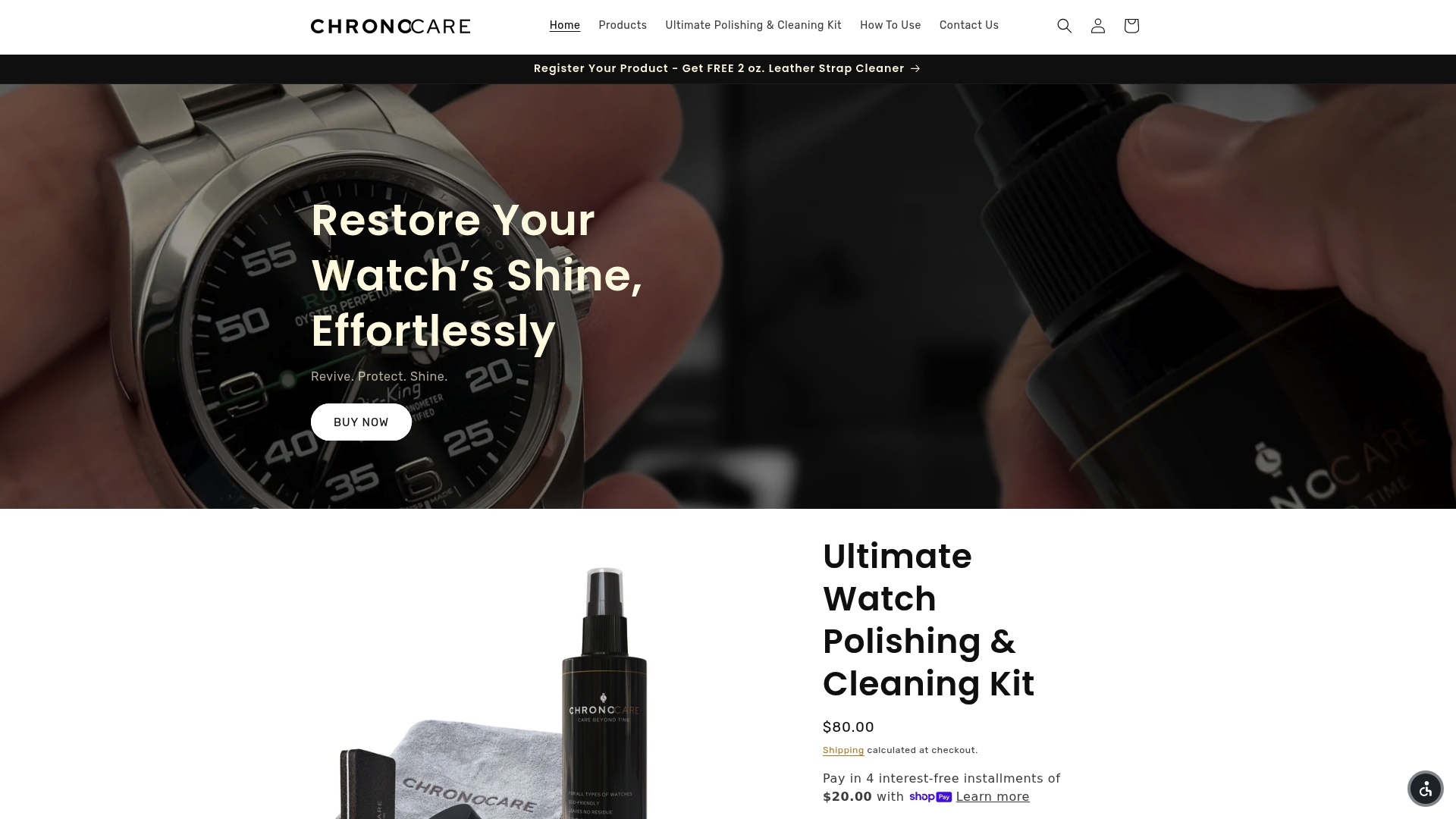
If you’re planning to clean and finish a case in the same session, the Ultimate Watch Polishing & Cleaning Kit adds a polishing cream for restoring shine to light scratches once the piece is dry. For readers who already have brushes and cloths sorted and just need finishing help, the standalone Watch Polishing Cream covers that step on its own. Check the current lineup at ChronoCare and pick the kit that matches how deep you plan to go.
Sources
- How to clean a watch — Longines
- How to clean and maintain a luxury watch — Pursuitist
- How to clean watch parts without a machine — Watch Repair Tutorials
FAQ
What can I use instead of an ultrasonic cleaner?
A hand-cleaning setup with naphtha or a watch cleaning solution for the wash, soft brushes and peg wood for agitation, and staged rinse jars finishing in 99% isopropyl alcohol does the same job for most movement parts. Balance assemblies and shellac-secured jewels need brief dips rather than any soak.
What is the best way to clean watches at home?
For the case and bracelet, lukewarm water with a single drop of mild dish soap and a soft brush, followed by a rinse and immediate lint-free drying, is the standard professional recommendation. Confirm the crown is secured and the water resistance rating supports wet cleaning before you start.
Is WD-40 good for watches?
No. WD-40 leaves a waxy film that attracts dust and debris rather than removing it, and it has no place on movement parts, cases, or crystals. Stick to naphtha, dedicated watch cleaning solution, or a kit built specifically for watches, like ChronoCare’s cleaning products.
Can I use alcohol wipes to clean my watch?
Only with caution, and never near shellac-secured jewels or a hairspring, since alcohol dissolves shellac. For general case cleaning, mild soap and water is the safer, widely recommended method; reserve 99% isopropyl alcohol wipes for metal movement parts during the final rinse stage, not for spot-wiping an assembled watch.