

How to Clean an Omega Watch Without Ruining It
Secure the crown, confirm your watch’s water resistance, and clean the metal case and bracelet with mild soap and a soft brush. Keep leather straps dry no matter what. That’s the whole method OMEGA itself recommends, and it’s the one ChronoCare builds every product around.
Before you touch water:
- Push the crown all the way in, or screw it down if your model has a screw-down crown.
- Never soak a leather strap. Wipe it, don’t dunk it.
- If you don’t know your watch’s current water-resistance rating, treat it as if it has none.
Key Takeaways
Cleaning an Omega safely comes down to one sequence: secure the crown, confirm water resistance, use mild soap and a soft brush on metal, and never let leather touch water.
| Point | Details |
|---|---|
| Crown security comes first | Push in or screw down the crown before any water touches the case or bracelet. |
| Match method to water resistance | Use the case-back rating to decide between a full rinse or a damp-cloth-only clean. |
| Leather stays dry always | Wipe with a barely damp cloth only; never soak leather or use standard leather cleaners. |
| Drying time prevents hidden damage | Air-dry face-up for at least an hour to let moisture escape bracelet links and the case gap. |
| Know your service intervals | Get annual water-resistance checks and a full service every several years. |
| ChronoCare kits reduce guesswork | The Ultimate Watch Cleaning Kit and Polishing & Cleaning Kit supply pH-balanced solution, sized brushes, and lint-free cloths for this exact routine. |
Table of Contents
- How to Clean an Omega Watch: The Pre-Clean Checklist
- What Tools Actually Belong in a Watch Cleaning Kit
- How Do You Clean an Omega’s Metal Case and Bracelet?
- How to Clean an Omega Crystal Without Scratching It
- Cleaning Leather, Rubber, and Fabric Watch Straps
- Drying and Storage After Every Clean
- When to Stop Cleaning It Yourself
- How Do You Clean an Omega’s Movement and Internal Components?
- Protecting Chronograph Pushers and Complications While You Clean
- Storing Your Omega to Stay Clean Longer
- What I’ve Learned From Years of Watching People Ruin Good Watches
- Why a Purpose-Built Kit Beats Improvising With Household Products
- Sources
How to Clean an Omega Watch: The Pre-Clean Checklist
Grab your watch and look at three things before any liquid gets near it. First, find the water-resistance rating, usually stamped on the case back (30m, 50m, 100m, 300m). That number tells you whether a full rinse is safe or whether you should stick to a damp cloth only. Second, check the crystal for chips or lifting at the edges, and check the crown and any pushers for looseness. A wobbly crown means water can get past the stem seal even if the rating looks fine on paper.
Third, decide whether to remove the strap or bracelet. A spring bar tool makes this a two-minute job and lets you clean leather, rubber, or fabric separately from the case.
- Read the water-resistance marking on the case back.
- Inspect the crystal edges and crown/pusher tightness.
- Remove the strap if you have the tool and confidence to do it.
Pro Tip: If your Omega hasn’t had a water-resistance check in over a year, treat it as non-water-resistant for this cleaning session and stick to the damp-cloth method until a service center confirms the seals.
What Tools Actually Belong in a Watch Cleaning Kit
A soft toothbrush, a lint-free microfiber cloth, a small bowl, mild dish soap, wooden or plastic toothpicks for clasp crevices, and an air puffer for dust. That’s genuinely all you need for 90% of routine cleaning, and it matches what OMEGA and independent watch specialists both recommend for metal cases and bracelets.
What to leave in the cabinet: glass cleaner, rubbing alcohol, hot water, and anything abrasive. Glass cleaner and alcohol strip AR coatings and can degrade gasket material over repeated use. Hot water accelerates lubricant breakdown inside the case. Abrasive pastes leave micro-scratches that dull a polished case faster than actual wear does.
- Soft-bristle toothbrush (an old one works fine)
- Lint-free microfiber cloth
- Mild dish soap, diluted
- Toothpicks for bracelet links and clasp gaps
- Small air puffer for loose dust and grit
If you’d rather skip assembling this from a hardware store and a pharmacy aisle, a kit built specifically for watch cases solves the pH and lint problem in one purchase. More on that below.
How Do You Clean an Omega’s Metal Case and Bracelet?
Push the crown in, mix mild soap into lukewarm water, brush gently with a soft toothbrush, rinse, then dry completely before wearing it again. That sequence, confirmed by OMEGA’s own care guidance, is the safest path for any water-resistant steel or gold case.
Here’s the full routine:
- Confirm the crown is secure. Screw it down or push it fully in. This is the single step that prevents water intrusion, and skipping it is the most common way people ruin an otherwise fine watch during “cleaning.”
- Mix your solution. A few drops of mild dish soap in a bowl of lukewarm (not hot) water is enough. Hot water stresses gaskets and can thin lubricants inside the case.
- Brush the bracelet links and clasp. Dip the toothbrush and work along each link, paying extra attention to the clasp mechanism where sweat and skin oil collect. Use toothpicks to work grime out of tight gaps between links.
- Brush the case sides and lugs. Light pressure only. You’re lifting dirt, not scrubbing paint off a wall.
- Rinse under a gentle stream of lukewarm tap water. Avoid a strong direct spray at the crown or pushers.
- Pat dry immediately with a lint-free cloth, then let it air-dry face-up for at least an hour.
One detail most guides skip: trapped moisture inside bracelet links is the most underestimated risk in home cleaning. Water hides in the tiny channels between links and clasp cavities, and if you strap the watch back on too soon, that moisture accelerates future grime buildup and can quietly promote pin wear you won’t notice until the bracelet starts stretching.
If your bracelet is heavily soiled and fully detached from the case, a separate ultrasonic clean is an option, but never run an assembled watch head through an ultrasonic cleaner; the vibration can loosen gaskets and stress the movement.
How to Clean an Omega Crystal Without Scratching It
Fog the crystal with your breath, or use a barely-damp microfiber cloth, before you wipe anything. Wiping a dry, dusty crystal with a dry cloth is how you carve tiny scratches into sapphire or acrylic, because you’re essentially dragging grit across the surface like sandpaper, a point Hodinkee’s care guide makes clearly.
For stubborn smudges, a tiny dab of dish soap on a damp corner of the cloth, followed by a clean-damp pass to lift the residue, handles fingerprints and oil that breath fog alone won’t touch.
Avoid entirely:
- Household glass cleaner (its ammonia content can attack AR coatings)
- Alcohol-based sprays or wipes
- Paper towels or tissues (they’re abrasive at a microscopic level)
- Dry wiping without fogging or dampening first
Anti-reflective coatings are thinner and more fragile than the crystal underneath them, which is exactly why a dedicated crystal cleaning approach matters more on modern sapphire crystals than it did on older acrylic ones.
Cleaning Leather, Rubber, and Fabric Watch Straps
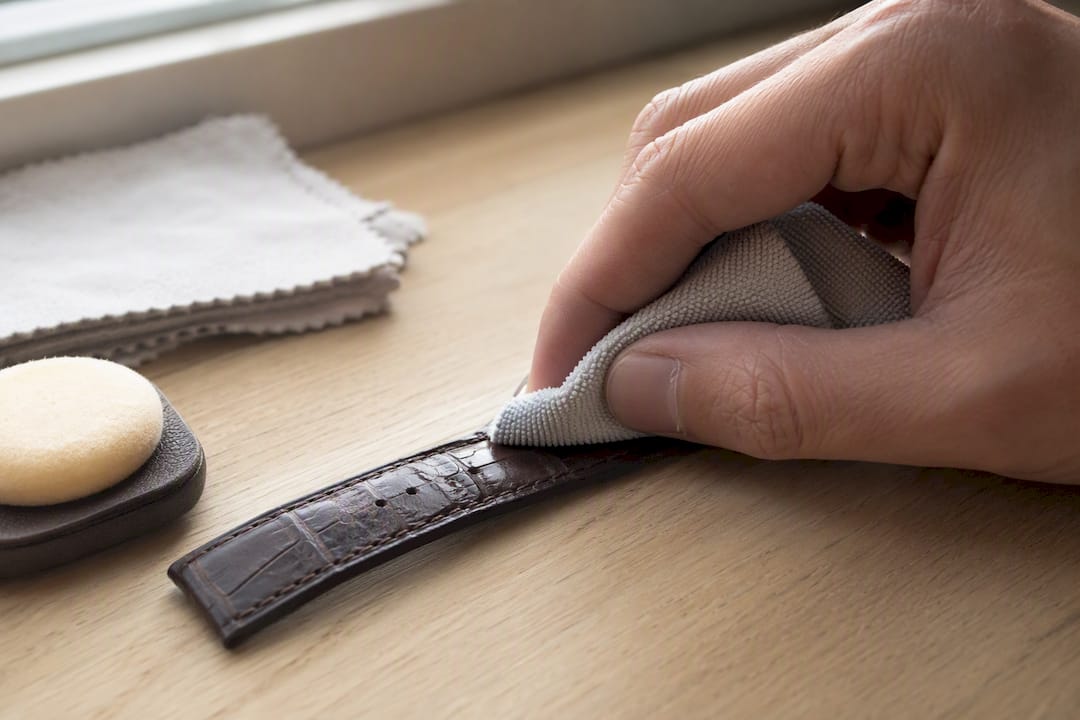
Leather is the one material on your Omega that punishes carelessness the fastest. OMEGA is direct about this: leather straps are permeable, meaning water, oils, and perfume can soak straight through and permanently discolor or warp the material. The safe method is a barely damp cloth wipe, immediate drying, and skipping standard leather cleaners entirely. If a leather strap needs real conditioning, contact an OMEGA boutique or authorized dealer rather than reaching for a generic leather cream that isn’t formulated for watch-strap leather.
Rubber and silicone straps are far more forgiving. Soapy water, a soft brush worked into the texture pattern, a thorough rinse, and air-drying away from direct heat covers nearly every case. Removing the rubber strap first makes it easier to get soap into the underside texture where sweat and sunscreen residue actually accumulate.
Fabric and NATO straps should come off the watch entirely before cleaning. Hand-wash in cool soapy water, rinse, and lay flat to air dry. Never leave a wet fabric strap attached to the case; the moisture sits against the spring bars and lug area far longer than it would on an open-air drying rack.
- Leather: damp wipe only, dry immediately, no standard cleaners
- Rubber/silicone: soapy water plus brush, rinse, air-dry away from heat
- Fabric/NATO: remove first, hand-wash, dry flat before reattaching
Pro Tip: Keep a spare strap on hand for whichever material you wear most. Rotating straps while one dries gives you zero downtime and cuts the temptation to rush the drying step.
Drying and Storage After Every Clean
Pat the watch dry, then set it face-up on a lint-free towel for at least an hour before you wear it or put it away. That waiting period isn’t optional theater. It’s the window where trapped moisture in the case gap, crown tube, and bracelet links actually evaporates instead of sitting there promoting corrosion.
Skip the hairdryer, the sunny windowsill, and the radiator. Direct heat can cause lubricant migration inside the movement, which shows up months later as timekeeping drift or a sluggish chronograph reset, not as an obvious problem you’d catch right away.
For routine upkeep: a quick 30 second wipe after each wear, a full clean every two to four weeks with regular use, and an immediate rinse whenever the watch has been in salt water. Salt is corrosive to gaskets over time, and rinsing it off promptly is far easier than dealing with a salt-crusted clasp six months later.
- Air-dry face-up for a full hour minimum
- No hairdryers, sunlight, or radiators near a drying watch
- Quick wipe daily, full clean every 2 to 4 weeks
- Rinse immediately after any salt water exposure
When to Stop Cleaning It Yourself
Fogging or visible condensation under the crystal, a chipped crystal edge, a loose crown or pusher, grinding or catching when you wind it, or simply not knowing the watch’s last service date. Any one of those is your signal to stop and call a professional.
OMEGA recommends an annual water-resistance check and a full mechanical service roughly every 5 to 8 years, and vintage or unverified pieces deserve more caution, not less. A shop like Horology Kings or your nearest OMEGA authorized service center can pressure-test the case and confirm gaskets are doing their job before you get the watch wet again.
- Condensation or fogging inside the crystal
- Chipped, cracked, or lifted crystal
- Loose crown, pushers, or an unusual grinding sound when winding
- No documented service history within the last several years
How Do You Clean an Omega’s Movement and Internal Components?
You don’t, and that’s the point. The movement, the tiny gear train, the balance wheel, the mainspring, sits sealed behind the case back specifically so it never needs owner-level cleaning. Anything you’d call “cleaning the movement” is actually a full disassembly, ultrasonic bath for individual components, relubrication, and reassembly, all performed by a trained watchmaker with the right tools and a dust-free bench.
What you can safely do is keep contaminants from ever reaching the movement in the first place. That means confirming the crown seal is intact before any wet cleaning, never forcing a stuck crown or pusher, and never opening the case back yourself out of curiosity or to “check for dust.” Case backs on modern Omega watches use a gasket that’s compressed to a specific torque; removing and reseating it without the right tools almost always compromises the seal, even if it looks fine visually afterward.
If dust or moisture has actually gotten past the case seals, that’s no longer a cleaning job. It’s a service job. Signs include a fogged crystal that doesn’t clear, a second hand that stutters, or visible debris inside the case when you look closely at the dial edge. At that point the movement needs to come out, get cleaned component by component in a proper ultrasonic bath, and get relubricated before it goes back in. Trying to flush or spray anything into the case through the crown tube or a gap will push contaminants deeper rather than out.
Protecting Chronograph Pushers and Complications While You Clean
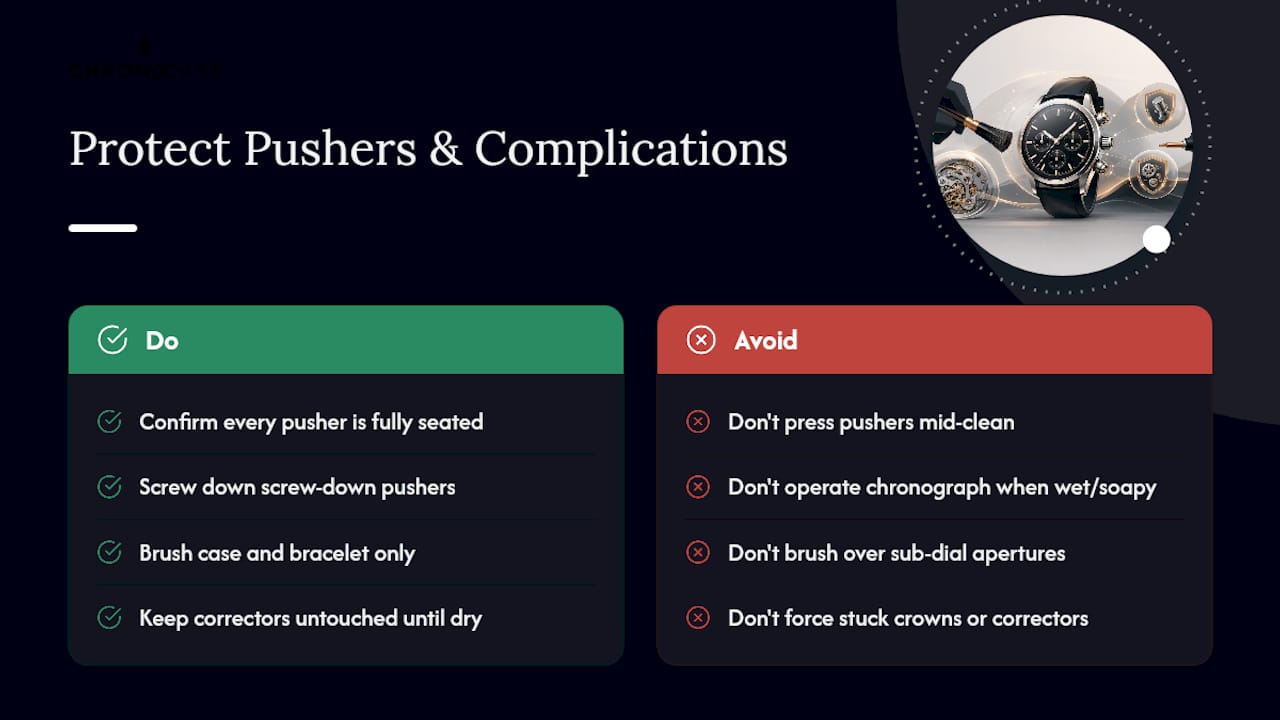
Chronograph pushers and any additional complications, date correctors, moon phase setters, GMT crowns, are the parts most likely to get damaged during an otherwise careful cleaning session, usually because someone presses a pusher mid-clean or forces a crown that’s stuck in an odd position. Treat every pusher and secondary crown as fragile until proven otherwise.
Before you start wet cleaning, confirm every pusher is fully seated and not mid-stroke. A chronograph pusher pressed halfway can let water past its own seal even when the main crown is secure. If your Omega has a screw-down chronograph pusher, as some Seamaster models do, screw it down the same way you’d secure the main crown.
Never operate the chronograph start/stop or reset functions while the case is wet or while your hands are soapy. Water or soap residue on the pusher mechanism can work its way into the chronograph module, and that module is considerably more complex to service than a standard time-only movement. If you’re cleaning a moon phase or annual calendar complication, avoid brushing directly over the sub-dial apertures; bristles can catch on the small date or moon phase wheels visible through those openings and shift their position.
The safest rule for any complicated Omega: brush the case and bracelet, never the dial side, and keep all correctors and pushers untouched until the watch is completely dry.
Storing Your Omega to Stay Clean Longer
A watch that’s properly stored after cleaning stays cleaner between cleanings, which sounds obvious but gets skipped constantly. Dropping a freshly cleaned Omega into a drawer with keys, coins, or other jewelry undoes a chunk of the work you just did, since loose debris in that drawer will scuff the case and work into the bracelet links within days.
A dedicated watch box or roll with a soft, lint-free lining keeps dust and grit away from the case and crystal between wears. If you rotate between several watches, individual compartments matter more than a shared tray; watches sliding against each other in a single tray is a common source of the fine surface scratches owners later mistake for cleaning damage.
Keep stored watches away from direct sunlight and humidity swings. UV exposure can fade leather straps and, over long periods, affect luminous material on the dial. Humidity swings encourage condensation inside a watch box even when the watch itself is dry, which defeats the purpose of the hour-long air-dry you just did.
If you wear a watch daily, a valet tray by your bedside works fine as long as it’s lined and away from a sunny window. If you have multiple Omegas in rotation, a proper watch box with individual cushions is worth the investment, both for scratch prevention and for a quick visual check that nothing looks off before you strap one on.
What I’ve Learned From Years of Watching People Ruin Good Watches
The habit that actually matters isn’t the deep clean, it’s the ten-second wipe you do the moment you take the watch off. That single move keeps skin oils and dust from ever setting into the bracelet links, which means your monthly full clean stays quick and low-risk instead of becoming a scrub-fest.
If I had to isolate the one step most owners skip, it’s the drying wait. People rinse, towel it off, and strap it right back on. That’s the moment trapped moisture starts working against you, quietly, in places you can’t see until months later. Give it the hour. Skip the hairdryer entirely; heat near a movement is never a shortcut worth taking.
— Raymond Jenkins
Why a Purpose-Built Kit Beats Improvising With Household Products
Mixing your own dish soap solution works, but it puts the pH, the brush stiffness, and the cloth material entirely on you to get right every single time. A kit formulated specifically for watch cases removes that guesswork: the solution is pH-balanced for metal and gaskets, the brushes are sized for bracelet links and clasp gaps instead of a bathroom junk-drawer toothbrush, and the cloths are genuinely lint-free rather than “probably fine.”
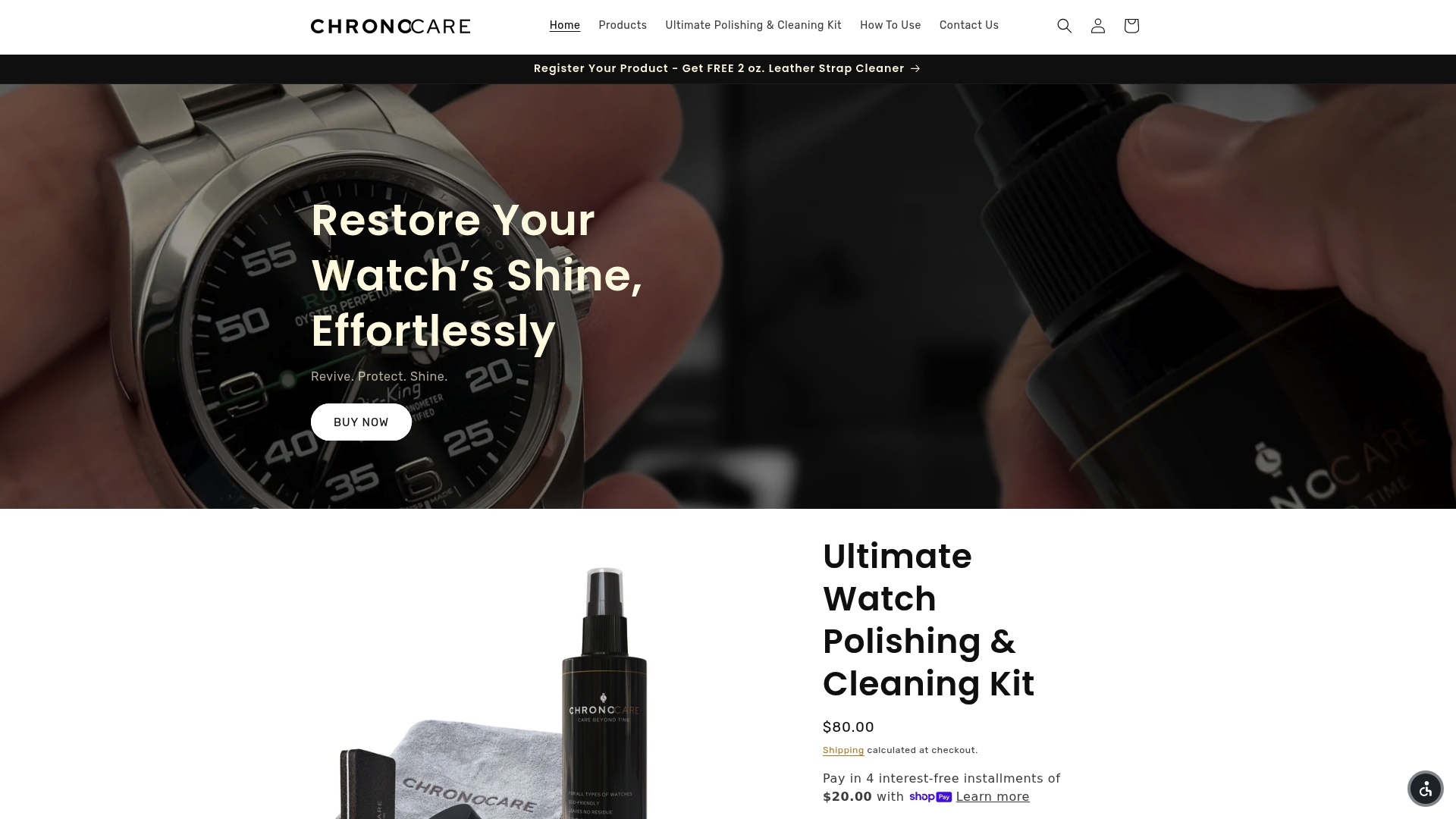
ChronoCare’s Ultimate Watch Cleaning Kit covers the exact routine described above, mild-clean solution, soft brush, lint-free cloths, in one purchase instead of four separate errands. If your Omega’s case has picked up light surface swirls from years of wear, the Ultimate Watch Polishing & Cleaning Kit pairs that same safe cleaning process with a polishing step designed for metal watch surfaces. And for spot-treating scuffs on a bracelet or case back without a full polish, the Watch Polishing Cream handles light scratches on its own.
Start with whichever kit matches what your Omega actually needs right now, routine cleaning, a polish refresh, or both, and you’ll have every tool this guide describes without the trial and error.
Sources
- How to Clean a Watch Without Damaging It: Case, Bracelet, and Crystal | WatchPolice
- How to clean your watch | Hodinkee