

Collectors: Seconds a Day of Ceramic Watch Care Removes Metal Marks
Wipe your ceramic watch with a microfiber cloth after every wear, deep clean only when buildup is visible, and always secure the crown before any contact with water or cleaning solution. Ceramic resists scratches far better than steel, but most of what looks like damage is removable surface grime rather than true harm. Chips, cracks, or signs of moisture call for a professional, since ceramic repairs usually mean part replacement rather than a simple polish.
TL;DR:
- Regular wiping with a microfiber cloth prevents surface grime buildup that can eventually require deep cleaning or professional repair.
- Deep cleaning should be done carefully with distilled water and gentle brushing, always with the crown secured and water resistance verified first.
- Most marks mistaken for scratches are often transferred metal deposits that can often be removed with gentle erasing or light cleaning, not polishing.
- Avoid household abrasives, chemical cleaners, and ultrasonic devices, as they can damage ceramic gaskets, seals, or cause chips due to ceramic’s brittleness.
- For cracks, chips, or moisture signs, it is essential to seek professional inspection and repair to prevent further damage and preserve water resistance.
Table of Contents
- Quick daily and weekly care routine
- Step-by-step deeper cleaning at home
- Removing apparent scratches, metal deposits, and discoloration
- What to avoid: chemicals, abrasives, and ultrasonic cleaning
- Water resistance, gaskets, and crown care
- When to get professional service or warranty repair
- An expert perspective on everyday ceramic watch care
- A cleaning kit built for ceramic watch owners
- FAQ
- Sources
Quick daily and weekly care routine
Most of what keeps a ceramic watch looking new happens in seconds, not minutes. A microfiber cloth lifts body oils, sweat, and fingerprints before they settle into the finish, and wiping right after you take the watch off prevents residue from bonding to the surface. Use light, even strokes rather than pressing hard, since ceramic’s glossy finish shows smudging more than scratching.
A weekly pass with a slightly damp cloth catches what the daily wipe misses, especially around the bracelet links and clasp where skin oils and dust accumulate and can rub against the case over time.
- Wipe the case and bracelet daily with a dry microfiber cloth, following the direction of the finish rather than circular scrubbing.
- Give the bracelet and clasp a closer look weekly, since trapped debris there causes more surface wear than the case itself.
- Avoid applying lotion, sunscreen, or perfume with the watch already on your wrist, since those products can leave a film that attracts grime.
- Keep a dedicated cloth for the watch alone, so it never picks up grit from other uses.
This routine alone prevents most of the buildup that eventually requires a deeper clean.
Step-by-step deeper cleaning at home
When a wipe-down no longer restores the shine, a more thorough clean is worth doing carefully. Before anything touches water or solution, confirm the crown is pushed in or screwed down, and check your watch’s stated water resistance so you know what level of exposure is safe. Manufacturer care guidance recommends this crown check as a standard first step before any cleaning.
- Gather a soft-bristle brush, a microfiber cloth, distilled water, and a watch-safe cleaning solution or a single drop of neutral detergent diluted in water.
- Dip the brush lightly in the diluted solution and work it gently over the case and bracelet, brushing along the grain of the finish rather than against it.
- Pay extra attention to clasp joints and link gaps, where the bracelet traps the most debris.
- Rinse with distilled water rather than tap water to avoid mineral spotting once it dries.
- Dry immediately with a clean microfiber cloth, patting rather than rubbing.
Pro Tip: Keep a separate brush for the ceramic case and one for the metal bracelet or clasp, so metal particles never transfer onto the ceramic surface during brushing.
Stop immediately if you notice loose links, debris that will not rinse free, or any moisture under the crystal. Those signs point to a problem a home clean cannot fix, and pushing further risks forcing water past a seal. For a fuller walkthrough with photos, our guide on cleaning a ceramic watch covers the same steps in more detail.

Removing apparent scratches, metal deposits, and discoloration
What looks like a scratch on a ceramic watch is often something else entirely. High-tech ceramic used in modern watches is significantly harder on the Vickers scale than common watch steels(https://pmc.ncbi.nlm.nih.gov/articles/PMC7896846/), which means it resists true abrasion far better than any metal component on the same watch. Many of the marks collectors worry about are actually metal transferred from a bracelet clasp, a belt buckle, or another hard surface rubbing against the case.
- Try a clean, soft eraser (the kind used for artwork) rubbed gently over the mark before assuming it is permanent damage; for more on conservator-backed methods to safely remove surface deposits, see our guide on cleaning stone sculpture.
- Test any cleaner or technique on a small, inconspicuous area first, since ceramic finishes can vary slightly between models.
- Use a soft brush with light pressure in a small circular motion directly on the deposit rather than scrubbing the whole case.
- If the mark has depth, a rough edge, or catches light differently from the surrounding surface, treat it as a chip or crack rather than a deposit.
A mark that lifts with gentle cleaning was never true ceramic damage to begin with. One that does not respond, especially anything with visible depth, needs a professional rather than more scrubbing. Our dedicated guide on removing discoloration from a watch case walks through this distinction with more examples.
What to avoid: chemicals, abrasives, and ultrasonic cleaning
Ceramic’s hardness protects the surface, but it does not protect the gaskets, crystal seal, or crown tube, and those parts are where most at-home cleaning mistakes do real damage. Solvents, rubbing alcohol, and ammonia-based household cleaners can dry out or degrade rubber seals over repeated exposure, which is the opposite of what any cleaning routine should do.
- Skip metal polishes and abrasive pads entirely. Ceramic’s hardness makes them unnecessary, and they can dull surrounding metal components or trim.
- Avoid ultrasonic cleaners at home. They work well on metal bracelets in professional settings but can stress seals and crystals if used without proper testing.
- Never force a stuck crown or pusher to clean around it; a technician can access tight areas without risking the seal.
- Treat any impact, even a minor drop, as a reason to inspect the case closely rather than just wiping it down.
A key fact to keep in mind: ceramic’s extreme hardness comes with a trade-off of brittleness, meaning a hard impact is more likely to chip or crack the material outright rather than scratch it, which is why dropped ceramic watches need inspection even when the surface looks fine.
Water resistance, gaskets, and crown care
Water-resistance ratings describe tested conditions, not a guarantee against every situation, and respecting that distinction protects the seals that keep moisture out. A rating for splash resistance does not mean the watch is safe for swimming, and even a dive-rated watch depends on the crown being fully pushed in or screwed down before any exposure.
- Always check that the crown is secured before washing hands, showering, or swimming with the watch on.
- Rinse the case and bracelet with fresh water after exposure to saltwater or chlorinated pool water, since both accelerate gasket wear over time.
- Dry the watch fully, including around the crown and case back, before it goes back on your wrist or into storage.
- Have gaskets checked periodically, since rubber seals age and lose elasticity even without visible damage, a point manufacturer guidance raises directly in its own care recommendations.
A watch that was water resistant when new will not stay that way indefinitely without periodic seal checks.
When to get professional service or warranty repair
Some problems are beyond what a cloth and a soft brush can fix, and recognizing them early prevents a small issue from becoming an expensive one. Cracks, chips, fogging under the crystal, or a crown and pushers that no longer feel precise all call for a qualified technician rather than continued home cleaning.
- Any visible crack or chip in the ceramic case means stop cleaning and get it assessed, since ceramic repairs typically require replacing the affected component rather than polishing it smooth.
- Moisture inside the crystal, even a faint haze, signals a seal failure that needs prompt attention before internal components corrode.
- Watchmaker guidance recommends periodic servicing on a schedule, since seals and movements wear even with careful home care.
- Use an authorized service center when the watch is still under warranty, since outside repairs can void coverage.
Our guide on signs your watch needs professional cleaning breaks down these warning signs in more depth.
An expert perspective on everyday ceramic watch care
Most of what collectors treat as a crisis, a mysterious scratch, a dull patch, a smudge that will not wipe away, turns out to be a surface deposit rather than true damage. Refinishing ceramic requires diamond abrasives and specialized equipment, which is well beyond anything safe to attempt at home, but that same hardness is exactly why gentle cleaning resolves far more issues than it seems like it should. A bracelet clasp that transfers a thin metal streak onto the case back, for instance, often lifts away completely with a soft eraser and a little patience, no polishing required. Using products formulated specifically for watch materials, rather than general household cleaners, removes much of the guesswork and risk from that process.
— Raymond Jenkins
A cleaning kit built for ceramic watch owners
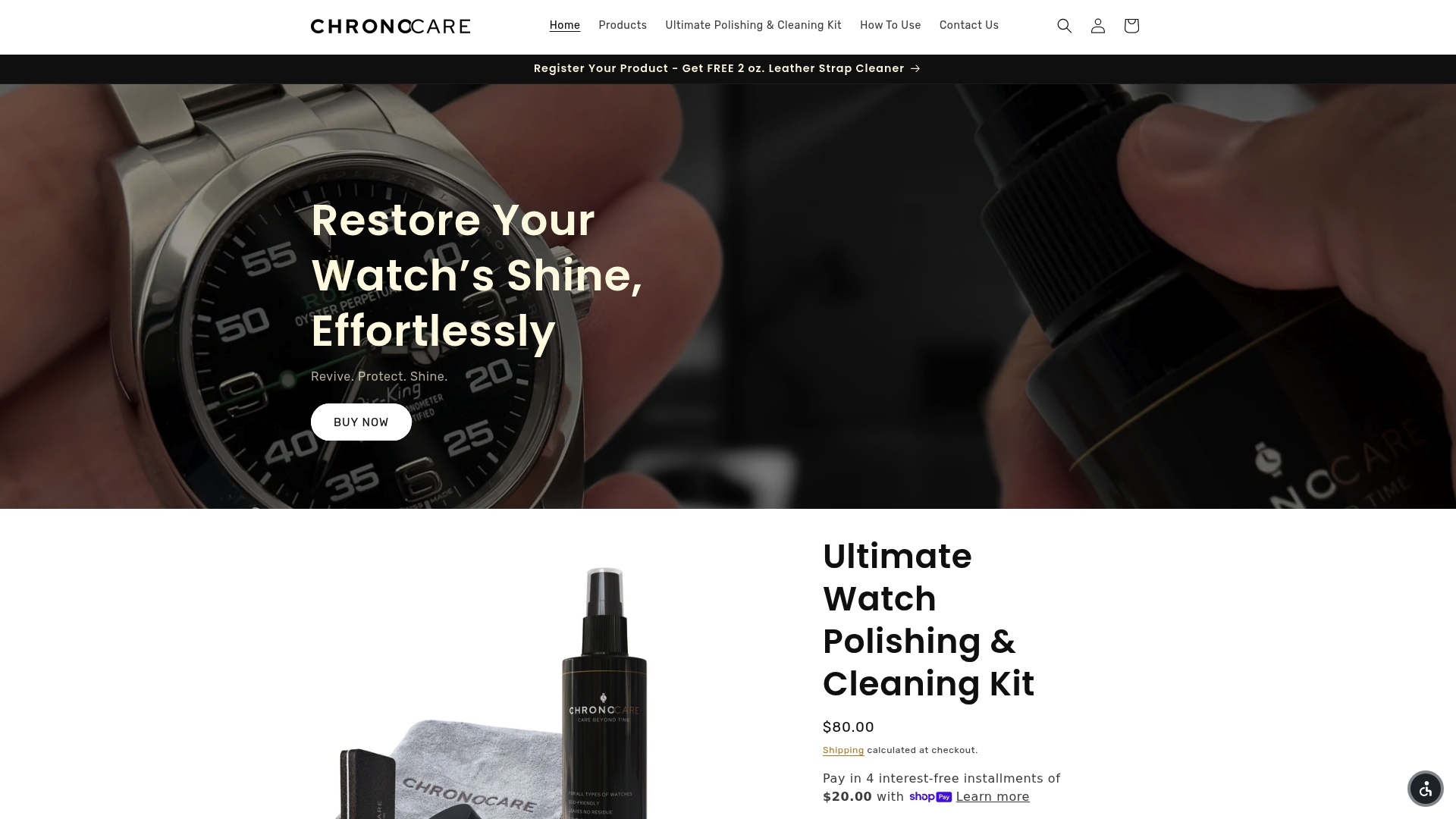
Our cleaning products are designed to work with ceramic cases and bracelets without introducing the risks that come with household cleaners or improvised tools. Our Ultimate Watch Cleaning Kit covers the case and bracelet steps outlined above, while products like our Watch Polishing Cream are meant for metal surfaces only and should never touch a ceramic case.
- Spot test any new product on a small, hidden area of the case before full use.
- Use polishing creams on metal clasps, buckles, and bracelet links, never on ceramic itself.
- Check your specific model and any active warranty terms before introducing a new cleaning product.
Browse our cleaning kits to find the right match for your watch.
FAQ
What are the downsides of a ceramic watch?
Ceramic is highly scratch resistant but more brittle than steel, so a hard impact is more likely to chip or crack the case than leave a scratch. Repairs after a chip or crack typically mean replacing the affected component rather than a simple polish, which can make ceramic repairs costlier than metal ones.
Do ceramic watches scratch easily?
No. High-tech ceramic used in watches has a Vickers hardness far above common watch steels, which makes it highly resistant to everyday scratching. Many marks that look like scratches are actually metal transferred from a bracelet or buckle, and these often clean away rather than being permanent.
Can a ceramic watch be polished?
Polishing ceramic is possible but requires diamond abrasives and specialized equipment, which is why it is rarely practical outside a professional repair setting. For most apparent surface marks, gentle cleaning to remove transferred deposits solves the problem without any polishing at all.
Is ceramic a good watch material?
Ceramic holds up well for everyday wear thanks to its hardness, color stability, and resistance to UV fading and many chemicals. Its main trade-off is brittleness, so care around impacts and drops matters more than it does with a steel case.
Sources
- PMC: engineering ceramics / material hardness (peer-reviewed overview)
- Chanel — Care instructions for watches
- IWC — Ten tips for watch care