

Benefits of Offering Watch Care Products for Retailers
Selling watch-care products is worth adding to your store. Watch accessories typically carry gross margins between 60% and 80% and can lift average transaction value by 10–25%. A cleaning kit added at checkout costs a low amount and typically retails for 3–5x your landed cost. The business case is straightforward.
TL;DR for busy managers:
- Start with 3–5 SKUs: a cleaning kit, a polishing cream, and a strap cleaner
- Price care products at 3–5x your landed cost to hit target margins
- Pair every product sale with a service voucher to drive repeat visits
- Track attachment rate and AOV weekly during a 90-day pilot
Table of Contents
- What are the real business benefits of offering watch care products?
- What should you stock? A scalable product assortment
- How should you price watch-care products and build bundles?
- How do you merchandise and train staff to sell care products?
- What operational and compliance factors should you plan for?
- How do you launch watch-care products in 90 days?
- How do you measure whether the pilot is working?
- What mistakes do retailers make when adding care products?
- Who are the best customers for watch-care products?
- What marketing works best for watch-care products?
- What legal and warranty issues apply to selling watch-care products?
- Key Takeaways
- Why care products are the most underrated margin driver in watch retail
- ChronoCare makes it easy to launch a watch-care line
- Useful sources and references
What are the real business benefits of offering watch care products?
The margin story alone justifies the shelf space. Watch accessories routinely achieve 60–80% gross margins, which is far above the margins most retailers earn on the watches themselves. Adding a reasonably priced cleaning kit to a watch sale can meaningfully improve the transaction’s blended margin.
The deeper benefit is repeat business. A customer who buys a cleaning kit has a reason to come back, whether for a refill, a polishing cream, or a service appointment. Retailers who treat simple maintenance services as a customer-acquisition funnel rather than a nuisance consistently build higher-LTV relationships than those who focus on one-time watch sales alone.

There’s also a differentiation angle that online competitors can’t easily copy. Offering curated after-care communicates competence and positions your store as the authority on watch ownership, not just watch sales. A customer who trusts your product recommendations is far less likely to price-shop you on the next purchase.
Key revenue levers at a glance:
- Gross margin on care accessories: 60–80%
- AOV uplift from care product attachment: 10–25%
- Repeat-visit driver: service voucher paired with product sale
- Brand authority: curated assortment signals expertise
Pro Tip: Bundle a cleaning kit with a dated inspection voucher. The product sale pays for itself immediately; the voucher brings the customer back in 90 days when they’re ready to spend again.
What should you stock? A scalable product assortment
Start small and tier deliberately. Three tiers keep inventory manageable while covering every customer type.
Tier 1 — Impulse items (under $20 retail): microfiber wipes, small polishing cloths, leather strap spray. These sit at the register and require no explanation. High margin, zero staff effort.
Tier 2 — Core SKUs ($25–$60 retail): The ChronoCare Ultimate Watch Cleaning Kit belongs here. It’s a complete, guided cleaning solution designed for luxury timepieces and gives customers everything they need in one box. Add a polishing cream and a travel case to round out this tier.
Tier 3 — Premium bundles ($60+ retail): The ChronoCare Ultimate Watch Polishing & Cleaning Kit fits this slot. Pair it with a complimentary inspection offer or a discounted service voucher. Bundling a care product with a future-dated service offer converts a one-time sale into a long-term relationship.
For a boutique pilot, 5–8 SKUs is the right starting point. Reorder when stock drops to a 2-week supply. Target 8–12 inventory turns per year on care products; slow movers should be cut or repositioned within 60 days.
Treating accessories as afterthoughts is one of the most common retail mistakes. Position them as part of the ownership experience from day one.
How should you price watch-care products and build bundles?
A 3–5x markup on landed cost is the standard starting point for care accessories. For example, a product that costs you $8 retails at $24–$40, aligning with industry norms for accessory pricing.
| SKU Example | Landed Cost | Suggested Retail | Gross Margin |
|---|---|---|---|
| Polishing cloth / wipes | $2–$3 | $10–$12 | 60–80% |
| Watch Polishing Cream | $8–$10 | $24–$40 | ~70% |
| Ultimate Watch Cleaning Kit | $15 | $45 | ~70% |
Bundle pricing works best when the perceived value exceeds the sum of the parts. A cleaning kit plus a $15-off service voucher feels like a $70 value at a $49 price point, even though the voucher costs you almost nothing to issue.
POS-triggered bundling that suggests a care kit at checkout can lift AOV by 10–25% with no additional marketing spend. Set your POS to prompt the suggestion on every watch sale above $200.
Pro Tip: For e-commerce, add a care kit as a one-click upsell on the cart page. A short line like “Protect your new watch from day one” converts at a higher rate than a generic “customers also bought” block.
How do you merchandise and train staff to sell care products?
Placement drives attachment rate more than price. Put Tier 1 items at the register, Tier 2 kits adjacent to the watch display, and Tier 3 bundles in a dedicated “care station” with a demo unit. Online, add care products to every watch product page as a recommended add-on and trigger a cart upsell for orders above your threshold.
Staff script for a new watch sale:
- “Every luxury watch needs regular cleaning to protect the finish and the movement.”
- “This kit is what we recommend — it’s formulated specifically for metal and leather surfaces.”
- “It takes about five minutes and keeps the watch looking new between services.”
That’s it. Three sentences, no pressure. Providing care consultations and guided product demos moves customers from interest to purchase more reliably than shelf signage alone.
Train one employee as the product champion in the first 30 days. That person runs a 15-minute team demo, sets the attachment-rate target, and tracks weekly results. Measure attachment rate as: care product units sold divided by total watch transactions.
What operational and compliance factors should you plan for?
Supplier selection matters more than most retailers expect. Prioritize suppliers who provide Safety Data Sheets (SDS, formerly MSDS) for all liquid products, clear usage instructions, and U.S.-compliant labeling. ChronoCare products are formulated in the U.S. with guided instructions included, which simplifies your compliance checklist.
Supplier and operations checklist:
- Confirm SDS availability for all liquids before placing a first order
- Verify MOQ and lead times; most care-product suppliers offer 12–24 unit minimums
- Decide stocked vs. dropship based on your storage capacity and order frequency
- Write a returns policy that excludes opened liquid products but covers defects
- For e-commerce shipping, use leak-proof inner packaging and check carrier restrictions on liquid goods
Watch care product safety guidance covers the specific handling notes your staff should know before selling or demonstrating any liquid cleaner.
Pro Tip: Post the SDS for each liquid product in your stockroom. If a customer or staff member has a reaction question, you can answer it immediately rather than scrambling for documentation.
How do you launch watch-care products in 90 days?
A phased pilot keeps risk low and gives you clean data before committing to a full assortment.
- Days 1–14: Source 5–8 SKUs, confirm SDS documentation, set retail prices, and brief your POS system for bundle prompts.
- Days 15–30: Merchandise the display, train staff on the three-sentence script, and photograph products for your website.
- Days 31–60: Run the pilot. Track attachment rate and AOV weekly. Collect customer feedback at the register.
- Days 61–90: Review data. Cut slow movers, reorder top performers, and decide whether to expand to Tier 3 bundles.
| Scenario | Startup Inventory Cost | SKU Count | Expected AOV Lift |
|---|---|---|---|
| Small boutique (low) | — | 5 SKUs | 10–15% |
| Mid-size jeweler (medium) | — | 8–10 SKUs | 15–20% |
| Multi-location (high) | $2,000 | 12–15 SKUs | 20–25% |
How do you measure whether the pilot is working?
Five KPIs tell the full story.
| KPI | Definition | How to Calculate | Target Range |
|---|---|---|---|
| Attachment rate | Care products sold per watch transaction | Care units ÷ watch transactions | 15–25% |
| AOV uplift | Change in average order value | (New AOV – baseline AOV) ÷ baseline AOV | 10–25% |
| Gross margin % | Margin on care SKUs | (Retail – cost) ÷ retail | 60–80% |
| Repeat purchase rate | Customers buying care products more than once | Repeat buyers ÷ total care buyers | 30%+ |
| Inventory turnover | How fast care SKUs sell | COGS ÷ average inventory value | 8–12x/year |
Sample calculation: A boutique doing 100 watch transactions per month at a $350 AOV adds care products at a 15% attachment rate. That’s 15 additional care-product sales averaging $40 each, or $600 in incremental monthly revenue at roughly 70% gross margin, adding $420 in gross profit per month.
Reframing repair-first foot traffic as a customer-acquisition channel applies the same logic: the profit comes from lifetime value, not the margin on a single transaction.
What mistakes do retailers make when adding care products?
Most failures trace back to three errors: underpricing, no staff buy-in, and poor placement.
- Underpricing: Selling a $45 kit for $25 to “be competitive” destroys the margin case. Hold your price; the product’s value is in the outcome, not the discount.
- Ignoring staff: If your team doesn’t mention care products, attachment rate stays near zero. One trained champion changes that.
- Poor placement: Care products buried in a back corner don’t sell. Register placement and POS prompts are non-negotiable.
- Missing SDS documentation: A single customer complaint about a liquid product without documentation on file creates unnecessary liability.
- Mixing care advice with professional service claims: Staff should recommend products for home maintenance, not position them as a substitute for professional servicing.
Signs your pilot is failing: attachment rate below 5% after 30 days, zero repeat purchases after 60 days, or inventory sitting untouched. Corrective actions: move products to the register, retrain staff, and add a POS prompt before pulling SKUs.
Who are the best customers for watch-care products?
Three segments drive the majority of care-product sales.
Luxury watch owners are your highest-value segment. Someone who spent $2,000 or more on a watch is already invested in protecting it. They respond to messaging around preserving resale value and maintaining the watch’s original finish. Position Tier 2 and Tier 3 products here.
Collectors own multiple watches and buy care products regularly. They’re your repeat-purchase engine. The ChronoCare blog’s guidance on care between wearings speaks directly to this segment’s habits.
Gift buyers are an underused segment. A cleaning kit packaged as a gift add-on alongside a watch purchase converts well during holidays and Father’s Day. Tier 1 and Tier 2 products work best here because the price point feels like a thoughtful extra rather than an obligation.
For e-commerce, segment by purchase history: customers who bought a watch in the past 6 months are your highest-probability care-product buyers. Email them first.
What marketing works best for watch-care products?
In-store: Shelf talkers with a single benefit line (“Keeps your watch looking new between services”) outperform generic product descriptions. A demo unit showing before-and-after polish results stops browsers. Battery replacements and simple maintenance services attract repeat traffic that converts to larger purchases, so promote your care services at the same display.
Online: Product page copy should lead with the outcome, not the ingredients. “Removes light scratches and restores shine on all metal surfaces” sells the ChronoCare Watch Polishing Cream better than a list of what’s in the bottle. Add a care kit to every watch product page as a recommended add-on, and use post-purchase email sequences to introduce care products to recent watch buyers.
Social and content: Short video demonstrations of a cleaning kit in use generate strong organic reach on Instagram and YouTube. A 60-second before-and-after polish video costs almost nothing to produce and drives both product awareness and in-store visits.
What legal and warranty issues apply to selling watch-care products?
A few practical points apply specifically to the U.S. market.
Product liability: If a customer claims a cleaning product damaged their watch, your first line of defense is clear usage instructions and SDS documentation. Stock only products with explicit usage guidance and material compatibility notes. ChronoCare includes guided instructions with its kits, which reduces misuse risk.
Warranty language: Your store’s warranty on care products should cover manufacturing defects, not outcomes from customer misuse. State this clearly in writing at the point of sale and on your website. A return policy that excludes opened liquid products is standard practice; clear return policy language protects both the retailer and the customer.
Watch manufacturer warranties: Some luxury watch manufacturers specify that third-party cleaning products void the movement warranty if liquid enters the case. Train staff to recommend care products for external surfaces only and to advise customers to confirm water resistance before any wet cleaning. This is general information, not legal advice; consult a qualified attorney for warranty language specific to your business.
Labeling: The Consumer Product Safety Improvement Act (CPSIA) and relevant OSHA Hazard Communication Standards apply to chemical products sold in the U.S. Confirm that every liquid SKU you stock carries compliant labeling before it hits your shelf.
Key Takeaways
Stocking watch-care products is one of the lowest-friction ways for a retailer to add a 60–80% gross-margin category, lift AOV by 10–25%, and turn one-time buyers into repeat customers.
| Point | Details |
|---|---|
| Margin opportunity | Watch care accessories carry 60–80% gross margins, well above typical watch margins. |
| AOV and repeat visits | Care product attachment lifts AOV by 10–25%; service voucher pairing drives repeat visits. |
| Start small, tier deliberately | Launch with 5–8 SKUs across three tiers; cut slow movers after 60 days. |
| Compliance basics | Require SDS documentation for all liquids and use clear warranty language at point of sale. |
| ChronoCare as your starter line | The Ultimate Watch Cleaning Kit, Ultimate Watch Polishing & Cleaning Kit, and Watch Polishing Cream are resale-ready SKUs with guided instructions included. |
Why care products are the most underrated margin driver in watch retail
Most watch retailers spend their energy on the watch sale and treat everything else as an afterthought. That’s a mistake, and the numbers make it obvious. A watch sold at a 30–40% margin is the hard part of the transaction. A cleaning kit sold at 70% margin in the same transaction is almost pure upside, and it takes 30 seconds to suggest.
What I find consistently overlooked is the compounding effect. The customer who buys a care kit doesn’t just generate one incremental sale. They come back for refills. They bring the watch in for service. They trust your store’s recommendations on the next purchase. That’s the real value of a care-product program: it turns a transactional relationship into an ongoing one, and it does it at almost no acquisition cost.
The retailers who struggle with this category almost always make the same error: they add the products but skip the staff training. A cleaning kit sitting silently on a shelf next to a $3,000 watch sells itself to maybe 2% of buyers. A staff member who mentions it in one sentence sells it to 15–20%. The product is the same. The difference is whether your team treats it as part of the sale or an optional extra.
ChronoCare makes it easy to launch a watch-care line
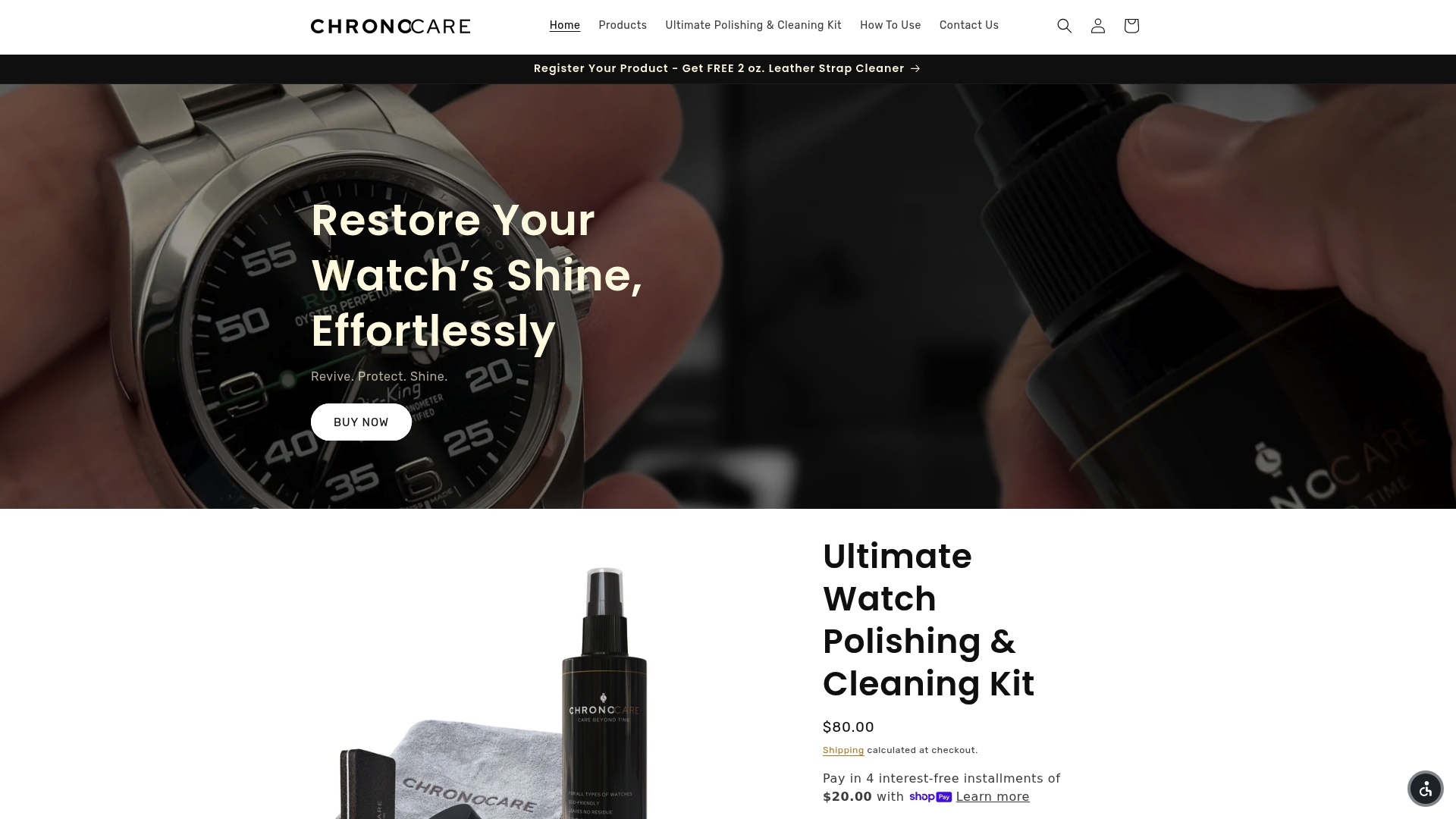
ChronoCare’s three core SKUs are built for exactly this kind of retail rollout. The Ultimate Watch Cleaning Kit is a complete, guided cleaning solution formulated for luxury timepieces, with everything a customer needs in one box and clear instructions that reduce misuse risk for retailers. The Ultimate Watch Polishing & Cleaning Kit steps up to a premium bundle suited for Tier 3 placement or gift-set positioning. The Watch Polishing Cream is a single-SKU add-on that pairs naturally with any watch sale and handles light scratches on all metal surfaces.
All three products are formulated in the U.S., come with guided usage instructions, and carry the customer satisfaction guarantee that makes them easy to stand behind at the register. Visit shopchronocare.com to explore reseller options and get your pilot order started.
Useful sources and references
- Watch Accessories Wholesale Supplier for Retail Business Success
- What Are the Top 5 Strategies to Maximize Profitability for Your Wristwatch Boutique? — margin ranges and AOV uplift estimates
- Enhancing Customer Loyalty with Expert After-Care: Four Valuable Tips – Company of Master Jewellers
- Profit-building with battery replacements – Stuller Bench Jeweler — service-first strategy
- Beyond the Sale: How a Holistic Care Strategy Keeps Customers Coming Back — voucher pairing tactics
- Repair-first customers are rising – Luxare — acquisition channel framing
- Ask the Watch Guy: 7 Reasons to Replace Watch Batteries – National Jeweler
- Why premium watch care products matter for collectors – ChronoCare
- Watch Care Product Safety: What Every Owner Must Know – ChronoCare