

Why Vintage Watches Need Special Care: A Collector's Guide
Vintage watches are defined as mechanical timepieces over 25 years old, and why vintage watches need special care comes down to one core fact: their materials, lubricants, and seals age in ways that modern watches simply do not. A vintage Rolex Submariner or Omega Speedmaster from the 1960s carries decades of mechanical history inside its case. That history is also its greatest vulnerability. Caring for vintage watches means understanding that every component, from the hairspring to the crystal gasket, has a finite lifespan that demands active management.
Why vintage watches need special care: aged oils and mechanical wear
The most urgent reason vintage watches require dedicated maintenance is lubricant degradation. Watch oils do not last forever. Over years, they dry out, thicken, and eventually turn into abrasive residue that grinds against the very pivots and gears they were meant to protect. The result is accelerated wear on components that are no longer manufactured and cannot be easily replaced.
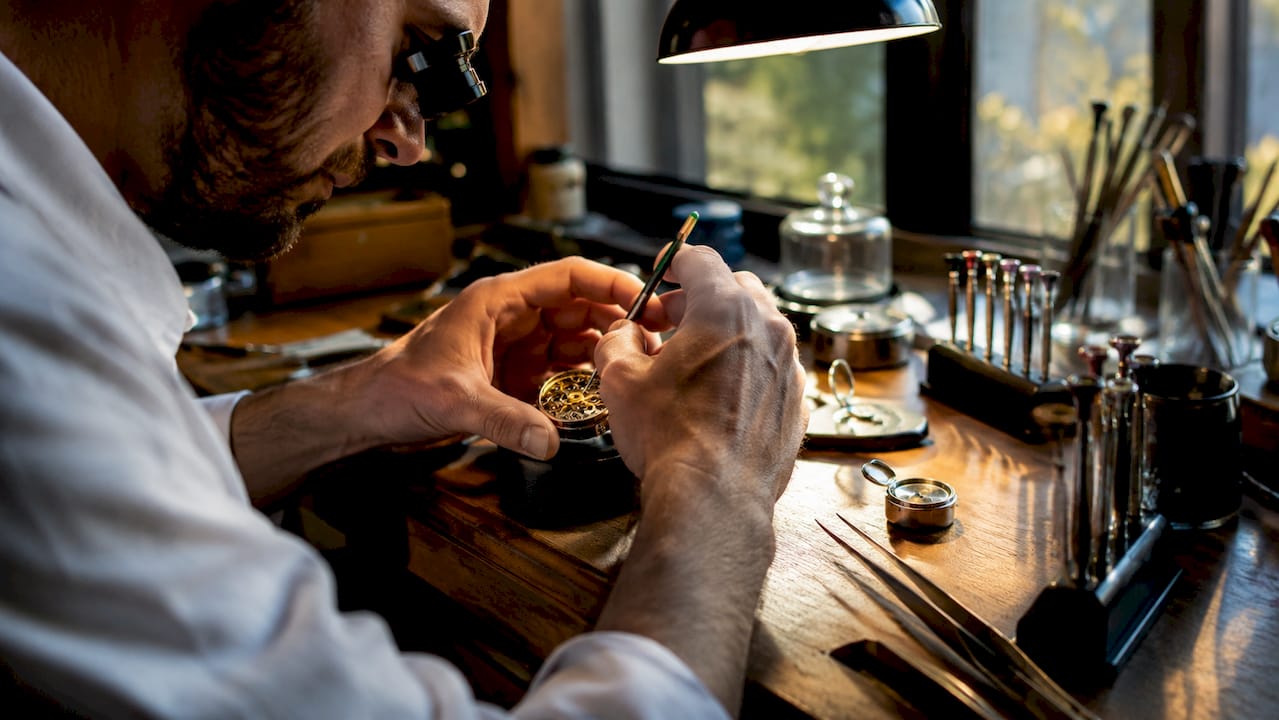
Experts recommend servicing vintage mechanical watches every 3–6 years to prevent internal damage caused by dried lubricants turning abrasive. Missing that window does not just mean a watch runs slow. It means metal-on-metal friction that shortens the movement’s life by years.
The specific risks of neglected lubrication include:
- Pivot wear: Dried oil allows steel pivots to grind against brass jewel settings, creating irreversible scoring.
- Gear train damage: Coagulated oil increases resistance across the gear train, straining the mainspring.
- Escapement failure: The pallet fork and escape wheel depend on precise, thin lubrication. Dry oil causes erratic ticking or complete stoppage.
- Mainspring fatigue: A strained mainspring under extra load fatigues faster, increasing the risk of breakage.
Pro Tip: If you acquired a vintage watch with no service history, treat it as overdue for service immediately, regardless of how well it appears to run. A watch that runs does not mean a watch that is healthy.
Regular use helps keep lubricants distributed, preventing them from settling and causing uneven wear. That said, regular use is not a substitute for professional servicing. It simply slows the degradation curve between service intervals.
How does water resistance fail in vintage watches?
Vintage watches lose their original water resistance as rubber and silicone gaskets degrade. Gaskets typically last around five years, meaning a watch that was water-resistant when new is almost certainly not water-resistant today. This matters even for collectors who never swim with their watches. Rain, hand washing, and high humidity all pose real threats.
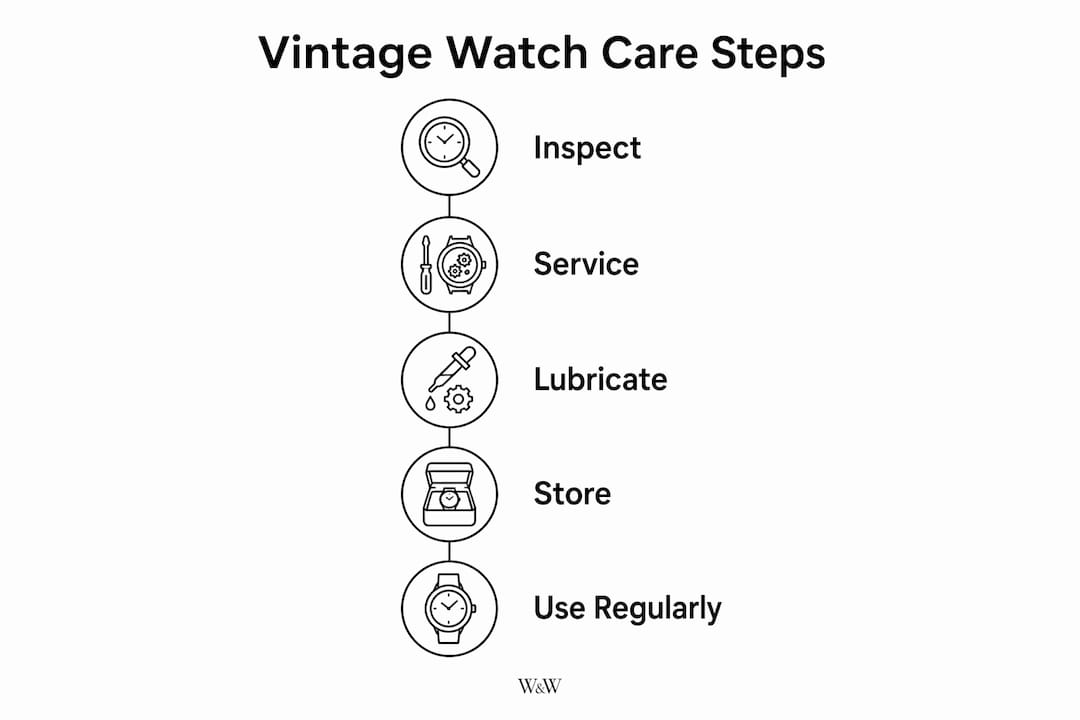
Moisture intrusion causes rust on steel components, corrosion on brass parts, and fogging under the crystal that is expensive to reverse. A cracked crystal compounds the risk dramatically. Leaving a cracked crystal unrepaired invites moisture and rust that can severely damage the movement. Replacing an acrylic crystal is one of the most economical repairs available, making it a clear priority.
Practical steps to prevent moisture damage include:
- Store watches in a humidity-controlled environment at 40–60% relative humidity.
- Never wear a vintage watch in rain, near sinks, or in any wet environment unless it has been recently pressure-tested by a watchmaker.
- Inspect the crystal for chips or cracks at least twice a year.
- Replace gaskets during every service, not just when visible damage appears.
Pro Tip: A small digital hygrometer costs under $20 and tells you the exact humidity level in your watch storage area. It is one of the cheapest and most effective tools in any collector’s kit.
How do magnetism and shocks damage vintage movements?
Magnetism is an invisible threat that most collectors underestimate. Exposure to household magnets, including those in phone cases, bag clasps, and laptop speakers, can magnetize the hairspring inside a vintage movement. A magnetized hairspring causes the watch to gain 5–10 minutes per day and requires professional demagnetization to correct. That time deviation is not a minor inconvenience. It signals that the hairspring coils are sticking together, disrupting the entire regulation of the movement.
Physical shocks present an equally serious risk. Modern watches use shock protection systems like Incabloc or Kif to absorb impacts. Most vintage watches, particularly those made before 1945, lack these systems entirely. A drop from table height can bend a pivot, displace a jewel, or break a balance staff. Repairs for shock damage are labor-intensive and costly.
To protect against both hazards:
- Keep vintage watches away from smartphones, tablets, magnetic bag closures, and speaker systems.
- Remove your watch before any activity with impact risk, including sports, yard work, or moving furniture.
- Store watches in padded watch rolls or boxes, never loose in a drawer where they can shift and knock against hard surfaces.
- If a watch suddenly gains or loses significant time, have it checked for magnetism before assuming a mechanical fault.
Pro Tip: A watchmaker can demagnetize a vintage movement in under a minute using a degausser. If your watch starts running fast without explanation, this is the first test to request.
Preservation versus restoration: which approach protects value?
The distinction between preservation and restoration is one of the most consequential decisions a vintage watch collector makes. Preservation seeks to stabilize the watch’s condition while maintaining its historical character, whereas restoration aims to return the watch to a factory-new appearance. Both have legitimate uses, but they serve different goals and carry different risks.
| Approach | What it involves | Best suited for |
|---|---|---|
| Preservation | Service movement, replace worn functional parts, retain original dial and case finish | High-value collector pieces, watches with original patina |
| Restoration | Refinish dial, polish case, replace damaged parts with period-correct components | Sentimental pieces, watches in genuinely poor cosmetic condition |
Over-polishing or replacing original dials and hands can reduce a vintage watch’s collector value by 10% or more. That figure understates the real-world impact on rare references, where originality commands a premium that no amount of cosmetic work can restore.
“A documented, professional service history increases buyer confidence and can add premium value, while undisclosed service or excessive polishing commonly reduces value.” A watch with honest wear and a clean service record will almost always outperform a heavily polished example at auction.
The preservation versus restoration decision should always start with the question: what is this watch worth with its original finish intact? For any watch with collector significance, the answer is almost always more than it would be after refinishing. Reserve cosmetic restoration for watches where the original finish is already lost or where sentimental value outweighs market value.
What daily winding and use habits protect a vintage watch?
Daily handling habits have a direct impact on the long-term health of a vintage movement. Winding at the same time each day helps maintain stable mainspring torque and consistent timekeeping. Winding at 9:00 AM each morning, for example, creates a predictable power reserve cycle that keeps the movement running at its designed tension level.
Over-winding is a real risk with older crown and stem assemblies. Forcing a crown that resists is one of the fastest ways to damage the winding mechanism. Wind slowly, stop at the first sign of resistance, and never force the crown in any direction.
Key daily care habits for vintage watch collectors:
- Wind manually wound watches once per day, at the same time, with slow and deliberate turns.
- Avoid setting the date between 9:00 PM and 3:00 AM. The date-change mechanism is under active engagement during this window, and forcing the date during this period risks damaging delicate gears.
- Rotate your collection rather than leaving watches unworn for months. Prolonged storage without use allows lubricants to settle unevenly.
- Avoid automatic winders for vintage pieces. Automatic winders can accelerate lubricant degradation by keeping the movement in continuous operation, shortening service intervals.
Pro Tip: Keep a simple log of when you last wound and wore each watch. For collectors with multiple pieces, this prevents any single watch from sitting unworn long enough for lubricants to settle and cause uneven wear.
The maintenance checklist for collectors covers service intervals, storage conditions, and winding routines in detail, and is worth reviewing alongside any new addition to your collection.
Key Takeaways
Vintage watches require specialized care because their aging lubricants, degraded seals, and fragile mechanics create failure risks that no modern watch faces at the same scale.
| Point | Details |
|---|---|
| Service every 3–6 years | Dried lubricants turn abrasive and cause irreversible movement damage without regular professional servicing. |
| Replace gaskets proactively | Original water resistance fails within roughly five years; humidity-controlled storage at 40–60% prevents corrosion. |
| Avoid magnets and impacts | Magnetism causes 5–10 minutes of daily time gain; vintage watches without shock protection are vulnerable to drops. |
| Preserve before you restore | Over-polishing or replacing original parts can reduce collector value by 10% or more. |
| Wind consistently and carefully | Daily winding at the same time maintains stable torque; automatic winders accelerate lubricant wear in vintage movements. |
The part most collectors learn too late
The single most common mistake I see among new vintage watch collectors is treating a running watch as a healthy watch. A vintage Omega Constellation that keeps decent time can still have dried, abrasive oil grinding through its movement every second it runs. By the time the watch stops or starts losing significant time, the damage is already done. The repair bill reflects not just the current problem but years of accumulated wear that a timely service would have prevented.
The second mistake is cosmetic. Collectors buy a watch with beautiful original patina on the dial, then send it out for a “refresh” that strips exactly what made it valuable. I have seen watches lose a third of their market appeal after a well-intentioned polish. Caring for vintage watches means resisting the urge to make them look new. Patina is not dirt. It is evidence of authenticity.
The right mindset is stewardship, not ownership. You are the current custodian of a mechanical object that may outlast you by another century if you treat it correctly. That means professional service on schedule, gentle daily handling, and the discipline to leave original finishes alone. Find a watchmaker who specializes in vintage movements, not a general repair shop. The difference in outcome is significant.
— Raymond Jenkins
ChronoCare’s tools for preserving vintage timepieces
Protecting a vintage watch between professional services requires the right products. Harsh household cleaners, abrasive cloths, and generic polishes can strip original finishes or leave residue that works into case joints.

ChronoCare’s Ultimate Watch Cleaning Kit is formulated specifically for delicate timepieces, giving collectors a safe way to remove surface grime without touching the original finish. For collectors who want to address light surface scratches on the case without over-polishing, ChronoCare’s watch polishing cream removes minor marks while respecting the metal’s original character. Both products are formulated in the US and designed for the precision that vintage pieces demand.
FAQ
Why are vintage watches more delicate than modern ones?
Vintage watches use aging lubricants, rubber gaskets, and mechanical components that degrade over decades. They also lack modern shock protection systems, making them far more vulnerable to everyday impacts and environmental hazards.
How often should a vintage watch be serviced?
Experts recommend servicing a vintage mechanical watch every 3–6 years. Skipping service allows dried oils to become abrasive, causing wear that shortens the movement’s lifespan.
Can I wear my vintage watch in the rain?
No. Gaskets in vintage watches degrade within roughly five years, making original water resistance unreliable. Even light moisture exposure risks rust and corrosion inside the movement.
Does polishing a vintage watch hurt its value?
Yes. Over-polishing or replacing original dials and hands can reduce a vintage watch’s collector value by 10% or more. Preservation of original finishes is the standard approach for any watch with collector significance.
What should I do if my vintage watch suddenly runs fast?
A sudden gain of 5–10 minutes per day typically indicates hairspring magnetization from exposure to a magnetic field. A watchmaker can correct this quickly with a degausser during a routine service visit.