

What Is Watch Investment Grade? A 2026 Collector's Guide
Investment-grade watches are luxury timepieces defined by brand prestige, scarcity, consistent market demand, and durable craftsmanship that allows them to hold or grow in value over time. The term “investment grade” is not an official industry certification. It is a collector’s shorthand for watches that meet a recognized set of criteria tied to resale liquidity, provenance, and maker reputation. Brands like Rolex, Patek Philippe, and Audemars Piguet anchor this category. Understanding what is watch investment grade separates collectors who build lasting value from those who buy on impulse and lose money.
What makes a watch investment grade?
Investment-grade timepieces share six measurable traits. Each one affects resale price, liquidity, and long-term holding value.
- Brand heritage and global recognition. Rolex, Patek Philippe, and Audemars Piguet collectively dominate 64% of the secondary market. That concentration reflects decades of consistent quality, controlled distribution, and cultural cachet that no marketing budget alone can manufacture.
- Limited production and scarcity. Scarcity drives demand. The Patek Philippe 5711/1A, now discontinued, commands a premium precisely because supply is permanently capped. A watch still in active production rarely holds the same pricing power.
- Proven secondary market liquidity. An investment-grade watch sells quickly at a fair price. If a model takes months to move at auction, it fails the liquidity test regardless of its retail price.
- Durable materials and craftsmanship. High grade watches built for daily wear combine historical market strength with materials that resist scratching, corrosion, and mechanical failure. A watch that survives daily use without losing condition retains more value than a fragile safe queen.
- Full set provenance. The original box and papers are not optional extras. Sophisticated investors treat them as essential documentation. Missing provenance can meaningfully reduce resale value, sometimes by a significant margin.
- Material as asset class. Steel provides the highest liquidity. Gold hedges against inflation. Titanium favors long-term rarity plays. Each material reflects a different investment goal, and collectors should choose accordingly.
Pro Tip: Before buying any watch as an investment, confirm it has a documented service history and the original box and papers. These two factors alone can separate a strong resale from a slow one.
How have investment-grade timepieces performed recently?

The 2026 market tells a clear story. 56% of Rolex watches and 63% of Audemars Piguet watches currently trade above their retail prices on the secondary market. That means the majority of pieces from these two brands alone are already profitable for their original buyers.
Specific model performance reinforces the pattern. The Rolex 116528 in yellow gold recorded a 3% price increase in just six months leading into 2026, outpacing broader gold market trends over the same period. That is a meaningful return for a wearable asset. The Patek Philippe 5711/1A continues to hold exceptional value due to its discontinued status and the permanent scarcity that creates.
| Model | Key Investment Factor | 2026 Market Signal |
|---|---|---|
| Rolex 116528 (Yellow Gold) | Material inflation hedge | 3% price gain in 6 months |
| Patek Philippe 5711/1A | Discontinued, high scarcity | Sustained premium above retail |
| Audemars Piguet Royal Oak | Brand dominance, limited supply | 63% of models trade above retail |
| Steel sport references (Big Three) | Highest liquidity tier | Fastest secondary market turnover |
The 2026 market correction has shifted collector focus away from speculative hype and toward proven resale liquidity and historical provenance. That is good news for disciplined investors. Watches with genuine scarcity and strong brand backing have continued to rise even as trend-driven pieces have softened.
Certified pre-owned programs from major brands add one complication. They provide warranty coverage and authentication, but CPO premiums are not reliably recovered at resale. Buying certified pre-owned for peace of mind is reasonable. Buying it as a pure investment strategy requires more scrutiny.
How to build an investment-grade watch portfolio
Building a watch portfolio requires the same discipline as any other alternative asset allocation. Financial advisors recommend allocating 5–10% of investable assets to luxury watches within a broader portfolio. That ceiling exists because watches, unlike stocks, carry storage, insurance, and maintenance costs.
The most effective structure is the core-satellite approach.
- Build the core first. Allocate 60–70% of your watch budget to liquid blue-chip references. These are proven models from Rolex, Patek Philippe, or Audemars Piguet with strong secondary market records. They move quickly at fair prices and form the stable foundation of the portfolio.
- Add satellites selectively. The remaining 30–40% goes to higher-risk, higher-reward pieces. These might include limited editions with genuine scarcity, high-complication watches from respected independent makers, or discontinued references with growing collector interest.
- Prioritize wearability. A watch you wear is a watch you maintain. Collectors increasingly seek watches that can be enjoyed daily rather than locked in a safe. Wearable investment watches also benefit from regular servicing, which keeps them in condition for resale.
- Buy pre-owned when possible. The pre-owned market removes the immediate depreciation hit that new retail purchases carry. A well-documented pre-owned Rolex Submariner, for example, often holds value better than the same watch bought new at authorized dealer price.
- Time purchases around market cycles. The 2026 correction created entry points in categories that were overpriced during the 2021–2022 speculation peak. Patient buyers who waited for stabilization are now positioned better than those who bought at peak hype.
Pro Tip: Track a watch’s secondary market price history for at least 12 months before buying. Platforms that aggregate auction results give you the data to buy at the right point in the cycle, not at the top.
A luxury watch care routine is not optional for portfolio watches. Condition is a primary driver of resale price, and neglected watches lose value faster than any market correction can explain.
Common misconceptions about investment-grade watches
The biggest misconception is that investment grade equals guaranteed profit. It does not. The term describes a watch’s historical tendency to hold or grow in value. It says nothing about future performance. Every watch investment carries risk, and market conditions change.
- Not all limited editions appreciate. Many hyped releases from secondary brands spike at launch and then fall below retail within 18 months. True scarcity requires permanently capped supply, not just a marketing campaign with a limited run number.
- CPO programs add cost, not guaranteed value. Certified pre-owned premiums are not proven to hold at resale. The warranty and authentication are real benefits, but they are not investment returns.
- Condition matters more than most collectors expect. A Rolex Daytona with polished lugs and no original bracelet sells for meaningfully less than an unpolished example with full bracelet and papers. The watch’s full set documentation is not a nice-to-have. It is a core value driver.
- Material choice shapes your exit strategy. Steel is the most liquid material across all price points. Gold hedges inflation but attracts a narrower buyer pool. Titanium plays are long-term bets on rarity, not short-term flips.
- The 2026 market rewards patience. Value-driven collecting now outperforms speculative trend-chasing. Collectors who buy proven references and hold them for five or more years consistently outperform those chasing the next hot release.
Key Takeaways
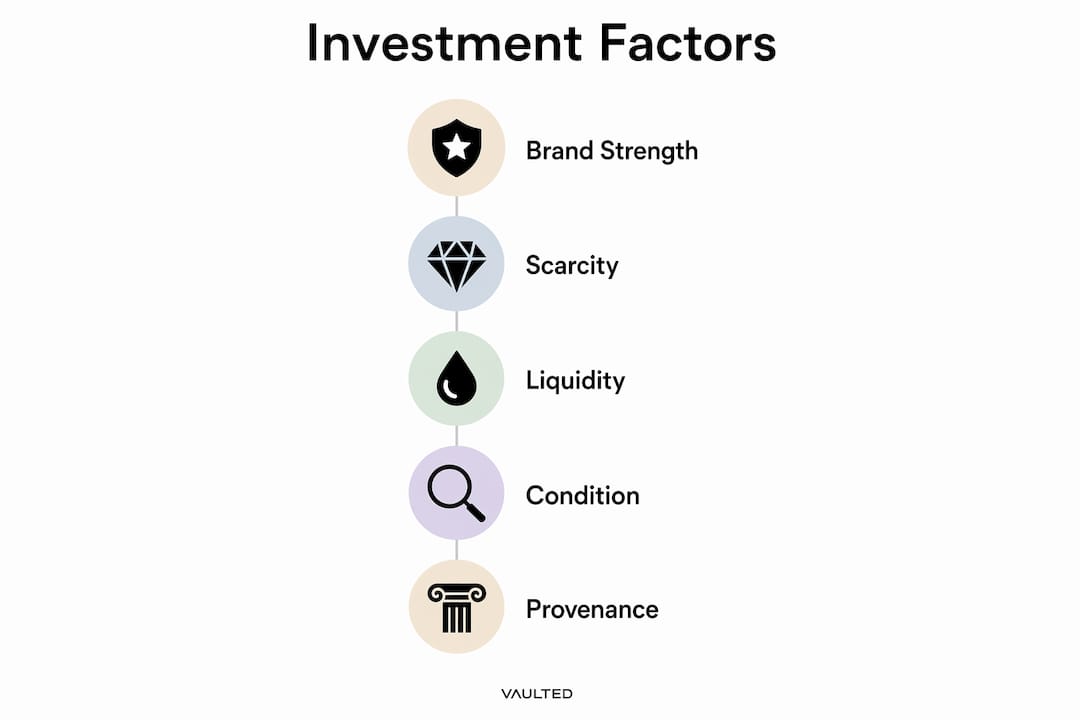
Investment-grade watches are defined by brand strength, scarcity, liquidity, condition, and provenance. No single factor guarantees returns, but all five working together create the strongest case for long-term value retention.
| Point | Details |
|---|---|
| Brand concentration matters | The Big Three hold 64% of secondary market share, making them the safest starting point. |
| Full set is non-negotiable | Original box and papers are core value drivers, not optional extras. |
| Core-satellite structure works | Allocate 60–70% to liquid blue-chip references and 30–40% to higher-risk satellites. |
| CPO premiums need scrutiny | Certified pre-owned programs add cost that is not reliably recovered at resale. |
| Condition drives resale price | Regular maintenance and avoiding unnecessary polishing protect long-term value. |
What I’ve learned after years of watching the watch market
The collectors who do best are not the ones with the most watches. They are the ones who buy fewer pieces with more conviction and then take care of them properly.
I have seen collectors buy a Rolex Submariner, wear it hard for a decade without a single cleaning, and then wonder why it sold for less than they expected. The watch was right. The care was wrong. Condition is not a soft factor. It is a hard number at auction.
The other mistake I see constantly is buying hype instead of scarcity. A brand releasing 500 pieces of a new reference is not the same as a reference being discontinued with no replacement. One is marketing. The other is genuine supply constraint. The market knows the difference, and it prices accordingly within 12 to 24 months.
My honest advice is to buy watches you would wear even if they never appreciated. That mindset keeps you from overpaying for trend pieces and pushes you toward the durable, versatile references that actually hold value. A Rolex Explorer or a Patek Philippe Calatrava worn regularly and maintained properly is a better long-term investment than a limited edition sitting in a box.
Patience is the real edge in this market. The 2026 correction punished speculators and rewarded collectors who held proven references. That pattern repeats every cycle. Buy quality, maintain it well, and hold it long enough for the market to recognize what you already know.
— Raymond Jenkins
ChronoCare: keeping your investment in top condition
Every investment-grade watch depreciates faster from neglect than from market cycles. The physical condition of a timepiece is a direct input to its resale price, and that condition is entirely within your control.
ChronoCare formulates premium cleaning and polishing products specifically for luxury timepieces. The Ultimate Watch Cleaning Kit removes grime, oils, and residue without damaging case finishing or crystal coatings. For collectors who want to address light surface scratches and restore case luster, the Ultimate Watch Polishing and Cleaning Kit handles both tasks in one kit. Maintaining your watch between wearings is one of the simplest ways to protect its resale value. ChronoCare products are formulated in the US and designed for the collector who treats their watch as both an asset and a daily companion.
FAQ
What is watch investment grade, exactly?
Investment-grade watches are luxury timepieces that reliably hold or appreciate in value due to brand strength, scarcity, proven secondary market liquidity, and documented provenance. The term is a collector’s standard, not an official certification.
Which brands produce the most investment-grade watches?
Rolex, Patek Philippe, and Audemars Piguet collectively hold 64% of the secondary market, making them the most reliable sources of investment-grade timepieces in 2026.
Does a full set really affect resale value?
The original box and papers are considered essential by sophisticated investors. Missing provenance can significantly reduce a watch’s resale price compared to a complete example of the same reference.
Are certified pre-owned watches better investments?
CPO programs provide authentication and warranty coverage, but the premium charged is not reliably recovered at resale. They offer peace of mind, not a guaranteed investment advantage.
How much of a portfolio should be in luxury watches?
Financial advisors recommend allocating 5–10% of investable assets to luxury watches as part of a broader alternative asset strategy. That range accounts for storage, insurance, and maintenance costs that equities do not carry.