

The Watch Click Spring: What It Does and Why It Matters
The click spring is a small, tensioned steel blade that pushes the click (pawl) firmly into the teeth of the ratchet wheel, keeping the mainspring under tension between each turn of the crown. Without it, the mainspring unwinds the moment you stop winding. According to The Subdial’s glossary, the click spring is directly responsible for both the power-retention function and the characteristic clicking sound you hear during winding. These three parts, the click, the click spring, and the ratchet wheel, form a single interdependent assembly. If any one of them fails, the winding mechanism fails with it.
Key Takeaways
The click spring is the single component that keeps a mechanical watch’s mainspring under tension during and after winding. Without a functioning click spring, no mechanical watch holds power.
| Point | Details |
|---|---|
| Core function | The click spring pushes the click into ratchet wheel teeth to retain mainspring tension. |
| Primary failure sign | Winding slips backward, power reserve drops sharply, or the click sound disappears. |
| Sourcing rule | Always match a replacement by physical sample: measure hole positions, wire thickness, and bend geometry. |
| Safety step | Let down the mainspring fully by holding back the click before removing the spring. |
| When to stop DIY | Rounded ratchet teeth or uncertain caliber identification means the job belongs with a professional. |
Table of Contents
- How the click spring, click, and ratchet wheel work together
- Why a weak or broken click spring causes real problems
- What click-spring designs look like in the real world
- How to find and fit the correct replacement click spring
- Safe workshop steps for removing or testing the click spring
- Expert tips and mistakes to avoid
- A watch-care specialist’s perspective
- Sources
How the click spring, click, and ratchet wheel work together
The click spring sits beneath or beside the click, applying constant outward pressure so the click’s nose stays engaged with the ratchet wheel teeth. Hodinkee’s Watch 101 entry on the click describes it plainly: the click holds the ratchet wheel against the force of the mainspring, and some designs use a separate click spring while others integrate the spring directly into the click’s body.
Here is what happens during a single turn of the crown:
- You rotate the crown, which turns the winding stem and the ratchet wheel.
- Each ratchet tooth pushes the click’s nose aside momentarily, compressing the click spring.
- As the tooth clears, the click spring snaps the click forward into the next tooth slot.
- The click now locks the ratchet wheel in place, preventing the mainspring from reversing.
- The next crown turn repeats the cycle, adding one more increment of stored energy.
That snap, the click spring returning the click into a fresh tooth, is exactly what you hear. Each audible click signals a successful engagement. A dull, soft, or irregular click often means the spring has lost tension or the click’s pivot is worn.
Why a weak or broken click spring causes real problems
A failed click spring doesn’t just silence the winding sound. The mainspring loses its ability to hold tension, and the watch either stops keeping power reserve or the crown spins freely without storing energy. In severe cases, the mainspring can unwind suddenly and without warning.
Signs worth checking before you open the case:
- Winding feels loose or slips backward. The crown turns but the resistance feels wrong, or you feel the mainspring releasing between turns.
- Power reserve drops faster than normal. A fully wound watch that runs down in hours instead of days points to tension loss.
- The click sound is absent, faint, or irregular. Silence or a soft thud where a crisp click should be.
- The crown spins freely in both directions. This is a late-stage sign that the click is no longer engaging at all.
“A failed click spring can lead to dangerous, high-energy mainspring release — a risk the NAWCC Forums thread on click springs flags explicitly for anyone working on winding assemblies.”
Don’t ignore ratchet teeth wear either. When a weak spring lets the click bounce repeatedly across teeth instead of seating cleanly, it files down the tooth profile over time. Replacing the click spring then also means inspecting the ratchet wheel for damage. If the teeth look rounded or chipped, stop the DIY attempt and take the movement to a professional.
What click-spring designs look like in the real world
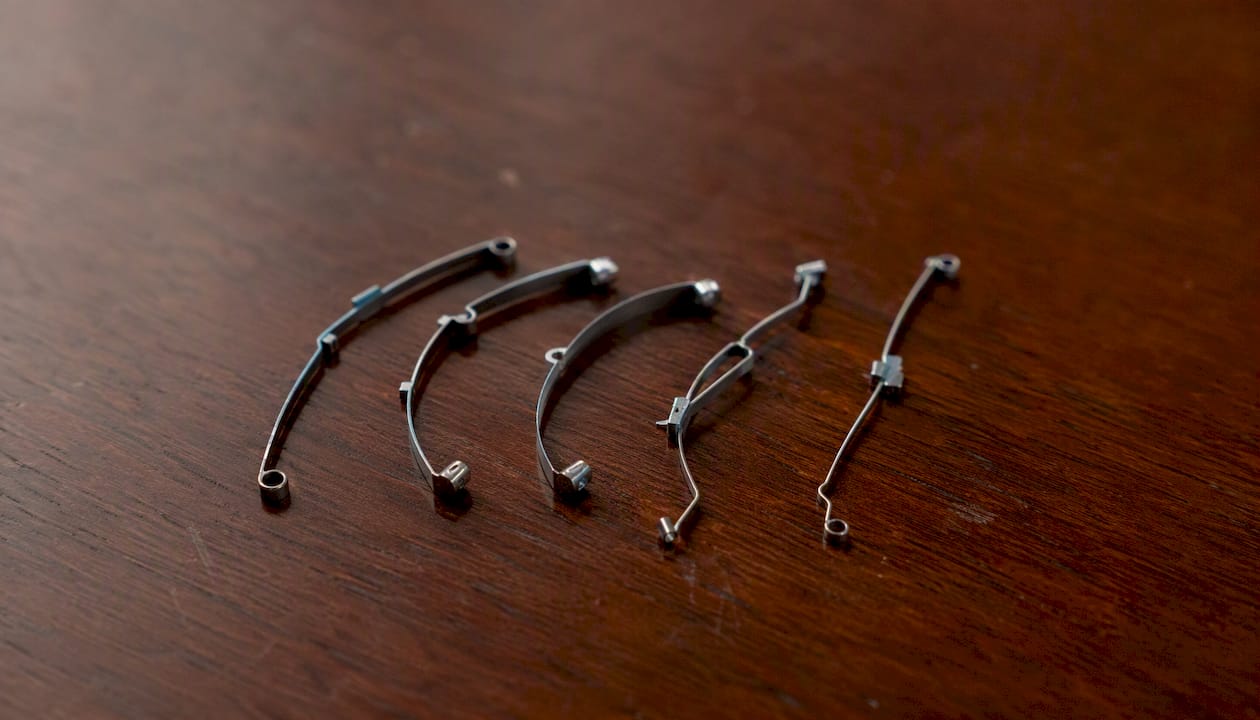
Not every movement uses the same architecture. WatchProSite’s deep-dive on click-spring aesthetics confirms that click-spring design varies widely across calibers, from simple blade springs to fully integrated and twin-click systems.
The three main families you’ll encounter:
- Separate blade click spring. A flat or curved steel blade screwed or riveted near the click. Common in most Swiss lever-set and pin-set movements. Easy to identify, easy to replace, but also easy to lose on the bench.
- Integrated click/spring. The spring function is built into the click’s own body, usually as a cantilevered arm. Fewer parts, but replacement means sourcing the entire click assembly, not just the spring.
- Twin or passenger clicks. Found in bi-directional winding systems and some chronograph movements with dual barrels. These work as a matched pair; their tensions interact, so replacing one without the other can throw off engagement symmetry.
| Design type | Typical failure mode | Identification tip |
|---|---|---|
| Separate blade spring | Fatigue fracture or corrosion at the bend | Visible as a distinct part next to the click |
| Integrated click/spring | Deformation of the cantilevered arm | Spring and click are one piece |
| Twin/passenger clicks | Uneven tension between the pair | Two clicks visible on the ratchet wheel |
How to find and fit the correct replacement click spring
Match by physical sample, not by part number alone. This is the single most repeated piece of advice across repair forums and supplier guides, and it holds especially true for older or unmarked movements where caliber identification is uncertain.
Before ordering anything, document the original spring:
- Photograph it from above and from the side before removal, with a ruler in frame.
- Measure hole positions (center-to-center distance between mounting holes or rivet holes).
- Measure wire or blade thickness with a micrometer. Even a 0.05 mm difference in diameter changes how the click engages.
- Note the bend geometry. The angle and radius of the spring’s curve determine how much force it applies to the click.
- Check the rivet or screw fit. A spring with the right shape but the wrong hole diameter will rock on its pivot and fail early.
Parts suppliers in the US, including Esslinger and Jules Borel, stock click springs sorted by movement caliber. For unmarked movements, bring the sample or its measurements and ask for a match. The NAWCC Forums also recommend replacing rivets at the same time, since old rivets often deform during removal.
Pro Tip: In a genuine emergency, music wire (piano wire) of the correct diameter can substitute temporarily. Hobbyists on the Christopher Ward Forum have documented this approach, but it requires precise diameter matching, careful deburring, and testing under low load only. Never trust a handmade spring in a watch you plan to wear daily.
Using the wrong bend geometry or diameter is a documented sourcing pitfall. WatchRepairTalk’s thread on sourcing click springs for unmarked movements warns that an incorrect spring leads to improper engagement and a mainspring that slips or won’t hold power.
Safe workshop steps for removing or testing the click spring
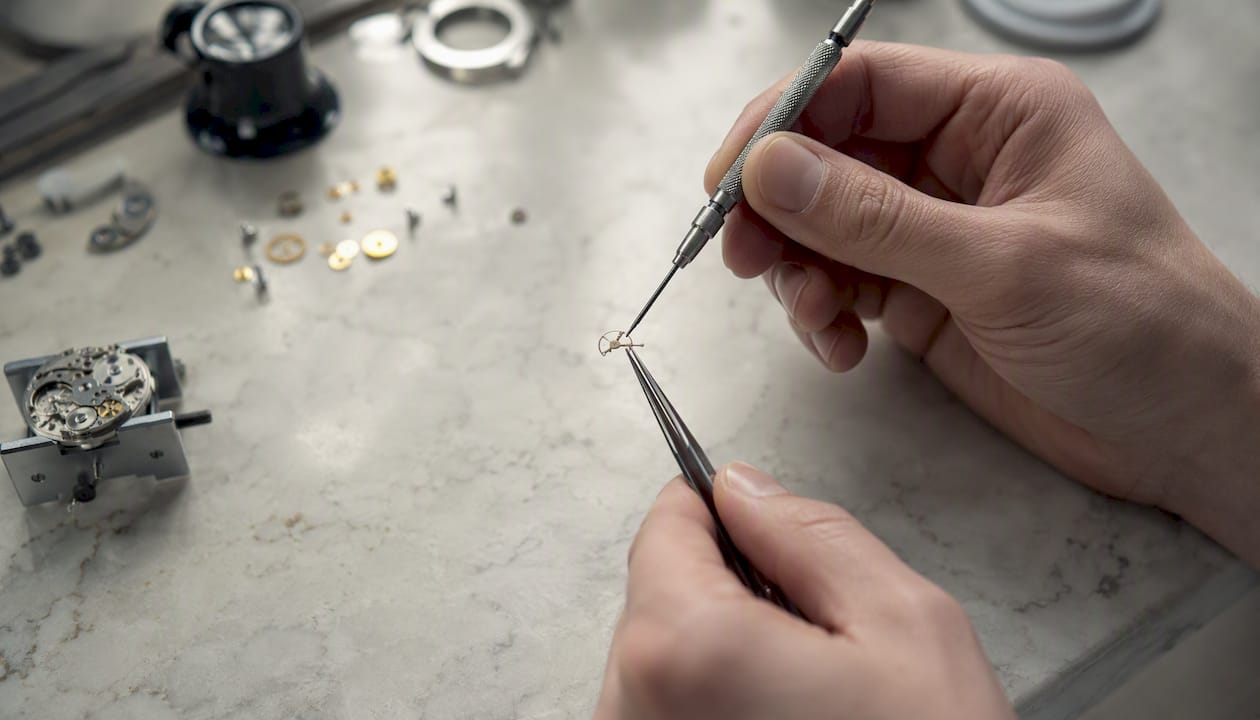
Controlling the mainspring’s stored energy before you touch the click spring is non-negotiable. A sudden, uncontrolled release can damage the barrel, the ratchet wheel, and the movement plate, and in larger clockwork systems it can cause injury.
Follow this sequence:
- Secure the movement in a movement holder so both hands stay free.
- Hold the click back with a pegwood stick or a dedicated click-holding tool, pressing it away from the ratchet wheel teeth.
- Turn the crown slowly in the winding direction while maintaining pressure on the click. This allows the mainspring to release in small, controlled increments rather than all at once.
- Repeat until the crown turns freely with no resistance. The mainspring is now fully let down.
- Only then remove the click spring screw or rivet and lift the spring clear with fine tweezers.
Tools you need: a movement holder, pegwood sticks or a click-holding tool, fine-tipped tweezers, a flat-blade screwdriver sized to the click spring screw, and a mainspring let-down tool if the barrel is already removed. Keep a parts tray close. Blade click springs are small enough to vanish instantly on a workbench.
For a broader look at the tools that belong in a home repair kit, ChronoCare’s guide to watch repair kits for home use covers recommended tools and supplies to stock before you open a movement.
Expert tips and mistakes to avoid
The two most useful professional habits are matching by sample and never over-tensioning the replacement spring. Everything else flows from those.
Pro Tip: Before installing a new click spring, test its tension against the click by hand. The click should snap back crisply but not so forcefully that it bounces off the tooth. A spring that’s too stiff accelerates ratchet tooth wear.
Common mistakes that cause secondary damage:
- Confusing the hairspring with the click spring. They are completely different components. Monochrome Watches explains that the hairspring (balance spring) regulates timekeeping, while the click spring is part of the winding and power-retention system. Mixing them up in conversation or in a parts order wastes time and money.
- Installing a spring with the wrong bend radius. A spring that sits flat against the movement plate instead of arcing over the click applies force in the wrong direction and won’t seat the click reliably.
- Over-tightening the rivet or screw. This deforms the spring’s geometry at the mounting point and changes its effective tension.
- Polishing or bending the spring to adjust tension. Altering the spring’s geometry by hand introduces stress risers that lead to early fatigue fracture. Source the correct spring instead.
- Skipping the ratchet wheel inspection. A new spring on a worn ratchet wheel will fail faster than the original.
Between-service care matters too. ChronoCare’s guide on watch care between services outlines practical checks that can catch early signs of winding mechanism wear before a full service is needed.
A watch-care specialist’s perspective
The click spring is one of those parts that collectors overlook until it fails, and then it becomes the only thing they can think about. What strikes me most, working with enthusiasts and repairers, is how often the sourcing step gets rushed. Someone identifies the problem correctly, orders a spring by part number from an online listing, and installs something that’s close but not quite right. The engagement feels fine at first, then the power reserve starts dropping again within weeks. Sample-matching, with a photograph and a micrometer reading in hand, is slower but it’s the step that actually holds.
ChronoCare’s focus on quality tools and maintenance products reflects the same principle: using the right product for the specific job, whether that’s a cleaning kit before reassembly or a polishing cream after case handling, makes the difference between a repair that lasts and one that needs redoing.
Sources
Trusted horology write-ups, active repair forums, and US-based parts suppliers are the three resources worth bookmarking before you start any click-spring work.
- Watch 101 — Click - Hodinkee
- The ABCs of Time: Everything About The Springs Inside a Mechanical Watch - Monochrome Watches
- Click Spring: Watch Term Definition & Guide | The Subdial
- Horological Meandering | The intoxicating beauty of click springs - WatchProSite
- Sessions Click Spring | NAWCC Forums

When sourcing a replacement spring, always bring a physical sample or precise measurements. A part number alone, especially for older or unmarked movements, is rarely enough to guarantee a correct fit. For anything beyond a straightforward blade-spring swap on a known caliber, a certified watchmaker is the right call.