

Vinegar on Watches: 7 Safer Bracelet Cleaning Steps for Collectors
No, vinegar should not be your default watch cleaner. Use it only in narrowly defined, last-resort ways on removable metal bracelets, and never on leather or an assembled electronic watch head. For most cleaning jobs, a microfiber cloth and mild dish soap, following manufacturer guidance, will get you a safer result with far less risk to your watch.
TL;DR:
- Detach a suitable metal bracelet, soak it briefly in lukewarm water with one drop of mild dish soap, brush gently, rinse, and dry fully.
- Use vinegar only as an unverified last resort on metal, diluted one part to ten parts water, with contact limited to one minute.
- Apple limits smartwatch heads to fresh water or a lightly damp cloth with no loose fibers; do not use soap, vinegar, or soak the device.
- For leather, wipe smooth straps with a barely damp cloth, brush suede or nubuck dry, and replace straps when lining or stitching separates.
- Have a watchmaker assess vintage watches or pieces with uncertain water resistance before cleaning; original finishes and aged seals may be impossible to replace.
Table of Contents
- Why acetic acid can damage finishes, seals and mixed metals
- How to safely clean a metal watch bracelet at home
- Leather straps: why vinegar is a bad idea
- Caring for rubber, silicone and textile watch bands
- Smartwatches: why vinegar is off-limits for the watch head
- How to spot test a cleaner before using it
- Drying and inspection after cleaning
- When to consult a professional watchmaker
- ChronoCare’s approach: least aggressive method first
- What happens if vinegar residue isn’t fully rinsed off
- Vinegar versus purpose-built watch cleaning products
- Caring for antique and vintage watches around vinegar
- Preservation beats aggressive cleaning every time
- A safer, collector-built kit for everyday watch care
- FAQ
- Sources
Why acetic acid can damage finishes, seals and mixed metals
Vinegar works because acetic acid dissolves mineral deposits and loosens grime. That same chemical action is what makes it risky on a watch. Plated finishes, PVD coatings and aged gaskets were not built to withstand repeated acid exposure, and a bath that looks harmless after one use can etch or discolor a surface over several applications.
Water resistance and chemical resistance are two separate things. A watch rated for swimming can still have gaskets that have hardened or shrunk with age, and acetic acid speeds that process along. Longines explains that water-resistance ratings don’t prove a watch can tolerate acids or solvents, which is why identifying materials before cleaning matters more than the cleaner you reach for.
A few specific risks stand out:
- Plated and PVD-coated surfaces can thin or discolor with repeated acid contact.
- Mixed-metal bracelets (steel paired with gold-tone accents) can corrode unevenly.
- Aged rubber or silicone gaskets can degrade faster when exposed to acidic solutions.
- Vintage finishes and patinas can be stripped unintentionally, erasing character that adds collector value.
Vinegar’s acetic acid can dissolve mineral deposits and lift grime, but that same action risks damaging finishes, coatings, and old seals, according to Longines’ cleaning guidance. The practical rule watchmakers follow is simple: identify the materials first, then use the least aggressive method that gets the job done.
How to safely clean a metal watch bracelet at home
Metal bracelets are the one component where a cautious, diluted approach has some practitioner support, but the process still favors soap over acid whenever possible.
- Remove the bracelet from the watch head if your tools and experience allow it; this keeps water and cleaner away from the movement entirely.
- Fill a small bowl with lukewarm water and add one drop of pH-neutral dish soap, then submerge the bracelet only.
- Let it soak for a few minutes to loosen oils and debris trapped in the links.
- Brush gently with a soft-bristle toothbrush, working into clasps and between links.
- Rinse thoroughly under clean, running water to remove all soap residue.
- Use an air-puffer bulb to clear water from crevices and hinge points.
- Let the bracelet dry completely before reattaching it to the watch head.
Longines’ cleaning guide outlines this soapy-water routine as the standard approach for appropriate metal bracelets, and it works without introducing acid at all. Some hobbyists report using a heavily diluted vinegar solution on bronze or steel bracelets to shift stubborn mineral deposits, a practice described in forum discussions among collectors. If you choose to try this, treat it strictly as a last resort, keep exposure to a minute or less, and rinse immediately and thoroughly afterward.
Pro Tip: Never soak a bracelet with a quick-release spring bar mechanism for long periods; moisture can seep into the mechanism and cause it to stick.
Leather straps: why vinegar is a bad idea
Leather is porous, and vinegar’s acidity breaks down the natural oils that keep it flexible. Longines’ leather-care guidance is direct about this: don’t use solvents, and don’t soak leather, full stop.
The safer routine depends on the leather type:
- For smooth or grained leather, wipe with a cloth that’s barely damp, never wet.
- For nubuck or suede, use a soft brush to lift surface dirt instead of any liquid.
- For persistent odor, remove the strap entirely and let it air out away from direct heat.
- Apply a strap-specific leather conditioner afterward to replace lost moisture.
If the lining or stitching has started to separate or smell has soaked into the material itself, replacement is usually more practical than continued cleaning. Our guide to cleaning a leather watch strap walks through material-specific steps in more detail if you want to extend a strap’s life before replacing it.
Pro Tip: Rotate between two or three straps if you wear a leather band daily. Letting leather rest and air out between wears does more to prevent odor than any cleaning product.
Caring for rubber, silicone and textile watch bands
Non-leather straps are far more forgiving than leather, though they still have limits worth respecting.
- Rubber and silicone bands can typically be washed with mild soap and water, then air dried away from direct heat sources.
- Nylon and textile straps are often rinsable, and some are machine washable inside a protective pouch, but check your specific manufacturer’s guidance first since materials vary.
- Avoid leaving rubber or silicone near radiators, car dashboards or other heat sources, since heat accelerates material breakdown faster than cleaning agents do.
Vinegar can help lift mineral buildup from metal hardware, such as buckles or clasps attached to these straps, but prolonged exposure risks damaging coated hardware or the polymer strap itself. Longines’ strap guidance breaks down recommended routines by material, and soap-and-water remains the default across rubber, silicone and nylon options.
Smartwatches: why vinegar is off-limits for the watch head
Electronic watch heads carry sensors, ports and seals that were never designed around chemical cleaners, and manufacturer guidance here is intentionally conservative.
Apple’s own cleaning instructions allow only fresh water or a lightly damp, lint-free cloth on the watch head itself.
Keep these limits in mind for any smartwatch:
- Never use soap, vinegar or any acid-based cleaner directly on the watch head.
- Never use ultrasonic cleaners or compressed air on an assembled electronic device.
- Never submerge a smartwatch in any liquid cleaning solution, even briefly.
- Wipe gently and dry immediately rather than letting moisture sit near ports or speakers.
Apple’s guidance explicitly permits only fresh water or a lightly damp lint-free cloth for the watch head, a notably narrower allowance than what applies to a mechanical watch’s metal bracelet, as detailed in Apple’s support documentation. If sensors or buttons feel off after any cleaning attempt, contact the device manufacturer rather than troubleshooting further at home.
How to spot test a cleaner before using it
A spot test takes two minutes and can save you from a visible mistake on a strap or bracelet you can’t undo.
- Choose a small, hidden area, such as the inside of a clasp or a link that sits against your wrist.
- Apply a small amount of your chosen cleaner, favoring a mild soap solution over anything acid-based.
- Let it sit briefly, no more than a minute, then blot dry and inspect the spot under good light.
- Wait a few minutes to see if any color change, dulling or texture shift appears.
- If you’re testing a diluted vinegar solution on metal only, keep the ratio conservative (roughly one part vinegar to ten parts water) and treat the result as unverified rather than a green light for broader use.
- Rinse the test area thoroughly and dry it before deciding whether to proceed.
Pro Tip: Keep a small notebook or phone note of what you tested and the result. If you’re caring for multiple watches, this prevents repeating a test that already told you no.
Drying and inspection after cleaning
Drying matters as much as the cleaning step itself. Pat each component dry with a microfiber cloth, then use an air-puffer bulb to clear water from crevices around clasps, lugs and link pins. Let everything cure overnight before reassembling the watch, since trapped moisture under a bracelet link or strap fitting can cause problems days later.
Check for these warning signs once everything is dry:
- Fog or condensation visible under the crystal, which signals a seal problem.
- Pushers or the crown that feel gritty or stick instead of moving smoothly.
- Any color change, dulling or texture shift on plated or coated surfaces.
If any of these appear, stop and have the watch looked at rather than continuing to wear or clean it. Routine preventive servicing every three to five years, per Longines’ recommendations, keeps seals in good condition and reduces the risk tied to home cleaning in the first place.
When to consult a professional watchmaker
Some situations call for a service center rather than a home routine. Reach out to a professional if you’re dealing with any of the following:
- A vintage or precious-metal watch where materials and original finishes are harder to replace.
- Unknown or questionable water resistance, especially on an older piece.
- Visible condensation or fog under the crystal after any exposure to moisture.
- Pushers or a crown that feel sticky or gritty rather than smooth.
When you bring a watch in, photograph the issue, note when it started and share the watch’s last service date if you know it. Regular certified servicing, as Longines notes, keeps seals healthy and actually widens what you can safely do at home between visits.
ChronoCare’s approach: least aggressive method first
Our guidance follows the same principle watchmakers use: start with the gentlest method and escalate only if needed. We recommend removing straps or bracelets where possible and beginning with microfiber cloths and mild, pH-neutral soap before anything stronger.
A well-built kit typically includes microfiber cloths, soft brushes, a silicone-safe cleaner, polishing cream for light surface scratches and an air-puffer bulb. A specialist kit becomes worthwhile for valuable or delicate finishes, PVD coatings or vintage pieces where a wrong product choice is hard to undo.
What happens if vinegar residue isn’t fully rinsed off
Incomplete rinsing is where most vinegar-related watch damage actually happens, more than the cleaning step itself. Acetic acid left on a surface keeps reacting even after you’ve wiped it down, which means a watch that looked fine right after cleaning can show problems days or weeks later.
On plated or PVD-coated surfaces, lingering residue can continue to thin the coating, leading to dull patches or uneven color that weren’t there immediately after cleaning. On mixed-metal bracelets, trapped residue in link pins or clasp mechanisms can promote slow corrosion in spots you can’t easily see or reach with a cloth. Rubber or silicone gaskets exposed to residual acid over time can harden or crack faster than they would with normal wear, which directly affects how well a watch resists water and dust going forward.
The fix is straightforward but easy to skip when you’re in a hurry: rinse with clean water for longer than feels necessary, and rinse twice if you’re at all unsure the first pass got everything out of a crevice or hinge. Full drying afterward, including overnight curing before reassembly, gives you a chance to catch early signs of residue damage, like discoloration or a rough feel, before they become permanent.

Vinegar versus purpose-built watch cleaning products
Vinegar has one real advantage: it’s already in your kitchen. Beyond that, the comparison with specialized watch cleaning products isn’t close.
A pH-neutral dish soap solution, which is what Longines recommends for appropriate metal bracelets, cleans effectively without the corrosion risk that comes with repeated or prolonged acid exposure. Purpose-built watch cleaning sprays and silicone-safe solutions are formulated to lift oils and grime without reacting with plated finishes, PVD coatings or gasket materials, which means you skip the guesswork around dilution ratios and exposure times entirely.

Vinegar also offers no guidance on concentration or contact time specific to watch materials, so every use is effectively an improvised test. A product built for watch care removes that uncertainty and is formulated with the same materials in mind that make vinegar risky: plating, coatings and seals. For routine maintenance, a dedicated cleaner paired with the right cloths and brushes gets you a comparable, often better, result with a lower chance of an irreversible mistake.
Caring for antique and vintage watches around vinegar
Vintage and antique watches deserve the most conservative approach of anything covered here, and vinegar has little place in that approach at all.
Older watches often carry original finishes, patinas and seals that can’t be replaced or matched if damaged, which means even a brief acid exposure carries outsized risk compared to a modern piece. Longines advises that watches with unknown or questionable water resistance, a common situation with vintage pieces, should go to a professional rather than through any home cleaning routine, vinegar included.
If you own a vintage watch, treat any cleaning beyond a dry microfiber wipe as a decision to make with a watchmaker, not a kitchen cabinet. Gaskets in older watches have frequently hardened or shrunk over decades, and acetic acid accelerates that deterioration in ways you won’t notice until the watch fails a water-resistance test it used to pass. Store the piece in stable conditions between cleanings, and consider a dedicated storage solution, such as a watch winder safe, to limit the dust and handling that create the need for cleaning in the first place.
Preservation beats aggressive cleaning every time
The biggest mistake I see collectors make isn’t using the wrong cleaner once. It’s treating cleaning as a rare, intensive event instead of a small, routine habit. A quick wipe-down after wear prevents the buildup that later tempts someone toward vinegar, ultrasonic baths or other shortcuts that carry real risk. Preservation-minded owners who stick to gentle, frequent care spend less time worrying about damage and more time actually wearing the watch.
— Raymond Jenkins
A safer, collector-built kit for everyday watch care
We built our Ultimate Watch Cleaning Kit around the same principle this entire article follows: start gentle, use the right tool for each material, and avoid the guesswork that comes with kitchen-cabinet fixes.
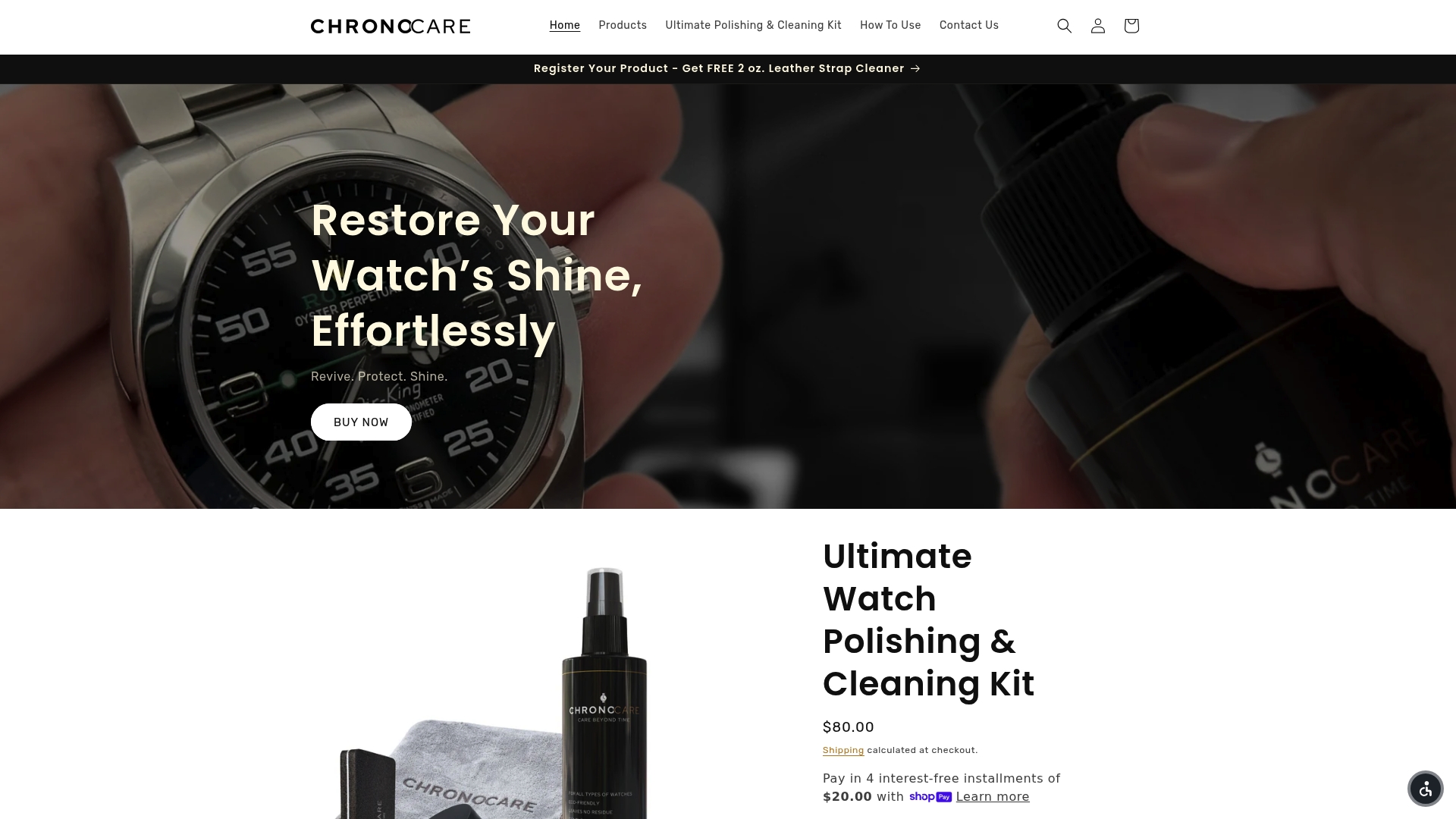
A kit for watch cleaning typically includes microfiber cloths, soft brushes, a silicone-safe cleaning solution and an air-puffer bulb, allowing you to follow the metal-bracelet routine above without reaching for vinegar or risking a coated finish. For watches showing light surface scratches after cleaning, our polishing cream restores shine without the abrasiveness of a harsher compound. Check out the full kit details to see what fits your collection.
FAQ
Can I clean my watch with dish soap?
Yes, a pH-neutral dish soap diluted in lukewarm water is the routine Longines recommends for appropriate metal bracelets. Keep soap away from the watch head on smartwatches, since Apple’s guidance limits that area to fresh water or a lightly damp cloth.
Is vinegar good for cleaning jewelry?
Vinegar can lift tarnish and mineral deposits from some jewelry metals, but the same acid risks plated finishes, gemstone settings and aged seals, similar to the concerns with watch bracelets. Spot testing on a hidden area first, then rinsing thoroughly, reduces the chance of a visible mistake.
How do I fix a smelly leather watch band?
Remove the strap and let it air out away from direct heat rather than washing it with vinegar or soap, since Longines’ leather-care guidance advises against solvents and soaking. If the smell persists after airing out, a strap-specific leather conditioner can help, though a strap with compromised lining or stitching usually needs replacing.
Can I use rubbing alcohol to clean my Apple Watch?
Apple’s support guidance permits 70% isopropyl or 75% ethyl alcohol wipes on certain bands, but not on leather bands and never on the watch head itself. The watch head should only be wiped with fresh water or a lightly damp, lint-free cloth, with no soaking or submersion in any cleaning agent.