

Save Your Luxury Watch: Remove Sunscreen Same Day with ChronoCare
Wipe the watch immediately with a dry microfiber cloth, then a lukewarm damp one, if the crown is secured and the water-resistance rating allows it. If you’re unsure about the seals, skip water entirely and just wipe. Never use alcohol on leather straps, and always spot-test any cleaner on a hidden section first.
TL;DR:
- Regular water contact-rated watches can be gently rinsed with a drop of mild soap and a soft brush, but others should only be wiped with a damp cloth.
- Silicone, rubber, and fabric straps handle soap and water well, while leather and exotic skins require dry cleaning and sparing moisture.
- Sunscreen buildup on sensor windows causes inaccurate readings and should be cleaned daily with a soft microfiber cloth, avoiding soap or abrasive cleaners.
- Never use acetone, ultrasonic cleaners, high heat, or abrasive polishes on delicate or plated finishes, as these can cause irreversible damage.
- Professional cleaning and resealing are recommended if signs of corrosion, condensation, or crown issues appear, or if cleaning attempts cause changes in case fit or mechanical function.
Table of Contents
- How Do You Remove Sunscreen From a Watch Right Away?
- What’s the Safest Way to Clean Each Watch Material?
- Why Does Sunscreen on the Back Crystal Matter?
- What Should You Never Use to Clean a Watch?
- How Do You Remove Dried, Stubborn Sunscreen Residue?
- How Can You Prevent Sunscreen Buildup Long Term?
- When Should You Take a Watch to a Professional Instead?
- Meet the Author: Watch Care Expertise Behind This Guide
- A Collector’s Case for Doing Less, Not More
- Which ChronoCare Kit Fits Your Cleaning Job?
- Where This Guidance Comes From
- Sources
- FAQ
How Do You Remove Sunscreen From a Watch Right Away?
Sunscreen residue hardens faster than most people expect, so act the same day it happens. Manufacturers and dermatology guidance both treat prompt removal on the same day as a priority for anyone wearing a watch during active outdoor time.
Here’s the sequence to follow:
- Power off a smartwatch or secure the crown on a mechanical piece before introducing any moisture.
- If you’re not certain about the water-resistance rating, take the watch off entirely rather than guessing.
- Wipe off excess sunscreen with a dry microfiber cloth, then follow with a lukewarm, barely damp cloth.
- For watches rated for regular water contact, use a drop of mild soap on a soft brush, rinse briefly, and dry.
- On rubber or silicone bands, a cloth dampened with isopropyl alcohol handles greasy residue. Never use it on leather.
- Dry everything thoroughly. If the strap is leather, apply a light conditioner once it’s fully dry.
Pro Tip: Keep a small microfiber cloth in your beach bag or golf cart. Wiping sunscreen off within minutes takes ten seconds and prevents the multi-step cleanup you’ll need after it dries into the grain of a leather strap or the crevices of a bracelet.
What’s the Safest Way to Clean Each Watch Material?
Generic “watch cleaning” advice ignores the fact that a titanium dive watch and an alligator-strapped dress watch have almost nothing in common when it comes to safe cleaning. Match the method to the material.
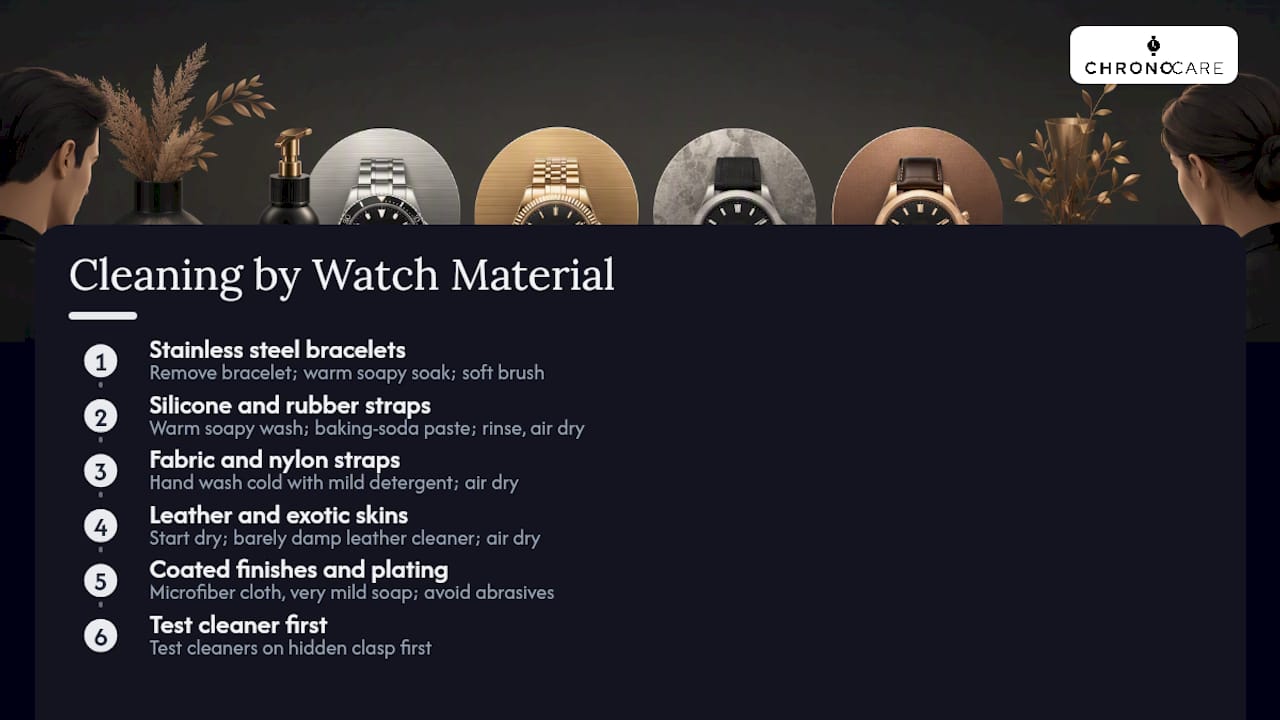
Stainless steel bracelets. Remove the bracelet from the case when you can (a spring bar tool makes this simple). Soak it in warm water with a single drop of mild dish soap, then work a soft-bristled brush into the link gaps where sunscreen and skin oil accumulate. This drop-of-soap-and-soft-brush method is standard practice among watchmakers for cleaning bracelets without scratching the finish. Rinse under lukewarm water and dry completely, including inside the links, since trapped moisture invites corrosion.
Silicone and rubber straps. These tolerate a warm soapy wash well. For sunscreen that’s turned into a sticky film, a baking soda paste worked in with your fingers lifts it without scratching. Diluted isopropyl alcohol on a cloth also works on stubborn spots. Rinse and let the strap air dry fully before reattaching.
Fabric and nylon straps. Hand wash in cool water with a small amount of mild detergent, then air dry flat. If the strap has a leather backing or lining, avoid saturating it. Blot rather than soak.
Leather and exotic skins. Start dry. Wipe with a soft cloth before introducing any moisture. For residue that won’t lift, use a barely damp cloth with a leather-specific cleaner, working in small sections. Let it air dry away from direct heat, then apply a leather conditioner sparingly. Overconditioning is as damaging as underconditioning; a light layer every few months is plenty.
Coated finishes and plated metal. PVD coatings and gold plating scratch easily and don’t tolerate abrasives or polish. Stick to a microfiber cloth and the mildest soap solution. This is the one category where “less is more” is not a cliché. It’s the actual rule.
Pro Tip: Test any cleaner on the inside of the clasp or a strap section hidden against your wrist before applying it anywhere visible. Thirty seconds of patience there can save a $2,000 strap.
Why Does Sunscreen on the Back Crystal Matter?
A thin film of sunscreen across the back crystal does more than look dull. On smartwatches and fitness trackers, that film sits directly between the optical sensor and your skin, and it’s a documented cause of erratic heart-rate and activity readings. If your readings have been jumping around lately, check the sensor window before you check the settings menu.
Cleaning it safely comes down to a few rules:
- Use a soft, damp microfiber cloth on the sensor window. Nothing abrasive, nothing dry-scrubbed.
- Skip soap on the sensor unless your device’s own manufacturer guidance says otherwise.
- If the device carries a solid water-resistance rating, a brief gentle rinse is usually fine. If not, stick to damp-wiping only.
- Never use compressed air, ultrasonic cleaners, or anything abrasive near the sensor housing.
Apple’s own cleaning guidance calls out lotions and sunscreens by name as substances that build up on the back crystal and interfere with sensor accuracy, and it recommends lightly running water or a microfiber cloth rather than soap for many models. That’s a manufacturer telling you directly: this buildup is common enough to warrant its own warning.
What Should You Never Use to Clean a Watch?
Some of the worst damage to luxury and smart watches happens not from sunscreen itself, but from an overcorrection trying to remove it. A few practices show up again and again in repair shop horror stories:
- Acetone or undiluted alcohol on leather or plated surfaces strips finish and dries out hide almost instantly.
- Ultrasonic cleaners are fine for solid stainless steel cases in professional hands, but they’re a poor match for delicate finishes, gem settings, or anything with a sensor.
- High heat, whether a hair dryer or a sunny windowsill, warps leather and can degrade adhesives holding gaskets in place.
- Aggressive scrubbing or metal polish on coated or thin-plated watches wears through the plating faster than you’d think.
- Assuming an older watch still holds its factory water-resistance rating. Gaskets degrade over years even without visible damage, so a watch resistant to 100 meters when new may not tolerate a sink rinse a decade later. A damp cloth is the safer default once a watch hasn’t had recent service.
How Do You Remove Dried, Stubborn Sunscreen Residue?
Sunscreen that’s baked onto a bracelet or strap for days behaves differently than fresh residue, and it needs a gentler warm up before you attack it directly.
- Press a warm, damp cloth against the affected area for a minute or two to soften the residue before wiping.
- For nonporous parts like steel or hard resin, a cloth dampened with 70% isopropyl alcohol lifts what plain water won’t. Skip this step entirely on leather.
- On silicone or rubber, a baking soda paste worked in gently with a soft cloth handles ground-in residue that soap alone missed. Do not use this paste on plated metal since the mild abrasion that helps rubber can dull plating.
- If residue remains after two careful attempts, or if you notice any change in how the crown turns or the case back seats, stop. That’s your signal to call a professional rather than keep pushing.
Pro Tip: Isopropyl alcohol is genuinely useful, but guidance on where it’s safe varies by manufacturer. Confirm your specific model’s care instructions before using it anywhere near a sensor or seal, not just on the strap.
How Can You Prevent Sunscreen Buildup Long Term?
The best sunscreen removal is the kind you never have to do. A few habits cut down on both the mess and the risk of long-term discoloration.
- Apply sunscreen and give it a few minutes to absorb into your skin before putting the watch back on.
- Wipe the watch down every night you’ve been outdoors, even if you didn’t notice visible residue.
- Rotate straps if you’re going to be poolside or at the beach often. A dedicated silicone band takes the abuse instead of your good leather one.
- Schedule a proper bracelet deep-clean and a seal check every year or two, especially for pieces you wear daily.
- Store leather straps dry and lightly conditioned rather than letting them sit in a humid bathroom drawer.
A watch collects skin oil, sunscreen, and sweat in every crevice it has, and light, frequent cleaning prevents the buildup that eventually demands aggressive methods. Waiting three months to clean a bracelet means fighting residue that’s had three months to set.
When Should You Take a Watch to a Professional Instead?
DIY cleaning has limits, and pushing past them risks turning a cosmetic problem into a mechanical one. Watch for these signals:
- Visible corrosion, a persistent film, or discoloration that survives careful cleaning attempts.
- Condensation forming under the crystal, or a noticeable change in timekeeping accuracy.
- Leather that cracks or stiffens after cleaning instead of staying supple.
- A loose or gritty-feeling crown, an unclear service history, or any real doubt about current water resistance.
Any of these means the case back needs to come off by someone who does it for a living, not by you with a case knife on a Sunday afternoon.
Meet the Author: Watch Care Expertise Behind This Guide
Raymond Jenkins has spent years in luxury watch maintenance, working directly with collectors and repair professionals on the everyday problems that damage fine timepieces, sunscreen residue chief among them. That hands-on experience shapes a simple conviction: purpose-built cleaners outperform household substitutes because they’re formulated to lift residue without stripping the finishes or seals underneath.
That’s the thinking behind the Ultimate Watch Cleaning Kit. For bracelets and cases, apply the cleaning solution with the included soft brush, work it into the links, then wipe clean with the microfiber cloth provided. Skip the solution entirely on leather straps and never spray it directly onto a sensor window. Damp-wipe those separately.
A Collector’s Case for Doing Less, Not More
The biggest mistake I see collectors make isn’t neglecting their watches. It’s overcleaning them out of anxiety. A spot test takes thirty seconds and prevents most of the damage I’ve seen described in repair forums, yet plenty of owners skip it because they’re in a hurry to fix a visible stain.
Minimal intervention wins over aggressive scrubbing almost every time. Keep a simple log of what you used and when, especially after any deep clean or seal service. That record matters more at resale than most owners realize.
— Raymond Jenkins
Which ChronoCare Kit Fits Your Cleaning Job?
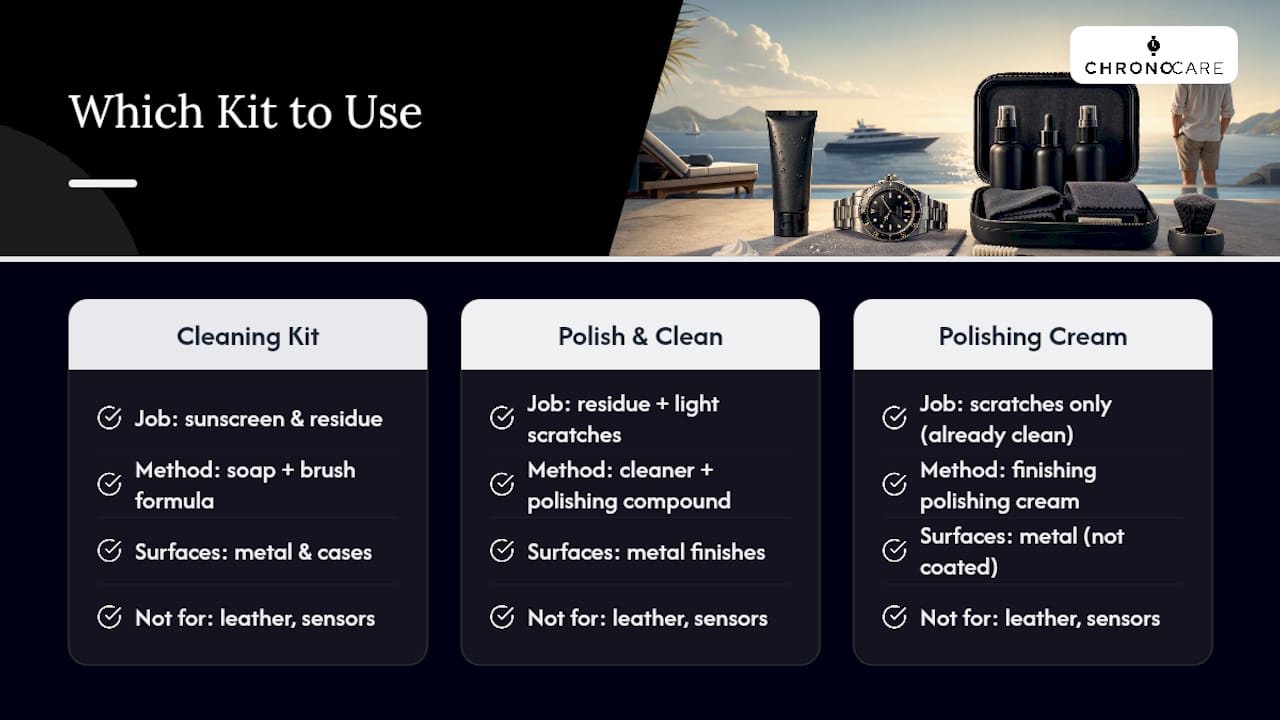
Each kit is built around a specific job, so you’re not reaching for a general-purpose spray on a piece that deserves better. For routine sunscreen and residue removal on bracelets and cases, the Ultimate Watch Cleaning Kit covers the soap-and-brush method described above with a formula built for metal and case finishes, not household surfaces.
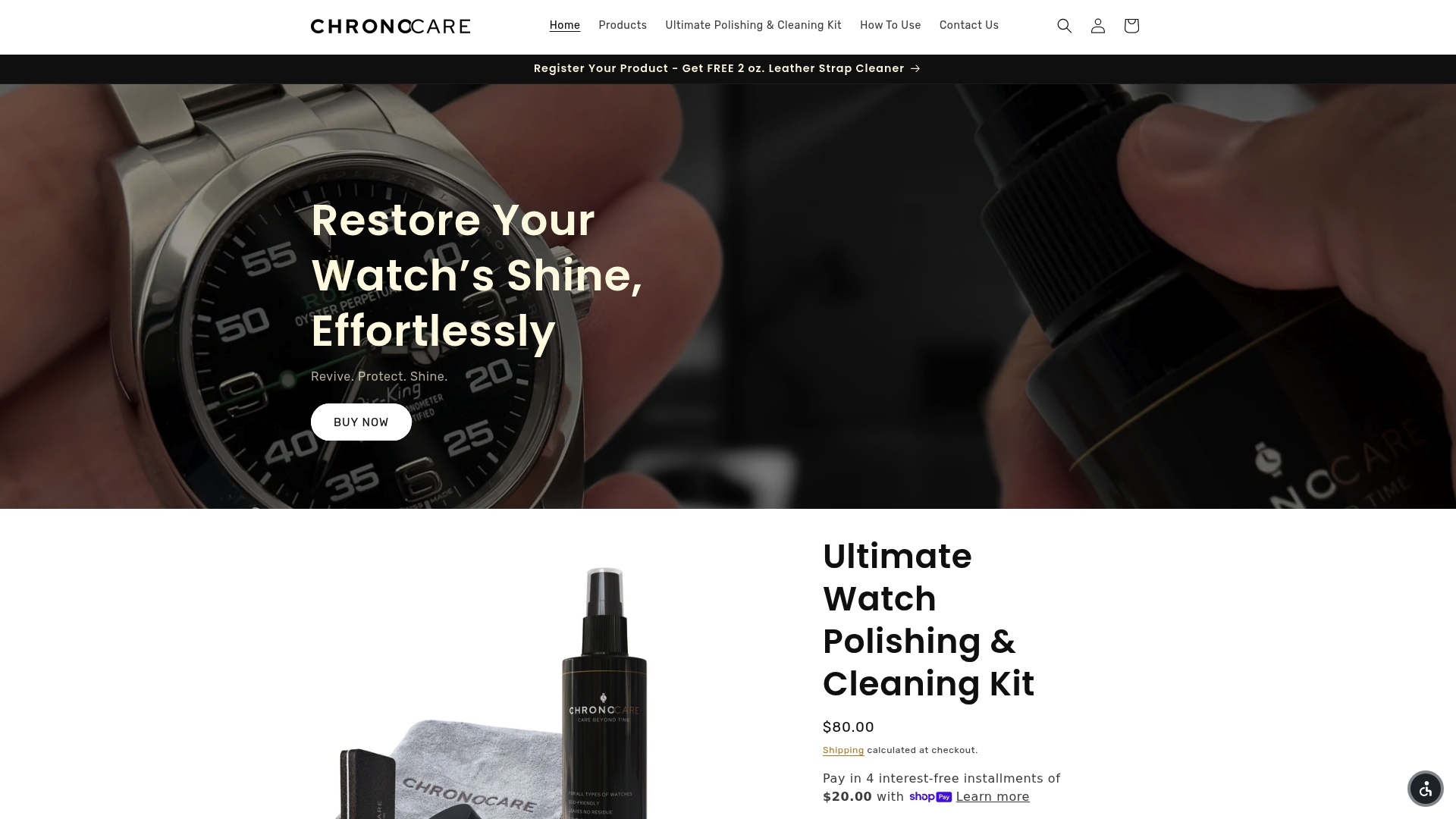
If you’re also dealing with light surface scratches alongside the residue, the Ultimate Watch Polishing & Cleaning Kit pairs a cleaning step with a polishing compound suited to restoring shine without the aggressive abrasives found in generic metal polish. And if scratches are your only concern once the watch is already clean, the Watch Polishing Cream handles that finishing step on its own, formulated for metal surfaces rather than coated or plated ones.
None of these kits are meant for leather. Use a dedicated leather cleaner and conditioner for straps, and keep any liquid solution away from sensor windows on smartwatches. Check the product page for full contents and application steps before your first use.
Where This Guidance Comes From
This guide draws on manufacturer care documentation from Apple and Garmin, along with independent watch-care resources covering material-specific cleaning methods and sensor accuracy. Reporting on how sweat and residue affect fitness tracking and standard bracelet-cleaning technique from WatchPolice rounded out the material-specific recommendations above.
Sources
- CDC: Sunscreen guidance (reference excerpt)
- Outside Online: How sweat and residue affect fitness watch accuracy
- Garmin: Watch care and fit tips
- Apple Support: How to clean your Apple Watch
- WatchPolice: How to clean a watch without damaging it
FAQ
Will Vinegar Remove Sunscreen Stains From a Watch?
Vinegar isn’t recommended for watches. Its acidity can dull metal finishes and degrade leather, and mild dish soap in warm water handles sunscreen residue just as effectively without that risk.
Does Zinc Oxide Sunscreen Need to Be Washed Off Right Away?
Yes. Mineral sunscreens containing zinc oxide leave a visible white film that hardens if left on a watch case or bracelet, and same-day removal is recommended to prevent it from setting into crevices and sensor windows.
Does Dawn Dish Soap Remove Sunscreen From a Watch?
A single drop of mild dish soap in warm water, applied with a soft brush, is a standard method for cleaning metal bracelets. Rinse thoroughly and dry completely afterward, and skip it on leather or sensor windows.
Can Old, Dried-On Sunscreen Stains Be Removed From a Watch?
Often yes, if you soften the residue first with a warm damp compress before cleaning. Stubborn spots on nonporous surfaces respond to isopropyl alcohol, while silicone bands often need a baking soda paste, though persistent staining or discoloration may call for a purpose-built kit like ChronoCare’s or a professional cleaning.
Is It Safe to Rinse a Luxury Watch Under Running Water?
Only if the watch carries a solid water-resistance rating and has had recent seal service. Older watches or those with unknown service history should be cleaned with a damp cloth instead of direct water exposure.