

Clean Alligator Watch Straps Without Soaking for Collectors
The safest way to clean an alligator watch strap is a dry wipe first, followed by spot-cleaning with a barely damp lint-free cloth only when necessary. Never soak the strap or use household detergents, soap, or solvents on exotic leather. We put together this routine drawing on a conservative, product-aware approach similar to the careful guidance found in expert watch care resources.
TL;DR:
- Brush or wipe away grit while the strap is dry, then wipe along the scales with a barely damp lint free cloth and blot immediately.
- Use an exotic leather safe cleaner only if water fails, testing it on the lining for color or sheen changes after a few minutes.
- If the strap gets soaked, blot it, remove it from the watch, and air dry it flat at room temperature; never use direct heat.
- Stop home treatment if a stain resists gentle spot cleaning or the finish cracks, peels, or discolors unevenly; seek professional care.
- Condition only a fully dry strap that looks dull or creased, apply an exotic leather safe product sparingly, and test it on a hidden spot first.
Table of Contents
- Safety and Preservation Rules Before You Clean
- Minimal Safe Supplies to Gather Before You Start
- A Clear, Numbered Cleaning Routine for Everyday Dirt and Small Stains
- How to Dry a Wet Strap Safely
- When and How to Condition or Protect an Alligator Strap
- Simple Care Cadence: Daily, Monthly, and Yearly
- ChronoCare Guidance for Exotic Strap Care
- Why Conservative Care Is Best for Collectors
- ChronoCare Products Built for Exotic Strap Care
- FAQ
- Sources
Safety and Preservation Rules Before You Clean
Alligator leather has a layered scale structure with soft, thin “belly” sections that scratch, stain, and dry out faster than smooth cowhide. The finish sits close to the surface, so anything abrasive or wet for too long can dull the sheen permanently.

Conservation guidance on exotic skins recommends minimal intervention and testing in an inconspicuous area before any product touches the strap, cleaning only enough to remove a specific soil rather than giving it a full treatment, per the National Park Service’s leather conservation appendix.
Avoid these on alligator leather:
- Soaking or rinsing under running water
- Dish soap, baby wipes, or household surface cleaners
- Alcohol, solvents, or ammonia-based products
- Saddle soap or generic bovine-leather conditioners
- Vigorous scrubbing between the scales
- Direct heat, hair dryers, or prolonged sun exposure
If a stain won’t lift with light spot-cleaning or the finish looks cracked or lifted, stop and send the strap to a professional rather than pushing harder with more product.
Minimal Safe Supplies to Gather Before You Start
You don’t need much, and more products usually means more risk. Gather these before you begin:
- Two or three lint-free microfiber cloths (one for cleaning, one for blotting, one spare)
- A soft, dry brush for loose dust and grit
- Distilled or clean water to dampen a cloth lightly
- A pH-neutral, exotic-leather-safe cleaner, such as our ChronoCare Watch Leather Strap Cleaner Spray
Skip household glass or multipurpose cleaners, baby wipes, saddle soap, solvents, and metal polishes. They’re formulated for other materials and can strip or discolor exotic finishes.
A Clear, Numbered Cleaning Routine for Everyday Dirt and Small Stains
Work slowly and test every product before applying it to the visible strap.
- Remove the strap if practical. Most quick-release or spring-bar straps come off with light pressure on the release pin, which keeps moisture and cleaner away from the watch head and case.
- Dry brush or wipe first. Use a soft brush or dry microfiber cloth to clear loose dust and grit before introducing any moisture.
- Dampen a cloth, not the strap. Mist a lint-free cloth lightly with distilled water so it’s barely damp, then wipe along the grain of the scales using light, even strokes.
- Blot immediately with a dry cloth. Press rather than rub, and never work a cloth into the gaps between scales, where thread and edges are most vulnerable.
- Use a small amount of pH-neutral cleaner only if needed, and test it on a hidden section of the strap lining first to confirm it doesn’t alter color or sheen.
Pro Tip: Always test any cleaner on the strap’s underside or lining edge, and wait a few minutes to check for color change before treating a visible area.
Conservation practice for reptile skins backs this cautious, test-first approach, since aggressive soaps and dressings applied directly can cause changes that are difficult to reverse, according to the National Park Service. Even a gentle option like Castile soap, often recommended for delicate fabrics, isn’t approved by leather brands for straps without specific manufacturer guidance.
If the finish looks cracked, peeling, or unevenly discolored after cleaning, that’s a sign for a conservator or watch service rather than a second round of home treatment.

How to Dry a Wet Strap Safely
A strap that gets wet from rain, sweat, or an accidental splash needs quick, gentle handling to avoid warping or staining.
- Blot excess moisture immediately with a dry, lint-free cloth, pressing rather than wiping
- Remove the strap from the watch if possible, so moisture doesn’t reach the case or movement
- Lay it flat at room temperature and let it air-dry fully before wearing it again
Avoid direct heat sources, hair dryers, radiators, and direct sunlight, all of which can shrink or crack the hide. Skip stuffing the strap with newspaper, since the ink can bleed into light-colored leather. If the strap smells musty or feels stiff after drying, that usually signals it needs professional cleaning rather than more home treatment. Our wet leather strap recovery guide walks through the same checklist in more detail.
When and How to Condition or Protect an Alligator Strap
Condition only when the strap is fully dry and actually shows signs of dryness, such as a dull surface or faint creasing at the flex points. Frequent conditioning does more harm than good on exotic leather, since it can saturate the finish and change its texture over time.
- Apply an exotic-leather-safe conditioner sparingly, testing a hidden spot first
- Let it absorb fully before wearing the strap again
- Rotate straps rather than wearing one every day, which limits sweat and flex wear
- Store straps in a breathable pouch, away from humidity, direct light, and perfume or cologne overspray
Pro Tip: A few drops of conditioner worked in with a soft cloth go further than a heavy application, and they’re much easier to correct if the test spot looks off.
Our conditioning guide covers dosing and timing in more depth if you want a closer look before trying it.
Simple Care Cadence: Daily, Monthly, and Yearly
A light, consistent routine keeps alligator leather in better shape than occasional deep cleaning.
- Daily: Wipe the strap with a dry cloth after wear to remove sweat and surface oils
- Monthly: Inspect closely and spot-clean only if you notice visible dirt or a stain
- Yearly: Check whether the strap needs conditioning, and have a professional assess the finish if it looks dull or worn
- Replace when: scales lift, cracks appear near the buckle holes, or the lining separates from the hide
ChronoCare Guidance for Exotic Strap Care
We built our strap-care content around the same low-intervention principle: clean only what needs cleaning, test before you commit, and let the leather’s natural finish do the work. Our cleaning walkthrough and collector-focused care guide cover dosing, cloth selection, and test-spot placement for alligator and other exotic hides.
- Use a barely damp cloth, never a soaked one, for spot-cleaning
- Test any spray or conditioner on the strap lining before touching visible scales
- Pair strap care with light, non-abrasive case cleaning to protect the whole watch
Why Conservative Care Is Best for Collectors
Exotic leather is harder to replace well than it is to damage. A strap that’s cleaned too aggressively loses its scale definition and sheen permanently, while one treated with light, infrequent care tends to age the way collectors want: softened, not worn out. When in doubt, do less, test first, and let a professional handle anything beyond a wipe and a spot-clean.
— Raymond Jenkins
ChronoCare Products Built for Exotic Strap Care
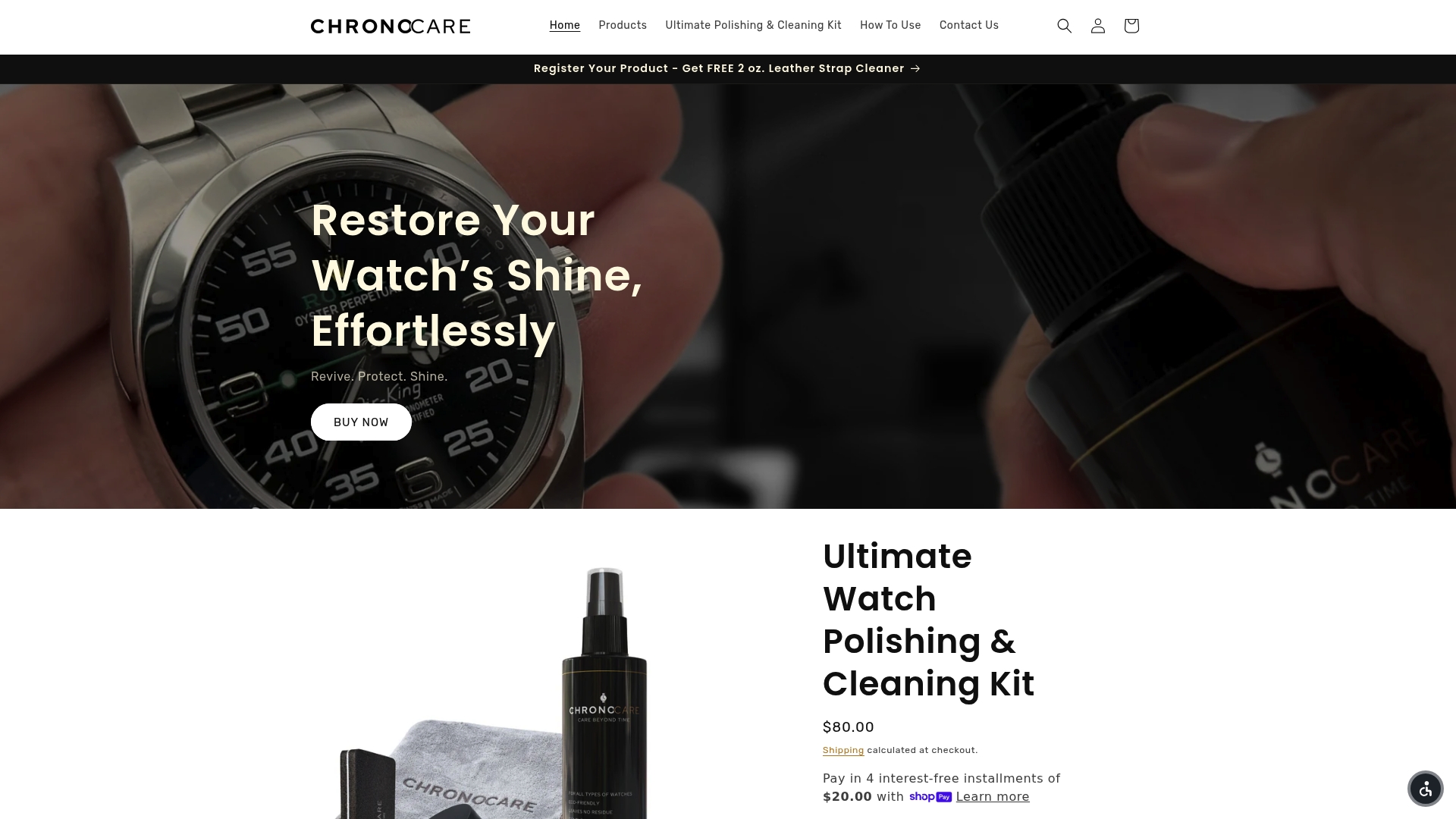
For collectors who want a dedicated product rather than improvising with what’s in the cabinet, our Ultimate Watch Cleaning Kit includes soft tools sized for delicate straps and watch cases alike, so you’re not reaching for a rag meant for furniture.
- Test any spray on a hidden strap edge before applying it to the visible face
- Apply sparingly and let the strap dry fully between uses
- Pair strap care with gentle metal cleaning using a separate polishing routine for cases and bracelets
Start with a small test spot on an inconspicuous area, then build the rest of your routine from there.
FAQ
How do you clean a leather watch band?
Wipe it with a dry, lint-free cloth to remove surface dust, then use a barely damp cloth only on visible dirt or stains, always blotting dry afterward. Avoid soap, solvents, and soaking, since these can damage the finish or weaken the stitching.
How do you maintain alligator leather?
Keep cleaning minimal: a daily dry wipe, occasional spot-cleaning only when needed, and sparing conditioning when the leather looks dry. Rotate straps and store them in a breathable pouch away from heat, humidity, and direct sun.
Does water ruin a leather watch band?
A small amount of moisture from a barely damp cloth is fine for spot-cleaning, but soaking or prolonged wet exposure can warp the hide and dull its finish. If a strap gets fully wet, blot it immediately and air-dry it flat at room temperature rather than using heat.
How do you remove smell from a leather bracelet?
Wipe the strap down with a dry cloth after each wear to cut down on the sweat and oils that cause odor buildup. If a musty smell persists after air-drying, that usually points to a deeper clean best handled by a professional rather than a stronger home product.
Sources
- National Park Service: Curatorial care of objects made from leather and skin products (Appendix S)
- Castile soap — Wikipedia