

What Is a Watch Repair Sponge? Your Care Guide
A watch repair sponge is a specialized soft applicator used to apply polishing creams and cleaning solutions to watch surfaces without causing abrasion. Known in professional circles as an applicator pad or polishing sponge, this small tool is a standard component in 6-in-1 and all-in-one watch restoration kits. It sits between your compound and your watch case, delivering controlled, even pressure that a cloth or fingertip simply cannot replicate. For collectors maintaining a Rolex Submariner, an Omega Seamaster, or a vintage Seiko, the right sponge is the difference between a restored finish and a ruined one.
What is a watch repair sponge and what does it do?
A watch repair sponge is defined as a soft, low-abrasion applicator pad designed to transfer polishing compounds and cleaning agents onto metal, crystal, and coated watch surfaces. Its primary job is contact control. You need consistent, even pressure across a curved or flat surface, and a sponge delivers that where a cloth bunches and a brush concentrates force.
The sponge’s soft texture prevents the micro-scratching that harder applicators cause. When paired with a cream like ChronoCare’s polishing compound, the sponge holds the product evenly and releases it gradually as you work. That controlled release is what makes it effective on delicate finishes.
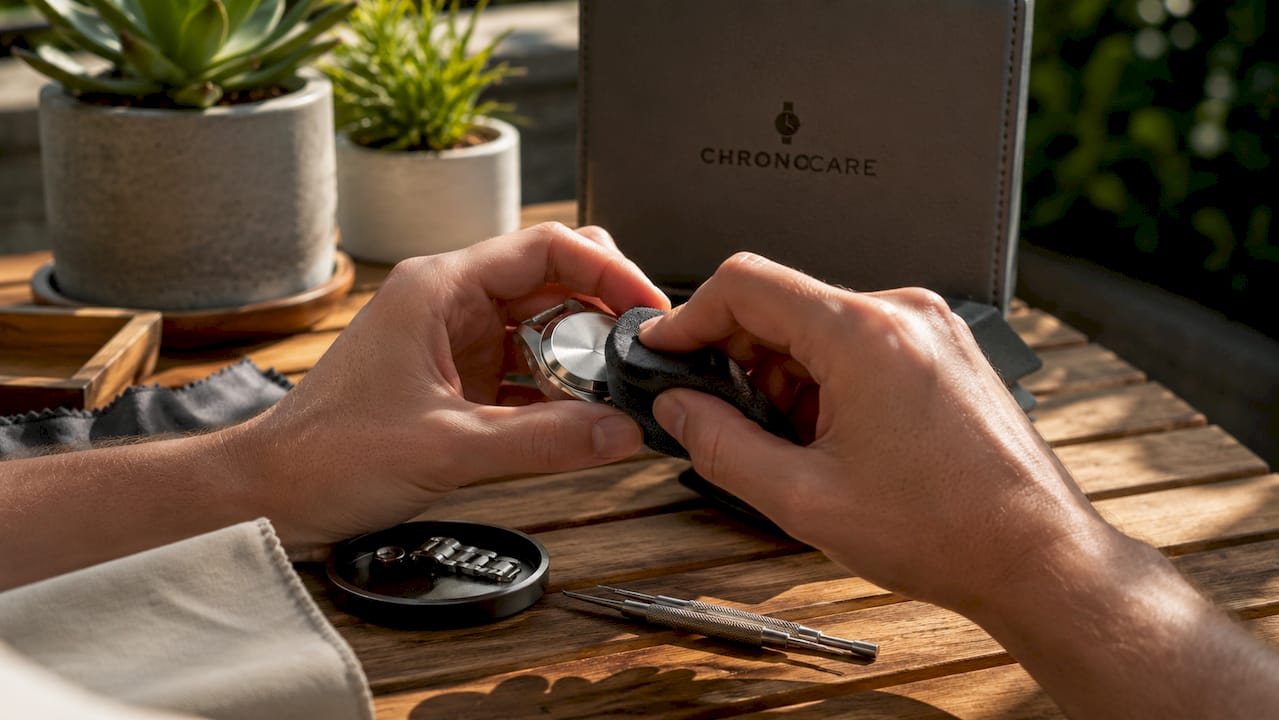
Specialized matte finish sponges restore brushed and satin surfaces without the abrasive wear that traditional polishing cloths introduce. This matters enormously on watches where half the case is brushed and half is polished. Using the wrong applicator on a brushed surface turns it glossy, and that change is very difficult to reverse at home.
What materials and types of sponges are used in watch repair?
Not every sponge belongs near a luxury watch. Material choice determines whether you restore a surface or damage it.
Melamine foam sponges
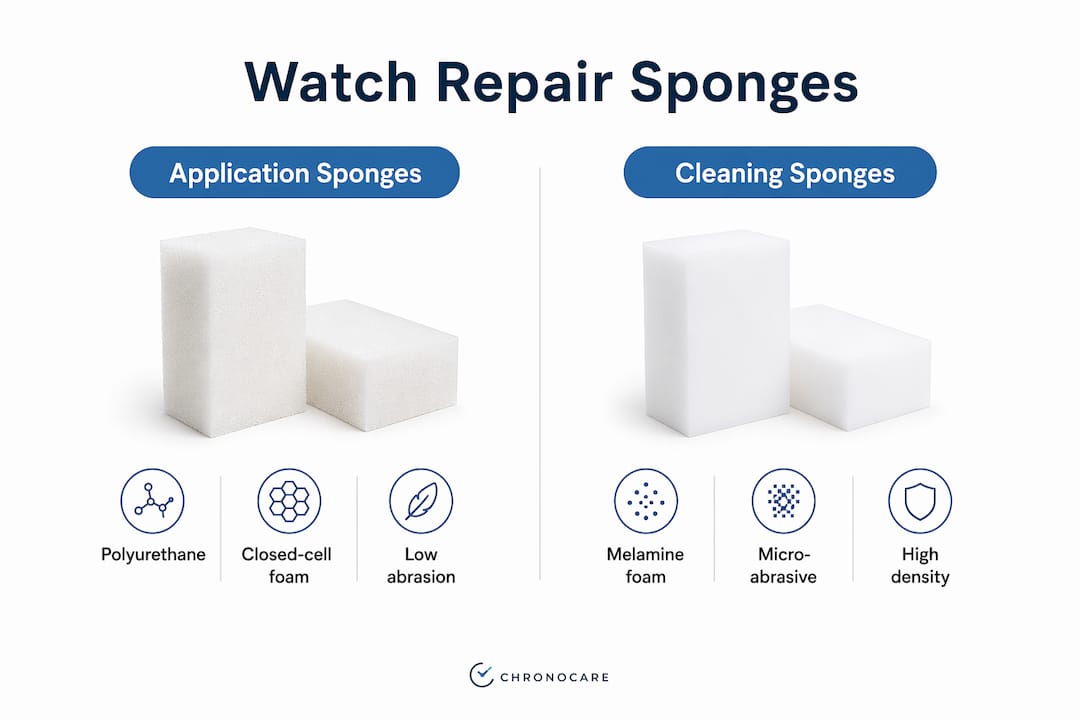
Melamine foam, often sold under the Magic Eraser brand name, is a micro-abrasive open-cell foam. It works by physically abrading a surface at a microscopic level. On acrylic watch crystals, it removes light scratches effectively. On polished metal cases or sapphire crystals, it is too aggressive and will dull the finish. Use melamine only where you understand the surface hardness.
Matte and applicator pad sponges
These are the sponges most commonly included in watch care kits. They are made from closed-cell polyurethane or foam rubber, which gives them a smooth, non-abrasive surface. Their job is application, not abrasion. They hold cream evenly and release it under light pressure without scratching.
High-density nano cleaning sponges
High-density nano sponges are used in electronics and hardware repair to clean delicate components without leaving lint or residue. In watch repair, they clean dust, grease, and light oxidation from external surfaces. They come in bulk packs of 500 pieces because they are single-use by design. One sponge per task keeps contamination out of the equation.
Here is a direct comparison of the most common applicator types used in watch care:
| Tool | Material | Abrasiveness | Best use |
|---|---|---|---|
| Matte applicator sponge | Polyurethane foam | Very low | Applying polishing cream to cases |
| Melamine foam sponge | Melamine resin | Low to moderate | Light scratch removal on acrylic crystals |
| Nano cleaning sponge | High-density foam | Very low | Removing dust and grease from surfaces |
| Microfiber cloth | Woven polyester | Near zero | Final buffing and drying |
| Polishing rod | Felt or rubber | Varies | Tight grooves and lugs |
The key distinction is abrasion versus application. Sponges built for application should never be swapped with sponges built for abrasion, even if they look similar.
How to use a watch repair sponge effectively
Technique matters as much as the tool itself. A good sponge used incorrectly will still damage a finish.
-
Confirm water resistance first. Before applying any liquid solution, verify your watch’s water resistance rating. If the rating is unknown or the crown gasket is worn, use only dry cleaning methods. Moisture intrusion damages the movement and voids many service warranties.
-
Apply a small amount of compound to the sponge. Never apply cream directly to the watch surface. Put a pea-sized amount on the sponge and spread it evenly across the pad before touching the case.
-
Work in circular motions with light to moderate pressure. When using scratch-repair creams like Novus #3, apply circular pressure for 3–7 minutes depending on scratch depth. Heavier scratches need more time. Fine scratch removal typically takes 4–8 minutes with a finer compound.
-
Wipe away slurry with a clean cloth. Watchmakers use sponges to wipe away abrasive slurry between polishing passes. This prevents the slurry from drying on the surface and causing secondary scratches.
-
Switch to a fresh sponge between polishing stages. Professional repairers recommend using a clean applicator when moving from coarse scratch removal to fine polishing. Residual grit from the first stage will undo the work of the second.
-
Buff with a microfiber cloth to finish. Once polishing is complete, use a clean microfiber cloth to remove any remaining compound and bring up the final shine.
Pro Tip: Keep two sponges labeled: one for coarse compound and one for fine. A single marker dot on the coarse sponge prevents mix-ups and protects your finish.
What mistakes should you avoid when using watch repair sponges?
The most common errors in watch sponge use are not dramatic. They are subtle, cumulative, and often invisible until the damage is done.
-
Applying too much pressure. Excessive polishing removes metal from the case. Watch restoration expert Andrew Collins stresses that material removal must be controlled to preserve original case geometry. Rounded lugs and softened edges are the most common signs of over-polishing.
-
Using a soiled sponge. A sponge loaded with dried compound or debris acts as an abrasive. Soiled sponges should be retired from delicate tasks immediately and reallocated to cleaning bench tools or rough hardware.
-
Applying sponges to internal components. Sponges are too coarse for movement parts. They cannot reach jewels, hairsprings, or gear trains safely. Attempting to clean internal components with a sponge risks fiber contamination and physical damage.
-
Ignoring surface type. A polishing sponge used on a brushed surface will alter the texture permanently. Always identify the finish before selecting your applicator.
Pro Tip: Before working on a full watch case, test your sponge and compound on the caseback. It is the least visible surface and gives you a reliable preview of how the finish will respond.
Watch repair sponges vs. other cleaning and polishing tools
Understanding where a sponge fits in the broader toolkit helps you use it correctly and know when to reach for something else.
| Tool | Primary function | Sponge comparison |
|---|---|---|
| Abrasive paper (wet/dry) | Initial scratch removal | Sponge follows paper to wipe slurry |
| Bergeon Rodico putty | Internal component cleaning | Preferred over sponges for movements |
| Microfiber cloth | Final buffing and drying | Less controlled than sponge for cream application |
| Polishing rod | Grooves, lugs, tight areas | Sponge better for flat or curved case surfaces |
| Watch cleaning spray | Overall surface degreasing | Sponge applies; spray loosens |
Bergeon Rodico is the professional standard for internal watch cleaning. It is a tacky putty that lifts dust, oil, and debris from jewels and hairsprings without leaving residue. Sponges cannot do this job. Rodico cannot polish a case. They are not competing tools. They serve entirely different functions.
Abrasive papers lubricated with water and mild detergent handle the heavy work of initial scratch removal. The sponge enters the workflow after the paper, wiping away the abrasive slurry so the next polishing stage starts clean. Microfiber cloths close the process, buffing the surface to its final appearance.
For collectors who want a complete home maintenance setup, ChronoCare’s watch repair kit guide covers which tools belong in each stage of the process.
Key takeaways
A watch repair sponge is the controlled-application tool that separates safe, professional-quality polishing from surface damage. Use it correctly, keep it clean, and pair it with the right compound for each finish type.
| Point | Details |
|---|---|
| Definition and purpose | A watch repair sponge applies polishing creams and cleaners without abrading delicate surfaces. |
| Material selection matters | Choose matte applicator sponges for cream application and melamine only for acrylic crystal scratch removal. |
| Technique determines outcome | Use circular motions, light to moderate pressure, and work for 3–7 minutes depending on scratch depth. |
| Fresh sponges between stages | Switch to a clean sponge when moving from coarse to fine polishing to prevent grit contamination. |
| Know the tool’s limits | Sponges clean external surfaces only. Use Bergeon Rodico for internal movement components. |
Why I think most collectors underestimate this tool
I have seen collectors spend thousands on a vintage Patek Philippe and then grab the first foam pad they find to apply polishing cream. The sponge is treated as an afterthought. It should not be.
The sponge is the only point of contact between your compound and your watch. Everything about the outcome, how evenly the cream distributes, how much pressure reaches the surface, whether grit from the last job transfers to this one, runs through that pad. A cheap, contaminated, or wrong-material sponge will undo a good compound every time.
What I find most collectors miss is the retirement rule. Once a sponge has been used for coarse work, it is done with fine work. Period. The residual abrasive particles embedded in the foam are invisible but real. I keep a small labeled container for “coarse only” sponges and another for “fine only.” That one habit has prevented more surface damage than any other single practice in my kit.
The other misconception is that more pressure means faster results. It does not. It means altered geometry. On a vintage case, those original lines and edges are part of the watch’s identity and value. Slow, light, circular work with a clean sponge preserves them. Aggressive scrubbing destroys them in minutes.
If you are serious about maintaining your collection, treat the sponge as a precision tool, not a disposable accessory.
— Raymond Jenkins
Explore ChronoCare’s professional watch cleaning kits
ChronoCare builds its cleaning kits around the tools that actually protect your watch, including purpose-made applicator sponges, polishing creams, and microfiber cloths formulated for luxury timepieces.
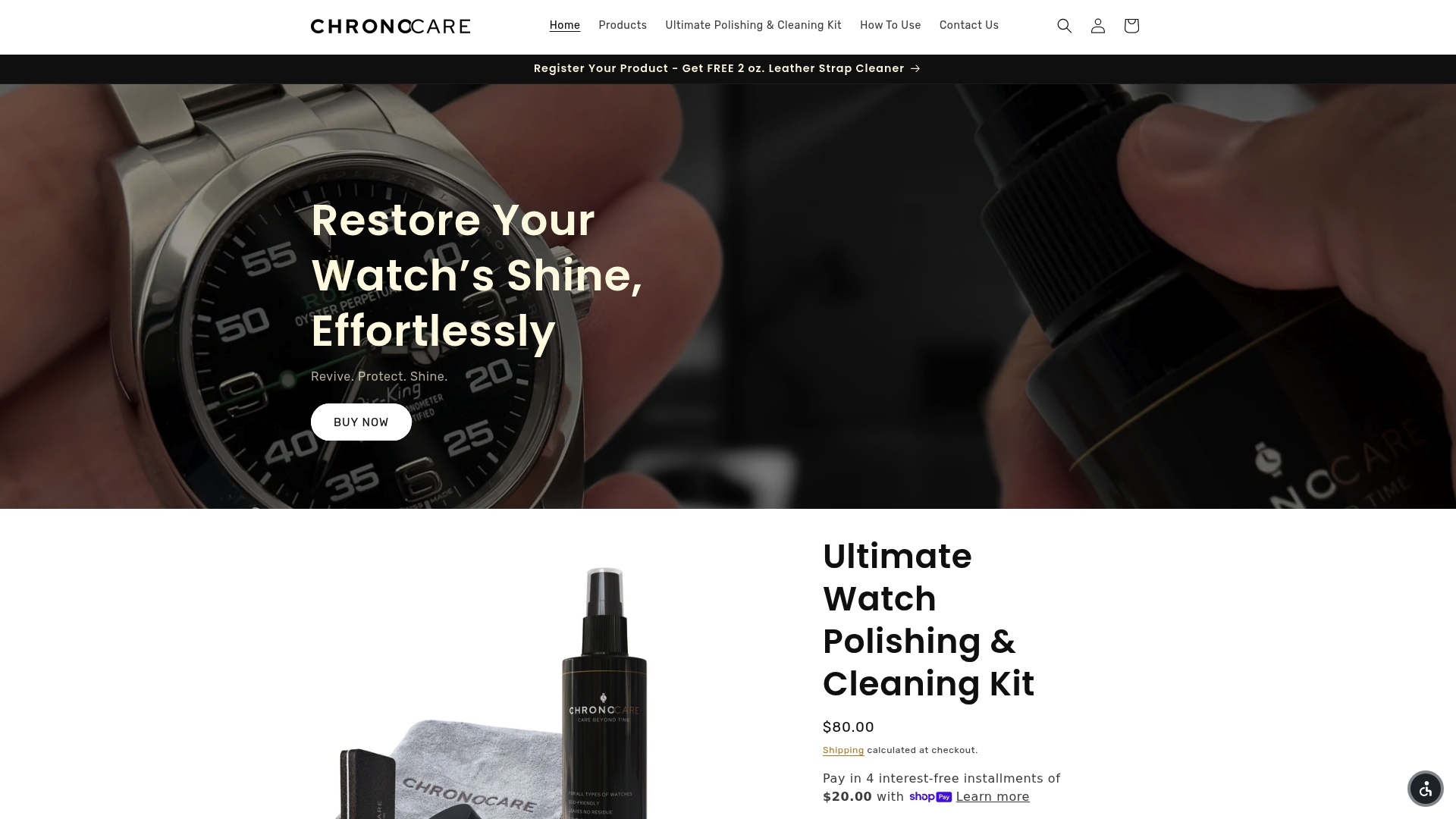
The Ultimate Watch Cleaning Kit includes everything you need for a complete cleaning and light restoration session at home. Each kit is assembled with materials sourced and formulated in the US, designed specifically for the surfaces found on high-end watches. Whether you are maintaining a daily wearer or restoring a vintage piece, ChronoCare’s kits give you the right tool for each step of the process. Browse the full range and find the kit that fits your collection.
FAQ
What is a watch repair sponge used for?
A watch repair sponge is used to apply polishing creams and cleaning solutions to watch cases and crystals without scratching the surface. It delivers even, controlled pressure that cloths and brushes cannot replicate on curved surfaces.
Can I use any sponge to clean my watch?
No. Standard household sponges contain abrasive scrubbing layers that will scratch metal and crystal surfaces. Use only purpose-made applicator pads or matte finish sponges designed for watch care.
How long should I use a sponge when polishing a watch crystal?
Apply light to moderate circular pressure for 3–7 minutes for heavier scratches and 4–8 minutes for fine scratch removal, depending on the compound and scratch depth.
When should I replace my watch repair sponge?
Replace or retire a sponge once it has been used for coarse polishing. Residual grit embedded in the foam will scratch surfaces during finer polishing stages. Keep separate sponges for each compound grade.
Are watch repair sponges safe for all watch surfaces?
Matte applicator sponges are safe for polished metal and most crystals. Melamine foam is suitable only for acrylic crystals. Neither type should be used on internal movement components, where Bergeon Rodico putty is the correct tool.