

What Does Watch Grade Mean for Luxury Collectors?
Watch grade communicates two distinct things depending on the watch in front of you. For antique and vintage pieces, it is a manufacturer-assigned classification that specifies movement quality, jewel count, regulator type, and adjustment standard. For modern pre-owned watches, it is a condition rating describing physical and mechanical state. Both meanings directly affect what a watch is worth and what it needs from you as an owner.
The key elements graders assess include:
- Movement specifications (jewel count, adjustment levels, regulator type) for vintage pieces
- Case and bracelet condition (scratches, dents, surface finish integrity) for modern watches
- Dial and hands (originality, discoloration, damage)
- Mechanical function (timing accuracy, service history)
- Age and rarity context, which shifts what “good condition” actually means
No single universal standard governs any of this. That gap between what graders promise and what buyers receive is where most confusion lives.
How watch grade works in antique and vintage timepieces
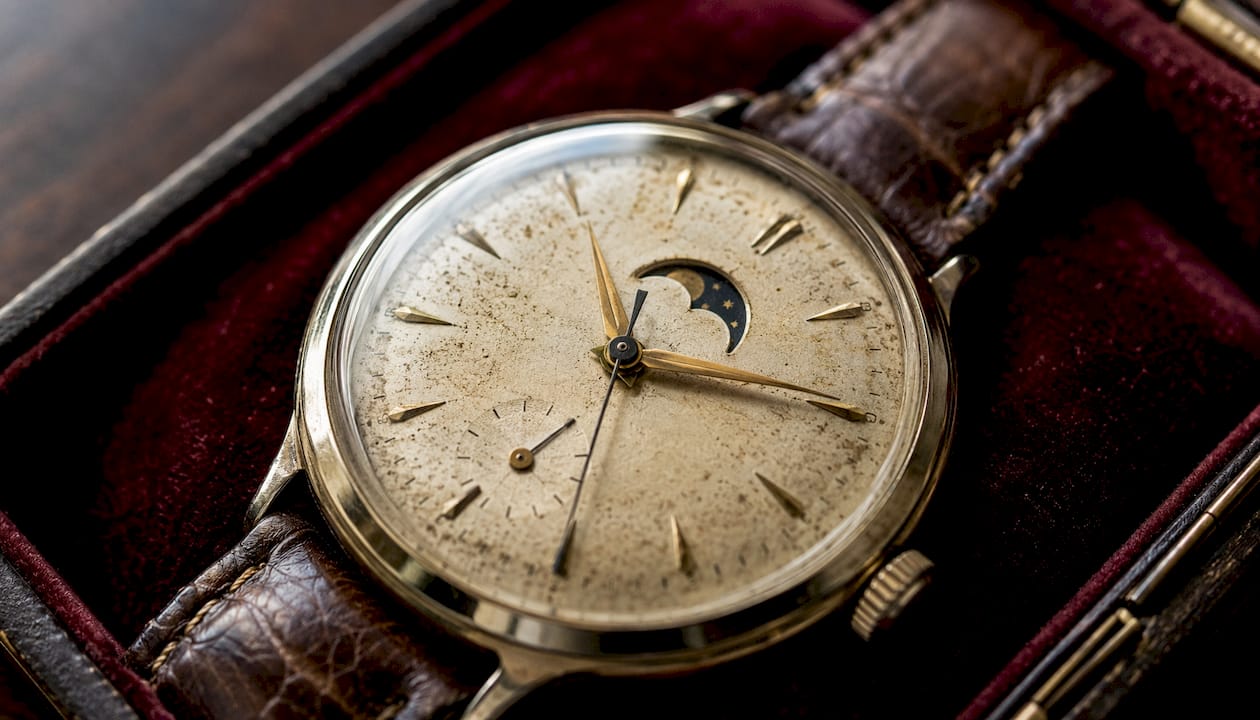
In the world of antique pocket watches, grade is a factory designation indicating the quality and specifications of a movement, not its cosmetic state. Two watches can share the same model plate design yet carry entirely different grades based on how they were finished and adjusted at the factory.
The core variables that separate grades:
- Jewel count: Ranges from 7 (minimum practical) up to 23 in the finest precision movements. A 21-jewel railroad-grade movement adjusted to five or six positions was the benchmark for American precision work, with examples like the Hamilton 992 and Waltham 845 representing that standard.
- Adjustment level: An unadjusted watch runs at whatever rate it happens to keep. A movement adjusted to 5 positions has been measured and corrected for dial up, dial down, and all pendant positions. Six-position adjustment adds dial down and marks a premium movement.
- Finishing quality: Higher grades used nickel plates, damaskeening, raised gold jewel settings, and double-sunk dials. Lower grades cut corners on labor while keeping the same basic plate design.
- Regulator type: A micrometer regulator allowed precise rate adjustment and appeared on higher-grade movements intended for railroad or precision use.
Grade and model are not the same thing, and conflating them is a common mistake. The model describes the plate design; the grade describes the finishing and specification level built on that design. A Waltham Model 1892 “Vanguard” grade and a Model 1892 “Appleton Tracy” grade share the same plates but differ in jeweling, adjustment, and finish. For collectors, higher-grade movements command premium prices because they represent more labor, tighter tolerances, and greater precision potential.
Modern watch condition grading: what gets evaluated and why it varies
Shift to the pre-owned market for modern wristwatches and “grade” means something different. Here it describes condition, not factory specification. The problem is that no universal standard exists, so “excellent” from one dealer may mean something a buyer at another house would call “good.”
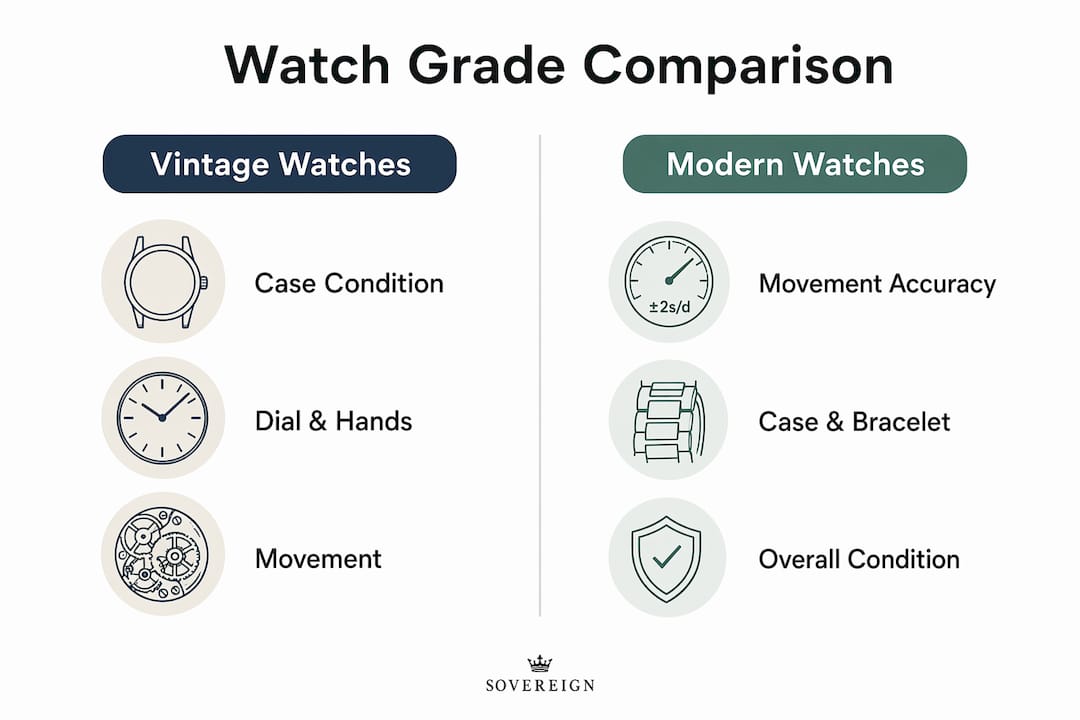
Professional graders typically evaluate three main components:
- Case and bracelet: Surface scratches, lug wear, bracelet stretch, and whether brushed or polished surfaces retain their original texture
- Dial and hands: Originality, any discoloration, printing integrity, lume condition, and signs of moisture damage
- Movement: General function, service history, and timing performance
Some graders go further. A Witschi Chronoscope X-1 timing machine, for example, tests a movement’s accuracy across all five positions, giving buyers an objective read on mechanical health beyond cosmetic appearance. Evaluating components separately rather than collapsing everything into one score gives buyers a clearer picture of what they are actually getting.
Common condition labels you will encounter: Mint or LNIB (like new in box), Excellent, Very Good, Good, and Fair. Each step down represents real reduction in value. The gap between Excellent and Good tends to be more meaningful than Mint to Excellent, because it crosses the line from wear you need a loupe to see into wear visible at arm’s length.
Pro Tip: Before buying any pre-owned watch, ask the seller to define exactly what their grade labels mean. A dealer who cannot explain their criteria in specific, observable terms is using the label as marketing, not evaluation.
Why universal grading standards are so hard to establish
The watch industry lacks a standardized grading system the way the diamond industry has the GIA scale, and that gap creates real problems for buyers. The GIA, founded in 1931, built its credibility on trained technicians, analytical equipment, and a shared reference database. Watch grading has none of those shared foundations.
Several factors make standardization genuinely difficult:
- Age and rarity require context-specific criteria: A wristwatch under 50 years old cannot be judged by the same standards as a 19th-century pocket watch. Expert evaluators adjust grading criteria based on historical context and conservation standards, which means two watches graded “very good” may represent very different levels of preservation relative to their age.
- Cosmetic condition and mechanical health are separate: A watch can look pristine and run poorly, or show honest wear and keep excellent time. Transparent grading separates these two dimensions, but many sellers collapse them into a single label.
- Amateur versus professional grading: A private seller eyeballing a watch under a desk lamp and a trained horologist using a timing machine and 10x loupe are doing fundamentally different things. Expert appraisals and condition certificates improve trust and establish provenance, especially for high-value transactions.
- Proprietary systems proliferate: Many dealers use non-standardized grading systems with their own definitions. Buyers who do not ask for the underlying criteria are essentially trusting a label with no agreed meaning.
The auction house Antiquorum addresses this by grading case, dial and hands, and movement separately, then adding an experts’ overall opinion that factors in historical interest and rarity alongside condition. That layered approach gets closer to honest evaluation than a single letter or percentage, but it is still proprietary.
Expert advice on evaluating and caring for watches by grade
Watchmakers and auction specialists consistently make one point: cosmetic condition and mechanical health tell different stories, and conflating them costs buyers money. A watch that has been heavily polished to look pristine may have lost the crisp case edges and original surface texture that collectors pay for. Over-polishing removes original finishes and can distort proportions, which is why experienced collectors often prefer honest wear over a watch that looks suspiciously perfect.
Practical guidance from the collector and specialist community:
- Prioritize mechanical transparency: A seller who provides timing results across five positions is giving you real data. One who only describes the dial is hiding something or simply does not know.
- Understand what grade means for maintenance: A watch graded “good” or “fair” often needs a service. Factor that cost into your purchase price, not as an afterthought.
- Verify certification and appraisal credentials: For significant purchases, an independent appraisal from a certified watchmaker or auction specialist adds a layer of trust that a seller’s own grading cannot provide.
- Preserve the grade you have: Once you own a watch, how you care for it determines whether its condition holds or declines. Understanding how polishing affects value is the first step toward not accidentally degrading what you paid for.
The same logic that applies to evaluating quality in luxury goods applies here: grade is only meaningful when the criteria behind it are transparent and consistently applied. A watch graded by someone who can explain every mark and measurement is worth more confidence than one graded by someone who just called it “excellent.”
Caring for a graded watch starts with the right products. ChronoCare’s luxury watch cleaning kit is formulated specifically for high-end timepieces, giving you a way to maintain condition without risking the original finish that collectors and appraisers look for.

Key Takeaways
Watch grade means different things for vintage and modern pieces, but in both cases it directly determines value, maintenance needs, and purchase confidence.
| Point | Details |
|---|---|
| Vintage grade = factory specification | In antique watches, grade defines jewel count, adjustment level, and finishing quality, not cosmetic condition. |
| Modern grade = condition rating | Pre-owned watch grading describes physical and mechanical state, with no universal standard across dealers. |
| Three components drive modern grading | Professional graders assess case and bracelet, dial and hands, and movement function separately. |
| Cosmetic and mechanical grades differ | A watch can look pristine and run poorly; transparent grading separates these two dimensions. |
| Demand grading transparency | Always ask sellers to define their grade labels in specific, observable terms before purchasing. |