

Inspect Seals 18–24 Months, Waterless Watch Cleaning for Collectors
For luxury watches, the safest cleaning approach without immersion is a gentle, waterless routine using microfiber, a manual air-puffer, and watch-safe polishing or conditioning products. Avoid solvents entirely, and never soak a leather strap. If the watch regularly meets water, have its seals tested by a professional rather than relying on surface cleaning alone.
TL;DR:
- Waterless cleaning should avoid solvents, brushes, and compressed air, which can damage seals, finishes, or push debris into the watch.
- Use microfiber cloths, a manual air-puffer, watch-safe cleaners, and the smallest amount of leather balm for straps to clean and condition safely.
- Routine maintenance includes dust removal with a puffer, gentle wiping along grain directions, and immediate drying, but gaskets still need professional pressure testing every 18 to 24 months.
- Leather straps last 12 to 18 months with regular care, but signs like cracking, odor, or seam separation indicate they should be replaced rather than conditioned further.
- Avoid water on straps and never use canned compressed air or household cleaners, as they present risks that a careful, dry routine minimizes.
Table of Contents
- What counts as waterless watch cleaning for collectors?
- Step-by-step waterless routine for cases, crystals, and bracelets
- Leather strap care without water: conditioning, curing, and replacement signals
- When to stop DIY: maintenance cadence and professional checks
- Handling gemstones and engravings during waterless cleaning
- Storage tips to maintain condition after cleaning
- Author’s note from Raymond Jenkins: favor a light touch
- ChronoCare’s waterless kits for this exact routine
- FAQ
- Sources
What counts as waterless watch cleaning for collectors?
Waterless watch cleaning means surface care performed without submerging the watch or its strap. It covers the case, bracelet, crystal, and crown using dry or near-dry methods, and it treats leather as a material that should never touch water at all. This matters because gaskets age, seams absorb moisture, and solvents can attack finishes long before a watch shows visible damage.
The toolkit is small and deliberate:
- Microfiber cloths: a tight weave picks up grit without scratching polished facets, while a plush pile works better on brushed surfaces.
- Manual air-puffer bulb: dislodges dust from lug gaps and bracelet links without introducing moisture or propellant.
- Watch-safe polishing cream or spray: solvent-free, silicone-free formulas that lift grime without attacking plating or crystal coatings.
- Cleaning putty: pulls debris from bezel crevices and case-back engravings where a cloth cannot reach.
- Leather balm: formulated specifically for watch straps, applied sparingly to condition without oversaturating the hide.
Compressed-air cans are a common mistake. The propellant inside those cans can force contaminants deeper into pushers or chill surfaces rapidly enough to stress seals, which is why Longines recommends a manual air-puffer bulb instead. Detergents and household solvents carry a similar risk: they can strip plating, cloud acrylic crystals, and degrade the rubber compounds used in gaskets.
Collectors generally want precision tools they can reuse indefinitely, while jewelers and service counters tend to favor professional-grade balms and putty sold in bulk for faster turnaround between clients. Either way, the goal is the same: lift surface contamination without ever introducing a chemical or moisture risk the watch wasn’t built to handle.
Pro Tip: Keep one microfiber cloth dedicated to crystals only. Reusing a cloth that has picked up case grime will create fine scratches on sapphire and acrylic alike.
Step-by-step waterless routine for cases, crystals, and bracelets
Before touching the watch, confirm the crown is pushed in or screwed down and that any pushers are seated correctly. Check the stated water-resistance rating, since even a “waterless” routine should respect the limits of a watch that may already have a compromised seal.
- Puff away loose debris. Use the air-puffer bulb around the lugs, crown, and bracelet links to remove dust and grit before any cloth contact, which prevents those particles from being dragged across the finish.
- Wipe with microfiber, following the grain. On brushed surfaces, move the cloth in the direction of the brushing; on polished facets, use light straight strokes rather than circular buffing, which creates micro-swirls under raking light.
- Treat stubborn residue sparingly. Apply a small amount of watch-safe cleaner to the cloth itself, not directly onto the watch, then work it into bracelet links or bezel recesses with a soft-bristle brush.
- Final buff and seal check. Dry any minimal dampness immediately with a fresh microfiber cloth and a pass of the air-puffer, then confirm the crown is fully seated before putting the watch down.
A watch’s water-resistance rating is not fixed over time. Gaskets compress and dry out with age, and professional water-resistance renewal typically involves replacing those seals and pressure-testing the case, which is a service no amount of waterless cleaning replaces.
The biggest risks come from shortcuts. Canned compressed air, household glass cleaners, and high-speed polishing wheels all show up repeatedly as causes of avoidable damage: canned air for the reasons above, household cleaners because they are not formulated for watch coatings, and high-speed polishing because it removes metal faster than a collector usually wants. A soft-bristle brush and patience outperform all three. If you need to remove a bracelet for a deeper clean around the lugs, a step-by-step guide to removing watch links covers the basic tools and technique safely.
Leather strap care without water: conditioning, curing, and replacement signals
Leather is porous, which is exactly why it cannot be treated like a metal case. Water, detergents, and even cosmetic residue from skin contact soak into the hide rather than sitting on the surface, and manufacturer guidance is consistent on avoiding all of them along with solvents.
The waterless conditioning sequence:
- Dry dust first. A soft microfiber pass removes surface grit before any product touches the strap.
- Apply balm sparingly. A pea-size amount of leather balm, worked in with light linear strokes rather than circular rubbing, conditions without oversaturating the material, a technique Longines describes explicitly.
- Rest for about 20 minutes, then buff off any excess with a clean cloth.
- Let it cure overnight before refitting the strap to the case, which gives the conditioner time to fully absorb.
Daily-worn leather straps typically last 12 to 18 months before replacement becomes the better option rather than continued conditioning. Watch for seam rot, a persistent odor that balm doesn’t resolve, or visible cracking along the fold points, since those are structural signs rather than cosmetic ones.
Pro Tip: If the strap has been exposed to salt water or sweat, dry-wipe the salt residue off first before applying any balm. Left in place, salt accelerates seam rot.
Stubborn stains or a seam that has started to separate are jobs for a professional rather than a home routine, since restitching or replacing a strap properly requires tools and materials most collectors don’t keep on hand.
When to stop DIY: maintenance cadence and professional checks
Waterless care handles day-to-day grime, but certain signs mean the case needs to come off the wrist and go to a service counter instead.
- Condensation under the crystal, which points to a seal that has already failed.
- Gritty or stuck pushers, suggesting debris has worked past the gasket.
- Noticeable crown play or looseness when unscrewed and screwed back down.
- Visible gasket cracking around the case back or crystal edge.
- Persistent fog or debris inside the lugs that a cloth and air-puffer can’t clear.
For anyone who swims or showers with their watch regularly, annual water-resistance testing is the standard recommendation. For most collectors who keep a watch mainly dry, an inspection every 18 to 24 months is a reasonable cadence.
A service visit typically includes uncasing, gasket replacement, pressure testing, and sometimes polishing. Polishing deserves a caveat: it removes a thin layer of metal to restore shine, which is not always appropriate on an engraved case back or a plated finish, where repeated polishing can wear through the surface over time.
Handling gemstones and engravings during waterless cleaning
Diamond-set bezels, gem-encrusted dials, and engraved case backs all need a gentler hand than a plain polished case. Gemstone settings often use small prongs or channels that can trap grit, and aggressive cloth pressure can loosen a stone over years of repeated cleaning rather than in one obvious incident.
For set stones, the air-puffer bulb does most of the work. It clears dust from around the setting without any contact at all, which is the safest first pass before a cloth ever touches the piece. Where buildup remains, cleaning putty pressed gently into the setting and lifted away, rather than rubbed across it, picks up grime without putting lateral pressure on the prongs.

Engravings on case backs or dial text respond well to the same putty approach, since it reaches into the recessed lines that a flat cloth skips over. Avoid any brush with stiff bristles on engraved surfaces, and never apply polishing cream directly to an engraving, since cream that settles into fine lines is difficult to fully remove and can dull the contrast that makes the engraving legible.
If a stone feels loose at any point, that is not a cleaning problem. It is a setting problem, and continuing to clean around a loose stone risks losing it entirely. A jeweler or the watch’s service center should reseat it before any further handling.
Storage tips to maintain condition after cleaning
A clean watch picks up new contamination quickly if it goes straight into the wrong environment, so storage is part of the routine rather than an afterthought.
Let the watch sit for a few minutes after cleaning before closing it into a box or case, especially if any part of the routine involved even minimal dampness from a cleaning product. Sealing in trapped moisture defeats the purpose of a waterless routine.
A dedicated watch box or roll with a soft, lint-free lining prevents the dust and fiber buildup that comes from tossing a watch into a drawer. For pieces with leather straps, avoid direct sunlight and high-humidity storage spots, since both accelerate the drying and cracking that balm is meant to prevent. A small silica packet in a watch box helps control humidity swings, particularly in climates with seasonal moisture changes.

Rotate watches that sit unworn for long stretches rather than leaving one piece cleaned and stored indefinitely. Gaskets and leather both benefit from occasional movement and light use over sitting static for months, and a rotation also means you’ll notice early signs of strap wear or case issues before they become bigger problems.
Author’s note from Raymond Jenkins: favor a light touch
Frequent light care beats occasional aggressive cleaning, every time. A watch wiped down weekly with microfiber rarely needs the kind of intervention that risks a finish or a seal.
Years spent around watches that saw regular saltwater exposure taught me to test seals on a schedule rather than waiting for a problem to show. Salt finds its way into places a cloth never will, and routine checks caught issues long before they became repairs.
— Raymond Jenkins
ChronoCare’s waterless kits for this exact routine
We built our kits around the same waterless principles covered here: lift grime, condition leather, and never reach for solvents or water. Our Ultimate Watch Polishing & Cleaning Kit and our Ultimate Watch Cleaning Kit map directly onto the steps above.
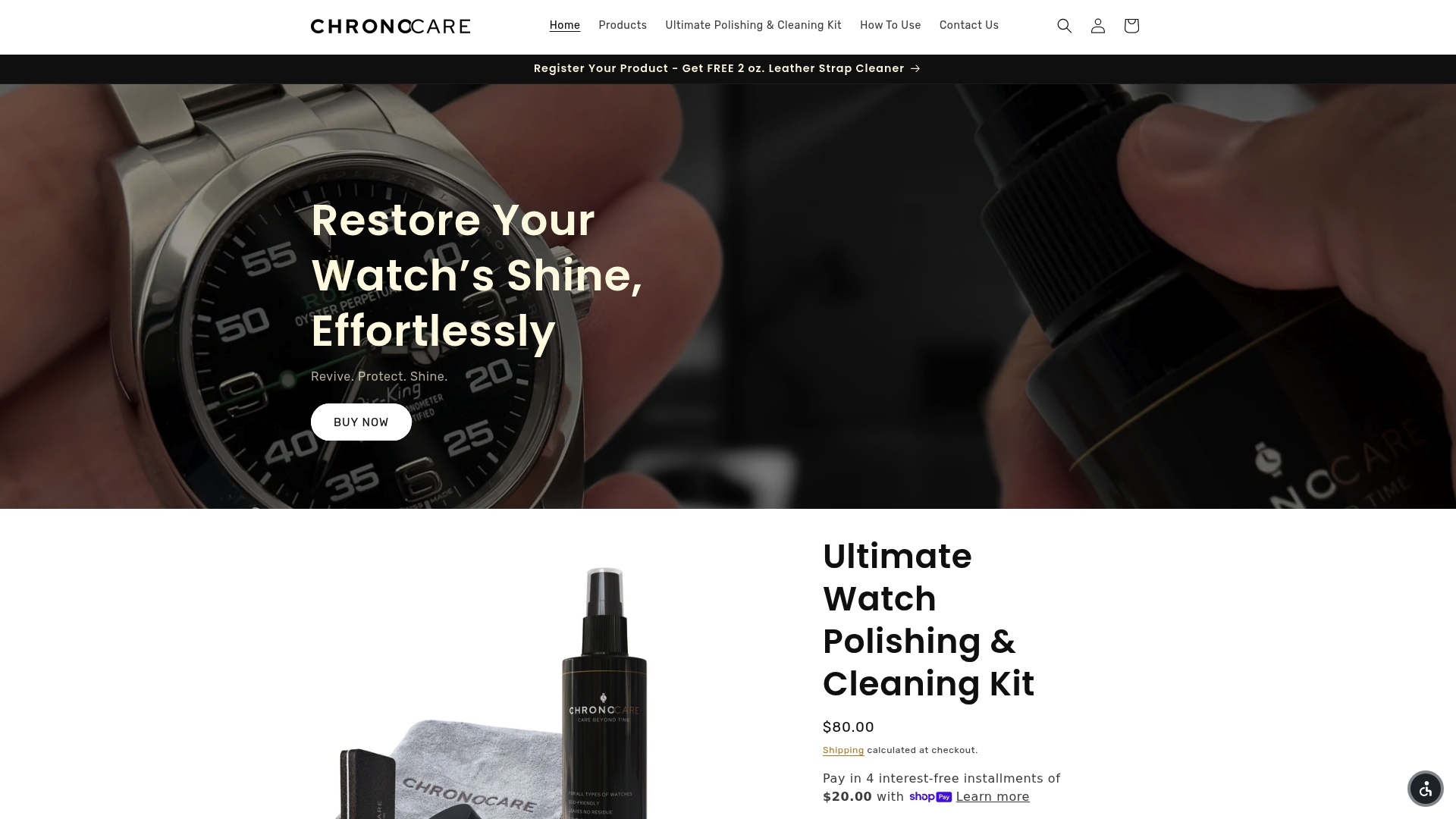
- One kit pairs a watch-safe polishing cream with microfiber cloths sized for cases and bracelets, suited to the buffing and residue steps in the routine.
- Another kit adds putty for crevices and recesses alongside a leather balm formulated for straps, matching the conditioning sequence described above.
- Both kits are meant for the surface and strap care covered in this guide. For gasket checks or pressure testing, a professional service visit still fills the gap no kit can.
Browse either kit, pick the one that matches your current routine, and start with the lightest application the next time your watch needs attention.
FAQ
Can I use water on a luxury watch strap at all?
No, water should never touch a leather strap, since leather is porous and moisture causes premature aging and discoloration. Metal, rubber, or textile straps can sometimes tolerate water depending on the watch’s rating, but manufacturer guidance still recommends detaching the strap before any cleaning involving moisture.
How often should I have my watch’s water resistance tested?
If you swim or regularly expose your watch to water, annual testing is the standard recommendation since gaskets age even without visible damage. For watches kept mostly dry, an inspection every 18 to 24 months is typically sufficient.
Is compressed air safe for cleaning a watch?
Canned compressed air is discouraged because the propellant can force debris into pushers or chill surfaces too quickly, a risk Longines specifically warns against. A manual air-puffer bulb achieves the same dust removal without that risk.
How long does a leather watch strap typically last?
Under normal daily wear, leather straps typically last 12 to 18 months before replacement becomes necessary. Cracking, persistent odor, or seam separation are signs it’s time to replace rather than continue conditioning.
What’s the difference between cleaning sapphire, mineral, and acrylic crystals?
Sapphire crystal tolerates firm microfiber wiping well since it resists scratching, while mineral crystal is softer and benefits from lighter pressure to avoid fine marks. Acrylic crystal is the most delicate of the three and scratches easily, so it does best with a dedicated soft cloth and minimal pressure, paired with watch-safe polishing cream to buff out light marks when needed.
Sources
- Longines — How to clean a watch
- Panerai — Accessories care & strap change
- IWC — Simple services (water resistance renewal)