

The Role of Watch Professional Product Demonstration
A professional watch-care product demonstration is a hands-on session where a watchmaker or trained specialist shows collectors, jewelers, and repair technicians exactly how to clean, polish, and restore a luxury watch without damaging its movement, seals, or finish. The demo exists to answer one question: does this product and technique actually protect the watch, or does it just look good on camera?
Good demonstrations leave you with three things. First, a clear safety limit: what temperature the water can be, when the crown has to be screwed down, and when a piece should never go near liquid at all. Second, one correct routine you can repeat at home or on the bench, matched to the case material in front of you. Third, a record of what was done, so the next owner, insurer, or service center knows the watch’s history.
- Safety limits come before technique, every time.
- One routine per material. Steel is not leather, and leather is not rubber.
- Documentation turns a five-minute demo into a permanent maintenance record.
A brand like Longines publishes its own cleaning routine for exactly this reason, and pressure-testing guidance generally recommends a regular interval for routine soaking, typically within a two-year period. ChronoCare builds its kits around that same logic: workshop-grade tools, correct product chemistry, and a demo script that a jeweler or collector can actually follow at home.
Key Takeaways
A trustworthy watch demonstration proves its safety limits first, its technique second, and leaves you with documentation before it ever asks for a sale.
| Point | Details |
|---|---|
| Water resistance is conditional | Ratings only apply with a secure crown and intact crystal, and a pressure test within two years. |
| Match method to material | Steel gets a lukewarm brush routine; leather stays off-watch and dry; vintage pieces stay dry entirely. |
| Ultrasonic is bracelet-only | Never run an ultrasonic bath on an assembled watch; it can dislodge internal lubrication. |
| Documentation preserves value | Record the demo date, products used, pressure-test status, and next service interval. |
| ChronoCare kits match the routine | The Ultimate Watch Cleaning Kit and polishing cream are formulated for the exact steps demonstrated here. |
Table of Contents
- What Does a Professional Watch-Care Demonstration Involve?
- What Tools and Products Does a Pro Actually Use?
- How Should a Demo Walk Through Each Material?
- What Water-Resistance Limits Should the Demo Cover?
- How Do You Evaluate a Demo Before Trusting a Product?
- Which Demo Format Actually Shows You What You Need?
- How ChronoCare Kits Fit Into a Real Demonstration
- What Should Happen After the Demo Ends?
- Why the Guidance Behind This Article Holds Up
- Why Demonstrations Are a Preservation Practice, Not a Sales Pitch
- Which ChronoCare Kit Should You Watch Demonstrated?
- Where to Verify This Guidance Yourself
- Sources
What Does a Professional Watch-Care Demonstration Involve?
The person running the demo is usually a watchmaker, a brand-trained educator, or a senior technician at a service center. Their job is not to sell a bottle of cleaner. It’s to show, step by step, why a specific product works on a specific material, and where the limits are.
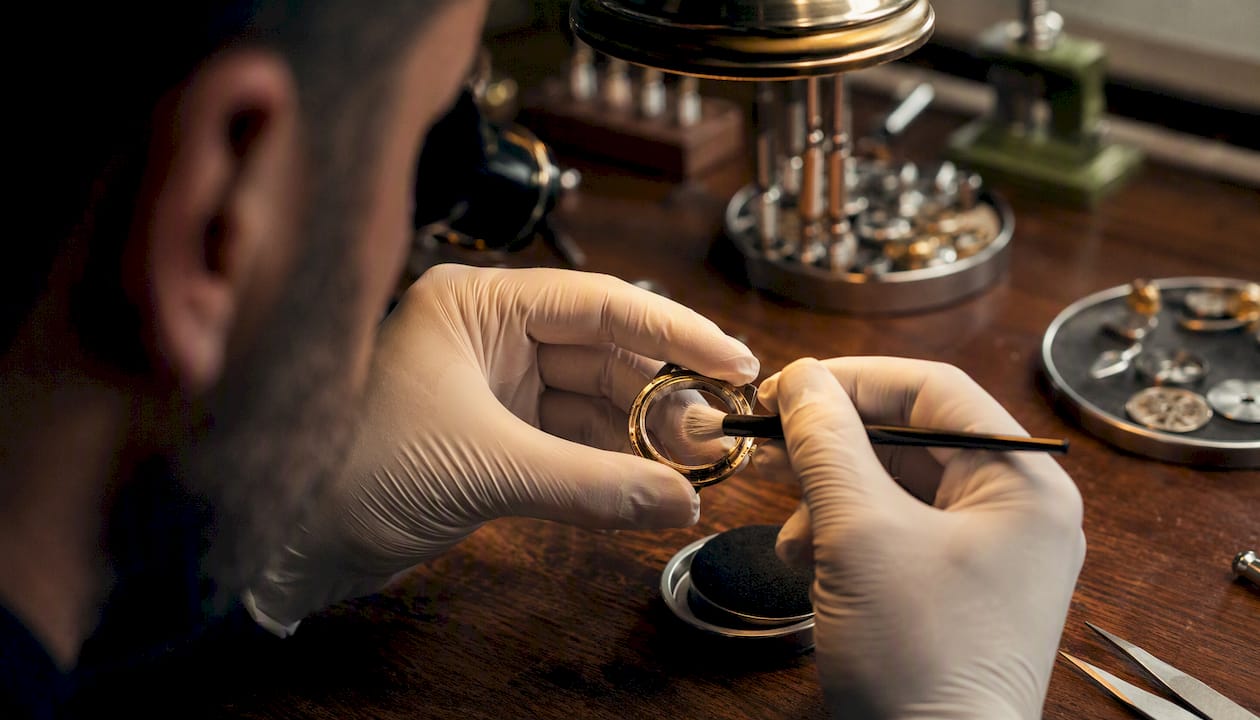
Three audiences show up to these sessions, and each wants something different. Collectors want reassurance that a $15,000 chronograph will not lose value from a bad cleaning. Retailers and jewelers want a repeatable process their staff can run on showroom stock without voiding a warranty. Repair professionals want to confirm a product’s chemistry won’t interfere with gaskets, plating, or lubrication before they recommend it to clients.
A demonstration worth your time delivers three outcomes: a cleaning method that’s actually safe for the case material on the table, proof that the product performs as claimed (not just marketing claims), and a paper trail showing what was done and when.
Credential signals matter more than confidence. Look for training tied to WOSTEP or the British Horological Institute, or an affiliation with an authorized service center. A demonstrator’s toolkit tells you almost as much as their résumé: pegwood instead of metal picks, microfiber instead of paper towel, an air-puffer instead of a compressed-air can. Demos happen at boutique counters, on workshop benches, and in hands-on clinics, and the setting changes what you should expect. A boutique demo is quick and cosmetic. A bench demo should show tool handling and crown checks up close. A clinic should let you try the routine yourself under supervision.
What Tools and Products Does a Pro Actually Use?
The toolkit rarely changes, even between demonstrators. What separates a careful pro from a rushed one is sequence and restraint.
Core tools you should see on the bench:
- Microfiber cloths (never paper towel or cotton, which can scratch)
- Soft-bristle brushes for crevices and lug areas
- Manual air-puffer bulbs, never compressed-air cans
- Silicone-free cleaning putty for tacky residue and dust
- Pegwood or wooden toothpicks, not metal picks, for crown and case-back seams
- Spring-bar tools for safe bracelet removal
- Soft polishing wheels or hand pads for cream application
On the product side, a legitimate demo sticks to pH-neutral soap for general cleaning, silicone-free putty for detail work, polishing cream for light surface marks, and leather balm for strap care. Hodinkee’s watchmakers recommend removing the bracelet whenever the case allows it, precisely so brushes and pegwood can reach the parts a wrist-worn cleaning routine misses.
ChronoCare’s kits are built around this same product logic. The Ultimate Watch Cleaning Kit covers the microfiber, brush, and puffer stage. The polishing cream handles light swirl marks on steel and titanium. Leather balm covers strap maintenance separately, because leather is never treated the same way as a steel case.
Pro Tip: Mask bezel inserts and any painted markers with low-tack tape before polishing cream touches the case. Cream that bleeds onto a ceramic or aluminum insert can dull the finish permanently, and most demonstrators skip this step because it looks unnecessary on camera.
How Should a Demo Walk Through Each Material?
A one-size routine is the fastest way to damage a watch. Material dictates method, and a demonstrator who treats every strap and case the same way is cutting corners.
Stainless steel or titanium (bracelet removed when possible):
- Confirm water resistance and crown position before anything touches liquid.
- Fill a bowl with lukewarm water and one drop of pH-neutral soap.
- Brush gently, moving away from the case, never scrubbing toward the crown.
- Rinse crown-down under a light stream.
- Use the air-puffer to clear crevices and lug holes.
- Pat dry with microfiber, then buff along the brushing grain, never across it.
Leather straps, off the watch:
- Wipe with a barely damp cloth. Never soak leather.
- Apply leather balm sparingly, following Van Cleef & Arpels’ care guidance.
- Rest the strap away from direct heat or sunlight and let it cure overnight before refitting.
Rubber or textile straps:
- Rinse under fresh water after chlorine or salt water exposure.
- Use mild soap only if odor persists.
- Air dry. Never use heat, which can crack rubber or shrink woven fabric.
Vintage or unknown-resistance pieces: the demo stays dry. Micro-cleaning putty and a soft brush handle surface dust, and the demonstrator should say plainly that anything beyond that belongs at a service center, not on a bench with running water.
What Water-Resistance Limits Should the Demo Cover?
Safety is the single biggest differentiator between a demo you can trust and one that’s just theater. Water resistance ratings are conditional, not permanent, and a good demonstrator says so out loud before touching a bowl of water.
Water-resistance ratings apply only when the crown is fully secured and the crystal is intact. If a watch hasn’t passed a recent pressure test, exposure should be limited rather than assumed safe.
That guidance comes directly from Patek Philippe’s own care recommendations, and it’s the standard a demonstrator should hold every watch to, regardless of brand. Longines recommends lukewarm water only, generally in the 0°C to 50°C range, since heat and cold both stress gaskets and seals. Ultrasonic cleaners never touch an assembled watch; they’re reserved for detached bracelets only, since vibration can dislodge lubrication inside the movement.
| Water-Resistance Rating | Recommended Cleaning Method | Frequency |
|---|---|---|
| — | Dry wipe only, no immersion | As needed |
| 50m | Lukewarm rinse if pressure-tested within 2 years | Monthly for active wear |
| — | Full lukewarm soak and brush routine | Monthly, plus post-swim rinse |
| Unknown or vintage | Dry methods and putty only | Refer to service before any moisture |
Watch for these red flags during a live demo: a compressed-air can held near the case (it can force moisture and debris past gaskets), any abrasive cleaner touching a polished surface, an ultrasonic bath running with the case fully assembled, or a demonstrator who never once mentions checking the crown before starting.
How Do You Evaluate a Demo Before Trusting a Product?
Judging a demonstration on the spot comes down to watching hands, not listening to pitch. A few observable habits separate a technically sound demo from a sales performance.
- Tools look clean and are set down on a soft surface, never a bare countertop.
- The demonstrator checks the crown position before introducing any liquid.
- Bracelet removal happens before deep cleaning, not as an afterthought.
- Water is visibly lukewarm, never steaming.
- Drying uses microfiber and air, never a heat gun or hairdryer.
Ask these five questions if you get the chance:
- When was this watch last pressure-tested, and how do you know?
- What’s the chemical base of this cleaning product, and is it safe on gold, platinum, or plated surfaces?
- Does this product carry any warranty conflicts with the manufacturer?
- What’s your policy on ultrasonic cleaning for assembled watches?
- Will I get written documentation of what was done today?
A demonstrator who can’t answer the pressure-test question, or who brushes past the crown-check step, is showing you a sales demo, not a technical one. That distinction should decide whether you buy the product or walk away.
Which Demo Format Actually Shows You What You Need?
Live bench demos let you ask questions in real time and watch tactile checks, like crown resistance, happen under your own eyes. Their limit is scale: a boutique counter demo is rarely more than a five-minute cosmetic pass.
Recorded macro close-ups solve a different problem. They let you replay a crown-check or a brushing angle frame by frame, and a well-produced video usually shows a certificate or reference to a recent pressure test on screen. What they can’t give you is the ability to interrupt and ask “why lukewarm and not room temperature.”
Hands-on clinics split the difference, letting attendees try the routine themselves, but they carry real liability. A clinic worth attending has visible supervision at every station and some form of coverage for attendee handling of client watches, not just a waiver buried in the sign-up form.
Pro Tip: A tight demo script covers safety, result, and documentation inside 10 to 12 minutes: two minutes on water-resistance checks and crown condition, six on the actual cleaning or polishing sequence, and the final minutes on what gets recorded afterward. Anything shorter usually skips the safety check. Anything longer usually pads for entertainment.
How ChronoCare Kits Fit Into a Real Demonstration
Each ChronoCare kit component maps to a specific stage of the routine above, which is exactly how a demonstrator should present it, one need at a time rather than one bundle.
- Microfiber cloths and the air-puffer handle surface dust and crevice cleaning, the first pass on almost every watch that walks into a demo.
- Watch Polishing Cream removes light swirl marks and hairline scratches on steel and titanium bracelets, applied in the sequence covered earlier: mask first, cream second, buff along the grain.
- Leather balm stays off-watch entirely, applied to a removed strap and left to cure before refitting.
A boutique quick-clean demo runs the cloth and puffer stage only, since that’s what fits a five-minute counter interaction. A polishing demonstration goes further, showing the cream applied in small circular motions on a masked case, then buffed clean, so attendees see the before-and-after on real metal. A leather-care walkthrough is its own separate session, since mixing wet cleaning with leather balm in one demo confuses the sequencing for anyone watching.
Pro Tip: A strong Ultimate Watch Cleaning Kit demo script keeps the crown screwed down until the very last drying step, brushes in one direction only, and never lets the puffer nozzle touch the case. That single sequencing choice protects gasket integrity while still delivering a visibly cleaner bracelet by the end of the demo.
What Should Happen After the Demo Ends?
A demonstration without a written record is a missed opportunity, especially for collectors thinking about resale or insurance down the line.
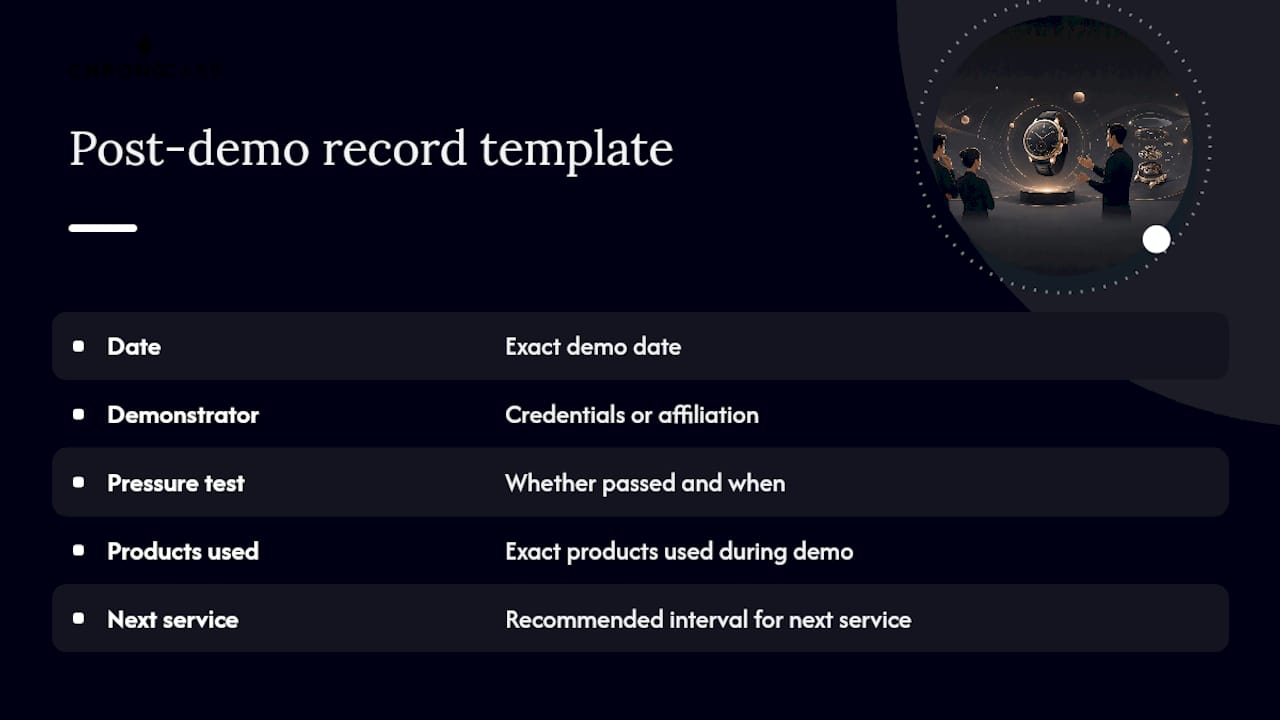
A simple recordkeeping template captures five things: the date, the demonstrator’s credentials or affiliation, whether a pressure test was passed and when, the exact products used, and the recommended interval for the next service. That record travels with the watch. Retailer guidance from Toronto Watch Exchange backs this up directly, noting that at-home cleaning is reasonable when the owner understands water-resistance limits, but that documentation and a service referral matter the moment those limits are unclear.
Follow-up steps are straightforward: schedule a pressure test if the last one is approaching two years old, ship to a service center if the demo revealed sticky pushers or crown resistance, and store the watch in a dry case away from direct sunlight afterward. Collectors who keep this kind of paper trail consistently find it reduces disputes at resale and shortens the diagnostic time when a watch eventually needs real restoration work, the kind involving full disassembly and lubrication that sits well outside what any product demo should attempt.
Why the Guidance Behind This Article Holds Up
ChronoCare builds its product line around the same routines watchmakers demonstrate on the bench: pH-neutral cleaning, silicone-free putty, polishing cream formulated for metal surfaces, and leather balm kept strictly separate from wet cleaning steps. The kits are sold direct, formulated with that workshop sequencing in mind rather than as a generic cleaning bundle.
- Products focus specifically on luxury watch materials, not general jewelry cleaning.
- Kit components are grouped by task (surface clean, polish, leather care) rather than bundled arbitrarily.
- The direct-to-consumer model means guidance and product formulation come from the same source, not a third-party reseller.
Author Raymond Jenkins brings a background centered on watch-care product formulation and demonstration standards, drawing on the same brand guidance cited throughout this piece. That’s also the standard worth applying to any live demonstrator you watch: WOSTEP or BHI training, a named service-center affiliation, and a visible toolkit that matches what’s described here. Credentials you can verify are worth more than confidence you can’t.
Why Demonstrations Are a Preservation Practice, Not a Sales Pitch
The real value in a good demonstration isn’t the product sold at the end of it. It’s the tacit technique that gets transferred, the exact angle to hold a brush, the pressure to use on pegwood near a case seam, things that don’t translate well into a written guide but click instantly when you watch someone do it correctly.
That’s also where demonstrations go wrong. A demonstrator under pressure to move product will rush past the crown check or skip mentioning the pressure-test window entirely, because those steps slow the pitch down. The best demos treat those checks as the actual content, not an obstacle to it. If a demonstration doesn’t mention when to stop and refer to service, it’s not a complete demonstration.
Which ChronoCare Kit Should You Watch Demonstrated?
If a demo shows a quick surface clean on a boutique watch, the Ultimate Watch Cleaning Kit is the one to watch for: microfiber, brush, and puffer, matched to the exact sequence covered above. It’s built for the steel and titanium routine, not for straps or polishing work.
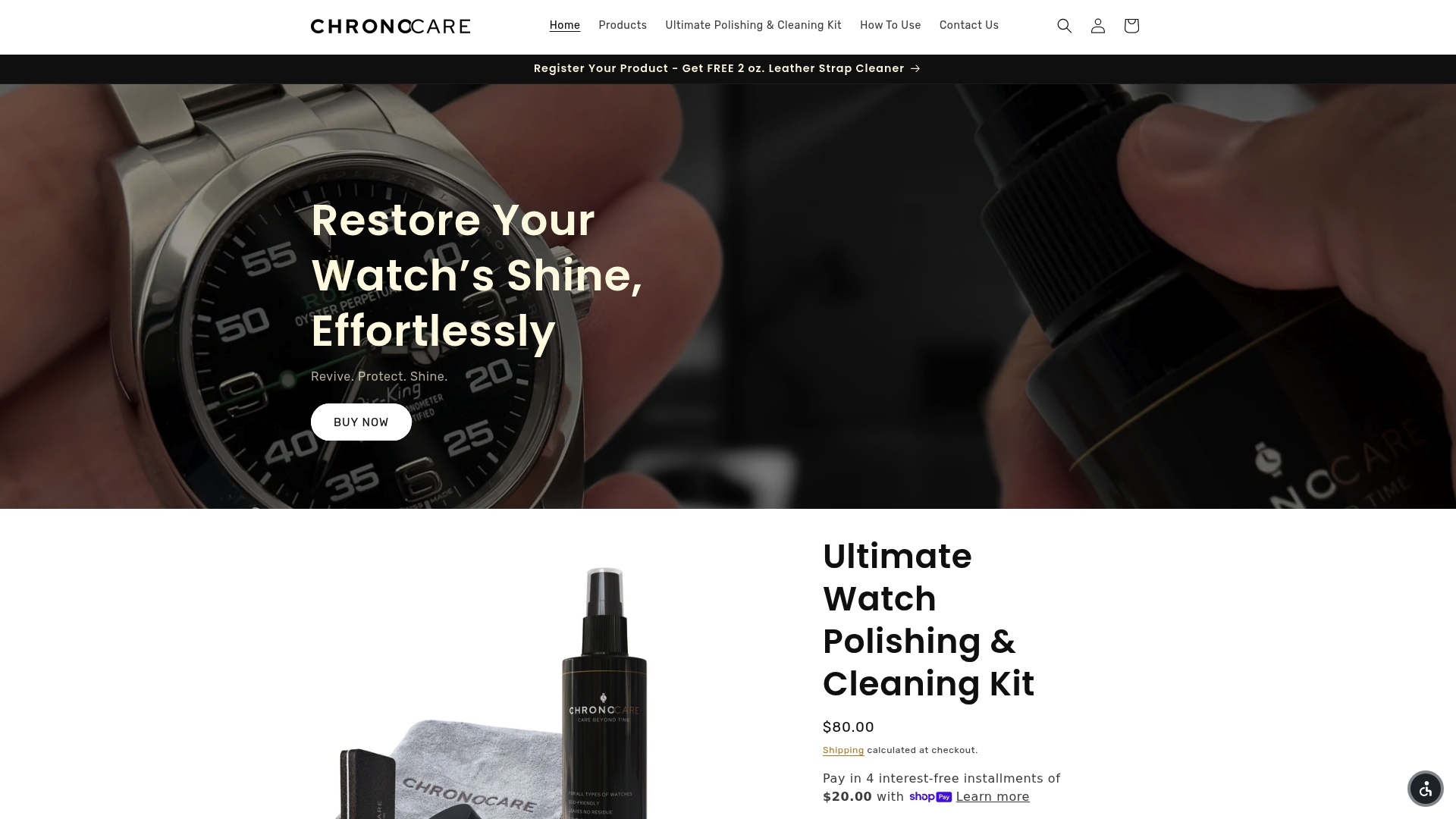
If the demo moves into light scratch removal on a steel bracelet, look for the Ultimate Watch Polishing & Cleaning Kit, which pairs cleaning tools with a polishing cream formulated specifically for metal surfaces rather than a general-purpose abrasive. When you’re checking kit contents before buying, confirm the cream is silicone-free and the cloths are genuine microfiber, since both details separate a workshop-grade kit from a bargain bundle that can leave micro-scratches behind. Order directly from ChronoCare and you get the same product logic demonstrated in this guide, ready for your own bench or counter.
Where to Verify This Guidance Yourself
- Longines’ cleaning guide walks through the full lukewarm-water routine and its ultrasonic warning in more depth.
- Patek Philippe’s care recommendations cover the pressure-test interval and crown-security conditions behind every water-resistance rating.
- Breitling’s watch-care page details post-swim rinsing and leather-strap protection from water and chemicals.
- Van Cleef & Arpels’ care advice gives specific leather balm and cure-time guidance for straps treated off-watch.
- Hodinkee’s cleaning guide offers a practical, tool-by-tool walkthrough from an editorial team that tests these routines directly.
Sources
- How to clean a watch | LONGINES AU
- Patek Philippe - Watch care recommendations
- Breitling - Caring for your Breitling
- How To Clean Your Watch - Hodinkee
- How to Clean Your Luxury Watch at Home