

Keep Ceramic Watches Factory Fresh: Polishing Rules for Collectors
Yes, you can polish a ceramic watch, but only with caution. High-tech ceramic resists scratches better than most metals, yet it is brittle and can chip or crack under hard impact, so light cleaning is usually safe while heavy polishing risks dulling the factory finish. If you notice chips or cracks, stop immediately and get professional service instead of continuing at home.
TL;DR:
- Light dry buffing with a non-abrasive cloth is safe for ceramic, but heavy polishing risks dulling the finish and should be avoided.
- Use only pH-neutral cleaners, soft brushes, and specific ceramic-safe polishes to prevent micro-scratches and impact damage.
- Avoid household abrasives, ultrasonic cleaning, and soaking unrated watches, as these can cause micro-damage and reduce water resistance.
- Repair costs for ceramic chips or cracks tend to be higher than metal, highlighting the importance of prevention over aggressive polishing.
- Matte ceramic surfaces should only be cleaned with a dry cloth, while glossy finishes can tolerate gentle, light polishing with spot-testing beforehand.
Table of Contents
- Safe cleaning and dry-polishing routine for ceramic cases and bracelets
- Choosing tools and products that are actually safe for ceramic
- Common DIY mistakes that damage ceramic watches
- When to stop DIY and call in professional repair
- Matte and glossy ceramic need different polishing approaches
- Spotting genuine ceramic versus coated or hybrid materials
- Common ceramic types and how tough they really are
- Why preservation beats aggressive polishing
- If you want a safe kit built for ceramic
- Sources
- FAQ
Safe cleaning and dry-polishing routine for ceramic cases and bracelets
Before you touch a cloth to the case, run a few quick checks. Confirm the crown is pushed in or screwed down, verify your watch’s water-resistance rating, and remove any leather strap so it stays dry. These steps matter because moisture that reaches the movement through an open crown can cause far more damage than any surface residue ever will. Our step-by-step safety checklist walks through these pre-checks in more detail.
You do not need a bench full of tools. Gather:
- A clean microfiber cloth
- A pH-neutral dish soap
- Lukewarm water in a small bowl
- A soft-bristle toothbrush for crevices
- Cotton swabs for lug edges
- An air puffer for dust
- A non-abrasive polishing cloth or pad
Once you have your materials, follow this sequence:
- Wipe the case and bracelet with a dry microfiber cloth to remove loose dust.
- Mix a drop of soap into lukewarm water and dampen the cloth, following the same approach Longines recommends for its own pieces.
- Wash the ceramic surfaces gently, using the soft-bristle toothbrush on bracelet links and crevices.
- Rinse with a barely damp cloth, never submerging a watch that is not rated for it.
- Pat dry immediately with a fresh microfiber cloth.
- Dry-buff with a non-abrasive polishing pad using even strokes in one direction rather than circular scrubbing.
A quick rinse after saltwater or heavy sweat exposure helps prevent mineral buildup, and a full clean once a month keeps most ceramic pieces looking factory fresh without over-handling the surface. Never soak a watch that lacks a water-resistance rating, and never run an assembled ceramic watch through an ultrasonic cleaner, since the vibration can loosen gaskets that protect the movement.
Pro Tip: Buff in one direction along the bracelet’s brushed grain rather than in circles. Circular motions on glossy ceramic can leave faint swirl patterns that catch the light.
Choosing tools and products that are actually safe for ceramic
Not every polish marketed for jewelry belongs on a watch. Look for products built specifically for ceramic or sapphire surfaces:
- pH-neutral cleaning sprays that will not strip factory sealant
- Microfiber cloths rated lint-free for optical or watch use
- Silicone-free cleaning putty for crevices and lug gaps
- Non-abrasive polishing creams formulated for watch ceramic, not metal
Household abrasives are the biggest risk here. Toothpaste and baking soda both contain grit that can create micro-swirls on glossy ceramic, and metal polishes formulated for steel or gold are often too aggressive for a ceramic surface, stripping the factory finish rather than restoring it. Rado notes that high-tech ceramic sits near 1,250 Vickers hardness, tough against everyday scuffs but still vulnerable to sharp impacts and harsh abrasives that exceed what the material was designed to withstand.
Before applying anything new, spot-test on a hidden area, such as the caseback edge or an inner bracelet link. Apply a single conservative stroke, wait a few minutes, then check for any change in sheen. A mild polishing cream can blend light surface marks or the metal transfer marks Chanel describes on white and black ceramic, but deeper gouges or uneven finish loss usually mean the piece needs factory resurfacing, not another round of home polishing. Our watch polishing cream is one option formulated for this kind of light blending work.
Common DIY mistakes that damage ceramic watches
Most ceramic damage comes from a short list of avoidable habits. Skip these:
- Abrasive pastes like toothpaste or scouring powder
- Rotary buffing wheels, even on low speed
- Ultrasonic cleaners on a fully assembled case
- Soaking a watch that is not rated for the water exposure
Each of these carries a real consequence. Abrasive pastes and buffing wheels leave micro-swirls that dull a glossy finish permanently. Ultrasonic vibration can degrade the gaskets that keep water and dust out, quietly reducing water resistance long before you notice a problem. Soaking an unrated piece risks condensation inside the case, which can fog the crystal or corrode movement parts.
If you suspect damage has already happened, stop cleaning right away. Dry the watch fully, check the crystal for any trapped condensation, and if you see fogging or moisture, get it to an authorized service center rather than opening the case yourself. Our guide to preserving factory geometry while polishing covers this balance between cleaning and restraint in more depth.
When to stop DIY and call in professional repair
Some damage is beyond what any home routine can fix. Hand the watch to a professional when you see:
- Visible chips or cracks in the ceramic
- Water fogging under the crystal that persists after drying
- Structural damage to the bezel or case edges
Repair reality check: ceramic components are usually replaced rather than repolished, since factory resurfacing equipment is not something a home kit can replicate. That means genuine parts and a real cost, so ask any service center about their authorization status, where they source replacement parts, whether the work carries a warranty, and how long turnaround will take. Get a written estimate before you approve anything, especially on a piece with sentimental or resale value.
Matte and glossy ceramic need different polishing approaches

Matte ceramic gets its look from a fine, deliberately textured surface, and that texture is easy to ruin. A polishing cloth or cream with any grit will smooth out the matte texture and leave shiny patches where the surface used to be uniform, so matte cases call for dry buffing only, using a soft cloth and minimal pressure, never a wet polish.
Glossy ceramic tolerates a bit more. Its reflective finish comes from a smooth, dense surface layer, and a light non-abrasive cream can blend faint surface marks without changing the overall sheen, provided you spot-test first and use single-direction strokes rather than circular motion. Chanel’s own care instructions for white and black ceramic bracelets point in this same direction: soft-bristle brushing and mild soap for cleaning, no aggressive rubbing for polishing.
The safest rule of thumb is to treat matte finishes as untouchable with anything but a dry cloth, and treat glossy finishes as candidates for occasional light polishing, always starting conservative and stopping the moment you see any change in texture or reflection.
Spotting genuine ceramic versus coated or hybrid materials
Genuine high-tech ceramic is a solid material through and through, formed under heat and pressure with color built into the material itself rather than applied on top, which is why Rado describes color as integrated during formation rather than sprayed or plated on afterward. A ceramic-coated watch, by contrast, has a metal or composite base with a thin ceramic layer applied over it, and that coating can wear through with enough use, revealing the base material underneath.

A few practical checks help tell them apart. Genuine ceramic feels notably lighter than steel of the same size and stays cool to the touch longer than metal. Look closely at any worn edges, lugs, or crown areas: a coated piece often shows a different color or metallic sheen underneath after years of contact with skin or clothing, while solid ceramic shows the same color and texture all the way through, even after a chip. Manufacturer spec sheets or care pages are the most reliable source for confirming which material a specific model uses, since visual inspection alone can be inconclusive on borderline cases.
Common ceramic types and how tough they really are
Most luxury ceramic watches use a version of zirconium oxide, often called high-tech ceramic in manufacturer materials. It offers strong scratch resistance and a surface that will not fade in sunlight, since the color is part of the material rather than a coating. Rado explains that this scratch resistance comes with a tradeoff: the same hardness that resists scuffs also makes the material brittle, so a hard drop or impact can chip or crack it in a way that a steel case would simply dent.
Some brands use alumina-based ceramics or ceramic composites blended with metal particles for added impact tolerance, though these variations are less common in mainstream luxury lines. Across ceramic types, the shared characteristic is a hardness-versus-brittleness tradeoff: fantastic resistance to daily scuffs and scratches, but a real vulnerability to sharp, concentrated impacts that metal cases tend to absorb more gracefully. Repair costs reflect that vulnerability. Ceramic case repairs have run notably higher than comparable metal cases in at least one reported case, a reminder that prevention matters more with ceramic than with most other case materials.
Why preservation beats aggressive polishing
After years of watching collectors chase a factory-fresh shine, the pattern is consistent: the pieces that age best are the ones cleaned regularly and polished rarely, not the ones buffed every few months. Some specialized watch care products are formulated in the US specifically for luxury materials, aligning with the same conservative approach found in manufacturer care guidance from brands like Rado, Chanel, and Longines. Protecting the seals and the original factory geometry matters more, over time, than chasing a marginally brighter shine today.
— Raymond Jenkins
If you want a safe kit built for ceramic
Household products were never designed for ceramic watch surfaces, and that mismatch is exactly what causes most of the damage covered above. A kit built specifically for luxury watch care removes the guesswork of matching the right cleaner, cloth, and polish to your case material.
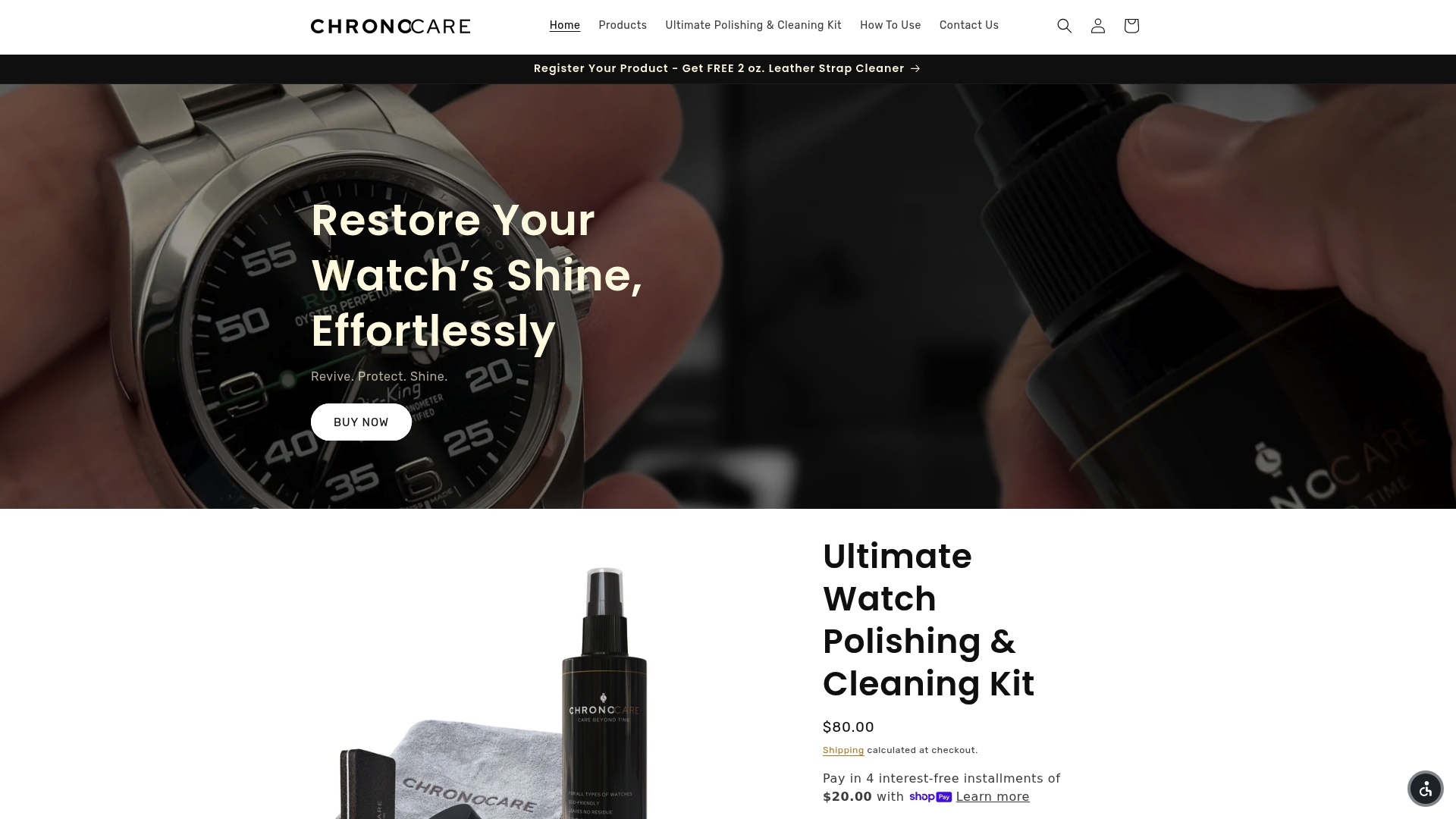
The Ultimate Watch Polishing & Cleaning Kit includes:
- A pH-neutral cleaning solution safe for ceramic and metal
- Lint-free microfiber cloths for drying and buffing
- A soft-bristle brush for bracelet links and crevices
- A non-abrasive polishing pad for light surface blending
If your routine is closer to a quick wipe-down between deeper cleans, the Ultimate Watch Cleaning Kit covers the basics in a smaller package. Either way, having the right tools on hand means one less reason to reach for something abrasive out of the kitchen cabinet.
Sources
- Master of Material | RADO® Watches
- Care and maintenance recommendations for CHANEL Watches | CHANEL
- How to clean a watch | LONGINES US
FAQ
Can a ceramic watch be polished?
Yes, but only lightly and only for surface marks, since high-tech ceramic is hard yet brittle and heavy polishing can dull the factory finish. Deep scratches, chips, or cracks need professional attention rather than a home polish.
Can I polish my watch myself?
You can safely clean and lightly dry-polish ceramic at home using pH-neutral soap, soft brushes, and non-abrasive polishing pads, following the routine outlined above. Anything beyond surface deposits, including chips or persistent water fogging, should go to an authorized service center instead.
How much does it cost to have a watch polished?
Cost varies by brand, damage type, and whether parts need replacing rather than resurfacing, so get a written estimate before approving any work. Ceramic repairs in particular can run higher than metal case repairs, since one reported case put ceramic case repair costs well above a comparable metal case.
Is polishing a watch a good idea?
Light, occasional polishing to blend faint surface marks is generally fine, but frequent or aggressive polishing tends to do more harm than good on ceramic. Most collectors get better long-term results prioritizing gentle regular cleaning over repeated polishing sessions.