

Wait 5 to 10 Minutes and Save Your Watch Strap from Perfume Damage
Yes, perfume can damage a watch strap, and leather takes the worst of it. If fragrance lands on your band, take the watch off, blot (don’t rub) the wet spot with a clean cloth, and let it air out somewhere shaded. Skip alcohol wipes or vigorous scrubbing. Leather needs the most caution since it can stain or stiffen; silicone is the easiest material to rescue and rarely suffers permanent harm.
TL;DR:
- Fragrance oils and alcohol in perfume can stain or stiffen leather straps, with porous materials like leather and fabric being most vulnerable.
- Promptly blot the wet spot and avoid alcohol wipes or vigorous rubbing to prevent deepening damage, especially on leather or fabric straps.
- Cleaning leather straps requires gentle wiping with distilled water, spot treatment with a mild leather cleaner, and conditioning, but deep stains or cracks often cannot be fully reversed.
- Silicone bands are the easiest to clean, needing only a vinegar-water soak, gentle scrubbing, and thorough rinsing, with repeated treatments posing minimal risk.
- Prevent future damage by applying perfume to clothes or hair, waiting at least five minutes before wearing the watch, and rotating straps if fragrance exposure is frequent.
Table of Contents
- Why Perfume Hurts Watch Straps in the First Place
- What Should You Do the Moment Perfume Hits Your Strap?
- How to Clean a Leather Strap Safely After Perfume Contact
- Cleaning Fabric, Nylon, and Canvas Straps
- How Do You Get Perfume Smell Out of a Silicone Watch Band?
- How to Prevent Perfume From Damaging Your Watch Strap
- When Should You Replace a Strap Instead of Cleaning It?
- Fix It or Replace It: A Judgment Call
- The Right ChronoCare Product for the Job
- Sources
- FAQ
Why Perfume Hurts Watch Straps in the First Place
Perfume isn’t just scent. It’s a mix of alcohol and oil-based fragrance compounds, and each reacts differently depending on what your strap is made of.
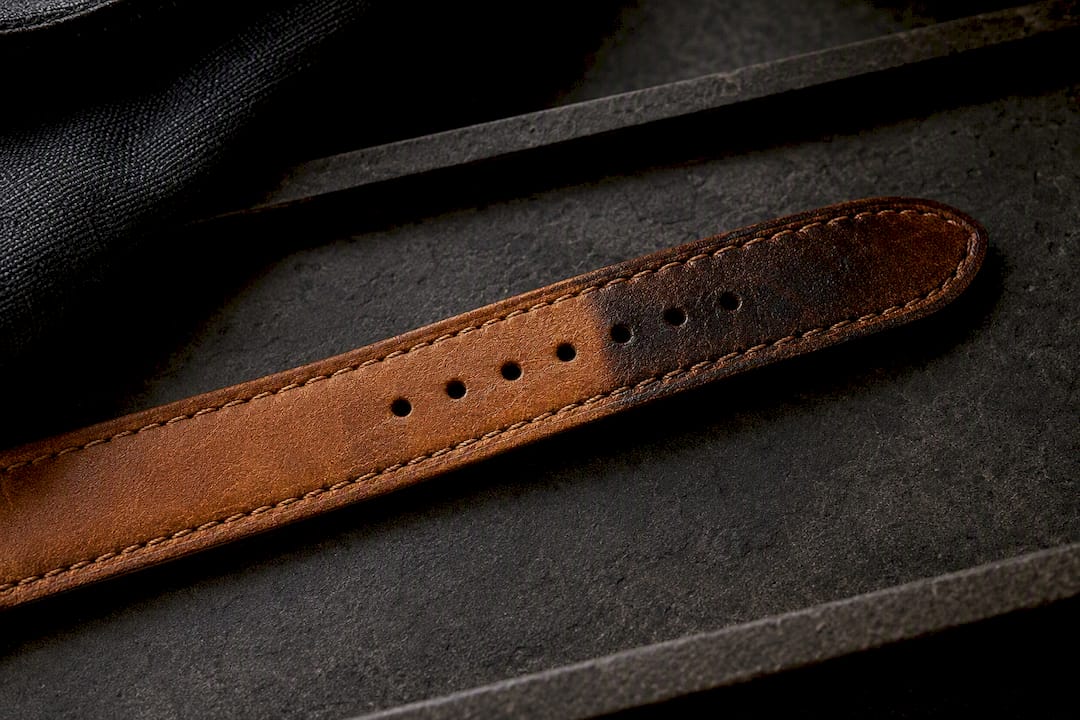
- Leather is porous, so it soaks up the alcohol like a sponge. That alcohol strips natural oils from the hide, which can darken the leather, dry it out, or leave a stiff patch that never fully softens again. Some dyes react to fragrance oils by staining permanently, which is exactly why Olivia Burton’s own strap care notes warn against letting perfume or body cream touch leather bands.
- Fabric, nylon, and canvas straps trap fragrance oils deep in the weave. You’ll often smell the perfume long after it’s dried, and dye transfer between the strap and your skin or clothing is common.
- Silicone and rubber are non-porous, so they don’t stain the way leather does, but they hold onto scent stubbornly. Worse, alcohol-heavy cleaners applied over time make these elastomers brittle and prone to cracking at the edges.
What Should You Do the Moment Perfume Hits Your Strap?
Speed matters more than technique here. The longer perfume sits, the deeper it penetrates.
- Take the watch off immediately and set it somewhere flat.
- Blot, don’t rub, the wet area with a dry microfiber cloth. Rubbing pushes fragrance oils deeper into leather fibers and fabric weave.
- Skip rubbing alcohol, acetone, or any household solvent on leather. These accelerate the same drying damage the perfume already started.
- Test any cleaner in a hidden spot, like the underside near the buckle, before treating the visible strap.
- In the future, give perfume five to ten minutes to dry before strapping the watch back on.
That last step alone prevents most perfume damage before it starts. It costs you nothing but a few minutes of patience.
Pro Tip: Keep a small microfiber cloth in your desk drawer or bag. Blotting perfume within the first thirty seconds cuts absorption dramatically compared to waiting even a few minutes.
How to Clean a Leather Strap Safely After Perfume Contact
Leather forgives almost nothing, so the goal is minimal intervention, not deep cleaning.
You’ll need a microfiber cloth, distilled water, a mild saddle soap or pH-balanced leather cleaner, a soft-bristle brush, and a leather conditioner for later. Work through the steps in order and don’t skip ahead.
- Blot any wet perfume residue first.
- Lightly dampen a cloth with distilled water and wipe the surface, going with the grain of the leather.
- If a spot remains, apply a small amount of leather cleaner with the soft brush, working in gentle circles, then wipe away residue immediately.
- Let the strap air-dry flat, away from direct heat, sunlight, or a hair dryer. Heat accelerates cracking on leather that’s already stressed from alcohol exposure.
- Once fully dry, usually after several hours, apply a thin layer of leather conditioner to replace lost oils.
Never submerge a leather strap in water. Google’s own Pixel Watch support guidance specifically warns against soaking leather bands and recommends fresh water with mild soap only where needed, which lines up with what most watchmakers tell you privately: leather and standing water don’t mix.
Pro Tip: If a stain lightens but doesn’t fully disappear after one cleaning, stop. Repeated scrubbing does more damage than a faint mark ever will.
Some discoloration may be permanent. A little patina from age and use is normal and even desirable to some owners, but a hard water ring or fragrance stain that doesn’t lift after one gentle attempt usually means it’s there to stay. At that point, you’re choosing between living with it or replacing the strap.
Cleaning Fabric, Nylon, and Canvas Straps
Woven straps handle water better than leather, but the hardware needs protection.
- Detach the strap from the watch head if your design allows it, keeping the case and movement completely dry.
- Hand-wash in cold water with a small amount of mild detergent, working the fabric gently between your fingers.
- For lingering odor, soak the strap in a cold mixture of one part white vinegar to three parts water for about fifteen minutes.
- Rinse thoroughly under cold running water until no soap or vinegar smell remains.
- Lay flat to air-dry away from sunlight and heat vents.
Avoid the washing machine. The agitation can fray woven edges and loosen stitching around the buckle holes. If dye transfer has already happened, meaning color has bled from the strap onto your skin or vice versa, that’s typically permanent and a sign the strap is nearing the end of its useful life.
How Do You Get Perfume Smell Out of a Silicone Watch Band?
Silicone is the most forgiving material here, and the fix is almost embarrassingly simple.
- Rinse the band under cool water to remove surface residue.
- Soak it for about fifteen minutes in a cold solution of one part vinegar to three parts water. This ratio effectively breaks down absorbed fragrance compounds without stressing the polymer the way alcohol does.
- Scrub gently with a soft brush, focusing on any textured or perforated areas where scent collects.
- Rinse thoroughly and let it air-dry.
- Buff with a dry microfiber cloth to restore surface sheen.
Skip alcohol-based cleaners and abrasive pastes. Alcohol is what gives silicone its brittle, chalky texture over time, which is the opposite of what you want in a band you wear daily. Repeat this treatment as needed; there’s no meaningful wear penalty from doing it every few weeks if odor keeps returning.
How to Prevent Perfume From Damaging Your Watch Strap
Prevention beats cleanup every time, and it takes almost no extra effort once it’s a habit.
- Spray perfume on your clothes or hair, never directly at your wrist.
- Wait five to ten minutes after applying fragrance before putting your watch back on.
- Store watches away from perfume bottles, scented drawer liners, or freshly sprayed clothing.
- Rotate straps if you wear fragrance daily, giving each one time to air out between wears.
- Wipe down straps after heavy sweat, sunscreen, or lotion exposure, not just perfume. Sunscreen in particular degrades straps fast and deserves the same waiting period before you put the watch back on.
Pro Tip: If you wear fragrance every day and sweat heavily during workouts, switch that specific watch to a rubber or metal band. Leather and heavy daily fragrance exposure are a poor long-term match.
Leather in particular rewards a little routine care. Conditioning it every few months meaningfully extends its life compared to leaving it dry and untreated, especially on a strap that regularly brushes against fragrance or lotion.
When Should You Replace a Strap Instead of Cleaning It?
Cleaning has limits, and pushing past them usually makes things worse.
- Cracking or flaking along the fold lines, especially near the buckle, means the leather’s structure is compromised, not just dirty.
- Delamination, where layers of the strap start separating, is not something a cleaner fixes.
- A lingering chemical or fragrance smell that survives two or three cleaning attempts usually means the odor has bonded with the material at a level surface cleaning can’t reach.
Leather that’s been repeatedly hit with perfume, sunscreen, and heat tends to fail years earlier than a well-conditioned strap. Professional restoration can sometimes recondition a strap that’s dry but not yet cracked, though it can’t reverse structural damage. ChronoCare’s leather cleaning guide and conditioning walkthrough cover the maintenance side in more depth if you want to extend a strap’s life before it reaches that point.
Fix It or Replace It: A Judgment Call
Collectors chasing originality should lean toward conservative cleaning and professional restoration. If you just want a strap that looks good and holds up, replace it once cracking or stiffness sets in. Don’t fight a strap that’s already lost its structure.
— Raymond Jenkins
The Right ChronoCare Product for the Job
Not every perfume mishap calls for the same fix, and picking the wrong product on delicate leather can do more harm than the fragrance did. For leather straps, the ChronoCare Leather Strap Cleaner is formulated for exactly the cautious, spot-treatment approach this guide walks through: a small amount, tested on a hidden area first, never soaked or oversaturated.
If your watch has mixed materials, a metal bracelet paired with a leather or rubber strap, or you’re dealing with hardware that’s picked up grime along with the fragrance, the Ultimate Watch Cleaning Kit covers the full maintenance routine in one box rather than forcing you to guess which household product is safe for which surface. Follow the label instructions, use sparingly on leather components, and pair it with the polishing cream if the case or bracelet needs shine restored after cleaning. Start with whichever kit matches your strap material and work the routine into your regular watch care instead of waiting for the next perfume accident.
Sources
Manufacturer care pages remain the most reliable source for material-specific rules. Check Apple’s own band care guidance or your watchmaker’s manual before applying any cleaner, since some materials and finishes carry exceptions the general advice here doesn’t cover.
- How to clean and care for watch bands — Stuller blog
- How to clean a silicone watch band that absorbed perfume — LifeTips (Alibaba)
- Google Pixel Watch band care — support
- What watch strap lasts longest? Durability guide by material — CNS Watch Bands
FAQ
My Watch Strap Smells Bad. How Can I Get Rid of It?
For leather, wipe with a barely damp cloth and condition once dry. For silicone or rubber, a fifteen-minute cold vinegar-and-water soak followed by a rinse removes most trapped fragrance.
Is It Safe to Spray Perfume on My Watch?
No. Spraying directly onto a watch strap, especially leather, exposes it to concentrated alcohol and oils that can stain, dry, or discolor the material. Spray fragrance on skin or clothing away from the wrist instead.
How Do You Remove Perfume Scent From Your Wrist?
Wash the area with mild soap and water, or wait it out since alcohol in most fragrances evaporates within a few hours. Avoid rubbing your wrists together afterward, since that generates friction heat that alters how the fragrance breaks down.
Why Shouldn’t You Rub Your Wrists Together After Applying Perfume?
Rubbing creates friction and heat, which speeds up evaporation of the top fragrance notes and can subtly change how the scent smells and lasts. It’s a fragrance quality issue more than a strap issue, but it’s part of the same habit of keeping perfume away from your wrist and watch entirely.
Can ChronoCare Products Fix a Strap That’s Already Stained From Perfume?
Leather cleaner can lift some surface residue and refresh the material, but deep-set stains from alcohol-based perfume are often permanent once the dye or oils have reacted. In those cases, conditioning to stabilize the leather or replacing the strap is more realistic than expecting a full stain removal.