

How Watch Condition Grading Affects Pricing and Value
Watch condition grading is the single most controllable pricing variable in the pre-owned luxury market. A Rolex Daytona ref. 116500LN with an unpolished case, original white dial, and full documentation trades at a meaningfully different price than the same reference with a polished case and missing papers. Same watch. Different grade. Thousands of dollars apart.
Here is what you need to know before you buy or sell:
- Condition grading evaluates a watch’s physical state, mechanical health, and originality to assign a standardized label that directly sets price expectations.
- Better grades command higher premiums because collectors prioritize originality over cosmetic perfection.
- Full sets including original box, papers, and accessories add 10–25% value to modern watches, while for vintage pieces, original documentation can add 30–50% or more.
- Grading terms like “Mint” or “Excellent” carry no universal definition. One seller’s “Excellent” is another’s “Very Good.”
- Verification beyond the label is non-negotiable: photos from multiple angles, written condition notes, and documented service history are the only reliable evidence.
What watch condition grading is and why it matters for buyers and sellers
Condition grading is a structured assessment of a watch’s physical appearance, mechanical function, and originality. It gives buyers and sellers a shared reference point when evaluating a pre-owned piece without handling it in person. Without grading, every transaction would require a full in-person inspection, which is impractical in a global marketplace.
The challenge is that no universal grading standard exists across the watch industry. Auction houses, gray market dealers, online platforms, and private collectors each apply their own language and criteria. A listing that says “mint condition” may or may not mean unpolished according to trusted luxury watch reviews. “Pre-owned” tells you almost nothing on its own.
Grading helps set realistic price expectations and informs negotiation. A buyer who understands the difference between “Excellent” and “Very Good” can push back on an inflated ask or recognize a fair deal quickly. For sellers, accurate grading builds trust and reduces disputes after the sale.
Collectors place a premium on originality over cosmetic perfection. A watch with light honest wear and all original parts often commands more than a polished example that looks cleaner but has lost its factory finishing. The grade is a starting point; the evidence behind it is what actually protects you.
Common grading tiers used across the industry include Mint (or New Old Stock), Excellent, Very Good, Good, Fair, and Poor. Each tier carries implied price adjustments that experienced buyers factor in automatically.
The main factors considered when grading a watch’s condition
Six components drive most grading decisions on a luxury watch. Understanding each one helps you read a listing critically and spot where a seller may be overstating condition.
- Case condition: Original factory finishing is the gold standard. Unpolished cases retain sharp edges and brushed or polished surfaces exactly as the manufacturer intended. Over-polishing damages original case geometry and reduces value, particularly on vintage and collectible references where those lines cannot be restored.
- Dial condition: Refinished or damaged dials are a serious red flag. For vintage pieces, an original dial showing honest age is almost always preferable to a perfectly refinished one. Signs of refinishing include overly even printing, slightly incorrect font weights, and a surface that looks too new relative to the case.
- Crystal integrity: Light surface marks on a sapphire crystal are common and acceptable at most grades. Deep scratches or chips push a watch down a full grade tier and signal heavier overall wear.
- Movement health and service history: Service from an authorized center adds confidence and can increase value. Undocumented service history introduces buyer uncertainty, especially on complicated movements where a poor service can cause long-term damage.
- Bracelet wear: Stretched links, replaced center links, or an incorrect-era bracelet all reduce value. On a Rolex sports model, the bracelet alone can shift the price by several thousand dollars.
- Completeness: Original box, papers, warranty card, and accessories contribute meaningfully to price. For modern watches, a full set adds a notable premium over the same reference without documentation.
Pro Tip: Always request close-up photos of the lugs, case sides, and bracelet end links. These areas show polishing and wear before the dial or crystal do, and sellers rarely volunteer them unprompted.
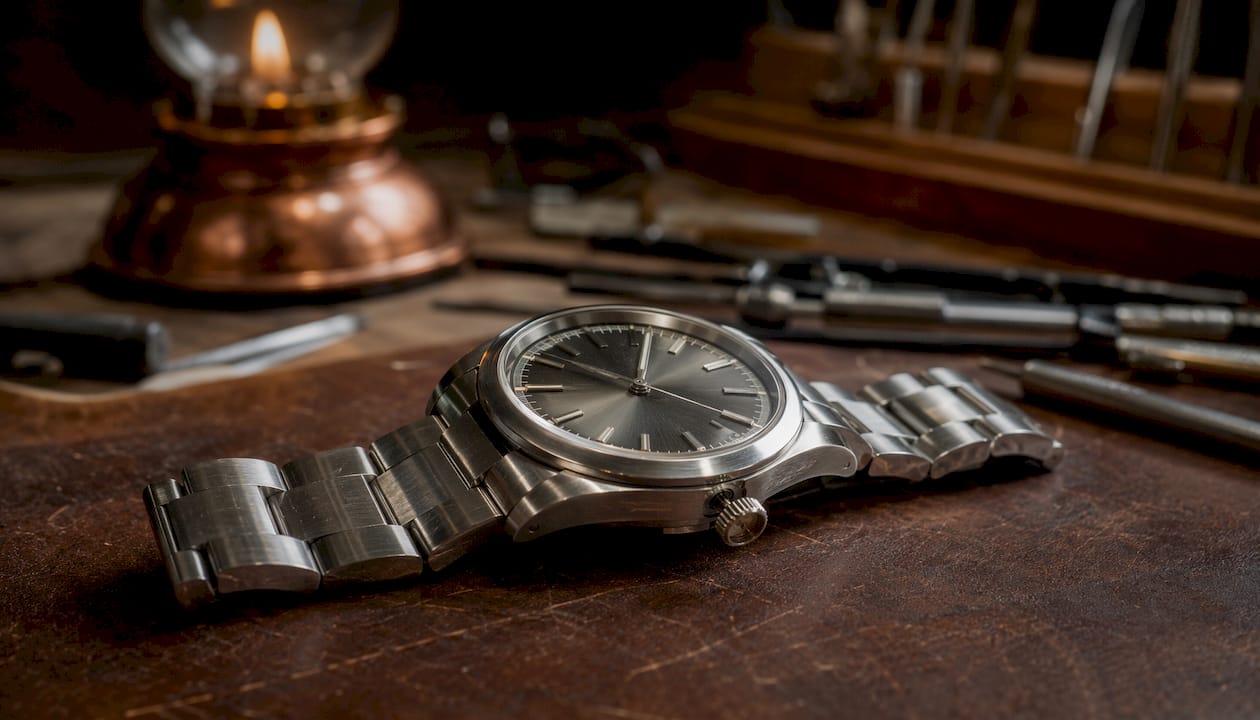
Common grading terms and what they mean for watch quality and value
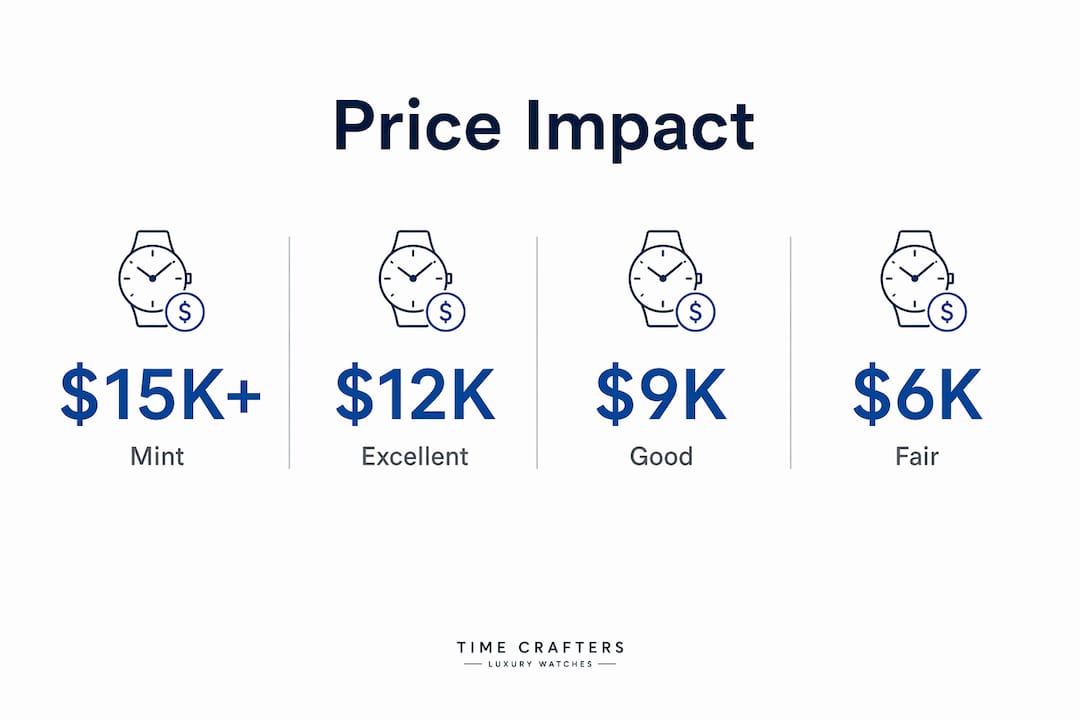
The industry has settled on a loose hierarchy of condition labels. The TZ grading system, widely used by collectors and pre-owned dealers, adds percentage scores to make the tiers more precise. Here is how the main grades translate to real-world condition and price:
- Mint / New Old Stock (NOS): Unworn, with all original packaging, stickers, and tags intact. No signs of wear whatsoever. Commands the highest premiums, typically 20–40% above an Excellent example of the same reference.
- Like New in Box (LNIB): Pre-owned but appears nearly new. Original box and papers present, no visible marks, bracelet unsized. TZ reference: 100%.
- Near Mint: Very light wear visible only under close inspection. TZ reference: 95–98%.
- Excellent: Minor visible wear, clean and highly presentable. Crystal clear, movement running accurately. This is the baseline grade most serious collectors use for comparison pricing.
- Very Good: Clear but moderate use. Light scratches on case or bracelet, possibly minor crystal marks. Typically trades at a noticeable discount compared to an Excellent example.
- Good: Obvious wear, deeper scratches, possible service needs. Fully functional but cosmetically showing its age. Typically trades at a clear discount compared to Excellent condition watches.
- Fair: Heavy wear, deeper scratches, possible dents. May need service. Value drops substantially compared to an Excellent example.
- Poor / For Parts: Severe cosmetic or mechanical issues. Primarily valuable for restoration projects or donor components.
The nuance within each grade matters as much as the label itself. A “Good” condition example of a rare, highly sought-after reference can be more valuable than an “Excellent” piece of a less desirable model. Condition, reference, and provenance work together, not in isolation.
How polishing, bracelet stretch, and replacement parts affect grading and pricing
These three condition modifiers surprise buyers more than any other factor. They are often invisible in listing photos and easy to overlook until you are holding the watch.
- Over-polishing: Light professional polishing may be acceptable if the case retains its original shape. Over-polishing is different. It softens the lugs, rounds the edges, thins the case, and erases the factory finishing that collectors pay for. For vintage or collectible references, an unpolished case with honest wear is more desirable than one that looks cleaner but has lost its original lines. Some collectors will not consider a polished watch regardless of price.
- Bracelet stretch: Caused by worn link pins and sagging over years of wear, bracelet stretch reduces value by thousands of dollars on luxury sports models. Authentic period-correct replacement bracelets are rare and expensive, which is why a stretched bracelet on a Rolex Submariner or GMT-Master II is a genuine pricing problem, not a cosmetic footnote.
- Replacement parts: Non-original dials, hands, bezels, or crowns reduce desirability even when the replacements are genuine Rolex or Patek Philippe parts from a later service. A watch can be 100% authentic without being “circa-correct,” and for highly collectible vintage references, later-era replacement components can detract significantly from value. Always check the dial, hands, bezel, crown, bracelet, and clasp for originality.
- Tasteful restoration vs. harmful refinishing: A movement service by an authorized center with documented paperwork is a positive. A dial refinishing or aggressive case polishing is not. The distinction is whether the work preserves or replaces original material.
Proper maintenance, including careful cleaning that avoids abrasive contact with case surfaces, is the most effective way to preserve watch value without risking a grade reduction.
What industry experts say about grading and pricing nuances
Experienced dealers and collectors consistently flag the same issues that beginners overlook. A few of the most useful observations from the market:
- No universal standard means buyer vigilance is mandatory. Grading terms vary between sellers, so photos and service records are the only reliable evidence. A grade without documentation is an opinion.
- Originality beats perfection. Collectors increasingly prefer watches that have never been polished, even if they show honest wear, over examples that look flawless but have been refinished. This preference is especially strong for vintage references and investment-grade pieces.
- Condition impact varies by model desirability. On a supply-constrained reference like the steel Rolex Daytona, even a Good-condition example commands a strong price because demand far exceeds supply. On a common reference, condition differences translate directly and sharply into price.
- Bracelet condition is chronically underestimated. Buyers focus on the dial and case while overlooking the bracelet. For iconic sports models, bracelet condition is a primary pricing variable, not a secondary one.
- Full sets and documented provenance carry real premiums. Matching papers with matching serial numbers confirm authenticity and strengthen provenance. Fraudulent papers do exist, so papers alone are not a substitute for physical authentication by an experienced dealer.
- Use multiple market tools to verify pricing. Asking prices on platforms like Chrono24 reflect what sellers hope to receive, not what transactions are completing at. Cross-referencing with sold data from WatchCharts gives a more accurate picture of where the market actually is. Auction results from Christie’s, Phillips, and Sotheby’s represent the cleanest benchmark for rare and vintage references, but always add the buyer’s premium of 20–26% on top of the reported hammer price.
Price differences between condition grades for popular luxury watch models
The gap between grades is not abstract. On specific references, it translates to thousands of dollars.
Rolex Submariner (ref. 124060 / 116610LN): The no-date Submariner 124060 retails at $10,050. On the secondary market, a clean Excellent-condition example with full set trades around $12,000–$17,000 depending on configuration and year. A Good-condition example with a stretched bracelet and no papers can sit several thousand dollars below that range. The bracelet alone accounts for a meaningful portion of that spread.
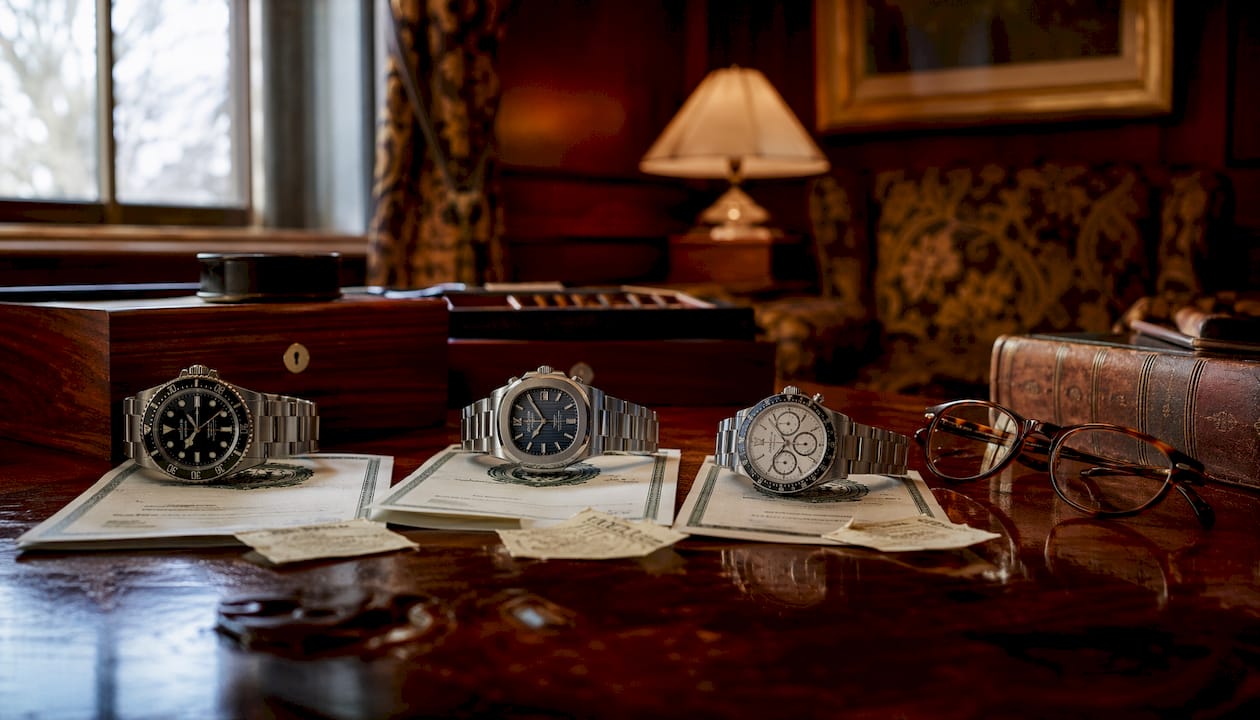
Rolex Daytona (ref. 116500LN): As of 2025, resale listings for the 116500LN typically range from $24,000 to $27,000, with white-dial models generally commanding a premium over black. An unpolished example with original box and papers sits at the top of that range. A polished example with a replacement bracelet and no documentation sits at the bottom, or below it. The Daytona trades roughly 87% above its list price on the secondary market, which means condition differences at this price point involve real money.
Patek Philippe Nautilus: The Nautilus trades around double its list price on the secondary market due to allocation constraints. At those valuations, condition and completeness premiums are amplified. Papers are practically assumed on current-production Patek Philippe pieces; a Nautilus without them raises immediate questions about provenance.
Omega Seamaster: Omega occupies a different tier. Most pre-owned Omega models trade 20–45% below retail, which is the normal shape of the market for non-supply-constrained references. Condition grades translate predictably into price here: an Excellent example with full set commands a clear premium over a Good example with no documentation, but the absolute dollar spread is smaller than on Rolex sports models.
For vintage watches across all three brands, original documents can add 30–50% or more to value due to rarity. Many vintage pieces have lost their paperwork over decades of ownership, which is why finding a vintage Rolex Daytona with original box and papers is increasingly uncommon and quite valuable to collectors.
How market demand and brand reputation interact with condition grading
Condition grading does not operate in a vacuum. The same grade on two different references produces very different pricing outcomes depending on where that reference sits in the market.
Supply-constrained models like the steel Rolex Daytona, GMT-Master II, and Patek Philippe Nautilus trade above retail regardless of condition because authorized-dealer allocation is effectively closed to walk-in buyers. The open market prices in years of waiting. On these references, even a Good-condition example holds value because demand absorbs the discount. A Rolex GMT-Master II trades around 46% above list price; the Submariner around 20% above. Condition still matters, but the floor is higher.
On common references, condition is the primary pricing lever. Most pre-owned luxury watches trade 20–45% below retail, and within that range, grade differences move the number directly. A Very Good Omega Seamaster with no papers is simply worth less than an Excellent example with full set, and the market reflects that without ambiguity.
Brand reputation shapes collector expectations around originality. Rolex collectors are particularly focused on case sharpness and bracelet authenticity. Patek Philippe collectors scrutinize dial condition and movement service history. For all three brands, a watch with original parts and documented provenance commands a premium that a cosmetically similar but non-original example cannot match.
Market timing adds another layer. The Rolex Daytona ref. 116500LN sold for nearly double retail at the height of the 2021 watch boom, then corrected 30–40% by 2023. Same watch, same grade, different market conditions. Condition grading sets relative value within a market; it does not insulate a watch from broader price cycles.
The role of professional appraisals and certification services in condition grading
A professional appraisal does more than assign a number. It verifies authenticity, identifies the reference, evaluates condition against market comparables, and flags rare features or production quirks that can significantly influence value. For insurance, estate, or resale purposes, a documented appraisal from a credentialed source carries weight that a seller’s self-assigned grade does not.
Appraisals typically cost between $50 and $150 per watch for standard pieces; specialized appraisers charge more for high-value or complicated timepieces. Some dealers offer informal estimates, but these are not formal appraisals and carry no independent verification weight.
For Rolex specifically, a professional appraisal combines authentication, condition analysis, and current market performance into a single documented assessment. Because Rolex pricing is cyclical, refreshing an appraisal when market conditions shift meaningfully keeps expectations realistic for both buyers and sellers.
Certification services from major auction houses add a layer of market credibility. Christie’s, Phillips, and Sotheby’s publish their results publicly, and a watch that has passed through a major house with a condition note carries a transparent market reference that private sales cannot replicate. The trade-off is the buyer’s premium of 20–26% on top of the hammer price, which buyers must factor into their total cost.
For buyers purchasing without a formal appraisal, the practical alternative is cross-referencing asking prices on Chrono24 with sold data on WatchCharts, then checking recent auction results for the same reference. No single source gives the full picture; combining all three does. If a dealer is priced meaningfully above that composite benchmark with no clear justification in condition, provenance, or rarity, that gap is worth questioning directly.
Pro Tip: Before committing to a high-value purchase, ask the seller for the serial number and cross-check it against the papers. Fraudulent documentation exists, and matching serial numbers are the first filter, not the last.
Protect your grade before you sell
The condition your watch is in when you list it is the condition that sets your price. Keeping the case, bracelet, and crystal clean without introducing new scratches or abrasive damage is the most direct way to maintain your grade between purchases.
ChronoCare’s luxury watch cleaning kit is formulated specifically for high-end timepieces, removing grime and fingerprints without touching the factory finishing that collectors pay for. For collectors who want to address light surface marks without risking the case geometry, the polishing and cleaning kit combines targeted surface care with protective cleaning in one system. Both are made in the US and designed for the collector who understands that maintenance and restoration are not the same thing.
Key Takeaways
Condition grading directly controls luxury watch pricing, with grade differences translating to thousands of dollars on supply-constrained references like the Rolex Daytona and Patek Philippe Nautilus.
| Point | Details |
|---|---|
| Grade affects price directly | Better condition commands higher premiums; a Fair watch trades substantially below an Excellent example of the same reference. |
| Full sets add real value | Original box and papers add 10–25% value to modern watches and 30–50% or more to vintage pieces. |
| Polishing and originality | Over-polishing reduces collector value; unpolished cases with original finishing command premiums, especially on vintage references. |
| No universal standard | Grading terms vary by seller; always verify with photos, written condition notes, and documented service history. |
| Cross-reference pricing | Combine Chrono24 asking prices with WatchCharts sold data and auction results for an accurate market picture. |