

How to Clean a Watch Stem Winding Tube Safely
The safe way to clean a watch stem winding tube is entirely external: secure the crown, lift surface grime with a clean microfiber cloth, then work trapped debris out of the crown gap with a soft-bristle brush and a wooden toothpick wrapped in lint-free cloth. No disassembly, no sprays into the case, no force on a stiff crown. That last part matters more than anything else in this guide, because a crown that feels gritty or stuck is telling you something is wrong internally, and pushing harder only makes the repair bill bigger.
Here is the immediate routine:
- Confirm the crown is pushed in or screwed down fully before touching anything
- Dry-brush the crown and case flank with a soft-bristle brush, working grime away from the tube
- Wrap a wooden toothpick in lint-free cloth and gently ease debris out of the crown gap with small outward strokes
- Finish with a clean microfiber cloth to remove loosened particles
If the watch shows no corrosion, no fogging under the crystal, and no looseness, you can finish with a ChronoCare cleaning kit built for exactly this kind of external maintenance. Longines advises checking your watch’s rated water resistance before any wet cleaning, and Hodinkee’s guidance is just as blunt: inspect for chips or looseness in the crystal or crown before introducing any moisture at all.
Key Takeaways
Safe crown and tube maintenance stays external, uses minimal moisture, and stops the moment the crown feels stiff, gritty, or loose.
| Point | Details |
|---|---|
| Stay external only | Clean around the crown with a brush and wrapped toothpick; never open the case or remove the stem yourself. |
| Check water resistance first | Confirm the rating before any damp cleaning, and default to dry-only methods on vintage pieces. |
| Know the red flags | Stiffness, wobble, rust residue, or fogged crystal all mean stop cleaning and see a watchmaker. |
| Verify after cleaning | Spin the crown to confirm smooth action and let the watch air-dry for about an hour first. |
| Use the right kit | ChronoCare’s Ultimate Watch Cleaning Kit covers the full external routine, with the polishing kit for finishing touches. |
Table of Contents
- Tools and Supplies for Safe Crown and Tube Cleaning
- How Do You Clean a Watch Crown Without Disassembly?
- When Should You Stop and See a Watchmaker?
- Drying, Verification, and How Often to Clean the Crown Area
- Which ChronoCare Products Work Best for the Crown and Tube Area?
- Frequently Asked Questions
- Sources
Tools and Supplies for Safe Crown and Tube Cleaning
You do not need a watchmaker’s bench to do this correctly. You need the right small tools, used with restraint. Professionals rely on a short kit, not a drawer full of gadgets.
Keep these on hand:
- A soft-bristle brush (a clean, dedicated toothbrush works, but a proper watch brush is gentler)
- Clean microfiber cloths, more than one, so you’re never wiping grime back onto the case
- Wooden toothpicks or pegwood, never metal
- Lint-free cloth for wrapping the toothpick tip
- A camera-style air puffer for clearing loosened particles out of the crown gap
- A magnifying loupe so you can actually see what you’re working on
- Cotton swabs and a low-moisture antibacterial wipe for the case flank
For finishing, ChronoCare’s Ultimate Watch Cleaning Kit bundles most of this list into one set formulated for luxury cases, and the Ultimate Watch Polishing & Cleaning Kit adds light surface polishing once the grime is gone. ChronoCare’s Watch Polishing Cream belongs later in the process, on open metal surfaces only.
Before any of this touches the crown, confirm it’s fully pushed in or screwed down. Citizen’s own maintenance guidance specifically calls out the crown and buttons as part of routine case cleaning, since dirt buildup there is a common cause of stiff crown action.
Pro Tip: Skip anything with a nozzle. WD-40, canned air, household oils, and spray lubricants can carry grit deeper into the tube and complicate a watchmaker’s repair later. A cloth-wrapped toothpick and a manual air puffer do the job without that risk.
How Do You Clean a Watch Crown Without Disassembly?
Start with your loupe, not your brush. Look closely at the crown, the crystal edge, and the case flank near the tube. You’re checking for chips, looseness, cracks, or any greenish discoloration before you decide what kind of cleaning is appropriate at all.
1. Confirm the basics. Push or screw the crown fully home. Note the watch’s rated water resistance if you know it. If you don’t know it, or the watch is vintage with unclear service history, treat it as unrated and skip every wet step below.
2. Dry-brush and puff first. Run the soft-bristle brush around the crown and along the case flank using light, outward strokes, away from the tube opening. Follow with a few puffs from the air puffer to lift what the brush loosened. This step alone clears most everyday grime and sweat residue.
3. Work the crown gap with a wrapped toothpick. Wrap a wooden toothpick tip in a small piece of lint-free cloth. Slide it gently into the narrow gap between the crown and the case, using small outward strokes rather than digging inward. This is where most trapped lint and skin oil actually sits, and it’s the step that most home routines skip entirely.
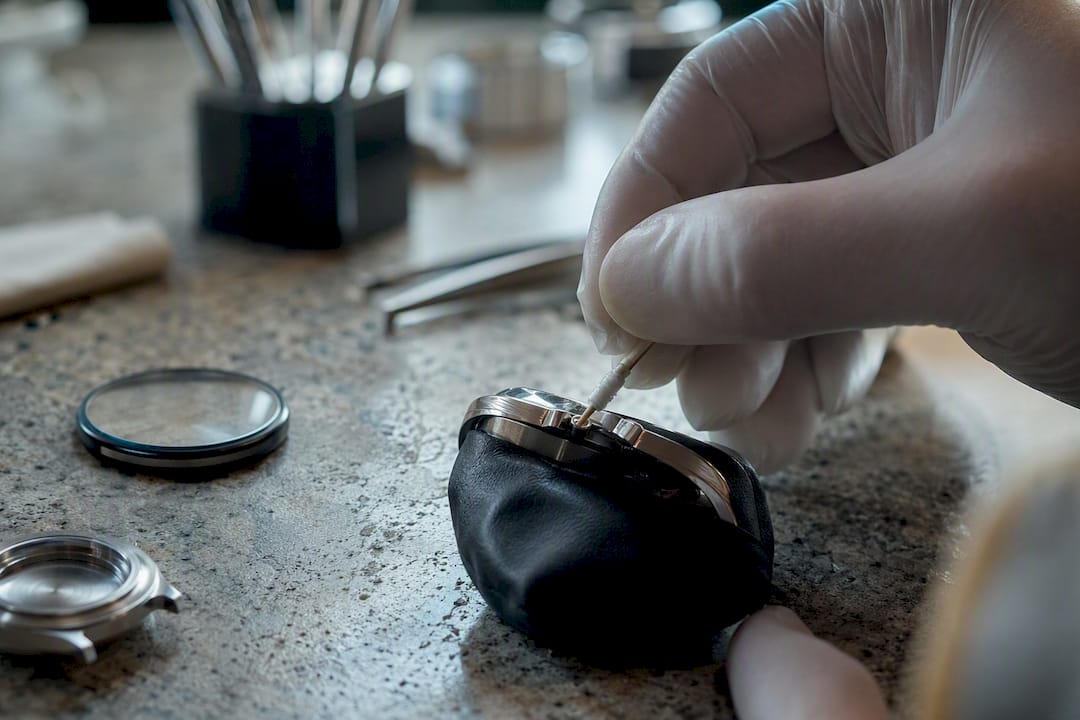
4. Add controlled moisture, only if the watch is confirmed water-resistant. WatchPolice’s water-resistance breakdown is a useful reference here: at roughly 30 meters, stick to a barely damp cloth; at 100 meters or higher, a light wipe with a pH-neutral solution on a microfiber cloth is reasonable. Never soak the crown, and never direct moisture straight at the stem joint.
5. Dry and clear. Pat the area dry with a fresh microfiber, then use the air puffer again to chase out any residual moisture from the crown gap.
Watch for these hard stops as you go: never force a crown that feels stiff or gritty, since that resistance often signals internal grit or early corrosion that a puffer and a toothpick can’t fix. Never insert anything metal into the tube gap; it will scratch the case and can damage the seal. Skip sprays entirely near the crown, since even light aerosol mist can wick past the gasket rather than staying on the surface.
For vintage pieces or anything with unknown water-resistance history, stay dry-only through the whole routine. Dry-brushing, air puffing, and the wrapped toothpick technique handle the vast majority of grime buildup without ever introducing risk.
Pro Tip: Pegwood works better than a plain toothpick because it tapers to a finer point without splintering. If you can’t find pegwood, a wooden toothpick sanded down slightly at the tip is a fair substitute.
When Should You Stop and See a Watchmaker?
Some symptoms mean the cleaning is done, and the watch needs a professional instead. Recognizing these early prevents a $40 mistake from turning into a $400 one.
Stop immediately if you notice:
- Persistent stiffness or a gritty feel in the crown after a full dry-cleaning pass
- Any side-to-side wobble in the crown
- A crown that won’t stay pushed in or screwed down
- Green or rust-colored residue anywhere near the tube
- Fog or moisture visible under the crystal
- Stripped threads on a screw-down crown
- Visible damage to the case or tube itself
If you see any of these, stop cleaning, secure the crown as best you can, and photograph the issue before you take it in. That photo helps the watchmaker diagnose faster.
A watchmaker’s next steps typically include a pressure test, and if warranted, removing the stem for inspection. Removing a winding stem generally means opening the case and working small screws or pushers, a process that’s movement-specific and easy to get wrong without training. That’s precisely why this guide stops at the case exterior.
Drying, Verification, and How Often to Clean the Crown Area
Once cleaning is done, don’t call it finished until you’ve verified the crown actually works the way it should.
Dry thoroughly first: pat with a microfiber cloth, then use the air puffer to expel any trapped moisture from the crown gap. Let the watch sit face-up on a clean cloth for about an hour before you handle it again.
Then verify:
- Spin the crown gently to confirm winding and setting feel smooth, with no grinding
- Check for any new play or looseness that wasn’t there before
- Look under the crystal for fog
- If it’s a screw-down crown, confirm it threads back down cleanly
For cadence, a quick wipe after each wear keeps grime from accumulating in the first place. Spot-clean after sweaty or salty exposure. Longines recommends a monthly deep clean for water-resistant pieces worn regularly, and a professional pressure test periodically every few years depending on how hard the watch is worn.
Which ChronoCare Products Work Best for the Crown and Tube Area?
Three products cover almost every situation you’ll run into with crown and tube maintenance, each with a distinct job.
The Ultimate Watch Cleaning Kit is the primary tool here. It’s built around the same external, non-invasive approach this guide walks through, with brushes and cloths sized for tight areas like the crown gap. Use it as your default first pass on any watch with no visible damage.
The Ultimate Watch Polishing & Cleaning Kit comes in after cleaning, for light surface polish on the case and bracelet. Keep it on open metal only; it isn’t meant to go near the crown gap or tube opening.
The Watch Polishing Cream deserves the most caution of the three. Apply it sparingly, on flat case surfaces only, using a cloth-wrapped applicator rather than fingers. Skip it entirely on bezel inserts, crown threads, or any watch where you’re unsure of the finish underneath. Test on a small, hidden spot first if you have any doubt.
Skip all three, and go straight to a professional instead, if the watch is vintage with unknown water resistance, shows any corrosion, or has a crown that already feels off before you’ve cleaned anything.
Pro Tip: Never apply cream or polish into a gap or seam. Anything that can wick into a seal will eventually find its way there, and cleaning products are no exception.
What Backs This Advice
Frequent light wipes paired with occasional focused cleaning around the crown preserve gasket integrity far better than infrequent deep cleans, and that habit alone cuts down on how often a watch needs invasive service.
This guide comes from Raymond Jenkins, a hands-on watch care author whose published routines for ChronoCare focus on external, reversible maintenance. The method draws on published workshop guidance from Hodinkee and Longines, and it deliberately stops short of anything requiring case opening or stem removal. ChronoCare documents its own product instructions and usage notes for exactly this reason: so the guidance and the tools stay consistent.
Why We Draw the Line at the Case Back
I’ve watched too many good watches get worse from someone reaching for a screwdriver instead of a toothpick. The crown and tube area rewards patience, not disassembly. ChronoCare’s products are built to support that external routine, not to replace a watchmaker when the signs point to something deeper.
Get the Full Kit Instead of Piecing One Together
Buying a soft brush here, pegwood there, and a separate microfiber pack somewhere else adds up fast, and half the sets sold for general use aren’t sized right for a crown gap. ChronoCare’s Ultimate Watch Cleaning Kit puts everything from this guide’s routine into one set, sized and formulated for luxury cases rather than generic jewelry.
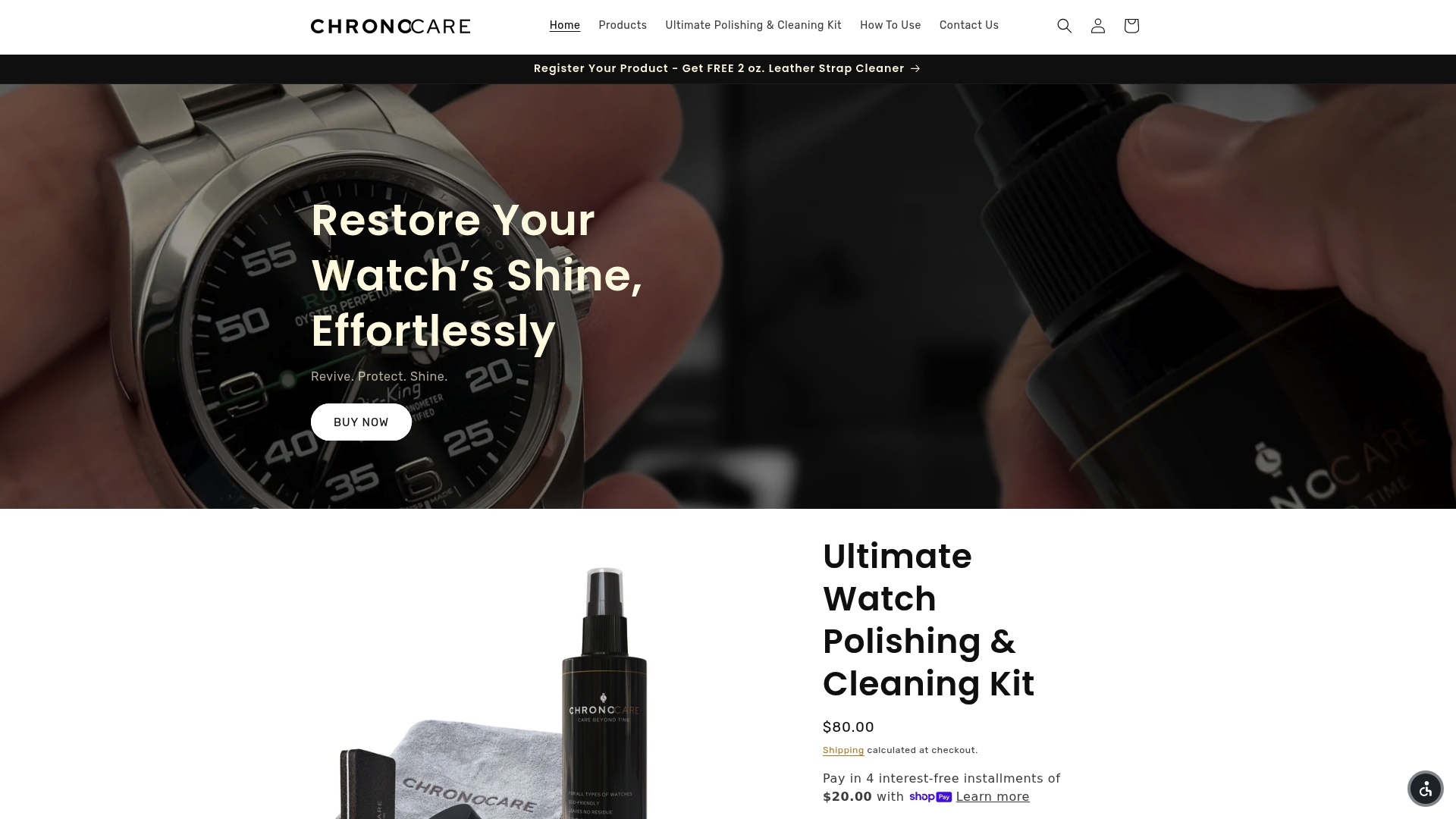
If your watch is past the grime stage and needs light scratch removal on the case, the Ultimate Watch Polishing & Cleaning Kit picks up where the cleaning kit leaves off. Every ChronoCare product ships with usage instructions specific to the material and finish it’s meant for, and returns are straightforward if a product isn’t right for your piece. Order the cleaning kit now and you’ll have everything you need on hand before grime has a chance to work its way back into the crown gap.
Frequently Asked Questions
Can I use water to clean around my watch crown? Only if your watch has a confirmed water-resistance rating and the crown is fully secured. WatchPolice’s guidance puts light dampness as safe around 30 meters and full wet wiping as reasonable above 100 meters. Unrated or vintage watches should stay dry-only.
Is it safe to remove the winding stem myself to clean it thoroughly? No. Removing a stem typically means opening the case and manipulating tiny, movement-specific screws or pushers, a process best left to a trained watchmaker rather than attempted at home.
What if my crown feels gritty even after cleaning? That’s a stop signal, not a cleaning problem to push through. Persistent grit after a proper dry-brush and toothpick pass usually points to internal debris or early corrosion that needs a watchmaker’s inspection.
How often should I clean the crown and tube area? A quick wipe after each wear, a spot clean after sweat or saltwater exposure, and a monthly deeper clean for water-resistant watches worn regularly. Pair that with a professional pressure test periodically every few years.
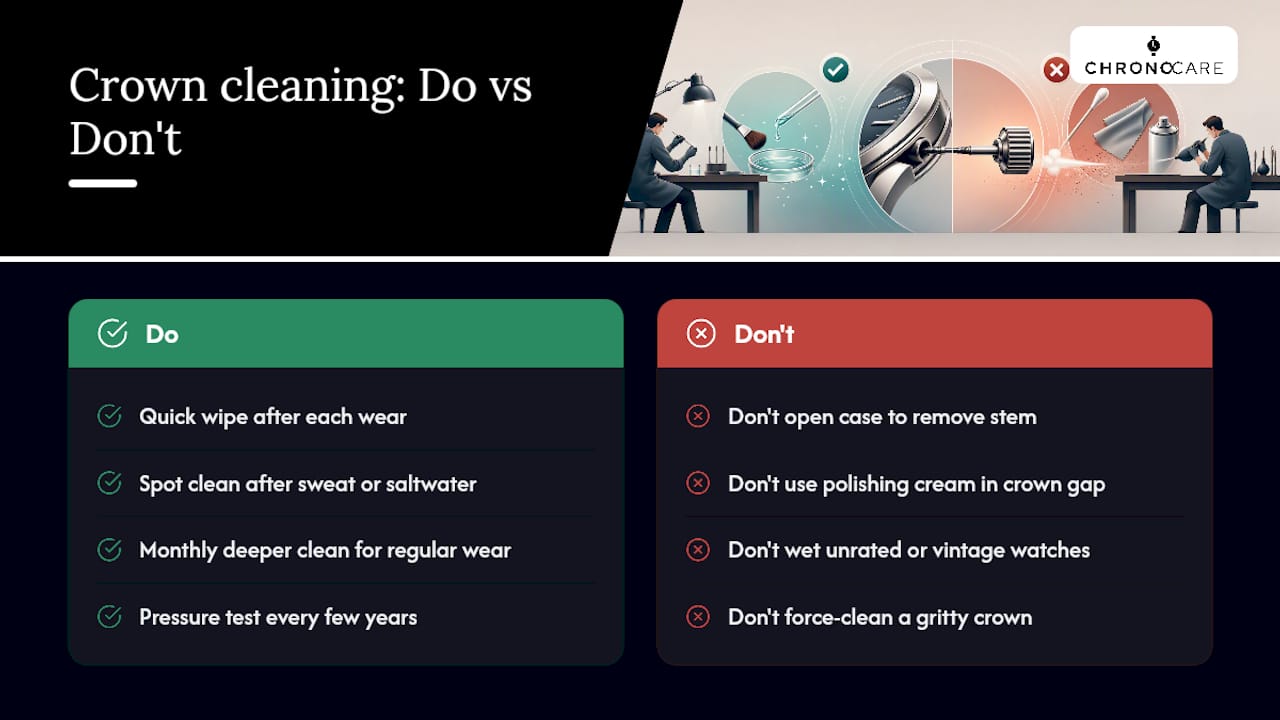
Can polishing cream go inside the crown gap? No. Keep polishing cream on open metal case surfaces only, applied with a cloth-wrapped tool. Cream that wicks into the crown gap or tube opening can interfere with the seal.
Sources
- How to Clean Your Watch - Hodinkee
- How to clean a watch - Longines
- How To Clean Your Watch - WatchPolice
- Care & maintenance - Citizen
- Removing crown and winding stem - Watch Movements