

Sell a Watch Faster: Clean It Without Losing Value
Before you list any watch for sale, clean it according to its material, photograph every angle and flaw, and unpair or reset it if it’s an Apple Watch. Skip anything resembling amateur polishing, since it removes metal and can knock real money off the price. Apple Support confirms the safest device reset method, watchmaker advice draws the line on wet cleaning, and Specialized care guides fill in the rest.
TL;DR:
- Properly verifying water resistance and avoiding liquid cleaning on vintage or uncertain watches prevents damage and preserves value.
- Removing the bracelet for cleaning allows better access and ensures thorough cleaning without risking water ingress in non-waterproof watches.
- Using manufacturer-approved cleaning products on modern watches is safe, but vintage or damaged cases require dry cleaning and professional assessment.
- For Apple Watches, unpairing, erasing, and removing cellular plans ensure complete removal of personal data and activation lock before resale.
- Honest photos, detailed descriptions, and transparency about previous polishing or repairs are more effective for fast sales than aggressive cosmetic overhauls.
Table of Contents
- What You Need Before You Clean a Watch Before Selling
- How Do You Safely Clean a Water-Resistant Watch?
- Cleaning a Vintage or Uncertain-Condition Watch
- How Do You Clean Different Watch Band Materials?
- How Do I Clean My Apple Watch Before Selling It?
- How Should You Photograph a Watch for Sale?
- Should You Polish a Watch Before Selling It?
- When Should You Use a Cleaning Kit vs. Call a Watchmaker?
- Why Restraint Sells Watches Faster Than a Cosmetic Fix
- Refresh a Watch’s Look Without Losing Its Value
- Sources
- FAQ
What You Need Before You Clean a Watch Before Selling
Gather your tools before you touch the watch. You’ll want a microfiber cloth, a soft-bristled brush (an old toothbrush works fine), a lint-free cloth for drying, mild soap, a wooden toothpick for crevices, and isopropyl wipes for hard, nonporous surfaces only.
Before any cleaning begins, inspect the crown, crystal, and case for cracks, looseness, or gaps. Check the watch’s stated water resistance before it goes anywhere near liquid.
- Photograph the serial number, caseback, clasp, and any existing scratches or dings first, so you have a “before” record.
- Keep original boxes, papers, warranty cards, and extra links if you still have them. They add real resale value.
- Remove the strap or bracelet when possible. It’s easier to clean and photograph a watch head on its own.
- If you notice a sluggish second hand, condensation, or a loose crown, stop here and get a watchmaker’s opinion before doing anything else.
How Do You Safely Clean a Water-Resistant Watch?
Start by confirming the crown is screwed down or pushed in fully and the caseback shows no gaps or corrosion. If you’re not sure the watch is actually water-resistant, treat it as if it isn’t. Pursuitist’s guide on luxury watch maintenance makes the same call: only wet-clean a watch you’re confident is sound.
Here’s the sequence that works for most modern, water-resistant watches:
- Fill a small bowl with lukewarm water and add a single drop of mild soap.
- Dip a soft brush into the soapy water and gently scrub the bracelet and case, keeping the brush away from the crown and any seams around the caseback.
- If the bracelet detaches easily, remove it and clean it separately in the same soapy water for better access between links.
- Rinse everything under lukewarm running water, keeping the crown pushed in the entire time.
- Dry immediately and thoroughly with a lint-free cloth, then let it air-dry for a few minutes before reassembling the strap.
Never run a home ultrasonic cleaner on an assembled watch. Professional ultrasonic cleaning requires taking the movement and case apart first, which is exactly why it stays in a watchmaker’s hands and not yours.
Pro Tip: After the watch dries completely, flex the bracelet gently and check the clasp for stretch or loose pins before you re-photograph it. A wobbly clasp in your listing photos raises red flags for buyers.

Once everything is dry and reassembled, take a fresh set of photos. Buyers notice the difference between a hazy, oily case and one that actually shines.
Cleaning a Vintage or Uncertain-Condition Watch
Old watches and anything with unclear water resistance deserve a much lighter touch. Pursuitist and other watchmaker sources agree: when you’re not sure of a case’s seals, keep it dry.
Start with a dry inspection under a bright lamp or daylight. Look closely for hairline cracks in the crystal, a crown that doesn’t sit flush, or lifted edges where the crystal meets the case.
- Use a dry microfiber cloth and a soft brush to lift dust and surface grime, working in small sections.
- A lightly dampened sanitary wipe can remove finger oils sparingly, but never soak or flood the surface.
- Never submerge, steam, or apply solvents to a vintage watch, and never use isopropyl alcohol on leather or fabric straps.
- If you spot corrosion, moisture trapped under the crystal, or anything suggesting a failed seal, stop immediately and take the watch to a service center.
Honesty sells vintage pieces better than a shiny finish does. If you’re not sure whether a mark is patina, damage, or wear, say so plainly in your listing rather than guessing.
How Do You Clean Different Watch Band Materials?
Bands take the most punishment on any watch, and each material needs its own approach. Jewelers Mutual’s cleaning guidance recommends a microfiber cloth and soft brush across most materials, paired with a full drying step every time.
- Metal bracelets: Remove if possible, soak briefly in mild soapy water, scrub gently between links with a soft brush, rinse, and dry completely. Check endlinks and spring bars for wear while you’re in there.
- Leather: Wipe with a barely damp cloth only. Never soak leather, and never touch it with alcohol or bleach. Let it air-dry away from direct heat or sunlight.
- Fabric or nylon: Hand wash gently with mild soap and air-dry flat. Watch for leather backing or adhesive linings that won’t tolerate the same treatment as the fabric itself.
- Rubber or silicone: Mild soap handles most grime; an isopropyl wipe lifts stubborn stains. Skip harsh solvents, which can degrade the material over time.
Always follow the manufacturer’s own care instructions for third-party bands, since formulations vary more than people expect. For a deeper walkthrough on material-specific procedures, ChronoCare’s step-by-step cleaning guide for collectors covers the finer points.
How Do I Clean My Apple Watch Before Selling It?
Unpair your Apple Watch from its paired iPhone first. This single step erases the watch, restores factory settings, and removes Activation Lock, which is exactly what Apple’s own instructions recommend for anyone preparing a watch for resale.
- Open the Watch app on the paired iPhone, tap your watch, then tap the unpair button and confirm.
- If you no longer have the paired iPhone, erase the watch through iCloud instead, but note that Activation Lock may not clear this way. Be ready to show the buyer proof it’s been removed from Find My.
- If your Apple Watch has cellular service, remove the plan and contact your carrier to cancel it before shipping the watch.
- Power the watch off, remove the band, and wipe the case with a nonabrasive, lint-free cloth.
- For hard, nonporous surfaces and metal bands, Apple approves 70% isopropyl or 75% ethyl alcohol wipes. Never use these on fabric or leather bands, and never use bleach, hydrogen peroxide, or submerge the watch.
Mention every one of these steps in your listing. A buyer who sees “unpaired, erased, and Activation Lock confirmed off” moves forward with a lot more confidence than one who has to ask.
How Should You Photograph a Watch for Sale?
A clean watch photographed badly still looks like a bad deal. Shoot the front face, caseback, serial and model numbers, clasp, and any accessible movement shot, along with honest close-ups of scratches or wear.
Diffuse daylight or soft indoor lighting against a neutral background beats a flash every time. Hold the camera steady, and include one shot with a ruler or on a wrist for scale.
- Write an honest description that lists recent service history, any known issues, and every included accessory.
- Disclose any past polishing or casework outright rather than letting a buyer discover it later.
- Re-photograph the watch after cleaning so buyers see its actual final condition, not a pre-cleaning snapshot.
Presentation genuinely moves offers. A watch that looks cared for and fully documented tends to draw stronger bids than one with vague photos and a one-line description, and resale price data across used categories backs up how much condition documentation affects what buyers are willing to pay.
Should You Polish a Watch Before Selling It?
Leave the polishing wheel alone unless you know exactly what you’re doing. Aggressive or amateur polishing removes actual metal from the case, softening the crisp factory edges that collectors specifically look for and prefer to keep intact.

A deep scratch disclosed honestly rarely scares off a serious buyer. A case that’s been ground down by a well-meaning owner with a buffing wheel scares off far more of them.
If a piece genuinely needs cosmetic work, a professional who understands how to preserve original geometry is worth the cost. For everyday watches with no collector value, a light surface refresh is a different story. ChronoCare’s polishing cream is built for exactly that: minor surface refresh on daily-wear pieces, not precious metals or anything with real collectible weight, where it’s worth getting professional advice first.

When Should You Use a Cleaning Kit vs. Call a Watchmaker?
Certain cleaning products are formulated specifically for modern, structurally sound watches, and that distinction matters more than most sellers realize. A kit works well on light scuffs, everyday grime, and surface oils. It’s not a substitute for a watchmaker’s judgment on anything mechanically uncertain.
- Use a cleaning kit for routine maintenance on watches you know are water-resistant and mechanically sound.
- Reach for a metal-safe polishing cream only on light surface scuffs, never on deep case damage.
- Stop and consult a watchmaker if the watch is vintage, has unknown seal integrity, shows moisture, or has any mechanical hesitation.
- Match the product to the job: a spot-clean deserves a spot-clean solution, not a full disassembly attempt at your kitchen table.
Knowing where the line sits between what a kit can fix and what a professional needs to see is half the job of preparing a watch responsibly.
Why Restraint Sells Watches Faster Than a Cosmetic Fix
Conservative cleaning beats a cosmetic overhaul almost every time a watch changes hands. A watch that’s been carefully cleaned and honestly photographed tends to move faster than one dressed up to hide its age, because buyers who collect or research watches spot over-polishing and inconsistent descriptions immediately.
Home cleaning has its place for anything modern, water-resistant, and mechanically sound. The moment a case shows corrosion, a crown feels loose, or the piece has real vintage value, professional service is the better call, even if it costs more upfront.
Buyers reward transparency. A few extra photos and one honest paragraph about condition will do more for your final sale price than any amount of buffing.
— Raymond Jenkins
Refresh a Watch’s Look Without Losing Its Value
Some product lines focus on the problem sellers face: cleaning a watch enough to look its best without stripping away the details that make it worth something. A generic household cleaner or an aggressive polish can do real damage in minutes, while a formula built for watch cases and bands respects the original finish.
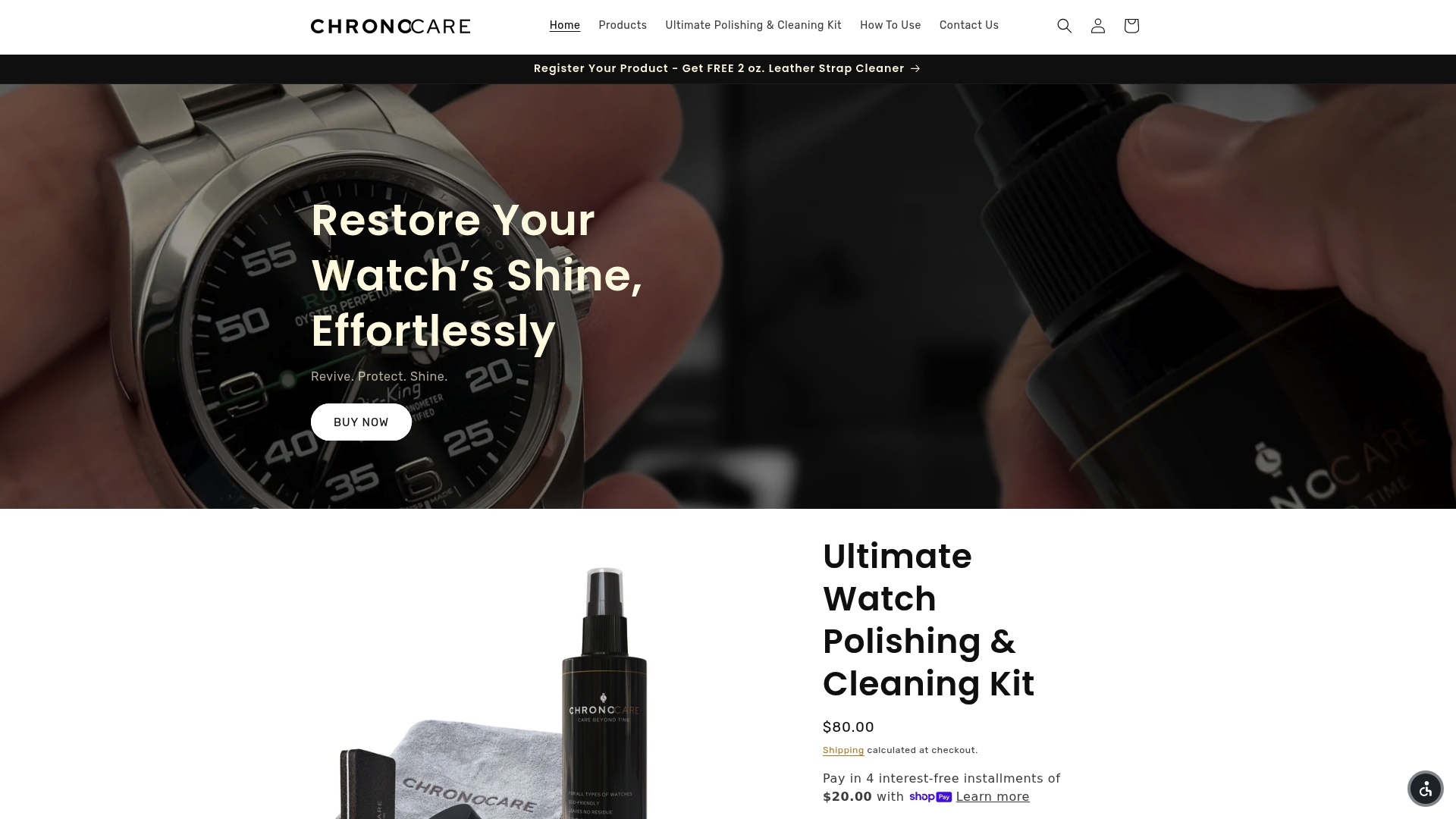
For a full cosmetic refresh on a modern, water-resistant watch, the Ultimate Watch Cleaning Kit covers case, bracelet, and crystal in one pass. If the piece has light surface wear that could use gentle blending, the Ultimate Watch Polishing & Cleaning Kit pairs cleaning with a conservative polish. Neither is meant for vintage pieces, unknown water resistance, or anything showing signs it needs a watchmaker’s attention. Browse the full lineup and pick the kit that matches your watch’s actual condition before you list it.
Sources
- How to clean and maintain a luxury watch — Pursuitist
- Useful tips: how to clean a watch — Jewelers Mutual
FAQ
How Do I Clear My Apple Watch Before Selling It?
Unpair it from the paired iPhone through the Watch app. This step erases the watch, restores factory settings, and removes Activation Lock automatically, which is what Apple recommends for resale.
Is Rubbing Alcohol Good for Cleaning a Watch?
It depends entirely on the surface. Apple approves 70% isopropyl or 75% ethyl alcohol wipes on hard, nonporous cases and metal bands, but never on leather or fabric straps, and traditional watches with painted dials or gaskets can react poorly to alcohol as well.
Can I Clean My Watch With Dish Soap?
A tiny drop of mild dish soap diluted in lukewarm water works fine on the case and bracelet of a confirmed water-resistant watch. Skip it entirely on vintage pieces, unknown water-resistance ratings, or leather straps, where a barely damp cloth is the safer choice.
What Is the Best Way to Clean a Watch at Home?
For most modern, water-resistant watches, a soft brush, a drop of mild soap, lukewarm water, and a thorough dry with a lint-free cloth handle the job safely. Jewelers Mutual recommends this same basic approach, and ChronoCare’s cleaning kits are formulated around it for sellers who want a safe, guided option.