

30 Minute Bronze Watch Cleaning for Collectors: Prevent Renewed Patina
Yes, you can clean a bronze watch safely, and the fastest, lowest-risk route is a simple baking soda and lemon paste. Remove the strap first, confirm your water resistance rating, apply the paste for 20 to 30 minutes, then rinse and neutralize thoroughly. The whole process runs about 30 minutes. Stop immediately if you notice pitting or anything that looks like a compromised seal.
TL;DR:
- Household acids like lemon juice or baking soda paste effectively remove surface tarnish and patina without damaging deep pitting or structural corrosion.
- Verdigris requires spot treatment with diluted acids and immediate rinsing to prevent spread, especially if it reappears frequently or shows signs of bubbling metal.
- Minimal cleaning with micro-wipes and protective coatings can slow oxidation, but aggressive polishing risks removing the original surface and altering the finish.
- Different bronze alloys react uniquely to cleaning treatments, so testing small areas and consulting manufacturer guidance prevents finish mismatch or damage.
- Using specialized cleaning products tailored for exclusive use on luxury bronze watches preserves value and avoids the guesswork of household remedies.
Table of Contents
- Tools and Safety Checklist Before You Start Cleaning a Bronze Watch
- How Do You Clean a Bronze Watch Step by Step?
- How Do You Remove Green Oxidation From a Bronze Watch?
- Should You Preserve Bronze Patina or Remove It Completely?
- What Daily and Periodic Habits Slow Bronze Oxidation?
- When Should You Use Specialist Products Instead of Household Fixes?
- Do Bronze Alloys and Finishes Need Different Cleaning Approaches?
- Which ChronoCare Product Fits Your Bronze Watch Cleaning Need?
- Living With Bronze: Should You Chase a Polished Look?
- Sources
Tools and Safety Checklist Before You Start Cleaning a Bronze Watch
Bronze watch cleaning goes wrong most often because of rushed prep, not the actual scrubbing. Gather these before you touch the case:
- A soft-bristle brush (an old toothbrush works fine) for working paste into engraved areas
- A microfiber cloth for buffing and drying
- Baking soda and fresh lemon juice, or a plain white toothpaste as an alternative paste
- A small bowl for mixing, plus a spare cloth to protect the crystal and crown
- Mild soap and warm water for the rinse and neutralize step
Before mixing anything, remove the strap, especially leather, since saltwater and grime concentrate around the lugs and spring bars where straps attach. Test your watch’s water resistance rating; if you’re not certain the crown seals properly, keep the case away from running water and wipe instead of rinsing. Spot-test any paste on the case back or an inconspicuous edge first. Verdigris, the green oxidation that sometimes appears on bronze, contains copper salts that can irritate skin, so avoid direct prolonged contact and wash your hands after handling it.
Pro Tip: Keep a dedicated small towel just for watch cleaning. Cross-contamination from lotion or perfume residue on a “regular” cloth is a sneaky cause of uneven re-patina.
How Do You Clean a Bronze Watch Step by Step?
The core routine is: remove strap, mix paste, apply, wait, brush, rinse, neutralize, dry, then optionally seal with wax or oil.
- Remove the strap and prep the case. Set the strap aside, cover the crown and crystal edge with a strip of tape or a protected cloth if you’re worried about scratching the glass.
- Mix the paste. Combine several desert spoons of baking soda with fresh lemon juice until it forms a spreadable paste, roughly toothpaste consistency. Some collectors get similar results with plain baking soda paste or white toothpaste, which is a gentler starting point if you’re nervous about acidity.
- Apply it to the case. Spread a thin, even layer over the bronze surface, working it into any engraved numerals or textured bezel edges with your soft brush.
- Let it sit. Give the paste 20 to 30 minutes to react with the oxidized surface layer. Longer isn’t automatically better here; past 30 minutes you’re mostly just risking dried residue getting into crevices.
- Brush gently. Use light, circular motions rather than hard scrubbing, focusing on darker or greener patches.
- Rinse and neutralize. This is the step people skip, and it’s the one that causes rapid re-patina. Rinse thoroughly under lukewarm water, then wash the case with mild soap to neutralize any leftover acid.
- Dry completely. Pat dry with your microfiber cloth, then let it air dry a few extra minutes before reattaching the strap.
- Inspect and repeat if needed. If patina remains, you can do a second pass, but two passes in one session is a reasonable ceiling. If bronze isn’t lifting after that, stop and consider a specialist product or professional cleaning instead of pushing harder with acid.
The full cycle, mixing through drying, typically lands around 30 minutes total, which lines up with what most hands-on bronze owners report. If your case has deep pitting rather than surface tarnish, a paste won’t fix that; that’s structural corrosion, not cosmetic patina, and it calls for a watchmaker’s opinion.
How Do You Remove Green Oxidation From a Bronze Watch?
Verdigris is not the same as the warm brown or gray patina bronze naturally develops. It’s a copper salt compound, chemically distinct from the surface oxide layer that forms the rest of your case’s aging color, and it needs slightly different handling.
- Apply a diluted, low-strength acid, weak lemon juice or vinegar cut with water, directly to the green spots rather than the whole case.
- Work it with a soft brush in short sessions instead of one long soak; verdigris tends to respond better to repeated spot treatment than aggressive one-time scrubbing.
- Rinse immediately and completely after each application. Leftover acid on verdigris re-oxidizes fast, sometimes within days.
- Dry the spot fully before deciding whether another pass is needed.
If verdigris keeps returning within a week or two despite proper rinsing, or if you see it spreading alongside flaking or bubbling metal, that can signal deeper corrosion under the surface. At that point, a professional watchmaker should take a look rather than another round of lemon juice.
Should You Preserve Bronze Patina or Remove It Completely?
This is really a taste and value question before it’s a cleaning question. Run through this before you decide:
- What alloy is your case, phosphor bronze or aluminum bronze? Different alloys react differently to the same acid, so check your manufacturer’s guidance first.
- Is there any pitting, or just surface discoloration? Pitting changes the calculation entirely, since aggressive cleaning on pitted metal can make things worse.
- Does the watch carry collector value tied to its current patina? Uneven, characterful aging is part of what some buyers pay for.
If you’re preserving patina, do minimal cleaning, a quick micro-wipe with a damp cloth, then a light coat of watch wax or mineral oil every few months as a moisture barrier. If you’re removing it, household acids work for light surface tarnish, while a formulated polish gets you a more even, controlled finish without guessing at acid strength. Removing patina always means removing a thin layer of surface metal; there’s no way around that trade-off.
Pro Tip: If you’re on the fence, clean one small section first and live with the contrast for a few days before committing to the whole case.
What Daily and Periodic Habits Slow Bronze Oxidation?
Bronze watch maintenance is mostly about reducing how often you need a deep clean, not eliminating patina altogether.
- Wipe the case after wear. A quick pass with a dry microfiber cloth removes skin oils and sweat before they accelerate oxidation.
- Keep perfume and lotion away from the case. Both contain chemicals that speed up unwanted discoloration, so apply them before you put the watch on, not after.
- Dry it fully after moisture exposure. Rain, humidity, or a splash from washing your hands all count; trapped moisture under the case back is a common cause of uneven blotching.
- Apply a thin protective barrier periodically. A light coat of specialized watch wax or mineral oil, reapplied every couple of months, slows new patina formation if that’s your goal.
- Remove the strap for any deep clean. This protects leather and lets you actually reach the lug areas where grime builds up.
- Rotate wear if you own multiple bronze pieces. Constant exposure on one wrist spot creates localized wear patterns that age unevenly compared to the rest of the case.
See a professional if you notice bronze disease (a powdery, light-colored corrosion that keeps spreading), any pitting that wasn’t there before, or if you’re unsure whether the crown or case back seals are still holding after repeated cleaning.
When Should You Use Specialist Products Instead of Household Fixes?
Household pastes work, but they’re blunt instruments. A pH-balanced product formulated for luxury cases avoids the guesswork of “how much lemon juice is too much” entirely, which matters more the older or more valuable your piece is. A specialized cleaning guide and product line can fill the gap between kitchen-cupboard fixes and what a case actually needs.
A few practical notes if you go that route: always follow the product’s stated dwell time rather than eyeballing it, keep any liquid cleaner away from leather straps, and treat a trip to a professional watchmaker as the answer once you’re dealing with anything beyond surface tarnish, not another round of product.
| Cleaning goal | Best approach | Watch for |
|---|---|---|
| Routine surface grime | Mild soap, soft brush, dry fully | Skipping the rinse step |
| Light tarnish, wants even color | pH-balanced polishing product | Leather strap contact |
| Verdigris (green spots) | Diluted acid, spot treatment, immediate rinse | Spreading or bubbling metal |
| Deep patina removal | Specialist polish over repeated acid passes | Removing too much surface metal |
For a deeper breakdown of how patina forms in the first place and why alloys behave differently, ChronoCare’s guide to watch patina is worth a read before you commit to a method.
Do Bronze Alloys and Finishes Need Different Cleaning Approaches?
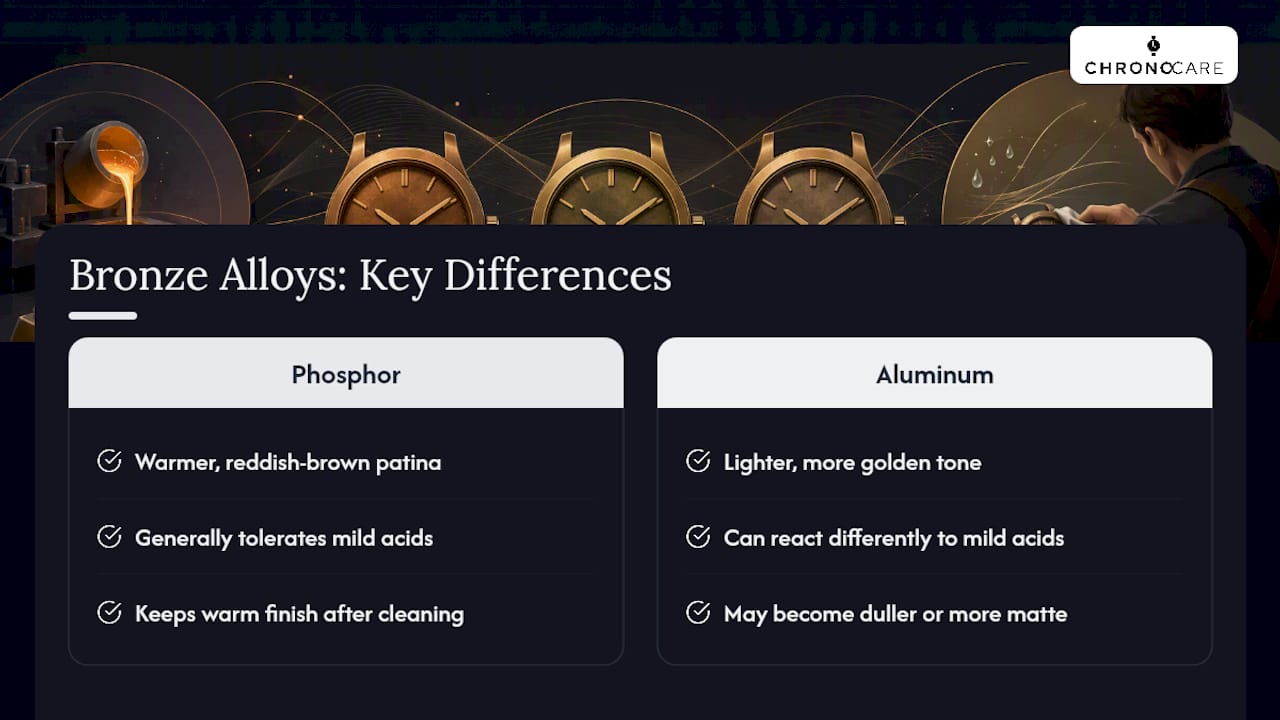
Not all bronze watches are the same metal, and that matters more than most owners realize. Phosphor bronze, the most common choice in dive watches, tends to develop a warmer, reddish brown patina and generally tolerates mild acid cleaning reasonably well. Aluminum bronze, used by a smaller number of brands for its lighter, more golden tone, can react differently to the same lemon juice or vinegar treatment, sometimes developing a duller or more matte finish than expected.
Some manufacturers apply a protective lacquer or specific surface treatment at the factory precisely to slow early patina development. If your watch is new or you’re not sure whether it has a coating, test a tiny area first; a paste that works fine on bare bronze can strip a lacquer unevenly and leave a visible line between treated and untreated metal.
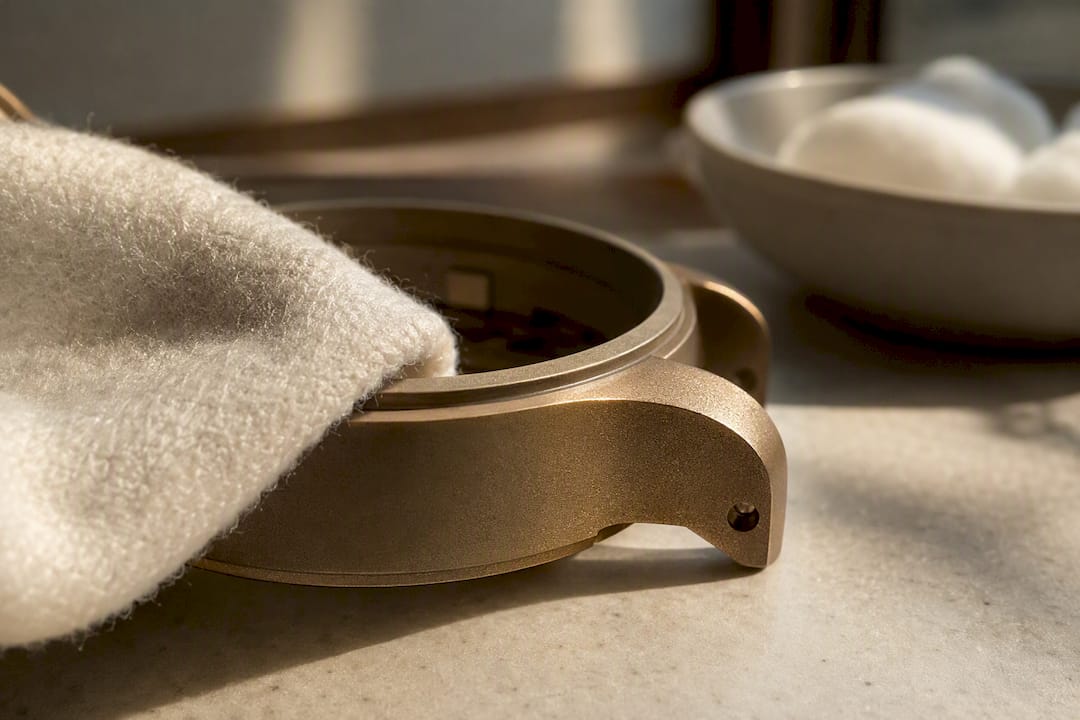
Bead-blasted or matte bronze finishes need gentler handling than polished ones. Abrasive pastes and hard brushing can smooth out the texture that gave the case its matte look in the first place, turning it inadvertently shiny in patches. If you have a matte or brushed bronze case, stick to soft cloths and avoid the toothbrush entirely.
This is exactly the situation the manufacturer guidance rule exists for. A quick email or check of your brand’s care documentation before deep cleaning takes five minutes and can save you from a finish mismatch that no amount of re-cleaning fixes.
Which ChronoCare Product Fits Your Bronze Watch Cleaning Need?
A product lineup is designed to address the common cleaning needs bronze watch owners typically encounter.
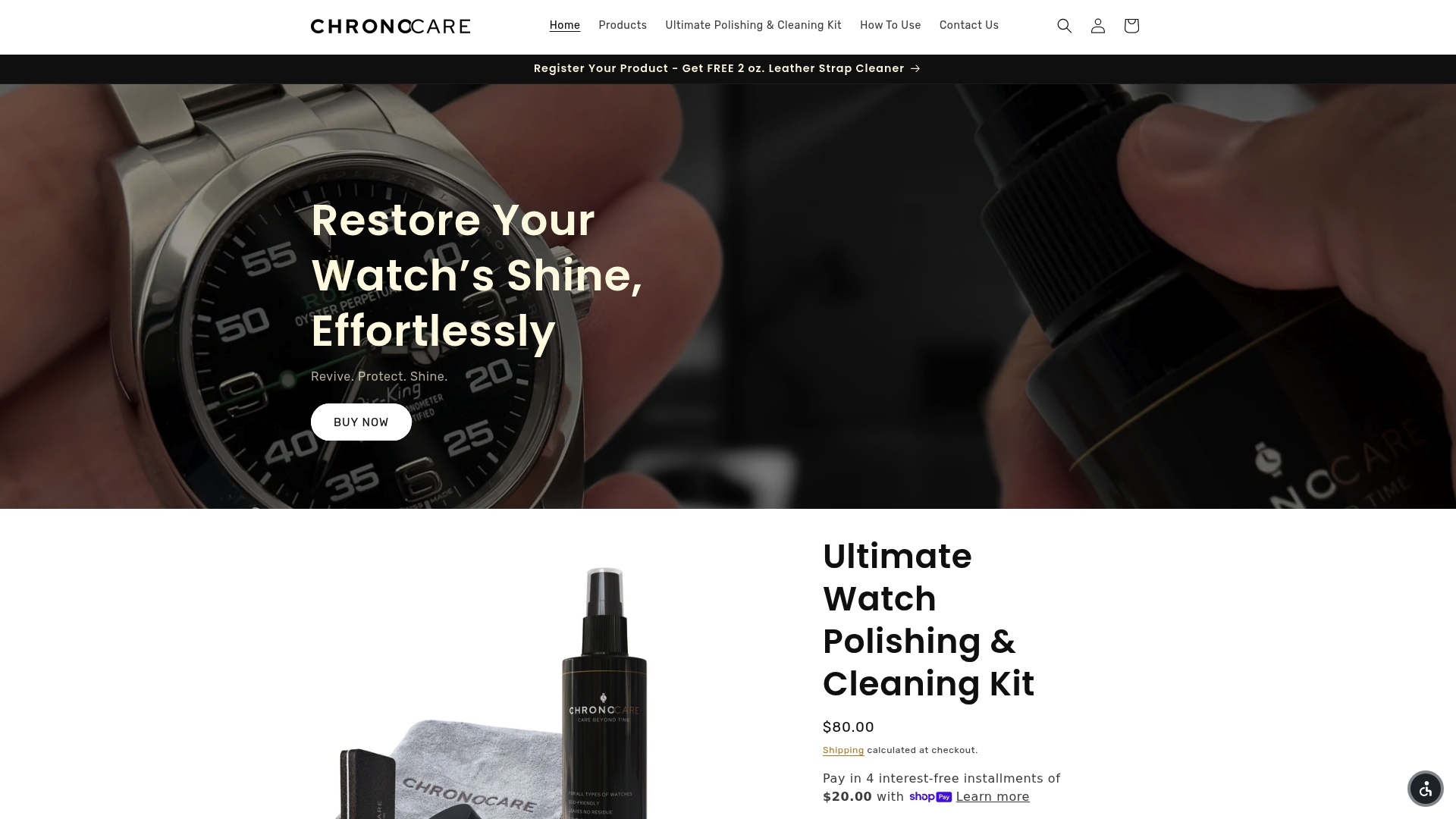
For routine upkeep, the Ultimate Watch Cleaning Kit handles the wipe-down and light-grime maintenance that keeps patina even without stripping it back to bare metal. If your case has picked up light scratches along with tarnish, the Watch Polishing Cream blends minor surface marks and restores shine without the abrasive bite of a DIY paste. For heavier restoration, dark buildup, uneven patina, or a case you want brought back close to its original tone, the Ultimate Watch Polishing & Cleaning Kit combines both steps in one process.
Whichever you reach for, check your watchmaker’s guidance before aggressive polishing, especially on aluminum bronze or lacquered cases, and keep any product away from leather straps. Start with the cleaning kit if you’re maintaining, or go straight to the polishing cream if scratches are the main complaint.
Living With Bronze: Should You Chase a Polished Look?
Patina is the reason most people buy bronze in the first place. It’s a record of wear, and collectors often value an uneven, honest finish over a case scrubbed back to factory shine. If you can’t decide, treat cleaning as selective rather than total: clean the crown and lugs where grime actually causes problems, leave the rest of the case alone, and add a thin protective coat if you want to slow things down without erasing them. Every aggressive cleaning pass removes a sliver of metal you don’t get back, and repeated over years, that adds up to a case that looks noticeably different from the one you bought.
— Raymond Jenkins
Sources
- How to clean a bronze watch - Pinion Watch Company
- Bronze Watches: Patina & Elegance | LONGINES US
- How to care for your bronze watch | WATCH EDUCATION
- All you need to know about bronze watches | WatchGecko