

Best Display Case Cleaning Products for Luxury Watch Retail
For luxury watch display cases, the right buy is a non-ammoniated, anti-static cleaner paired with a set of low-lint microfiber cloths — and if your case is acrylic, add a three-step NOVUS system (gentle cleaner, fine scratch remover, heavy scratch remover). The Canadian Conservation Institute is clear: apply cleaner to the cloth first, never directly to the surface. That single rule prevents liquid from wicking into frames and destroying glued seams.
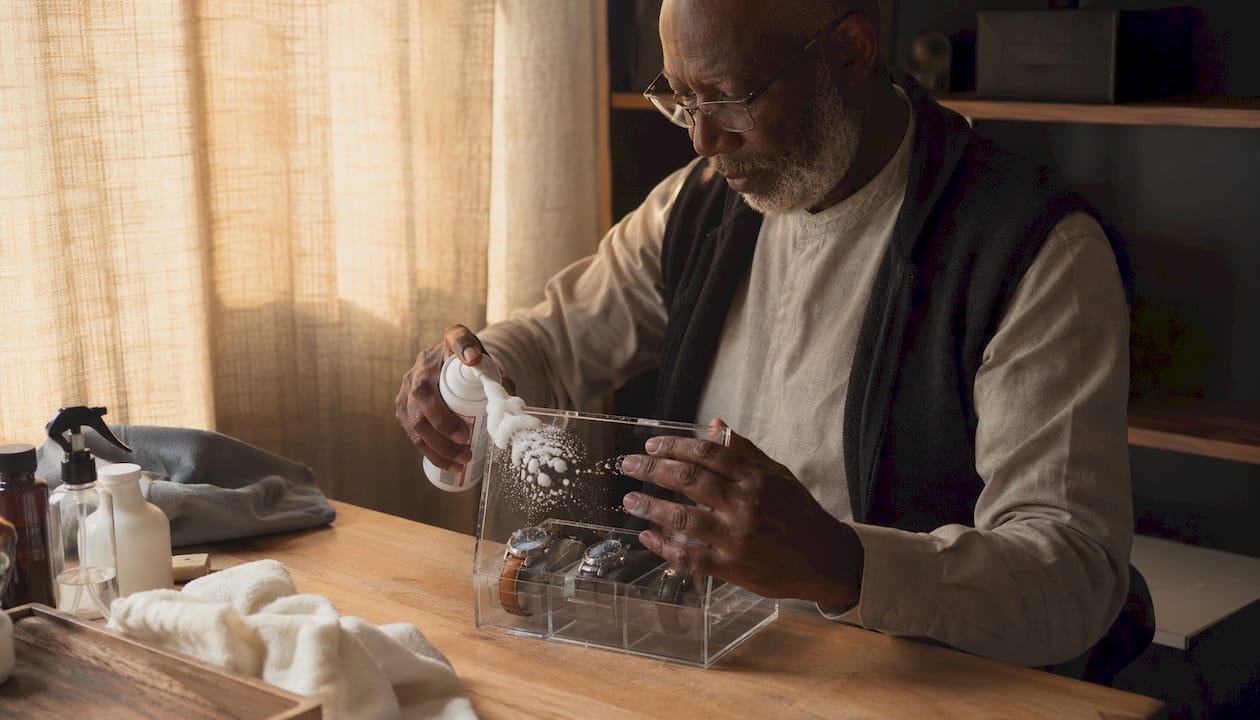
Material rule in one line: glass tolerates mild non-ammoniated cleaners; acrylic demands specialized formulas free of ammonia AND alcohol, or you risk permanent yellowing and hazing.
Quick buying checklist for your cart right now:
- Gentle non-ammoniated cleaner (spray or foam) for routine glass and acrylic maintenance
- Anti-static acrylic cleaner (no alcohol, no ammonia, no SLS) for polycarbonate and acrylic panels
- Fine scratch remover (NOVUS No. 2 or equivalent) for light abrasions on acrylic
- Low-lint microfiber set (300–400 GSM, waffle or plush weave) — minimum two cloths per session
- Distilled water as a safe first-pass option when you want zero chemical risk
Pro Tip: Choose a foam-based cleaner for high-rotation boutique cases. Foam systems deliver controlled, uniform coverage and dramatically reduce runoff into seams and hardware compared to spray bottles.
Table of Contents
- How to clean display cases the right way: glass vs acrylic
- ChronoCare kits: which one fits your display-care workflow
- Key Takeaways
How to clean display cases the right way: glass vs acrylic
Glass display cases
Apply a non-ammoniated cleaner to a clean microfiber cloth, never to the glass itself. Wipe in overlapping passes from top to bottom, then buff dry with a second cloth. Pay extra attention to corners and frame edges where liquid pools. Glass is more scratch-resistant than acrylic, but a scratch on glass is essentially permanent, so keep abrasive compounds away from it entirely.
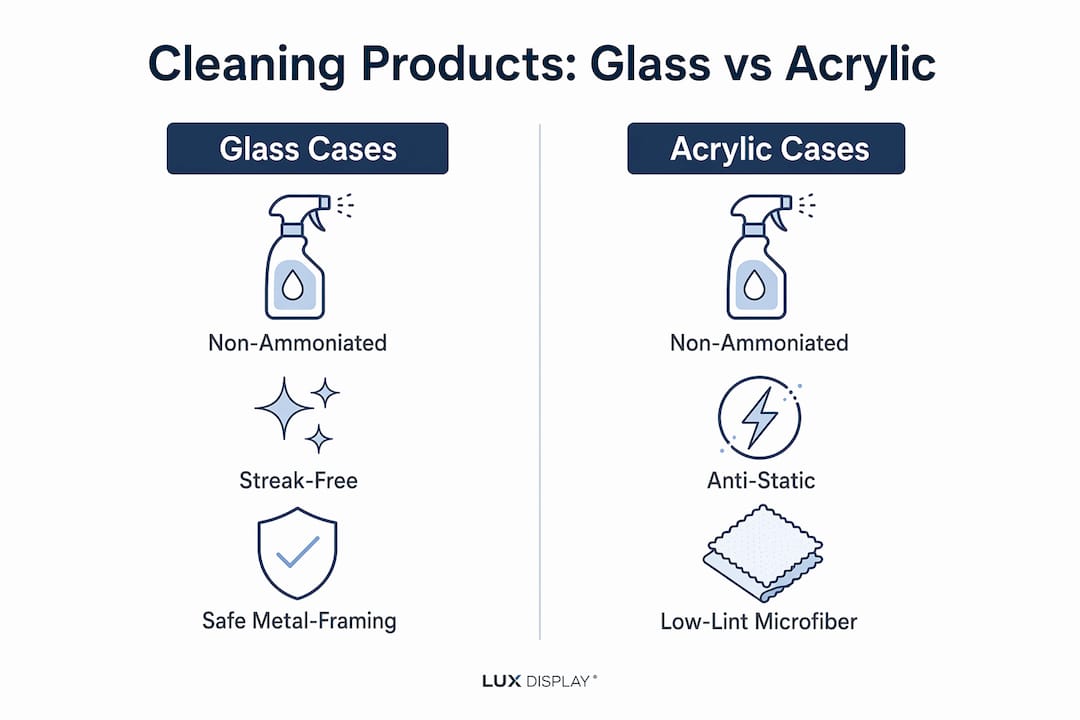
Products to look for on the label: no ammonia, no alcohol, streak-free formula, safe for metal framing. Brands like Brillianize advertise formulas without alcohol, ammonia, SLS, or ethylene glycol butyl ether and claim an anti-static, biodegradable finish — that ingredient list is a useful benchmark when reading any retail label.
Acrylic and polycarbonate cases
Acrylic is the harder material to maintain. The conservator standard is minimal intervention: routine dusting with a soft-bristled brush or microfiber before reaching for any liquid. When a deeper clean is needed, follow an incrementally abrasive workflow:
- Step 1 — Gentle cleaner (NOVUS No. 1 or equivalent): removes surface grime, fingerprints, and dust without abrading the surface.
- Step 2 — Fine scratch remover (NOVUS No. 2): addresses light abrasions and haze; use only if Step 1 leaves visible marks.
- Step 3 — Heavy scratch remover (NOVUS No. 3): reserved for deep scratches; stop at the lowest-effective step to preserve surface integrity.
Stop at Step 1 whenever possible. Moving to Step 2 or 3 removes a thin layer of acrylic each time.
Microfiber: the detail most collectors get wrong
Low-grade cloths trap particles and scratch acrylic on contact. Use low-lint microfiber only with appropriate thickness. Launder cloths after every two to three uses in warm water with fragrance-free detergent and no fabric softener (softener coats fibers and reduces absorbency). Replace any cloth that feels rough or has visible embedded grit. This is a frequently overlooked cause of micro-scratches on acrylic display panels.
Pro Tip: Anti-static cleaners do more than clean — they reduce static charge on acrylic, which means dust is repelled longer and you clean less often. For a busy boutique, that compounds into real time savings.
Buying specs to check on the label
| Dimension | Glass cases | Acrylic / polycarbonate cases |
|---|---|---|
| Formulation | Non-ammoniated, streak-free | Non-ammoniated, non-alcoholic, anti-static |
| Application method | Spray to cloth or foam | Foam preferred; spray to cloth only |
| Abrasiveness | None | Step 1 gentle → Step 2 fine → Step 3 heavy |
| Microfiber spec | 300–400 GSM, low-lint | 300–400 GSM, low-lint (critical) |
| Safety / VOCs | MSDS available, nonflammable | MSDS available, biodegradable preferred |
Safety, storage, and maintenance schedule
Store cleaners and polishing compounds in a cool, ventilated space away from children. Foam cleaners that are biodegradable and propellant-free lower VOC concerns for enclosed showrooms. Wear nitrile gloves when using scratch removers; the abrasive compounds in Step 2 and Step 3 products can irritate skin with repeated contact. Check shelf life on the label — most liquid cleaners remain effective for 18–24 months when stored correctly.
Maintenance schedule:
- Daily: dry microfiber dust of exterior panels
- Weekly: damp microfiber wipe with gentle cleaner (glass) or anti-static acrylic cleaner
- Monthly: inspect acrylic for haze or light scratches; apply Step 1 cleaner
- As needed: Step 2 or Step 3 only when scratches are visible and confirmed
The showroom display cleaning checklist from ChronoCare maps this schedule to a retail workflow if you want a printable reference. For collectors managing display objects beyond watches, the display care checklist from Moon Swords applies the same minimal-intervention logic to other high-value display pieces.
ChronoCare kits: which one fits your display-care workflow
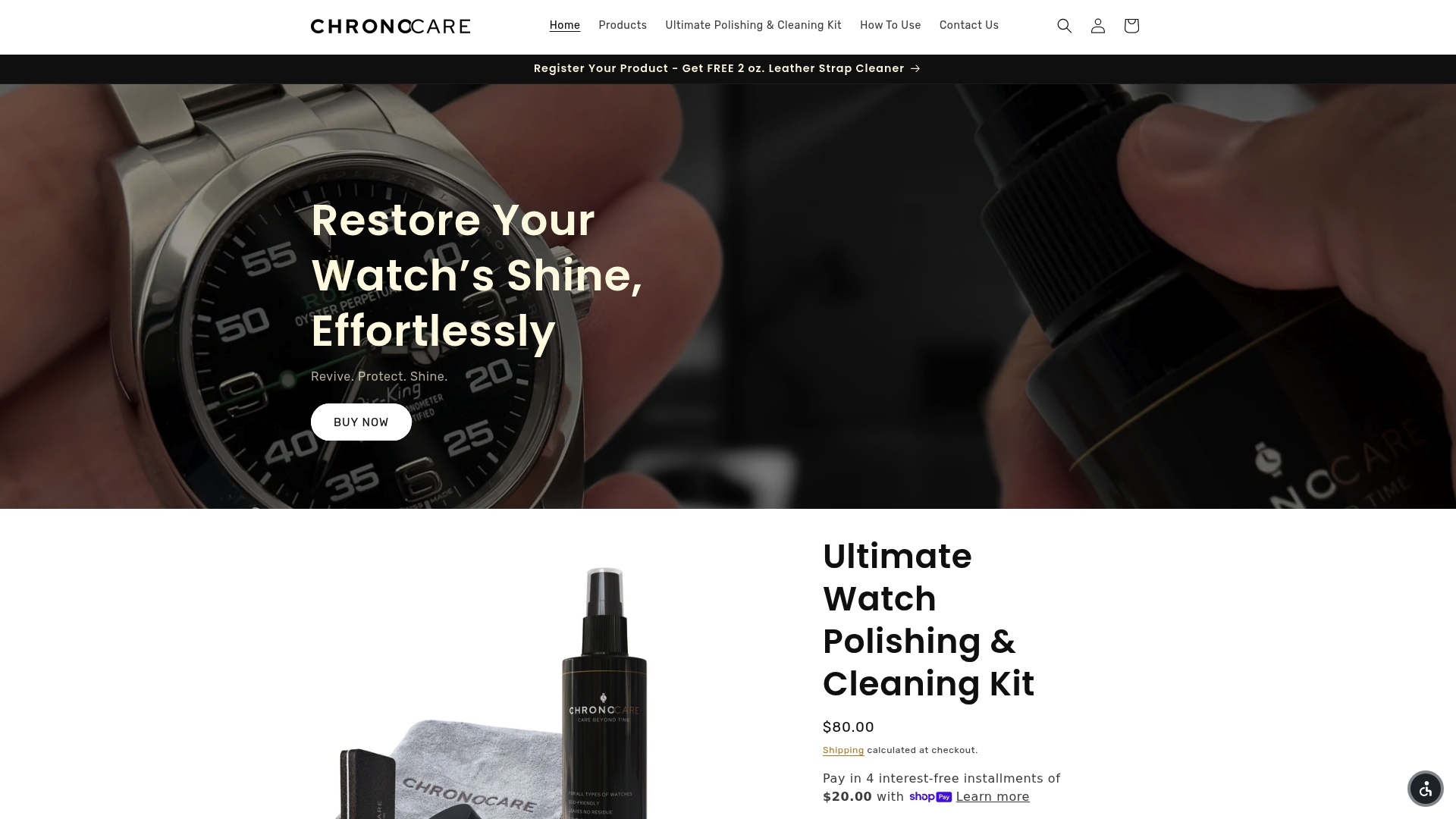
ChronoCare’s products are formulated for watch surfaces, not display-case panels — and that distinction matters when you’re building a complete care kit.
The Ultimate Watch Cleaning Kit covers routine watch-surface cleaning: the cleaner, microfibers, and basic polishing tools you need for case metal, crystals, and straps after handling or service. It’s the right starting point for a collector with a home vitrine who wants a single-vendor solution for the watch itself.
The Ultimate Watch Polishing & Cleaning Kit adds polishing compounds tuned to watch metals, making it the better pick for small retailers or collectors who occasionally need to restore a bracelet or case after a scratch. It does not replace a dedicated acrylic display-case cleaner, but it handles everything on the watch side of the equation.
The Watch Polishing Cream is a focused single-item add-on for metal surfaces — ideal when a watch comes out of a display case with handling marks and needs a quick luster restoration before going back on show.
Practical pairing: use ChronoCare products on the watch, and pair them with a non-ammoniated anti-static cleaner for the acrylic or glass panels of the case itself. That two-product approach covers both surfaces without cross-contaminating formulations. Browse the full range at shopchronocare.com and check the product pages for ingredient transparency and usage guidance before your first application.
Key Takeaways
For luxury watch display cases, the safest and most effective approach combines a non-ammoniated anti-static cleaner for the case surface with dedicated watch-surface products like ChronoCare kits for the timepiece itself.
| Point | Details |
|---|---|
| Material compatibility is non-negotiable | Never use ammonia- or alcohol-based cleaners on acrylic — they cause permanent yellowing and hazing. |
| Foam beats spray for boutiques | Foam-based cleaners reduce runoff into seams and hardware, making them the better choice for high-rotation retail cases. |
| Three-step acrylic protocol | Use gentle cleaner first, fine scratch remover second, heavy scratch remover only when necessary — stop at the lowest-effective step. |
| Microfiber quality matters | Use 300–400 GSM low-lint cloths; launder after every two to three uses and replace any cloth with embedded grit. |
| ChronoCare covers the watch | ChronoCare’s cleaning and polishing kits are formulated for watch surfaces; pair them with a dedicated display-case cleaner for complete coverage. |