

How to Maintain Leather Strap Display Stock Right
Proper leather strap display stock management is defined as the systematic practice of cleaning, conditioning, displaying, and rotating leather watch straps to preserve their quality, shape, and resale value. For retailers and collectors managing luxury inventory, neglect is not a minor inconvenience. Leather left unconditioned for six months can suffer permanent damage. The right approach combines products like Bickmore Bick 4, pH-neutral conditioners, and microfiber cloths with smart merchandising tools like T-stands and acid-free tissue to keep every strap in display-ready condition.
How to maintain leather strap display stock: cleaning and conditioning
Cleaning and conditioning are the two non-negotiable pillars of leather strap care. Get them right, and your inventory holds its value. Skip them, and you are looking at cracked, stiff, or discolored straps that no customer will pay a premium price to own.
Step-by-step cleaning process
Follow this sequence every two weeks for straps on active display:
- Remove the strap from the display fixture. Never clean leather in place. You need full access to both sides, including the area near the buckle where oils and dust collect fastest.
- Wipe the strap with a lightly damp microfiber cloth. Use minimal moisture. Excess water weakens leather fibers over time and can cause warping along the edges.
- Treat visible stains with a mild saddle soap or a dedicated watch strap cleaner. Apply a small amount to the cloth, not directly to the leather. Work in small circular motions and wipe clean immediately.
- Air dry at room temperature. Heat damages leather by contracting fibers and causing irreversible warping and cracking. Keep straps away from radiators, heat vents, and windowsills with direct sun exposure.
- Inspect the strap before returning it to display. Look for soft spots, edge peeling, or color inconsistencies that signal deeper wear.
Conditioning: frequency and product selection
- Condition every 2–4 months for straps on active display, and before any long-term storage period.
- Use only pH-neutral conditioners formulated specifically for watch straps. Products designed for shoes or furniture seal the leather surface and block the natural breathing process, causing long-term degradation.
- Apply a pea-sized amount to a clean cloth. Work it into the leather in thin, even layers.
- Over-conditioning creates sticky surfaces that attract dust and can darken leather permanently. Buff away any excess with a dry cloth immediately after application.
- Avoid wax-heavy conditioners. Wax builds up in the grain and prevents moisture exchange, which accelerates brittleness.
Pro Tip: Test any new conditioner on the underside of the strap near the buckle before applying it to the full surface. This single step prevents discoloration on the visible face of the leather.
How should you display leather straps to prevent damage?
Display method is where most retailers make their first serious mistake. The way a strap sits on a fixture for 30, 60, or 90 days determines whether it holds its shape or develops permanent creases and deformations.
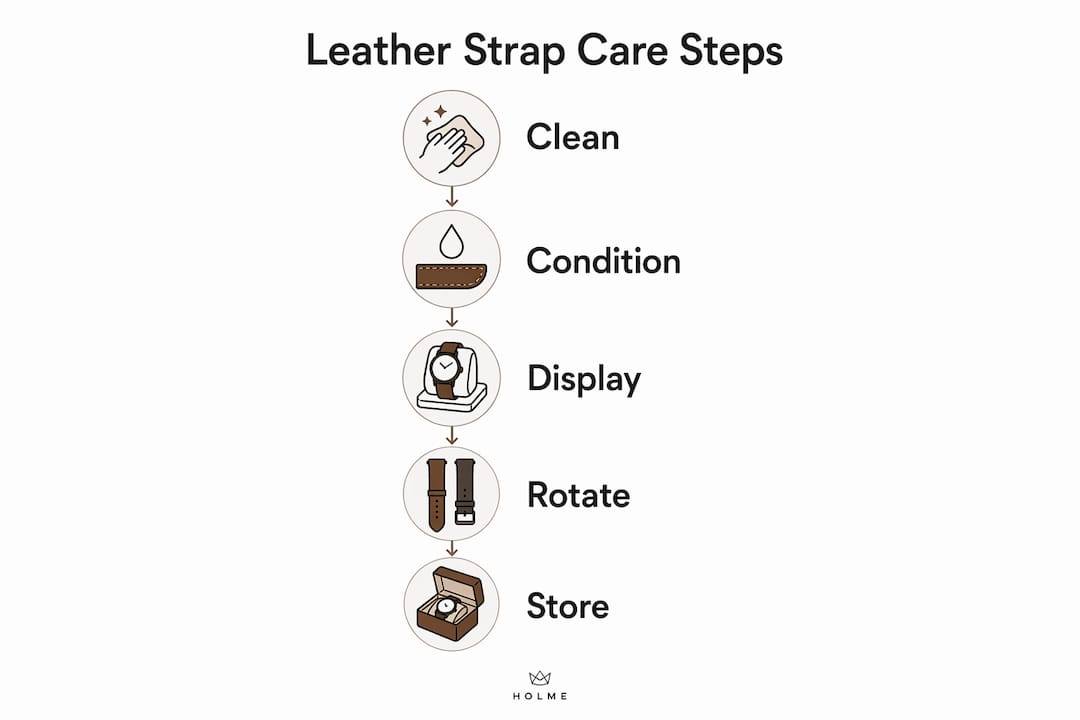
The core principle is simple: support the full width of the strap at all times. Hanging leather straps on thin hooks concentrates weight on a single point and causes indentations that cannot be reversed. The same logic applies to buckles. Hanging by handles or buckles for as little as 72 hours can stretch leather by up to 1.5 inches and weaken stitch integrity.
Best display fixtures for leather straps
| Display Method | Effect on Leather | Recommended? |
|---|---|---|
| Thin metal hooks | Creates point pressure, permanent indentation | No |
| Wide flat shelves | Distributes weight evenly, preserves shape | Yes |
| Padded T-stands | Supports full strap width, mimics wrist shape | Yes |
| Narrow wire racks | Causes creasing along center fold | No |
| Acid-free tissue stuffing | Maintains interior shape, prevents collapse | Yes |
Use acid-free tissue or custom pillows inside folded straps to maintain their natural curve. This also communicates higher value to buyers. A strap that sits flat and full reads as premium. A strap that sags or creases reads as used.
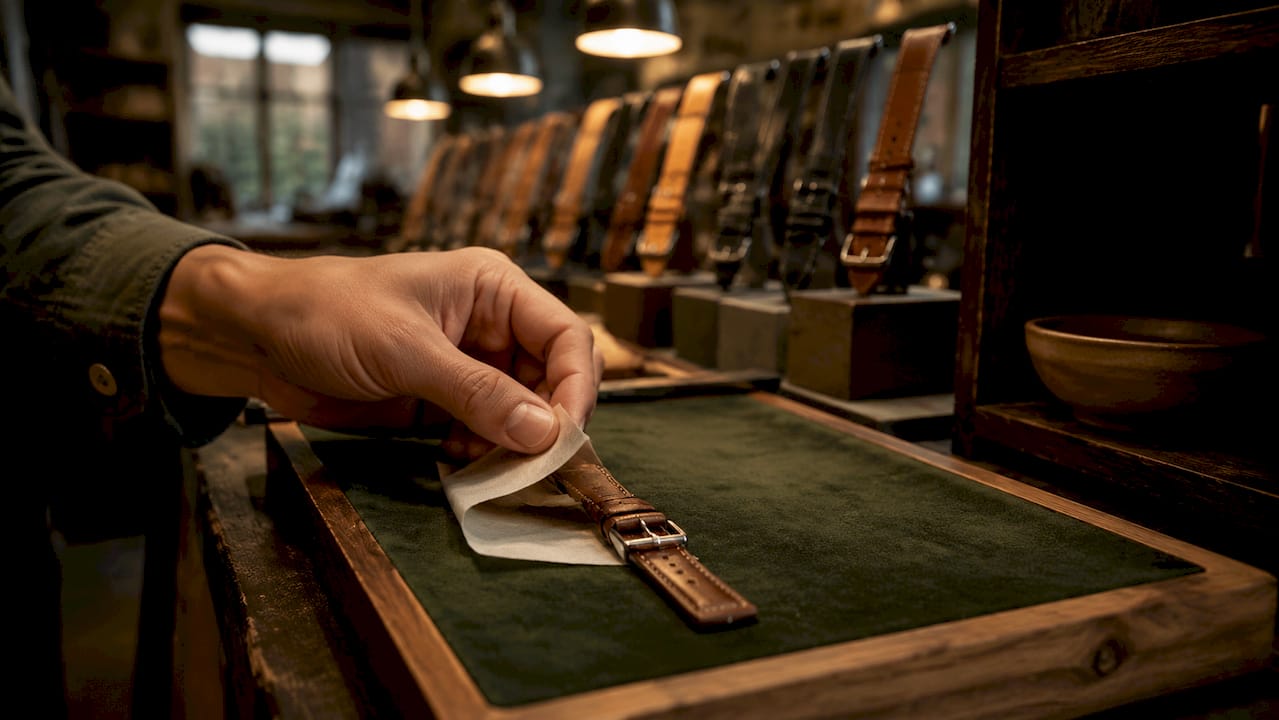
Pro Tip: Rotate your display stock every 90 days. Straps left in the same position under the same lighting develop uneven fading and shelf-wear patterns that are impossible to correct without professional restoration.
A cluttered display undermines luxury perception. Keep your display clean, spaced, and consistent. Buyers make quality judgments within seconds of approaching a display case. Give each strap room to be seen.
For collectors considering how different materials perform under display conditions, the strap material comparison guide from ChronoCare offers useful context on why leather requires more attention than rubber or metal alternatives.
What inventory practices protect leather strap quality over time?
Inventory management is not just an operational concern. For leather goods, poor stock rotation is a direct cause of product degradation. A strap that sits in the back of a drawer for eight months without conditioning will harden and crack before it ever reaches a customer.
Rotation and accuracy
Weekly cycle counts are the standard for reaching 99% inventory accuracy and maintaining 95–99% service levels. That level of accuracy matters for leather specifically because it tells you which straps have been sitting longest and need attention first.
Follow these four practices to protect your leather inventory:
- Apply the FIFO method. FIFO ensures older leather stock moves first, preventing hardening and preserving value. Label each strap with its intake date and pull from the oldest stock when fulfilling orders or rotating displays.
- Condition before storage. Any strap going into long-term storage should receive a full conditioning treatment first. This prevents the leather from drying out during the inactive period.
- Avoid airtight containers. Leather needs to breathe. Sealing straps in plastic bins or vacuum bags traps moisture, promotes mold, and accelerates stiffening. Use breathable fabric pouches or open-shelf storage instead.
- Bundle slow-moving stock strategically. Pairing slow movers with popular items clears aging inventory before it deteriorates and maintains premium perception across your catalog.
| Inventory Practice | Purpose | Frequency |
|---|---|---|
| Cycle counting | Maintain 99% accuracy | Weekly |
| FIFO rotation | Prevent hardening of older stock | Ongoing |
| Conditioning before storage | Prevent drying and cracking | Before each storage period |
| Display rotation | Prevent uneven fading and shelf-wear | Every 90 days |
Avoiding retail display mistakes that compromise product integrity is as important as the maintenance routine itself. Poor fixture choices and overcrowded shelving undo even the best conditioning schedule.
Which mistakes cause the most damage to leather strap inventory?
The most damaging errors in leather strap care are not dramatic accidents. They are quiet, repeated habits that compound over weeks until the damage becomes visible and irreversible.
- Using the wrong conditioner. The biggest misconception in leather care is that any conditioner will do. Shoe and furniture conditioners seal the leather surface and prevent breathing, causing long-term degradation that no amount of later treatment can fix. Always use products formulated specifically for watch straps.
- Over-conditioning. More product does not mean better protection. Excess conditioner sits on the surface, attracts dust, and darkens the leather in ways that are permanent. Apply sparingly and always buff the excess.
- Hanging straps from buckles or thin fixtures. Even short-term tension causes permanent stretch and weakens stitching. This is one of the most common errors retailers make when setting up displays quickly without thinking about long-term strap integrity.
- Exposing straps to heat or direct sunlight. Heat is the primary enemy of leather. A strap left near a store window or above a heating vent will warp, crack, and fade faster than any other form of neglect.
- Storing straps buckled or tightly wrapped. This creates permanent crease lines along the fold points. Store every strap flat, unbuckled, and supported.
“The straps that arrive to us most damaged were never worn. They were stored wrong.” This observation from experienced watch strap retailers captures the core problem: display and storage decisions cause more harm than regular use.
Understanding why watch straps crack over time gives you a clearer picture of the chemistry behind these failures and reinforces why each of these mistakes matters at a structural level.
Key takeaways
Maintaining leather strap display stock requires consistent cleaning every two weeks, conditioning every 2–4 months, proper flat or padded display fixtures, and FIFO inventory rotation to prevent irreversible damage.
| Point | Details |
|---|---|
| Clean every two weeks | Wipe with a damp microfiber cloth and treat stains with saddle soap or a dedicated strap cleaner. |
| Condition every 2–4 months | Use only pH-neutral, wax-free conditioners formulated for watch straps; buff away all excess product. |
| Use flat or padded display fixtures | Wide shelves, T-stands, and acid-free tissue prevent indentations, creasing, and permanent deformation. |
| Rotate display stock every 90 days | Prevents uneven fading and shelf-wear; apply FIFO to move oldest inventory first. |
| Never use airtight storage | Leather must breathe; use fabric pouches or open shelving and condition before any long-term storage. |
What i’ve learned after years of watching retailers get this wrong
Most retailers treat leather strap maintenance as a cleaning task. It is not. It is a preservation discipline, and the difference in mindset changes everything about how you approach your inventory.
The retailers I have seen maintain the most pristine display stock share one habit: they schedule maintenance the same way they schedule ordering. It goes on the calendar. It does not happen when someone notices a strap looks dull. By then, the damage is already done.
The second thing I have noticed is how much display quality affects buyer behavior. A strap that sits flat on a padded T-stand with clean edges and consistent color reads as a premium product. The exact same strap, hanging from a thin hook with a slight crease down the center, reads as a return or a floor sample. The leather has not changed. The presentation has. That gap in perception translates directly to price resistance at the counter.
Training staff is the piece most retailers skip. You can have the best products and the right fixtures, but if the person restocking the display hangs straps by the buckle out of habit, the damage accumulates faster than any conditioning routine can offset. A 20-minute training session on proper handling, display, and cleaning technique is one of the highest-return investments a leather goods retailer can make.
My honest recommendation: start with a written maintenance schedule posted in your stockroom. Assign ownership. Review it quarterly. The retailers who do this consistently are the ones whose inventory looks showroom-ready six months after it arrives.
— Raymond Jenkins
Products that make leather strap care easier
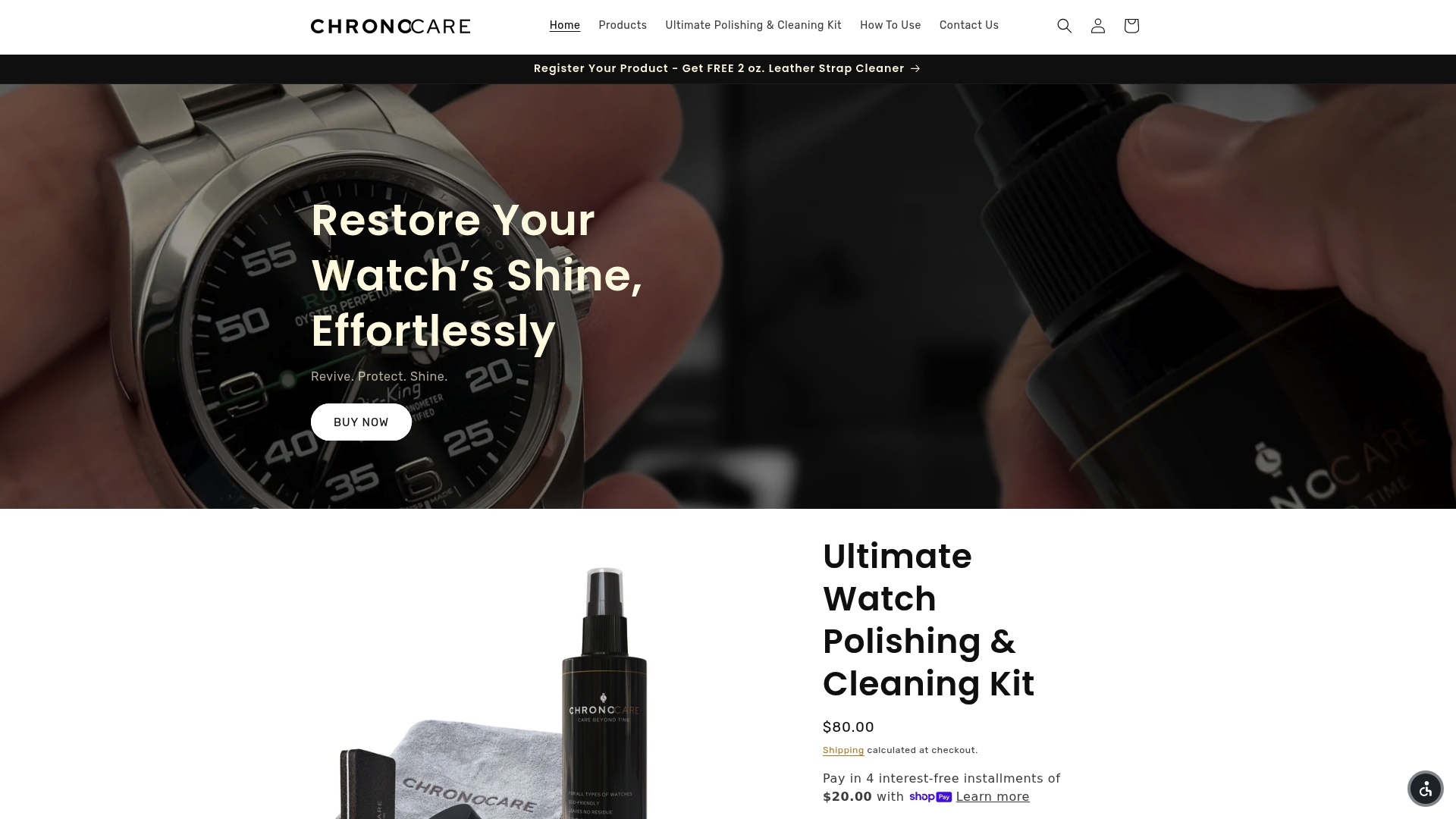
ChronoCare builds its products specifically for the demands of luxury watch care, and that specificity matters when you are maintaining leather strap inventory at scale. The Ultimate Watch Cleaning Kit includes everything needed for a complete cleaning and conditioning routine, formulated to work safely on premium leather without stripping natural oils or leaving residue. For targeted cleaning between full sessions, ChronoCare’s leather strap cleaner spray removes surface grime and light stains without requiring a full strip-down of your display. Both products are formulated in the US and designed for collectors and retailers who cannot afford to experiment with generic alternatives on high-value inventory.
FAQ
How often should leather watch straps be cleaned?
Clean leather watch straps every two weeks with a damp microfiber cloth. Condition every 2–4 months to prevent cracking and preserve suppleness.
What is the best way to store leather straps long-term?
Store leather straps flat, unbuckled, in breathable fabric pouches or on open shelving. Avoid airtight containers and always condition straps before placing them in long-term storage.
Can i use shoe conditioner on a leather watch strap?
No. Shoe and furniture conditioners seal the leather surface and block the natural breathing process, causing long-term damage. Use only pH-neutral conditioners formulated for watch straps.
How do i prevent display straps from developing permanent creases?
Use wide flat shelves, padded T-stands, or acid-free tissue stuffing to support the full strap width. Hanging straps on thin hooks or by their buckles for even 72 hours causes stretching and permanent indentations.
What inventory method works best for leather strap stock?
The FIFO method is the standard for leather inventory. FIFO moves older stock first and prevents hardening or drying before straps reach a customer. Pair it with weekly cycle counts to maintain 99% inventory accuracy.