

One Drop Routine to Clean a Waterproof Watch and Preserve Its Seals
If the crown is fully pushed in or screwed down, the crystal has no chips, and the rating supports it, clean a waterproof watch with lukewarm water, one drop of mild dish soap, and a soft brush for the metal case and rubber strap. Wipe leather, never soak it. Skip alcohol, bleach, and hot water entirely. If you’re unsure about the seals or gaskets, stick to dry-clean methods and get it checked by a professional first.
TL;DR:
- Water resistance ratings are only approximate and diminish over time; a watch rated at 100m requires intact gaskets for safe swimming or showering.
- Always check that the crown is fully pushed in or screwed down before wet cleaning to prevent water intrusion.
- Use lukewarm water with one drop of neutral dish soap and a soft brush for cleaning metal cases and straps; avoid soaking leather, acrylic, or plated finishes.
- Prioritize dry-clean methods and professional pressure testing for vintage watches, or if the gasket replacement history is unknown.
- Smartwatch cleaning rules vary by model, but generally avoid alcohol and harsh chemicals, and remove bands for targeted cleaning to protect sensors and internal components.
Table of Contents
- How to Check If Your Watch Is Safe to Clean With Water
- Cleaning Metal Cases, Bracelets, and Rubber or Textile Straps
- Caring for Leather, Crystals, and Precious Metal Finishes
- What About Smartwatches and Sensor-Heavy Bands?
- Drying and Checking Your Watch Afterward
- How Often Should You Clean a Waterproof Watch?
- Why Cautious, Regular Care Beats Occasional Deep Cleans
- Products That Fit Into Your Cleaning Routine
- Sources
- FAQ
How to Check If Your Watch Is Safe to Clean With Water
That water-resistance number on the caseback isn’t a lab guarantee. It reflects performance under controlled, static pressure when the watch was new, not after five years of temperature swings and dropped straps. A 30m rating means splash resistance for washing hands, not swimming. 50m tolerates light rain and hand washing. 100m or more generally handles swimming and showering, though even that assumes the gaskets are still intact.
Before any wet cleaning:
- Confirm the crown is pushed in fully or screwed down tight. An unscrewed crown is the single most common way water gets inside a case, according to watchmaker guidance from WatchPolice.
- Inspect the crystal for chips, cracks, or a loose bezel ring. Any gap is a red flag.
- If you don’t know when the gaskets were last replaced or pressure-tested, treat the watch as non-immersible. Gaskets degrade with age regardless of the original rating.
Pro Tip: If your watch hasn’t seen a service center in two or three years, wipe it dry instead of dunking it. A ten-second rinse isn’t worth a $200 movement repair.
Cleaning Metal Cases, Bracelets, and Rubber or Textile Straps
Gather what you actually need: a bowl of lukewarm water, one drop of neutral mild dish soap, a microfiber cloth, a soft-bristle toothbrush, and a manual air-puffer bulb. Skip anything stronger. Watchmakers at Longines specifically call for just one drop of soap because excess residue dulls metal finishes and clings inside bracelet links.
For a steel or titanium case and bracelet:
- Mix the drop of soap into the lukewarm water and swirl gently.
- If the rating allows it, submerge the head briefly, no more than a minute or two.
- Brush gently along the links and lugs with the soft toothbrush, working dirt out of joints where sweat and grime build up.
- Rinse under lukewarm running water if the rating supports it, or wipe thoroughly with a damp cloth if you’re being cautious.
- Pat dry with microfiber, then buff along the direction of the brushed grain, never in circles. That small habit prevents micro-swirls that collectors notice immediately.
For rubber straps: wash with the same soapy water using the toothbrush, but wrap the case itself in a dry cloth first if you’re worried about immersion. Rinse fully and air-dry. Some colored rubber can transfer dye onto light-colored clothing when new, so give it a full dry cycle before wearing.
For nylon or textile bands: lather with soapy water, rinse until no suds remain, then squeeze (don’t wring) and lay flat to dry. Twisting distorts the weave, and heat from a dryer or radiator can shrink synthetic fibers.
If grime has worked deep between bracelet links, remove the bracelet for a closer clean rather than running the whole watch through an ultrasonic cleaner, which can loosen gaskets you can’t see.
Caring for Leather, Crystals, and Precious Metal Finishes
Leather, acrylic, and plated finishes don’t tolerate the wet-clean routine above, and treating them the same way is how straps crack and finishes dull early.
- Leather straps: wipe with a barely damp cloth, never soak. Condition roughly every three months with a leather-specific product, and keep leather away from alcohol-based cleaners and direct heat sources like radiators or car dashboards.
- Acrylic or hesalite crystals: use only a microfiber cloth, no brushes. Fine scratches on acrylic can often be buffed out, but that’s specialist polishing work, not a home fix.
- Gold or gold-plated cases: avoid abrasive cloths and harsh chemicals entirely. Light wiping keeps them clean; visible scratches call for professional polishing rather than a DIY cream.
- Vintage watches or anything with an unknown resistance rating: dry-clean only. Get a pressure test at a service center before it ever touches water again.
Pro Tip: A watch that “used to be” 100m water resistant from decades ago should be treated as zero water resistant until a pressure test proves otherwise. Gaskets don’t age gracefully.
What About Smartwatches and Sensor-Heavy Bands?
Smartwatches carry their own rules, and it’s worth checking the manufacturer’s page directly since limits vary by model. Apple’s own cleaning guidance warns against bleach, hydrogen peroxide, alcohol, and aerosol sprays, all of which can permanently discolor the case or band. Apple also recommends wiping leather bands and reserves soap-and-water cleaning for rubber or sport bands only.
- Remove the band before cleaning where the design allows it, so you’re not scrubbing near the sensor housing.
- Keep lotion, sunscreen, and oils off the back sensor and crystal. Residue there skews heart-rate and other readings until it’s fully cleaned off and dried.
- If debris gets into speaker or port openings, use a soft brush, not compressed air, which can push particles deeper or damage internal membranes.
Drying and Checking Your Watch Afterward
Pat the case dry with a microfiber cloth first, then use a manual air-puffer bulb to push trapped water out of crevices around the crown and lugs. Compressed air and hair dryers are off limits; the direct heat and pressure can force moisture past compromised seals rather than out of them, echoing the same expansion risk that makes hot water dangerous during cleaning.
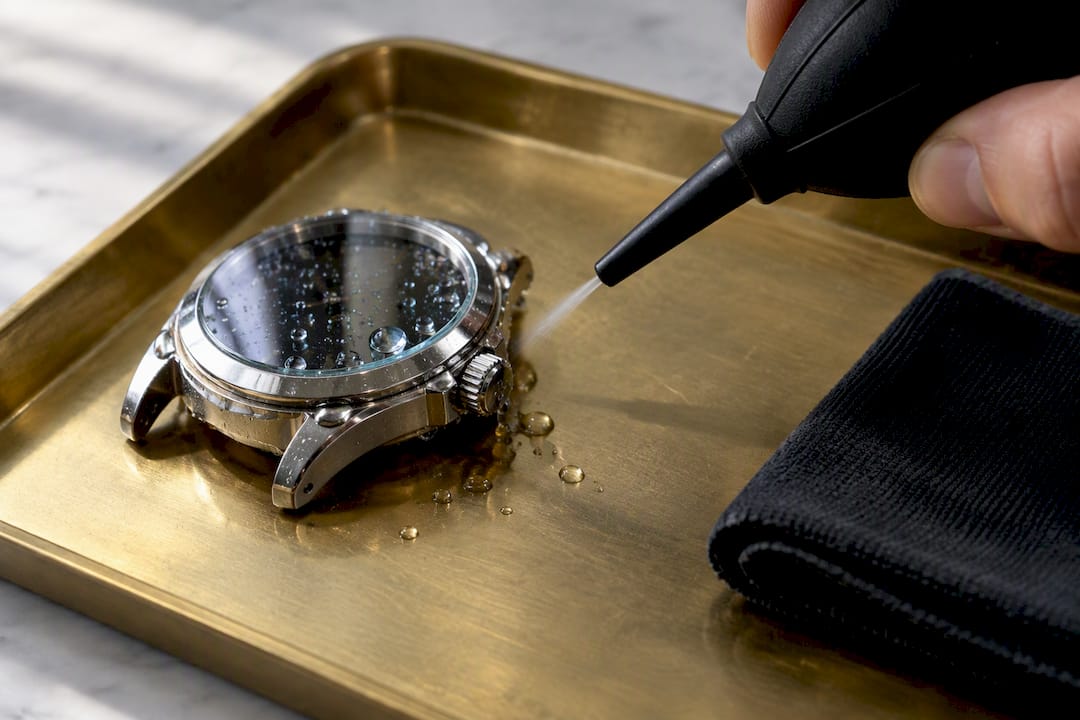
Lay the watch face up on a soft cloth and let it air-dry for at least an hour before putting it back on. That’s enough time for residual moisture in the links or under the caseback to evaporate rather than sit trapped against the movement.
Watch for trouble signs afterward:
- Fogging or condensation under the crystal means water got past a seal. Stop wearing it and get it to a professional immediately.
- A stiff or gritty crown, or a pusher that grinds instead of clicking cleanly, both suggest water or debris intrusion.
- Buff any metal surfaces along the grain only, never in circles, to avoid the fine swirl marks that show up under bright light.
How Often Should You Clean a Waterproof Watch?
A daily wearer needs a quick wipe with a dry or barely damp microfiber cloth every day or two, just to clear off skin oils and dust before they settle into the bracelet joints. Rinse under fresh water promptly after any saltwater exposure or a heavy sweat session; a quick 20 to 30 second rinse keeps salt crystals from working into the gaskets and pitting the metal over time.
For a proper deep clean with the soap-and-water method, once a month is plenty for a water-resistant watch worn daily. Leather straps get conditioned roughly every quarter.
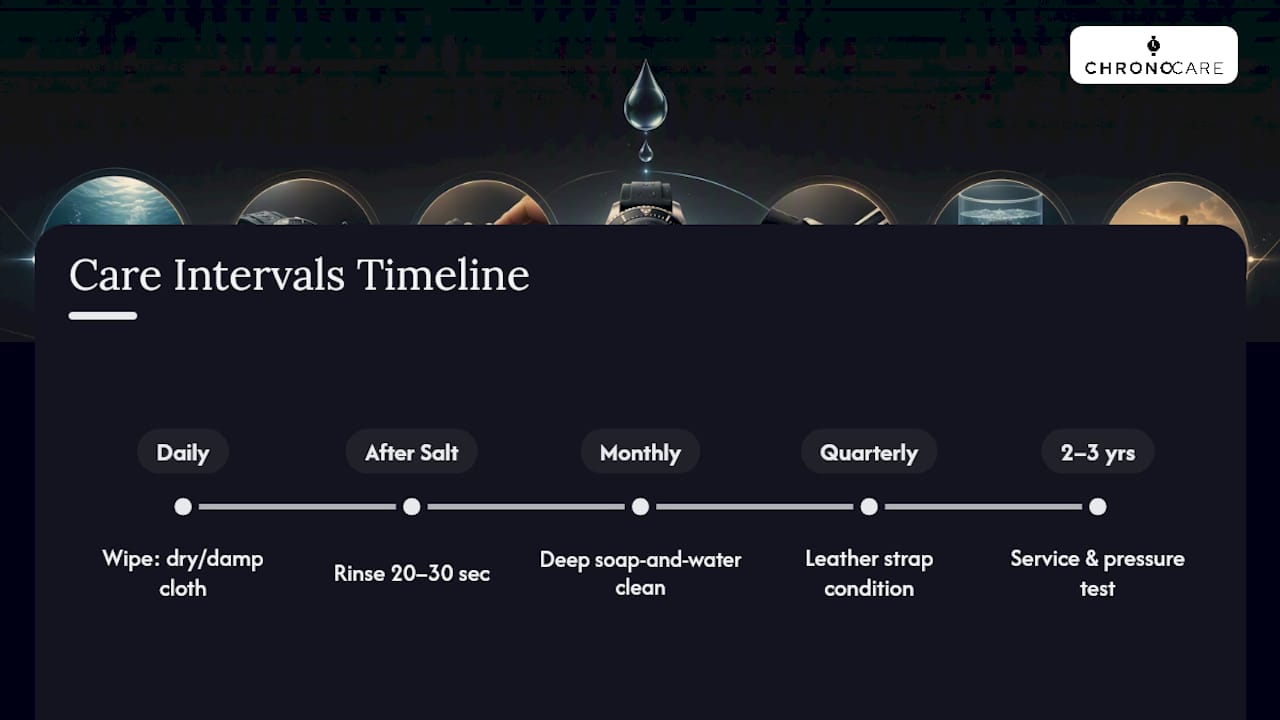
Send the watch to a professional when you notice fogging, a chipped crystal, a visibly worn gasket, or if it simply hasn’t had a pressure test in two to three years. A full service check typically includes a pressure test, gasket replacement, and a movement dry-out if any moisture made it inside, work that’s far cheaper than replacing a corroded movement.
Why Cautious, Regular Care Beats Occasional Deep Cleans
The watches that hold their value best aren’t the ones that get scrubbed once a year. They’re the ones wiped down every few days, rinsed the moment salt or sweat touches them, and never dunked when the owner isn’t sure about the seals. Ten seconds a day beats a stressful hour of guesswork every few months.
Treat the crown check as a habit, not a formality. Skip it once with a compromised gasket and you’re looking at a corroded movement instead of a clean bracelet.
— Raymond Jenkins
Products That Fit Into Your Cleaning Routine
Once the basics are covered, the right product for each material speeds things up without guesswork. ChronoCare’s Ultimate Watch Cleaner Spray works well for spot cleaning metal cases and rubber straps between full soap-and-water sessions, lifting residue and skin oils without soaking anything.
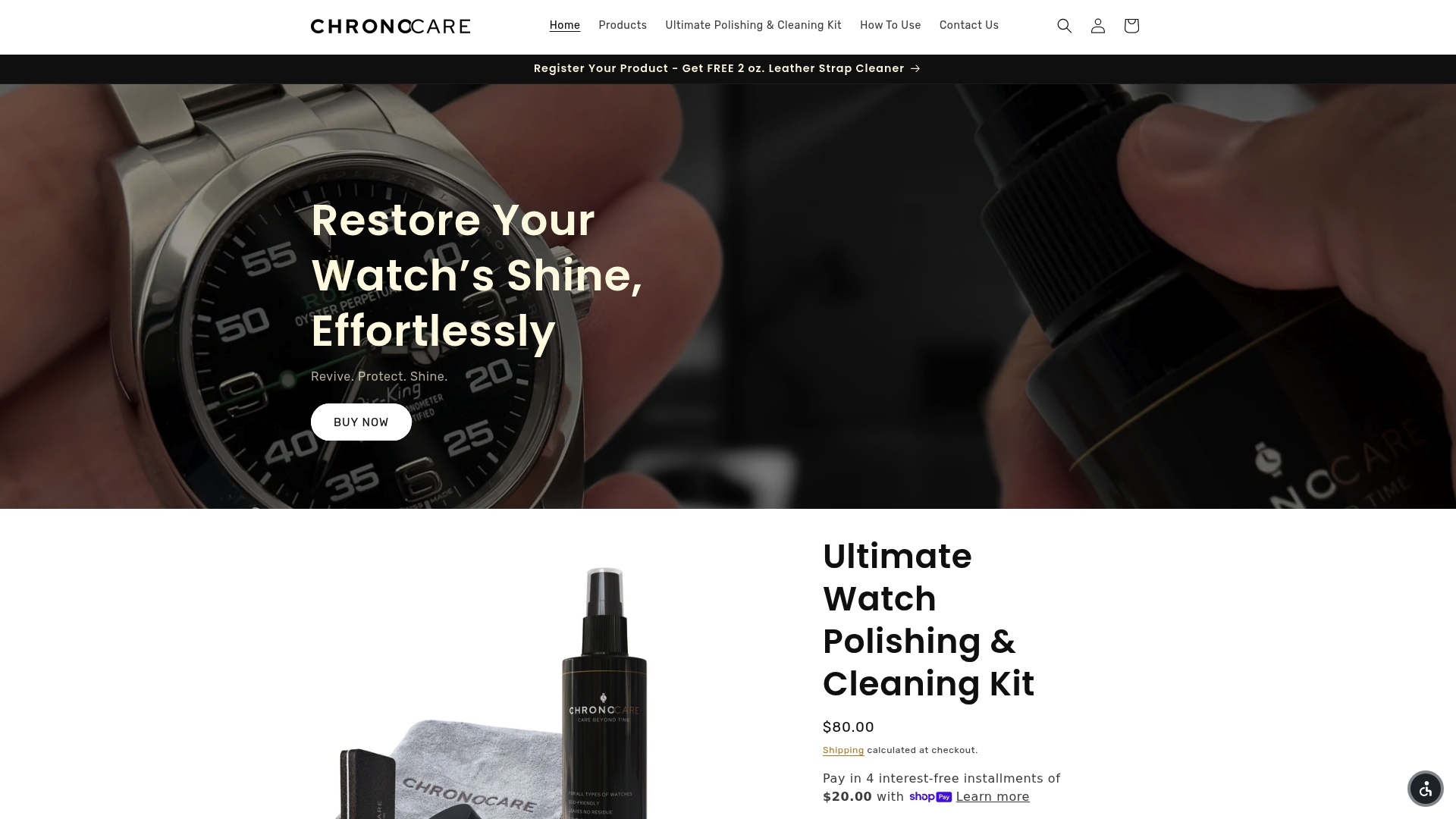
For leather, the Watch Leather Strap Cleaner Spray handles wiping and conditioning in one step, which matters since soaking leather is exactly what you’re trying to avoid. Once your watch is dry and buffed, the Watch Polishing Cream can lift light surface scratches from metal cases and bracelets, restoring shine without the abrasive grit of a generic polish.
Test any product on a small, hidden area first, especially on plated or vintage finishes, and follow the label instructions exactly. If you’re building out a full routine, ChronoCare’s step-by-step cleaning guide walks through the complete kit collectors use, and you can browse the full lineup at Shopchronocare to find what fits your watch.
Sources
This guide draws on manufacturer and watchmaker guidance rather than guesswork:
- How to clean your Apple Watch - Apple Support
- How to clean a watch | LONGINES US
- How to clean your watch | Hodinkee
FAQ
Can I use alcohol wipes to clean my watch?
No. Alcohol strips protective coatings and can cause discoloration on both metal finishes and rubber or leather bands. Apple’s own guidance specifically lists alcohol among the chemicals to avoid on watch cases and bands.
Can you use Dawn dish soap to clean a watch?
Yes, a single drop of neutral, mild dish soap in lukewarm water is the method watchmakers recommend for metal cases and rubber straps. Use only one drop, since excess soap leaves residue that dulls the finish, and rinse thoroughly before drying.
What liquid can I use to clean my watch?
Lukewarm water with one drop of mild dish soap is the safest liquid for metal and rubber, following the same approach Longines recommends for routine deep cleans. Leather should never be soaked; wipe it with a barely damp cloth instead.
Can I shower with my waterproof watch?
Only if the crown is fully secured and the rating supports it, generally 100m or higher, and the gaskets haven’t degraded with age. If you don’t know the service history or last pressure test, skip the shower and stick to dry-clean methods until it’s checked professionally.