

Watch Strap Material Comparison Guide for Luxury Watches
The strap you choose can make or break a luxury watch. Not just aesthetically. A wrong material choice leads to premature wear, skin irritation, and a watch that looks neglected within a year. This watch strap material comparison guide cuts through the noise by covering every major material category, from FKM rubber to shell cordovan leather to titanium mesh, with the kind of specificity that actually helps you decide. Whether you’re outfitting a Rolex Submariner or a dress piece, the right strap protects your investment and shapes how the watch wears every single day.
Table of Contents
- Key takeaways
- 1. How to evaluate watch strap materials
- 2. Rubber straps: FKM, silicone, natural rubber, and PU
- 3. Leather straps: calfskin, shell cordovan, alligator, and more
- 4. Metal bracelets: stainless steel, titanium, and mesh
- 5. Fabric straps: NATO, sailcloth, canvas, and denim
- 6. Full material comparison at a glance
- My honest take on where watch strap materials are heading
- Keep your straps performing like new with Shopchronocare
- FAQ
Key takeaways
| Point | Details |
|---|---|
| FKM outlasts silicone significantly | FKM rubber lasts 5 to 10 years versus 6 to 24 months for silicone, offering better long-term value. |
| Leather requires rotation to survive | Rotating between 2 to 3 leather straps dramatically extends their lifespan by allowing them to dry fully. |
| Metal bracelets offer the longest lifespan | Stainless steel and titanium bracelets last 10 or more years with minimal maintenance effort. |
| Material choice should match occasion | Leather suits formal wear, FKM suits sport and outdoor use, and fabric straps work best for casual settings. |
| Maintenance determines actual lifespan | Even the best strap material degrades fast without the right cleaning and conditioning routine. |
1. How to evaluate watch strap materials
Before comparing specific materials, you need a clear framework. Most buyers focus on looks and forget the three factors that determine whether a strap lasts two years or ten.
Durability and resistance covers how well a material holds up against sweat, UV exposure, water, and everyday friction. A strap worn daily on a sport watch faces chemical stress from sunscreen and chlorine. A dress strap worn occasionally faces less abuse but may still crack if stored improperly.
Comfort and break-in period matter more than most buyers expect. Some materials, like FKM rubber, feel comfortable immediately. Others, like stiff calfskin leather, require weeks of wear before they conform to your wrist. Breathability also plays a role. A non-porous material traps heat and moisture during long wear.
Maintenance demands vary widely across materials:
- Leather requires conditioning every few months and should never be submerged in water
- Metal bracelets need periodic polishing and occasional link cleaning
- Rubber straps need only a rinse and dry
- Fabric straps can often be hand-washed but may fray or fade over time
Style suitability is the fourth dimension. A Milanese mesh bracelet reads as polished and versatile. A thick rubber strap signals sport and utility. Matching the strap to the watch’s design language and your wardrobe context is what separates a thoughtful collector from someone who just swaps straps randomly.
Pro Tip: Before buying any strap, identify the two or three contexts where you wear your watch most often. A strap that works for 80% of your situations beats a “perfect” strap that only suits formal dinners.
2. Rubber straps: FKM, silicone, natural rubber, and PU
Rubber straps have become the go-to choice for sport and tool watches, but “rubber” covers a wide range of materials with very different performance profiles.
FKM rubber
FKM (fluoroelastomer) is the premium tier. FKM lasts 5 to 10 years under daily use, far outperforming alternatives. It originated in aerospace and industrial applications and brings that engineering-grade resilience to watch straps. It resists sweat, sunscreen, salt water, chlorine, and UV without degrading, and unlike silicone, it does not attract dust or lint. The Rolex Oysterflex is perhaps the most famous example, and it goes further by integrating a titanium-nickel alloy core inside the rubber for structural rigidity without sacrificing comfort.
FKM pros:
- Exceptional chemical and UV resistance
- Maintains shape in temperatures from -20°C to +200°C
- Does not attract lint or dust
- Long lifespan with low maintenance
FKM cons:
- Higher upfront cost ($80 to $200)
- Less immediately soft than silicone
- Limited color variety compared to silicone
Silicone
Silicone is softer out of the box and costs significantly less. However, silicone attracts lint, becomes sticky, and fades faster under heat and sunlight than FKM. Its electrostatic nature causes persistent lint attraction that cleaning cannot fully fix. Lifespan typically runs 6 to 24 months with daily wear.
Silicone pros:
- Immediately soft and flexible
- Low cost ($10 to $25)
- Wide color availability
Silicone cons:
- Attracts lint and dust constantly
- Fades and degrades faster under UV
- Requires frequent replacement
Natural rubber and PU
Natural rubber offers a heritage feel and moderate durability but is more susceptible to UV degradation over time. Polyurethane (PU) is the budget tier. It mimics rubber’s look at a lower cost but typically cracks within one to two years of daily wear. Neither is a strong choice for a luxury watch.
Pro Tip: If you’re pairing a rubber strap with a high-end sport watch, the cost difference between silicone and FKM is negligible over a three-year period. FKM’s cost-per-year is actually lower once you factor in replacement frequency.
3. Leather straps: calfskin, shell cordovan, alligator, and more
Leather remains the most traditional and style-versatile strap material for luxury watches. The category spans a wide range of quality levels, and the differences are significant.
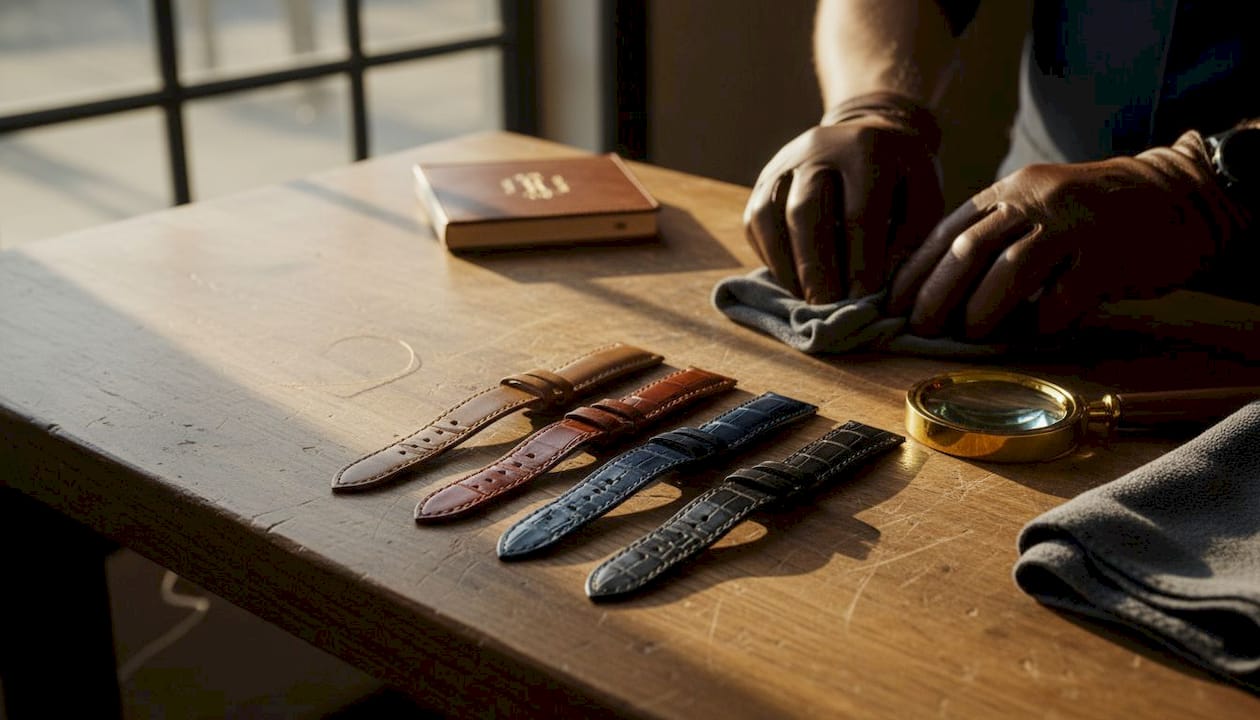
Calfskin is the most common entry point. It’s soft, breaks in relatively quickly, and suits dress watches well. With proper conditioning and rotation, calfskin lasts 5 to 10 years. Without care, it can fail within one to three years.
Shell cordovan is in a different league. Sourced from the fibrous flat muscle beneath a horse’s rump, its dense structure can last 20 or more years with proper care. It develops a rich patina over time and resists creasing better than any other leather type. It’s the choice for collectors who treat straps as long-term investments.
Alligator and crocodile leather is the luxury tier for dress watches. The texture is distinctive, the prestige is undeniable, and the price reflects both. These straps require careful handling and should never be exposed to water or humidity.
Suede is soft and casual but fragile. It stains easily and is not suited for daily wear or humid climates.
Key leather maintenance rules:
- Rotate between 2 to 3 straps to allow full drying between wears
- Condition every 2 to 3 months with a product designed for watch leather, not shoe leather
- Pay attention to the underside of the strap, where sweat accumulates and degradation starts first
- Never submerge leather in water; wipe moisture off immediately
Pro Tip: The underside of a leather strap is where most failures begin. Sweat breaks down the liner before the top grain shows any wear. A leather strap cleaner applied to both sides extends life considerably.
4. Metal bracelets: stainless steel, titanium, and mesh
Metal bracelets represent the most durable category in any watch strap durability comparison. When maintained properly, they outlast every other material type.
Stainless steel and titanium bracelets last 10 or more years with minimal maintenance. The key grades in luxury watches are 316L and 904L stainless steel, both offering strong corrosion resistance. Rolex uses 904L, which provides superior polish retention and rust resistance compared to the industry-standard 316L.
Titanium takes durability further with a significant comfort advantage. It weighs about 60% of steel and is hypoallergenic, making it the preferred choice for high-end sport watches and wearers with nickel sensitivities.
| Metal type | Weight | Hypoallergenic | Corrosion resistance | Best use |
|---|---|---|---|---|
| 316L stainless steel | Heavy | No | Very good | Dress and sport watches |
| 904L stainless steel | Heavy | No | Excellent | Luxury dress watches |
| Titanium | Light | Yes | Excellent | Sport and active wear |
| Milanese mesh | Medium | Varies | Good | Dress and semi-formal |
Metal bracelet pros:
- Longest lifespan of any strap category
- Easy to clean with a soft brush and mild soap
- Polishing restores appearance after scratches
- Milanese and mesh styles offer flexible, comfortable fit
Metal bracelet cons:
- Heavier than rubber or leather options
- Limited adjustability without a jeweler’s tool
- Can scratch easily on brushed finishes
- Not ideal for high-heat or water-sport environments without proper care
For keeping metal bracelets looking their best, a dedicated watch polishing kit makes a noticeable difference in removing micro-scratches and restoring luster.
5. Fabric straps: NATO, sailcloth, canvas, and denim
Fabric straps offer something no other category can: breathability, casual character, and the ability to transform a tool watch into a relaxed everyday companion.
NATO and sailcloth straps dry quickly, breathe well, and suit casual or military-style watches particularly well. NATO straps thread under the watch case, which actually protects the caseback from direct contact with skin. Sailcloth is a step up from standard nylon, offering a tighter weave, better durability, and a more refined texture that works on some dress-casual watches.
Fabric strap highlights:
- Nylon NATO: Lightweight, washable, and nearly indestructible for daily casual wear
- Sailcloth: Faster drying, more structured than NATO, suits sport and field watches
- Canvas: Heavier and slower to dry than nylon, but develops a worn-in character over time
- Denim: Casual and distinctive, but fades and frays with extended use
- Suede: Soft and luxurious in appearance, but highly sensitive to moisture and staining
The main limitation with fabric straps on luxury watches is formality. A waxed canvas strap on a vintage-style field watch looks intentional. The same strap on a dress watch looks like a mismatch. Context matters.
For collectors who rotate straps seasonally, fabric options provide an affordable way to change a watch’s personality without buying a new timepiece.
6. Full material comparison at a glance
The table below consolidates the key attributes across all major strap materials to give you a clear picture for your decision.
| Material | Lifespan | Water resistance | Formality | Maintenance | Comfort |
|---|---|---|---|---|---|
| FKM rubber | 5 to 10 years | Excellent | Casual to sport | Low | High |
| Silicone | 6 to 24 months | Good | Casual | Low | Very high |
| Calfskin leather | 3 to 7 years | Poor | Formal to dress | High | Medium |
| Shell cordovan | 10 to 20+ years | Poor | Formal | High | Medium |
| Alligator leather | 5 to 10 years | Very poor | Formal | Very high | Low |
| Stainless steel | 10+ years | Excellent | Versatile | Medium | Medium |
| Titanium | 10+ years | Excellent | Sport to casual | Low | High |
| NATO nylon | 2 to 5 years | Good | Casual | Low | High |
| Sailcloth | 3 to 6 years | Very good | Casual to sport | Low | High |
| Canvas | 2 to 4 years | Moderate | Casual | Medium | Medium |
Pro Tip: Build a three-strap rotation for your most-worn watch: one FKM or metal for active days, one leather for formal occasions, and one NATO or sailcloth for weekends. This approach extends the life of every strap and gives you the flexibility to match any setting.
My honest take on where watch strap materials are heading
I’ve spent years handling straps across every material category, and the shift I’ve watched happen in real time is the normalization of FKM rubber on genuinely high-end watches. Five years ago, putting a rubber strap on a dress watch felt wrong to many collectors. Now, luxury brands actively favor FKM for sport references because the material’s performance credentials have become a selling point, not a compromise.
What I’ve learned about leather surprises most people I talk to. The biggest killer isn’t water or sun. It’s the back of the strap. Sweat breaks down the liner from the inside out, and most people never clean that side. I’ve seen beautiful calfskin straps that look pristine on top but are completely degraded underneath. Rotating straps and cleaning both sides is the single highest-return maintenance habit you can develop.
My contrarian take on comfort: the material that feels best in the first five minutes is rarely the material that feels best after five hours. Silicone wins the initial softness test. But FKM and well-broken-in leather win the all-day test, because they don’t trap heat or shift position the way soft silicone does.
Looking ahead, I expect composite designs to become more common. The Rolex Oysterflex approach of embedding structural elements inside rubber is not going away. It solves the one real weakness of rubber: the feeling of instability on the wrist. More brands will follow that direction, particularly in the sport and professional watch segment.
The bottom line from my experience: buy the best material you can afford for the context you wear the watch in most. Then maintain it properly. A $150 FKM strap that lasts eight years beats a $30 silicone strap you replace three times.
— Eduardo
Keep your straps performing like new with Shopchronocare
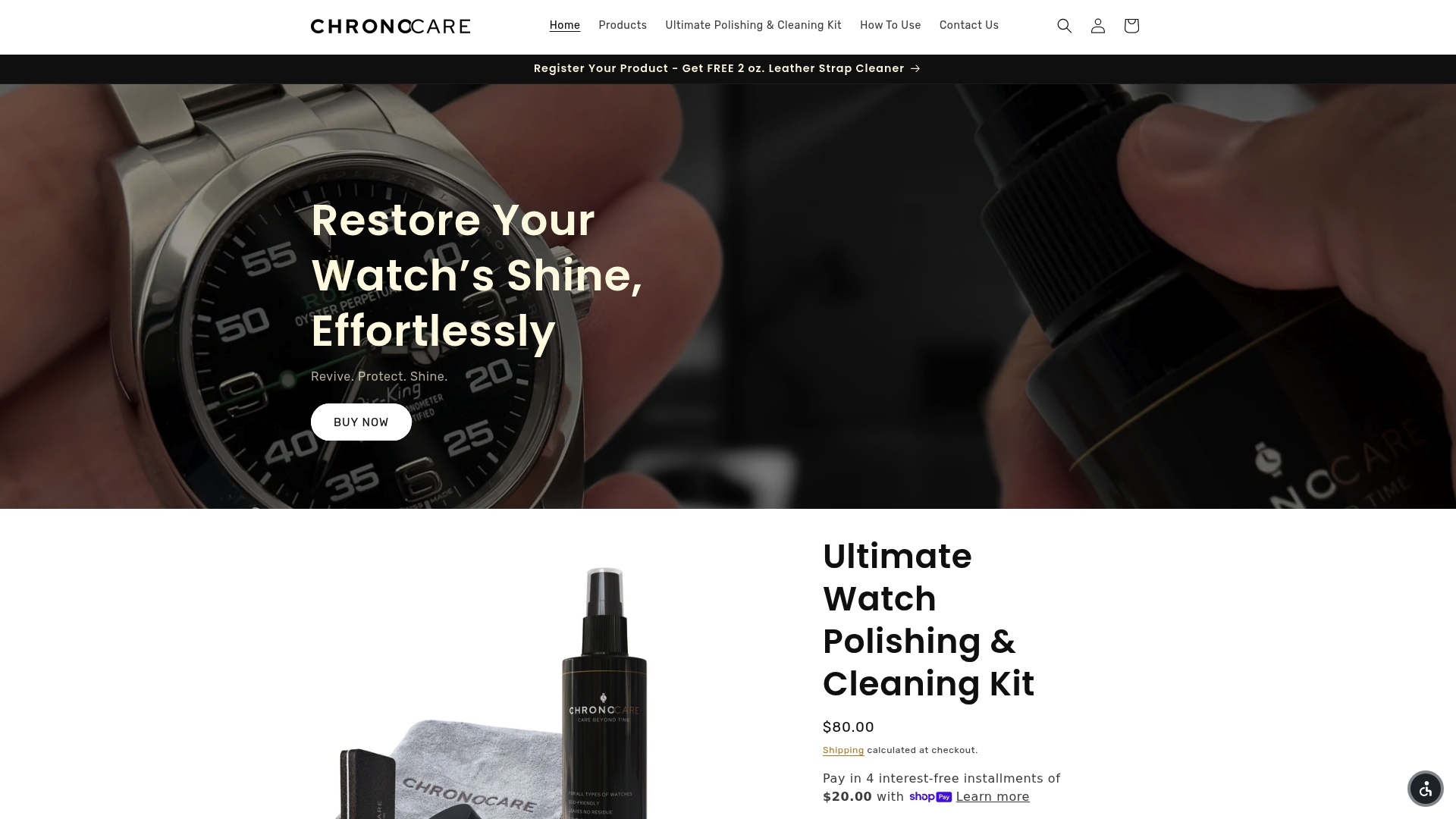
Choosing the right strap material is only half the equation. How you maintain it determines whether that strap lasts two years or ten. Shopchronocare offers a full line of care products designed specifically for luxury watch owners who take their investment seriously. The leather strap cleaner spray is formulated to clean both sides of the strap without stripping natural oils, extending the life of calfskin, shell cordovan, and exotic leathers. For metal bracelet owners, the luxury watch cleaning kit removes grime from link gaps and restores that factory finish. Every product at Shopchronocare is formulated in the US and designed for the specific demands of high-end timepieces. Your strap is a daily-wear component. Treat it accordingly.
FAQ
What is the most durable watch strap material?
Metal bracelets, particularly stainless steel and titanium, offer the longest lifespan at 10 or more years with minimal care. Among non-metal options, FKM rubber and shell cordovan leather are the top performers, each lasting 5 to 20 years depending on maintenance.
How do I choose the right watch strap material?
Match the material to your primary use case: FKM rubber for sport and outdoor wear, leather for formal and dress occasions, and NATO or sailcloth for casual everyday use. Consider your maintenance commitment as well, since leather requires significantly more care than rubber or metal.
Are silicone watch bands worth it for luxury watches?
Silicone works as a budget option but degrades faster than FKM rubber, attracts lint persistently, and typically needs replacement within one to two years. For a luxury watch, FKM rubber offers a meaningfully better long-term result at a modest price premium.
How long do leather watch straps last?
With proper conditioning and rotation between multiple straps, calfskin leather lasts 5 to 7 years and shell cordovan can exceed 20 years. Without care, even quality leather fails within 1 to 3 years due to sweat degradation and drying out.
Can I use the same watch strap for sports and formal wear?
Not ideally. A Milanese mesh or titanium bracelet bridges sport and semi-formal contexts reasonably well, but the best approach is maintaining two straps: one rubber or metal for active use and one leather for formal occasions.